
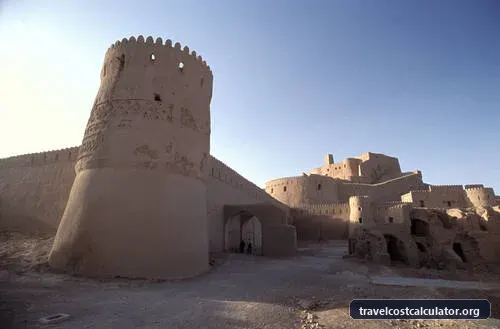
 Iran
Iran
Takht-e Soleyman
The archaeological site of Takht-e Soleyman, in north-western Iran, is situated in a valley set in a volcanic mountain region.
Takht-e Soleyman
🏛️ Overview & Historical Significance
Perched high in the rugged, windswept mountains of West Azerbaijan Province in northwestern Iran, Takht-e Soleyman ("The Throne of Solomon") is one of the world's most enigmatic and atmospheric archaeological sites. Inscribed as a UNESCO World Heritage site in 2003, this remote sanctuary sits in a high-mountain valley over 2,200 meters above sea level. Its centerpiece is a mysterious, bottomless turquoise artesian lake created by mineral-rich thermal springs, around which millennia of royal, religious, and architectural history are layered.
During the Sasanian Empire (224–651 CE), Takht-e Soleyman was known as Shiz and housed Adur Gushnasp (Azargoshnasp)—one of the three ultimate sacred fire temples of Zoroastrianism. Dedicated to the warrior and royal class, Sasanian monarchs would travel here on foot after their coronation to make offerings, receive divine sanction, and light the eternal holy fire. The complex was constructed using advanced stone masonry, featuring monumental vaulting, an elaborate temple dedicated to the water goddess Anahita, and thick perimeter walls crafted from local calcium carbonate deposits formed naturally by the spring over thousands of years.
Following the Arab conquest of Persia in the 7th century, local inhabitants renamed the site "Solomon’s Throne" to protect it from destruction. According to folk legend, King Solomon used magical powers to command demons to build the massive stone fort and hollow out the nearby crater lake. In the 13th century, under the Mongol Ilkhanid dynasty, the site experienced a grandiose second revival when sovereign Abaqa Khan transformed the ancient Sasanian ruins into a lavish fortified summer palace, adding colorful luster-tiled halls and hunting pavilions.
Today, Takht-e Soleyman stands as an extraordinary symbol of human spirituality and architectural ingenuity, representing the absolute pinnacle of Sasanian sanctuary architecture and seamless integration with a dramatic natural landscape.
🎟️ Entrance Fees, Opening Hours & Ticket Booking Tips
Visiting Takht-e Soleyman in 2026 requires understanding Iran’s unique financial landscape. Standard international credit and debit cards (Visa, Mastercard) do not work in Iran due to international banking sanctions. You must carry physical cash (USD or EUR) or acquire a local Iranian prepaid Tourist Debit Card upon arrival.
2026 Estimated Entrance Fees
-
✦
Foreign Visitor Ticket: Approximately $5.00 – $10.00 USD (equivalent to roughly 500,000 – 1,000,000 Iranian Tomans / 5,000,000 – 10,000,000 IRR, depending on exchange rate shifts).
-
✦
Domestic Visitor Ticket: Approx. 50,000 – 100,000 Tomans ($0.50 – $1.00 USD).
-
✦
Zendan-e Soleyman (Solomon's Prison): Free access to hike the exterior mountain; small token ticket (~$1.00 USD) may apply at the base station parking lot.
Opening Hours & Logistics
-
✦
Spring & Summer (April – September): 8:00 AM – 7:00 PM daily.
-
✦
Autumn & Winter (October – March): 8:30 AM – 5:00 PM daily.
-
✦
Ticket Sales: On-site ticket counter only. Online pre-booking is generally unavailable for individual foreign tourists, though authorized local tour operators can handle tickets in advance.
-
✦
Payment Method: Cash in local currency (Rials/Tomans) or via an Iranian Tourist Card (such as MahCard or DaricPay). Euro and USD cash are accepted by private guides, but official entrance gates require Iranian currency.
🚌 How to Get There & Local Transit Costs
Takht-e Soleyman is isolated in the mountains of northwestern Iran. The primary staging base for visits is the town of Takab (45 km southwest). Larger regional transport hubs include Zanjan (160 km east) and Tabriz (280 km northwest).
Option 1: From Takab (Closest Base Town)
Takab is connected by long-distance intercity VIP buses from Tehran Travel Budget (7–8 hours, ~$6 – $10 USD) or Sanandaj. From Takab to Takht-e Soleyman:
-
✦
Private Taxi (Darbast): The easiest method. A private round-trip taxi from Takab to the site—including 2–3 hours of waiting time and a stop at Zendan-e Soleyman—costs between $10.00 and $18.00 USD (approx. 1,000,000 – 1,800,000 Tomans).
-
✦
Shared Taxi (Savari): Shared taxis run from Takab’s main square to Nosratabad village near the site for roughly $2.00 – $3.00 USD per seat, though departures are sporadic outside peak morning hours.
Option 2: Day Trip from Zanjan (Recommended Hub)
Zanjan is easily reached by train or highway from Tehran. Many travelers book a day trip from Zanjan to Takht-e Soleyman via the scenic mountain highway through Dandi.
-
✦
Private Day-Tour Taxi from Zanjan: Hiring a private driver for a full-day trip (Zanjan – Takht-e Soleyman – Zendan-e Soleyman – Zanjan) costs approximately $35.00 – $55.00 USD per vehicle.
-
✦
Public Bus + Taxi Combination: Take an early morning bus from Zanjan to Takab ($3.00 – $4.00 USD, 3 hours), then hire a local taxi in Takab to complete the trip.
📸 Best Photography Spots & Insider Visit Hacks
To capture the ethereal magic of this ancient sanctuary, timing and perspective are critical. High elevation means crisp light, but dramatic atmospheric changes can occur rapidly.
Top Photography Angles
-
✦
The Lake & Sasanian Archway: Stand at the southern side of the central spring pool during late afternoon. Frame the ancient, crumbling Sasanian brick arches (Ivan-e Khosrow) reflected in the deep turquoise waters.
-
✦
Northern Platform Panorama: Walk up to the elevated Northern Gate fortification wall for a sweeping shot looking down across the central water basin surrounded by the Ilkhanid palace ruins and surrounding mountain backdrop.
-
✦
Zendan-e Soleyman Summit Rim: Located 3 km hillward from the main complex, this hollow conical mountain was formed by an extinct spring crater. A 20-minute steep hike to the rim offers a jaw-dropping view into a dark, 80-meter-deep void, with Takht-e Soleyman visible in the valley distance.
Insider Visit Hacks
-
✦
Best Time of Day: Late afternoon (2 hours before sunset). The warm golden hour light illuminates the red brickwork and limestone walls against the deep teal lake.
-
✦
Do NOT Attempt to Swim: Swimming in the central lake is strictly forbidden and life-threatening. The artesian spring is over 110 meters deep, fed by intense underwater thermal currents, heavily saturated with heavy minerals, and lacks buoyancy.
-
✦
Dress Code & Altitude Weather: National modesty rules apply (women must cover hair with a headscarf/hijab and wear long sleeves/tunics; men should wear long pants). Bring windproof outerwear even in late spring—the mountain breeze at 2,200m altitude is notoriously sharp.
-
✦
Best Season: Late April to early June (when surrounding valleys are blanketed in wild grass and red poppies) or late September to October. Winters (November to March) bring severe freezing temperatures and frequent heavy snow blockages on mountain passes.
🏨 Nearby Accommodation & Daily Budget Allocation
Because Takht-e Soleyman sits in a rural region, lodging options range from cozy traditional eco-lodges near the site to mid-range hotels in Takab or high-standard hotels in Zanjan.
Where to Stay
-
✦
Traditional Ecolodges (Near Site): Located in nearby villages (Nosratabad or Bareh-Yaft). Staying in an Iranian Bumgardi (ecolodge) includes carpeted traditional rooms, home-cooked regional meals, and direct access to the ruins. Cost: $15.00 – $30.00 USD per night (including breakfast & dinner).
-
✦
Takab Town Hotels: Basic to mid-range accommodations such as Rancho Hotel or local municipal hoteliers in Takab. Cost: $20.00 – $40.00 USD per night.
-
✦
Zanjan City Hotels: Modern 3-star and 4-star properties (e.g., Grand Hotel Zanjan, Dadash Hotel) for those making a day trip. Cost: $40.00 – $75.00 USD per night.
Food & Dining Options
Dining near the site is rustic and authentic. Village guesthouses serve traditional Azerbaijan regional specialties such as Abgoosht (savory lamb and chickpea stew), fresh flatbread baked in tandoor ovens, wild herb omelets, and locally produced honey. A full lunch or dinner at a local village tavern costs around $3.00 – $7.00 USD.
Estimated 2026 Daily Budget Allocation (Per Person)
-
✦
Budget Backpacker: $25.00 – $35.00 USD / day (Staying in a local village ecolodge, using shared savaris, eating regional home-cooked meals).
-
✦
Mid-Range Traveler: $55.00 – $85.00 USD / day (Staying in Takab/Zanjan hotel, hiring a private driver for full day transport, paying entrance fees and full restaurant meals).
Frequently Asked Questions
Essential visitor FAQs for Takht-e Soleyman
What is the entrance fee for Takht-e Soleyman in 2026?
How much time do you need to explore Takht-e Soleyman?
How do I get to Takht-e Soleyman from the nearest city?
📊 Heritage Quick Specs
Visiting Iran on a Budget?
Calculate your full daily travel budget for Iran — including hotel costs, local transport, food, and sightseeing expenses.
View Iran Daily Travel Costs →Explore more UNESCO World Heritage Sites
🏛️ All 1,200+ Heritage Sites →