
 India
India
Sundarbans National Park
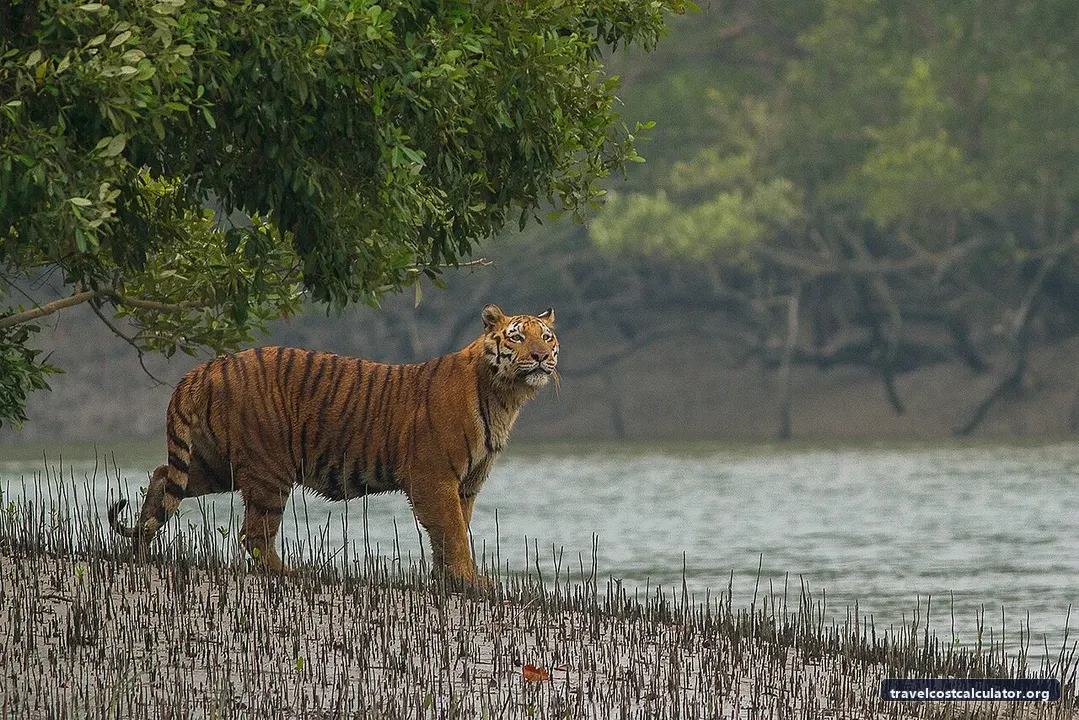
The Sundarbans covers 10,000 km2 of land and water (more than half of it in India, the rest in Bangladesh) in the Ganges delta.
Sundarbans National Park
🏛️ Overview & Historical Significance
Spanning the tidal delta formed by the confluence of the Ganges, Brahmaputra, and Meghna rivers in the Bay of Bengal, Sundarbans National Park is the world’s largest contiguous mangrove forest ecosystem. Designated as a UNESCO World Heritage Site in 1987, this vast watery wilderness covers over 10,000 square kilometers across India and Bangladesh, with the Indian core national park encompassing roughly 1,330 square kilometers. The site earned its UNESCO status under natural criteria (ix) and (x) for representing outstanding ongoing ecological processes and housing critical natural habitats for biological diversity.
What makes the Sundarbans globally unique is its resident population of Royal Bengal Tigers (Panthera tigris tigris). Unlike any other tiger population on Earth, these apex predators have adapted to a hyper-saline, semi-aquatic environment. They are strong swimmers capable of crossing wide, tide-ripped channels and hunting aquatic prey alongside wild boar and spotted deer. In addition to tigers, the ecosystem supports the endangered saltwater crocodile (Crocodylus porosus), Irrawaddy and Ganges River dolphins, northern river terrapins, and hundreds of bird species amidst the dense stands of Heritiera fomes (locally known as the Sundari tree, from which the forest derives its name).
As of 2026, the Indian Sundarbans stands at the frontlines of climate resilience and biosphere conservation. Enhanced tracking technologies, eco-tourism controls, and digital permit systems implemented by the West Bengal Forest Department ensure that human footfalls remain sustainable while offering travelers an immersive look into one of the planet's last truly untamed wetland frontiers.
🎟️ Entrance Fees, Opening Hours & Ticket Booking Tips
Visiting Sundarbans National Park requires navigating a permit structure composed of individual entry tickets, boat ecosystem permits, camera clearances, and mandatory local guides. Because entry to the national park is strictly water-based, permits are checked at the primary forest station in Sajnekhali.
Estimated 2026 Entry & Permit Fees
-
✦
Foreign Nationals Entry Fee: ₹600 INR (~$7.20 USD) per person, per day.
-
✦
Indian Citizens Entry Fee: ₹150 INR (~$1.80 USD) per person, per day.
-
✦
Boat Entry Permit: ₹500 INR (~$6.00 USD) per boat per day.
-
✦
Mandatory Local Forest Guide: ₹600 – ₹800 INR (~$7.20 – $9.60 USD) per day per boat (paid directly to certified local guides).
-
✦
Camera Fees: Still Camera: ₹100 INR (~$1.20 USD); Video/Professional Gear: ₹500 – ₹1,000 INR (~$6.00 – $12.00 USD).
Opening Hours & Access Timings
The park is open to boat traffic from 7:00 AM to 5:00 PM daily throughout the year. Boat entries past 4:00 PM at watchtower check-posts are prohibited, and all vessels must anchor at designated eco-zones or village ports by sunset. Waterway travel within the core reserve area after dark is strictly illegal.
Booking Tips & Logistics
-
✦
Digital Pre-Registration: Permits can be arranged in advance via the West Bengal Forest Department’s official portal or through accredited local tour operators in Kolkata.
-
✦
Identity Requirements: Foreign travelers MUST carry their original passport and a valid Indian visa (or e-Visa printout), along with 3–4 physical copies of both for watchtower security checks. Indian nationals must carry original government-issued photo ID (Aadhaar, Passport, or Voter ID).
-
✦
Package Tours vs. Independent Travel: Booking an all-inclusive 2-day or 3-day guided package from Kolkata (ranging between $80 and $220 USD per person) is significantly smoother than self-booking individual boat, permit, and guide logistics at Godkhali Ghat.
🚌 How to Get There & Local Transit Costs
The gateway city for Sundarbans National Park is Kolkata (Netaji Subhash Chandra Bose International Airport - CCU). From Kolkata, travel involves a combination of road/rail transport to the roadhead at Godkhali Ghat or Canning, followed by a boat transfer onto the islands.
Route 1: The Budget Route (Local Train + Shared Transit + Boat)
-
✦
Train from Kolkata to Canning: Catch a local suburban train from Kolkata's Sealdah Station (SDAH) to Canning Station (CAN). Trains run every 30–45 minutes.
Duration: ~1 hour 15 minutes | Cost: ~₹20 INR (~$0.25 USD) second class. -
✦
Shared Auto / Bus to Godkhali Ghat: From Canning station, take a shared auto-rickshaw or local bus to Godkhali Ferry Ghat.
Duration: ~1 hour 15 minutes | Cost: ~₹50 – ₹100 INR (~$0.60 – $1.20 USD). -
✦
Ferry Transfer to Pakhiralay/Gosaba: Board a public motorboat across the river to Gosaba Island or Pakhiralay village (the main tourist hotel hub).
Duration: ~20 minutes | Cost: ~₹15 – ₹30 INR (~$0.20 – $0.35 USD).
Route 2: Direct Private Transfer (Car + Boat Charter)
For a hassle-free trip, hire a private AC car directly from central Kolkata or CCU airport to Godkhali Ghat (approx. 90 km).
-
✦
Private Taxi/Cab Fare: ₹2,500 – ₹3,500 INR (~$30.00 – $42.00 USD) one-way. Transit takes 3.5 to 4 hours depending on traffic out of Kolkata.
-
✦
Private Motorised Boat Charter from Godkhali: Standard tourist boats (licensed for 15–20 passengers) cost between ₹3,500 and ₹6,000 INR (~$42.00 – $72.00 USD) per day for private safari use.
📸 Best Photography Spots & Insider Visit Hacks
Photographing wildlife in the Sundarbans requires patience, long lenses, and an understanding of tidal dynamics. Because foot travel within the forest core is banned for safety reasons, all photography takes place from licensed watchtowers or open-deck safari boats.
Top Photography & Wildlife Watchtowers
-
✦
Sudhanyakhali Watchtower: Consistently rated the best location for Royal Bengal Tiger sightings. The tower overlooks a clear freshwater pond where tigers, axis deer, and wild boars regularly come to drink.
-
✦
Dobanki Watchtower & Canopy Walk: Features a 496-meter elevated canopy walk enclosed by heavy protective netting 20 feet above the ground. Ideal for birdwatchers seeking the brown-winged kingfisher, osprey, and masked finfoot.
-
✦
Sajnekhali Complex: Excellent for close-up shots of estuarine crocodiles at the breeding center, northern river terrapins, and mangrove interpretive displays.
-
✦
Netidhopani Watchtower: Offers historical depth with 400-year-old temple ruins inside the forest, though entry permits are strictly capped per day.
Insider Hacks for Photographers & Travelers
-
✦
Plan Around Low Tide: Wildlife sightings—especially tigers and crocodiles sunning on mudbanks—peak during low tide when riverbanks are fully exposed. Coordinate boat departure times with your local boat captain based on daily tide charts.
-
✦
Essential Gear: Bring a telephoto lens (minimum 300mm–600mm equivalent). Animals are often spotted across wide river channels. Use a dry bag and silicone lens covers, as the salty sea breeze and moisture can damage camera optics.
-
✦
Optimal Lighting Windows: The best light occurs during early mornings (7:00 AM – 9:30 AM) when mist rises off the tidal creeks, and late afternoons (3:30 PM – 5:00 PM) before the mandatory exit hours.
-
✦
Best Season to Visit: October to March offers pleasant temperatures (15°C to 28°C), lower humidity, and dry weather. Avoid the monsoon season (June to September) due to severe cyclonic risks and river turbulence.
🏨 Nearby Accommodation & Daily Budget Allocation
Most tourist accommodation is located outside the core reserve on neighboring populated islands such as Pakhiralay, Dayapur, and Jharkhali, directly across the water from Sajnekhali Watchtower.
Accommodation Options in 2026
-
✦
Budget Eco-Lodges & Guest Houses (Pakhiralay): Simple non-AC or basic AC rooms with private bathrooms. Features home-cooked Bengali meals.
Price Range: $15 – $35 USD (₹1,200 – ₹2,900 INR) per night. -
✦
Mid-Range Riverside Eco-Resorts (Dayapur / Sajnekhali Area): Comfortable cottages with air conditioning, manicured gardens, cultural folk dance performances (Bhavaiya/Tusu), and organized boat tour packages.
Price Range: $60 – $120 USD (₹5,000 – ₹10,000 INR) per night (often includes meals). -
✦
Luxury Boat Cruises & Floating Resorts: Multi-day private cabin cruises operating directly out of Kolkata down the Hooghly river into the Sundarbans.
Price Range: $250 – $450 USD (₹20,000 – ₹37,000 INR) per person per night (all-inclusive).
Dining & Food Costs
Meals in the Sundarbans highlight fresh local Bengali cuisine. Most resorts include full board (breakfast, lunch, tea, dinner). Independent dining in village bazaars is extremely affordable:
-
✦
Traditional Bengali Thali (Fish/Vegetable): ₹150 – ₹300 INR (~$1.80 – $3.60 USD).
-
✦
Fresh Coastal Prawn or Crab Curry Meal: ₹350 – ₹600 INR (~$4.20 – $7.20 USD).
-
✦
Bottled Water & Coconut Refreshments: ₹20 – ₹40 INR (~$0.25 – $0.50 USD).
Daily Budget Allocation Breakdown (Estimated 2026 Costs)
To help plan your trip for 2026, here is an estimated daily cost breakdown per person based on your travel style (excluding international flights to Kolkata):
-
✦
Budget Backpacker: ~$35 – $50 USD / day (₹2,900 – ₹4,200 INR)
- Accommodation: $15 (Shared budget lodge)
-
✦
Food & Water: $10 (Local thalis & snacks)
-
✦
Transport & Safaris: $15 - $25 (Shared local transport & group boat Split Travel Budget)
- Accommodation: $50 - $80 (AC Eco-resort cottage)
- All-inclusive luxury houseboat/cruise package covering fine dining, private permits, dedicated naturalist guides, and onboard amenities.
Frequently Asked Questions
Essential visitor FAQs for Sundarbans National Park
What is the entrance fee for Sundarbans National Park?
How much time do you need to explore Sundarbans National Park?
How do I get to Sundarbans National Park from the nearest city?
📊 Heritage Quick Specs
Visiting India on a Budget?
Calculate your full daily travel budget for India — including hotel costs, local transport, food, and sightseeing expenses.
View India Daily Travel Costs →Explore more UNESCO World Heritage Sites
🏛️ All 1,200+ Heritage Sites →