
 Gambia
Stone Circles of Senegambia
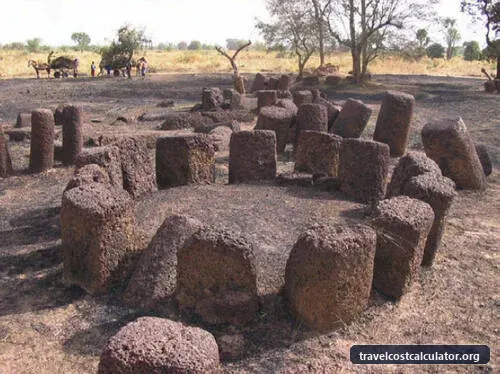
The site consists of four large groups of stone circles that represent an extraordinary concentration of over 1,000 monuments in a band 100 km wide along some 350 km of the River Gambia.
Stone Circles of Senegambia
🏛️ Overview & Historical Significance
Standing quietly against the sun-baked savannas of West Africa, the Stone Circles of Senegambia represent one of the world's most enigmatic megalithic achievements. Recognized as a UNESCO World Heritage site in 2006, this extraordinary archaeological landscape spans a 100-kilometer-wide zone along the River Gambia. While the UNESCO designation encompasses 93 individual circle sites across both Senegal and The Gambia, the Wassu and Kerbatch clusters in The Gambia's Central River Region feature some of the most striking and best-preserved megaliths in the entire region.
Constructed between the 3rd century BC and the 16th century AD, these monuments consist of precisely carved laterite (ironstone) pillars arranged in circular formations. Each circle typically contains between 8 and 14 stones, with height variations ranging from 1 to 2.5 meters. The engineering precision required to quarry, shape, transport, and erect thousands of these monoliths—weighing up to 10 tons each—without modern metallic tools highlights a highly organized, sophisticated ancient society.
Archaeological excavations have confirmed that these stone circles served primarily as funerary monuments. Beneath and surrounding the monoliths lie extensive burial grounds featuring grave goods such as pottery, copper bracelets, iron weapons, and beads. This evidence suggests a ritualistic ancestor-worship culture and complex social stratification, likely tied to ancient trade routes connecting the Sahara to the West African coast. For modern travelers visiting in 2026, standing among these ancient red stones provides an evocative glimpse into West Africa's pre-colonial history—a profound sacred landscape shrouded in enduring local legends and spiritual reverence.
🎟️ Entrance Fees, Opening Hours & Ticket Booking Tips
Visiting the main site at Wassu is straightforward, inexpensive, and directly supports the preservation efforts managed by the National Centre for Arts and Culture (NCAC) of The Gambia.
2026 Ticket Pricing Breakdown
-
✦
International Visitors: 300 GMD (~$4.20 USD) per person.
-
✦
ECOWAS / West African Nationals: 150 GMD (~$2.10 USD) per person.
-
✦
Gambian Citizens & Students: 50 GMD (~$0.70 USD) per person.
-
✦
On-Site Local Guide Fee: Tipping is expected; a fair rate for an informative 30-to-45-minute tour is 250 to 350 GMD (~$3.50 to $5.00 USD).
-
✦
Camera / Video Permit: Included in the standard ticket price (commercial filmmaking requires prior NCAC authorization).
Opening Hours & On-Site Facilities
The Wassu Stone Circles site and its small, informative museum are open daily from 8:00 AM to 6:00 PM (including weekends and national holidays). The museum displays excavated grave artifacts, historical timelines, and comparative charts of Senegambian megaliths.
Insider Booking Tips
-
✦
Cash Only (GMD): There are no digital payment terminals, credit card readers, or online ticketing platforms at Wassu. You must pay the entrance fee in cash using local Gambian Dalasi (GMD). Obtain cash at ATMs in urban centers like Senegambia/Serrekunda Travel Budget or Farafenni before traveling upriver.
-
✦
Combine Wassu & Kerbatch: If you plan to visit the secondary site at Kerbatch (approx. 50 km away), note that ticket officers at Wassu can provide current entry details, though Kerbatch is less developed and often unticketed, requiring a polite tip to local village elders.
🚌 How to Get There & Local Transit Costs
The Stone Circles of Wassu are located in the Niani District of the Central River Region, approximately 250 kilometers inland from the coastal tourism capital of Banjul Travel Budget/Serrekunda. Reaching the site offers an authentic journey through inland Gambia.
Route 1: The North Bank Highway (Direct Route)
The standard and most efficient highway route runs along the paved North Bank Road directly to the town of Wassu.
-
✦
Step 1 (Banjul to Barra): Take the passenger ferry from Banjul terminal across the Gambia River to Barra. Ferry tickets cost roughly 25 GMD (~$0.35 USD) for standard foot passengers and take about 45 to 60 minutes.
-
✦
Step 2 (Barra to Wassu via Minibus): From Barra garage, catch a direct "Gelli-Gelli" (shared public minibus) heading toward Kuntaur or Janjanbureh. Ask the driver to drop you directly at the Wassu Stone Circles junction.
- Gelli-Gelli Fare: ~350 to 450 GMD (~$5.00 to $6.50 USD) per seat; duration is 3.5 to 4.5 hours.
-
✦
Shared Taxi / "Sept-Place": ~600 to 750 GMD (~$8.50 to $10.50 USD) per seat for a faster, less crowded ride.
Route 2: South Bank Highway via Janjanbureh Island
If traveling along the South Bank (passing through Kiang West or Soma), your route leads to the historic island town of Janjanbureh (Georgetown).
-
✦
Ferry Crossing: Take the short Janjanbureh vehicle ferry or a local wooden pirogue across to the North Bank (costs 20–50 GMD).
-
✦
Local Taxi to Wassu: From the North Bank ferry slip, take a local bush taxi north to Wassu (approx. 25 km / 30 minutes). Shared taxis cost ~100 GMD ($1.40 USD), while hiring a private taxi ("town trip") costs 700 to 1,000 GMD (~$10 to $14 USD).
Hiring a Private Driver from the Coast
For maximum comfort, hiring a private 4x4 vehicle with a driver from the coastal resort area (Kotu/Kololi) for a multi-day upcountry trip costs between 7,000 and 10,500 GMD ($100 to $150 USD) per day, including fuel and driver allowances.
📸 Best Photography Spots & Insider Visit Hacks
Capturing the rich red tones of the laterite monoliths against the golden Gambian landscape requires careful timing and spatial positioning.
Top Photography Angles
-
✦
Wassu Main Circle (Circle 1): The central cluster features the tallest monoliths. Position yourself on the western edge looking east to frame the tall stones against the expansive sky and surrounding acacia trees.
-
✦
Low-Angle Close-ups: Get low to highlight the unique weather-carved textures, iron-rich pittings, and moss formations on the ancient laterite surfaces.
-
✦
The Lyre Stone at Kerbatch: If making the side trip to Kerbatch, capture the unique double-pronged "V-shaped" (lyre) stone—the only one of its kind in the region.
Lighting & Seasonal Weather Strategy
-
✦
Golden Hour Magic: The best photographic lighting occurs from 4:30 PM to 6:00 PM, when the low afternoon sun casts long shadows and highlights the warm terracotta hues of the megaliths. Early morning (7:30 AM to 9:00 AM) provides crisp, cool light with low haze.
-
✦
Avoid Midday Heat: Inland Gambia temperatures during the dry season (March to May) frequently exceed 38°C (100°F). Midday light creates harsh, washed-out shadows and high heat shimmer.
-
✦
Dry Season vs. Green Season: Visit between November and February for pleasant weather, clear skies, and low humidity. During the rainy season (July to October), the surrounding landscape turns lush emerald green, making photos pop, though travel logistics become muddy and challenging.
Cultural Etiquette & Insider Hacks
-
✦
Small Wishing Stones: You will notice small, round stones placed on top of the large megaliths. Local tradition holds that placing a small stone atop a pillar while making a wish brings good fortune. Respect the site by never climbing on or defacing the historic monuments.
-
✦
Combine with River Safaris: Wassu is only 15 minutes away from the river port of Kuntaur. Arrange a wooden motorboat cruise from Kuntaur into the River Gambia National Park (Baboon Island) to spot wild chimpanzees, hippos, and rare bird species on the same day.
🏨 Nearby Accommodation & Daily Budget Allocation
Because Wassu is a small village, most travelers base themselves in nearby Janjanbureh (Georgetown) or riverside eco-camps in Kuntaur.
Recommended Places to Stay
-
✦
Budget: Janjanbureh Riverside Camps / Guesthouses
Price Range: $15 – $30 USD (1,050 – 2,100 GMD) / night.
Simple, traditional round-house thatched rooms with fan cooling, mosquito nets, and basic shared or private bathrooms right along the Gambia River. -
✦
Mid-Range: Kairoh Garden or Baobabbolong Camp (Janjanbureh)
Price Range: $45 – $85 USD (3,150 – 5,950 GMD) / night.
Comfortable en-suite rooms, solar-powered electricity, on-site restaurants serving local Gambian dishes (Domoda, Yassa), and organized river trips. -
✦
Boutique / Safari Eco-Lodge: Baboon Island Safari Camps
Price Range: $120 – $190 USD (8,400 – 13,300 GMD) / night (includes meals & boat transfers).
Upscale eco-tents and wooden decks built over the water, offering immersive wildlife experiences near the chimpanzee sanctuary.
Estimated Daily Budget Breakdowns (2026 Rates)
Backpacker Budget Planner: ~$30 to $45 USD / day
-
✦
Lodging: Basic budget guesthouse ($20 USD)
-
✦
Meals: Local eateries / local street food ($8 USD)
-
✦
Transport: Shared Gelli-Gelli minibuses ($7 USD)
-
✦
Activities: Entrance fee & shared guide tip ($5 USD)
Mid-Range Traveler Budget: ~$85 to $140 USD / day
-
✦
Lodging: Mid-range riverside eco-lodge with breakfast ($60 USD)
-
✦
Meals: Lodge restaurant lunch & dinner ($25 USD)
-
✦
Transport: Combination of private local taxis ($30 USD)
-
✦
Activities: Entrance fees, private museum guide, and local boat trip ($25 USD)
Comfort / High-End Budget: ~$230 to $350 USD / day
-
✦
Lodging: Premium safari eco-camp ($160 USD)
-
✦
Meals: Three-course dining & drinks included ($40 USD)
-
✦
Transport: Private 4x4 vehicle with dedicated driver ($100 USD/day Split Travel Budget)
-
✦
Activities: Comprehensive private historical and wildlife river safaris ($40 USD)
Frequently Asked Questions
Essential visitor FAQs for Stone Circles of Senegambia
What is the entrance fee for Stone Circles of Senegambia in 2026?
How much time do you need to explore Stone Circles of Senegambia?
How do I get to Stone Circles of Senegambia from the nearest city?
📊 Heritage Quick Specs
Visiting Gambia on a Budget?
Calculate your full daily travel budget for Gambia — including hotel costs, local transport, food, and sightseeing expenses.
View Gambia Daily Travel Costs →Explore more UNESCO World Heritage Sites
🏛️ All 1,200+ Heritage Sites →