
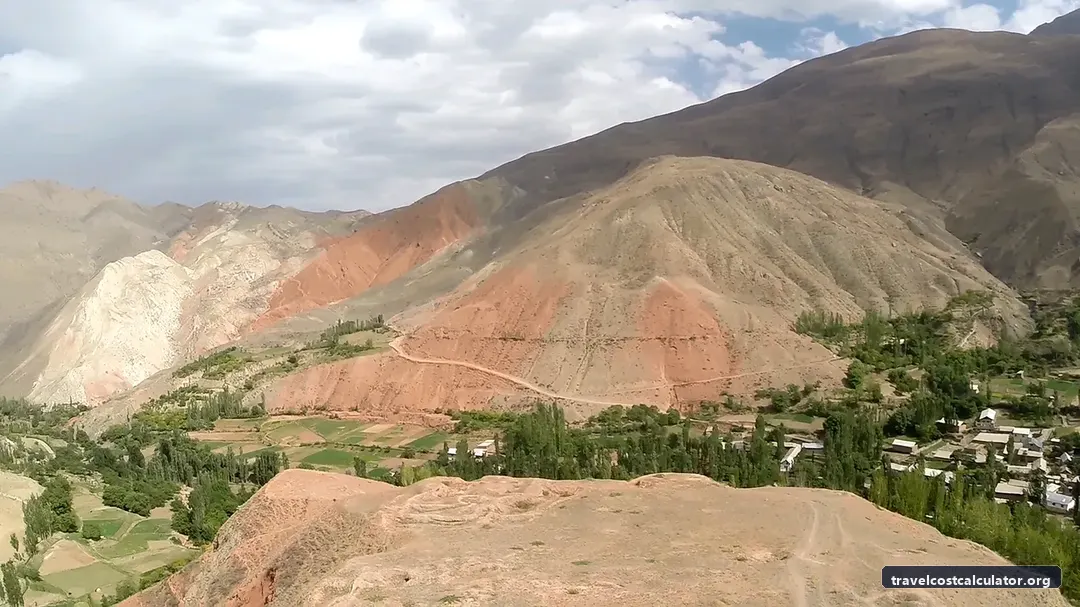
 Tajikistan
Silk Roads: Zarafshan-Karakum Corridor
The Zarafshan-Karakum Corridor is a key section of the Silk Roads in Central Asia that connects other corridors from all directions.
Silk Roads: Zarafshan-Karakum Corridor
🏛️ Overview & Historical Significance
In September 2023, UNESCO officially inscribed the Silk Roads: Zarafshan-Karakum Corridor on the World Heritage list, highlighting one of the most vital artery networks of ancient Eurasian civilization. Spanning 660 kilometers across the rugged landscapes of Tajikistan, Uzbekistan, and Turkmenistan, this corridor served as the primary trade highway connecting the high Pamir mountain passes to the vast Karakum Desert from the 2nd century BCE through the 16th century CE.
The Tajik segment of this corridor, situated in the fertile yet canyon-bound Zarafshan River Valley (Sughd Province), holds an extraordinarily rich concentration of urban, military, and spiritual sites built by the ancient Sogdians. Known as the quintessential merchants of the Trans-Eurasian trade, the Sogdians managed complex trade posts that facilitated the exchange of silk, lapis lazuli, glass, spices, paper-making techniques, and religious doctrines including Zoroastrianism, Buddhism, Manichaeism, and Nestorian Christianity.
Key UNESCO-protected components within Tajikistan include:
-
✦
Ancient Panjakent (Penjikent): Frequently hailed by archaeologists as the "Pompeii of Central Asia," this 5th–8th century Sogdian city was abandoned rapidly following the Arab conquest, leaving behind an exceptionally preserved grid of multi-story mud-brick mansions, administrative palaces, Zoroastrian fire temples, and intricate wall frescoes.
-
✦
Castle on Mount Mug (Muk Castle): Perched dramatically high above the Zarafshan River, this fortress served as the final refuge of Dewashtich, the last Sogdian ruler of Panjakent. In 1933, shepherds discovered a mountain basket filled with over 70 documents written in Sogdian, Arabic, and Bactrian—providing modern historians with an unprecedented record of 8th-century administration, law, and diplomacy.
-
✦
Sanjarshah, Hisorak, and Gardani Hisor: Mountain outposts, iron-smelting centers, and fortified palace complexes that guarded the trade arteries against nomadic incursions while extracting rich mineral wealth from the surrounding mountains.
🎟️ Entrance Fees, Opening Hours & Ticket Booking Tips
Visiting the Zarafshan-Karakum Corridor sites in Tajikistan offers exceptional value compared to Western heritage destinations. However, remote logistics require careful financial planning. The local currency is the Tajik Somoni (TJS). In 2026, the estimated exchange rate sits at approximately 1 USD = 10.90 TJS.
2026 Ticket Pricing & Fee Structure
-
✦
Ancient Panjakent Archaeological Site: 30 TJS (~$2.75 USD) for foreign visitors. Includes access to the open-air excavation zone.
-
✦
Rudaki Museum of History & Regional Studies (Penjikent): 25 TJS (~$2.30 USD). Contains original Sogdian frescoes, coins, ceramics, and artifacts excavated from Ancient Panjakent and Mount Mug.
-
✦
Mount Mug Fortress Ruins & Rural Outposts (Hisorak / Sanjarshah): No formal entrance gates exist. Sites are free to explore, though site caretakers or local village elders may request a modest community conservation fee of 15–20 TJS (~$1.50–$2.00 USD).
-
✦
Local English/Russian-Speaking Guide: 180–250 TJS (~$16.50–$23.00 USD) for a 2- to 3-hour guided tour of Ancient Panjakent and the museum.
Opening Hours & Logistics
-
✦
Ancient Panjakent Ruins: Open daily, sunrise to sunset (typically 08:00 to 18:30). The site is open-air with minimal shade.
-
✦
Rudaki Museum: Tuesday to Sunday, 09:00 to 17:00 (Closed Mondays).
Crucial Ticket Booking & Cash Hacks
Strict Cash-Only Environment: There is no online ticketing or advance electronic reservation system for any UNESCO archaeological site in Tajikistan. All entrance fees, guide fees, and transportation payments must be made in cash (Tajik Somoni). While ATMs are available in central Penjikent, international card outages are common. Always carry small-denomination cash bills (10, 20, and 50 TJS notes) acquired in Dushanbe Travel Budget, Khujand Travel Budget, or at border currency exchanges.
🚌 How to Get There & Local Transit Costs
The primary transit springboard for exploring the Tajik Zarafshan-Karakum Corridor is the city of Penjikent (Panjakent), located near the Uzbekistan border.
Option 1: From Samarkand, Uzbekistan (Fastest Route)
Penjikent sits just 27 kilometers east of Samarkand, making it an easy cross-border journey.
-
✦
Take a local taxi from central Samarkand to the Jartepa Border Crossing (approx. 30 minutes, 80,000–100,000 UZS / ~$6.50–$8.00 USD).
-
✦
Cross the border on foot (visa-free or e-visa required depending on nationality).
-
✦
On the Tajik side (Sarazm/Penjikent border point), take a shared taxi into Penjikent city center (15–20 minutes, 20–30 TJS / ~$2.00–$2.75 USD per seat) or hire a private vehicle (60–80 TJS / ~$5.50–$7.50 USD total).
Option 2: From Dushanbe, Tajikistan
If arriving from Tajikistan's capital, the journey travels north through the dramatic Varzob Gorge and the Anzob Tunnel (Tunnel of Independence).
-
✦
Head to the Asian Express / Cement Factory Taxi Stand in northern Dushanbe.
-
✦
Take a 7-seater shared 4WD or sedan taxi to Penjikent (approx. 4 to 5 hours).
-
✦
Estimated Fare: 130–170 TJS (~$12.00–$15.50 USD) per seat. Booking the front passenger seat costs a slight premium.
Option 3: From Khujand, Tajikistan
Shared taxis depart regularly from the Silk Road Taxi Terminal in Khujand, heading west across the Shahristan Pass.
-
✦
Travel Time: 4 to 4.5 hours.
-
✦
Estimated Fare: 110–140 TJS (~$10.00–$13.00 USD) per seat.
Getting to Outlying Corridor Sites from Penjikent
-
✦
To Ancient Panjakent: Located on a terrace overlooking the southern edge of modern Penjikent. Walkable in 25–30 minutes from the town center, or take Marshrutka #1 or #3 (2–3 TJS / ~$0.25 USD).
-
✦
To Mount Mug & Upper Zarafshan Valley Outposts: Located near the village of Khayronbed (approx. 70 km east of Penjikent). Reaching Mount Mug requires hiring a private 4WD driver in Penjikent for the day. Expect to pay 350–500 TJS (~$32.00–$46.00 USD) total for a round-trip vehicle including waiting time.
📸 Best Photography Spots & Insider Visit Hacks
Top Photography Angles
-
✦
Ancient Panjakent Citadel Overlook: Stand on the northern rim of the high citadel mound during golden hour. You can frame the exposed mud-brick Sogdian foundations in the foreground against the backdrop of the emerald Zarafshan Valley and the snow-capped Fan Mountains.
-
✦
Rudaki Museum Fresco Hall: Capture close-ups of the recovered Sogdian wall paintings. Look for the famous banquet scenes, blue-pigmented deities, and epic battle sequences (no flash permitted).
-
✦
Mount Mug Summit Panorama: The climb to the top of Mount Mug rewards photographers with a sweeping 360-degree view of the Zarafshan River rushing through steep granite gorges.
-
✦
Sanjarshah Outpost Ruins: Photograph the dramatic contrast between the sun-baked earthen ramparts and the lush green fruit orchards that line the valley floor in spring.
Insider Travel Hacks
-
✦
Optimal Seasonal Timing: The ideal travel windows are April to May and September to October. Spring brings blooming wild tulips and moderate temperatures (18°C–24°C / 64°F–75°F). Early autumn offers crisp mountain light, fresh pomegranates, and warm dry days. Avoid July and August, when temperatures on the open excavations routinely exceed 38°C (100°F).
-
✦
Timing Your Ancient Panjakent Visit: Visit the open-air site early in the morning (08:00–10:00) or late afternoon (16:30–18:30). The low sun casts deep shadows into the excavated rooms, revealing architectural layouts that wash out under harsh midday sunlight.
-
✦
Combine with Sarazm: Just 15 km west of Penjikent sits the Proto-urban Site of Sarazm (inscribed on the UNESCO list in 2010). Combine your Zarafshan-Karakum Corridor tour with Sarazm on a single day trip via shared taxi to see 5,000 years of continuous human habitation in one valley.
-
✦
Footwear Essential: The excavated Sogdian ruins feature deep, unpaved dirt trenches, loose gravel, and steep mud-brick slopes. Sturdy hiking shoes or trail runners with aggressive grip are essential.
🏨 Nearby Accommodation & Daily Budget Allocation
Penjikent offers a growing range of accommodations, from friendly family-run guest houses to modern mid-range hotels catering to Silk Road overland travelers.
Where to Stay
-
✦
Budget: Salom Guesthouse / Panjakent Hostel — Charming family-run lodging with traditional court gardens. Dorm beds from 100 TJS (~$9.00 USD); private rooms with shared bath 180–220 TJS (~$16.50–$20.00 USD), including a lavish homemade breakfast.
-
✦
Mid-Range: Hotel Sugd / Panjakent Plaza — Modern amenities, reliable air conditioning, private bathrooms, and stable Wi-Fi. Double rooms cost 380–550 TJS (~$35.00–$50.00 USD) per night.
-
✦
Boutique Top Choice: Umariyon Hotel — The city's highest standard hotel, featuring spacious rooms, on-site dining, heating/AC, and multi-lingual staff who can arrange 4WD drivers for Mount Mug. Double rooms range from 650–900 TJS (~$60.00–$82.00 USD) per night.
Local Dining Costs
Tajik cuisine in the Zarafshan Valley is hearty and affordable. A meal at a traditional Choykhona (Teahouse) generally includes:
-
✦
Zarafshan Plov (Pilaf): Plate of yellow carrots, tender beef, and fragrant rice cooked in flaxseed oil (25–40 TJS / ~$2.30–$3.70 USD).
-
✦
Qurutob: The national dish of flatbread layers soaked in savory salted cheese curd sauce, topped with fried onions and fresh herbs (25–35 TJS / ~$2.30–$3.20 USD).
-
✦
Shashlik (Skewered Beef or Lamb): 12–18 TJS (~$1.10–$1.65 USD) per skewer.
-
✦
Pot of Green Tea (Chai) & Fresh Bread (Non): 5–8 TJS (~$0.45–$0.75 USD).
Estimated Daily Budget Allocations (2026 Rates)
-
✦
Backpacker Budget Planner: $25–$35 USD per day (Hostel dorm or simple homestay, local transport via marshrutka, teahouse dining, self-guided site visits).
-
✦
Mid-Range Explorer: $65–$110 USD per day (Private room in a 3-star hotel, Split Travel Budget private driver costs for outlying sites like Mount Mug, hiring site guides, dining at top valley restaurants).
-
✦
Luxury / Expedited Tour: $180–$300+ USD per day (Private dedicated 4WD vehicle with driver from Dushanbe/Samarkand, high-end accommodation, dedicated private historian guide, all meals included).
Frequently Asked Questions
Essential visitor FAQs for Silk Roads: Zarafshan-Karakum Corridor
What is the entrance fee for Silk Roads: Zarafshan-Karakum Corridor?
How much time do you need to explore Silk Roads: Zarafshan-Karakum Corridor?
How do I get to Silk Roads: Zarafshan-Karakum Corridor from the nearest city?
📊 Heritage Quick Specs
Visiting Tajikistan on a Budget?
Calculate your full daily travel budget for Tajikistan — including hotel costs, local transport, food, and sightseeing expenses.
View Tajikistan Daily Travel Costs →Explore more UNESCO World Heritage Sites
🏛️ All 1,200+ Heritage Sites →