
 Japan
Japan
Shirakami-Sanchi
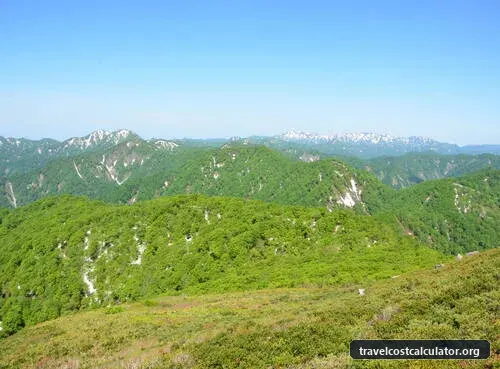
Situated in the mountains of northern Honshu, this trackless site includes the last virgin remains of the cool-temperate forest of Siebold's beech trees that once covered the hills and mountain slopes of northern Japan.
Shirakami-Sanchi
🏛️ Overview & Historical Significance
Spanning 130,000 hectares across the mountainous border of Aomori and Akita Prefectures in northern Honshu, Shirakami-Sanchi (literally "White God Mountains") is one of East Asia’s most ecological natural treasures. In 1993, a central core area of 16,971 hectares was designated as one of Japan’s very first UNESCO World Heritage Sites (alongside Yakushima Island). The site protects the world's largest remaining virgin forest of Siebold's beech (Fagus crenata, locally known as buna), an ancient ecosystem that once blanketed northern Japan following the last glacial period roughly 8,000 to 12,000 years ago.
Unlike commercial timber forests across post-war Japan, Shirakami-Sanchi remained virtually untouched by human intervention due to its extremely steep, impassable topography and severe winter snowfalls. This evolutionary sanctuary harbors remarkable biodiversity, acting as a refuge for the endangered black woodpecker (kumagera), the Japanese serow (a goat-antelope known as kamoshika), the golden eagle, and the elusive Japanese black bear (tsukinowaguma).
To balance environmental protection with public enjoyment, the region is strictly partitioned into two main sectors:
-
✦
The Core Zone (10,139 hectares): A strictly preserved wilderness with zero paved roads, zero commercial structures, and zero man-made trails. Entering this untouched center requires submitting a formal route notification to the Regional Forest Office in advance.
-
✦
The Buffer Zone & Outer Trails: Accessible peripheral areas designed for eco-tourism. These include the world-famous Juniko (Twelve Lakes) cluster featuring the cobalt Aoike, the three-tiered Anmon Falls, and scenic viewing passes such as Tsugaru-Toge.
🎟️ Entrance Fees, Opening Hours & Ticket Booking Tips
Visiting Shirakami-Sanchi’s outer attractions does not require a traditional, single entrance ticket. Instead, access relies on a combination of free public entry, small voluntary conservation contributions, and localized parking fees.
2026 Price Breakdown & Fee Schedule
-
✦
Buffer Zone Trails & Juniko Lakes Access: FREE. Walkers can explore the popular Aoike Blue Pond and surrounding beech forest trails without paying an entry fee.
-
✦
Anmon Falls Maintenance & Conservation Contribution: ¥500 (~$3.35 USD) per person. Collected at the trailhead at Aqua Village Anmon to support safety helmet rentals, trail upkeep, and park ranger patrols.
-
✦
Juniko Visitor Parking Fee: ¥500 (~$3.35 USD) per standard vehicle per day at the main Juniko Kyorokuen parking area.
-
✦
Shirakami World Heritage Conservation Center (Nishimeya & Ajigasawa Outposts): FREE admission. Excellent facilities featuring interactive flora/fauna exhibits and multi-lingual trail maps.
-
✦
Core Zone Climbing Permit / Route Notification: FREE, but mandatory. Trekkers aiming to hike deep core routes (such as Mt. Shirakamidake) must file an official notification (Eirin-sho submission) via post or online at least one week prior to arrival.
Opening Hours & Seasonal Closures
Due to heavy snowfall in the Tohoku region, access to Shirakami-Sanchi is highly seasonal:
-
✦
Peak Operating Season: Late April through mid-November. Hiking trails, visitor centers, and local shuttle buses operate continuously during this period.
-
✦
Winter Closure (Late November to Mid-April): Prefectural roads leading to Anmon Falls, Tsugaru-Toge, and high-elevation trailheads are completely closed to vehicular traffic. Juniko can be accessed during winter only via specialized guided snowshoe tours.
-
✦
Daily Trail Hours: Outer trails are open during daylight hours (typically 8:30 AM – 5:00 PM). Entering forest trails after dusk is strongly discouraged due to bear activity and treacherous terrain.
🚌 How to Get There & Local Transit Costs
The main gateways to Shirakami-Sanchi are Hirosaki City (Aomori Prefecture) to the northeast and Noshiro / Akita City to the south. Depending on whether your priority is the Juniko Blue Ponds or Anmon Falls, your route will differ.
Option 1: The Iconic "JR Resort Shirakami" Train (To Juniko Lakes)
The most breathtaking way to reach the western side of Shirakami-Sanchi is aboard the JR Resort Shirakami, a themed Joyful Train operating along the scenic JR Gono Line between Akita and Hirosaki/Aomori.
-
✦
Route: Hirosaki Station to Juniko Station (approx. 2 hours 15 minutes) or Akita Station to Juniko Station (approx. 2 hours 10 minutes).
-
✦
2026 Train Fare: Approx. ¥2,500 to ¥3,200 ($16.65 - $21.35 USD) base fare + ¥840 ($5.60 USD) reserved seat fee ( mandatory for all Resort Shirakami trains). Fully covered by the JR East Pass (Tohoku area) or full Japan Rail Pass.
-
✦
Connecting Bus: From Juniko Station, take the Konan Bus to the Oku-Juniko Kyorokuen bus stop (15 minutes, ¥370 / $2.45 USD one-way), located just a 5-minute walk from Aoike.
Option 2: Direct Bus from Hirosaki (To Anmon Falls & Nishimeya)
For visitors heading straight to Anmon Falls and the World Heritage Conservation Center on the eastern side, seasonal direct buses run from Hirosaki Station.
-
✦
Operator: Konan Bus Line (Runs late May through October).
-
✦
Route: Hirosaki Bus Terminal to Aqua Village Anmon (approx. 1 hour 30 minutes).
-
✦
2026 One-Way Fare: Approx. ¥1,650 ($11.00 USD) per adult.
Option 3: Car Rental (Recommended for Full Flexibility)
Renting a vehicle in Hirosaki or Aomori Airport provides maximum autonomy to combine Juniko, Tsugaru-Toge, and Anmon Falls in a single trip.
-
✦
2026 Rental Cost: Compact cars cost approximately ¥7,000 – ¥10,000 ($46.65 - $66.70 USD) per 24 hours. Gasoline runs ~¥175/liter.
-
✦
Driving Conditions: Mountain roads (Route 28 / Tsugaru-Toge) are narrow and winding. Ensure your rental includes an ETC card for toll roads if driving from Sendai or Tokyo Travel Budget.
📸 Best Photography Spots & Insider Visit Hacks
Prime Photography Locations
-
✦
Aoike (Blue Pond): Famous for its vivid, cobalt-blue water that looks artificially dyed. Insider Tip: The best illumination occurs between 11:00 AM and 1:30 PM on bright sunny days when direct sunlight penetrates the forest canopy. Use a circular polarizing filter (CPL) on your camera to eliminate surface reflections.
-
✦
Wakatsubo Pond: Often overlooked in favor of Aoike, this nearby turquoise pond features clearer underwater beech branches and far fewer tour groups.
-
✦
Anmon Third Waterfalls (San-no-taki): A 26-meter waterfall framed by sheer rock faces and overhanging ancient beech canopy. Best timing: Autumn mornings when mist rises off the stream.
-
✦
Tsugaru-Toge Mother Tree (Maza Tsuru): A massive, 400-year-old Siebold's beech tree standing as a symbol of the primeval forest. Accessible via a short paved trail from the Tsugaru Pass parking lot.
Insider Visit Hacks for 2026
-
✦
Seasonal Foliage Timing: Autumn leaf peeping (koyo) peaks between mid-October and early November. Early June offers vibrant fresh greenery (shinryoku) with roaring waterfall flows driven by snowmelt.
-
✦
Bear Safety Gear: Black bear sightings are common. Rent or buy a bear bell (kuma-suzu) at local stations/visitor centers, wear bright clothing, and carry bear spray if trekking long routes like Mt. Shirakamidake.
-
✦
Equip Proper Footwear: The trail to Anmon Falls involves crossing footbridges and navigating wet gravel paths. River trekking sandals or waterproof hiking boots with rubber grip are essential; safety helmets provided at Aqua Village Anmon are mandatory for the inner canyon trail.
-
✦
Avoid Weekend Crowds: The Resort Shirakami train and Juniko parking sell out quickly on October weekends. Book train seat reservations 30 days in advance via the official JR-EAST Train Reservation site.
🏨 Nearby Accommodation & Daily Budget Allocation
Because Shirakami-Sanchi spans a massive rural region, travelers generally stay in Hirosaki City for urban convenience, along the Fukaura Coast for hot spring resort experiences, or in Nishimeya Village for direct forest access.
Accommodation Options Across Budgets
-
✦
Budget / Hostels: Hirosaki Capsule Hotel or Guesthouse Apple House (Hirosaki) — Dorm beds and modest private rooms ranging from ¥3,500 to ¥6,000 ($23.35 - $40.00 USD) per night.
-
✦
Mid-Range Hotels: Dormy Inn Hirosaki or JR-East Hotel Mets Hirosaki — Modern business hotels with public thermal baths located right by train stations. Expect ¥9,000 to ¥16,000 ($60.00 - $106.65 USD) per night including breakfast.
-
✦
Authentic Luxury & Onsen: Koganezaki Furofushi Onsen (Fukaura Coast) — World-renowned coastal hot spring ryokan featuring outdoor cliffside baths facing the Sea of Japan. Rates run ¥22,000 to ¥42,000 ($146.65 - $280.00 USD) per night per person, including multi-course kaiseki dinners featuring local seafood.
Daily Budget Allocations (2026 Estimates)
To help you plan your finances for a trip to Shirakami-Sanchi, consider the following daily spending projections (excluding long-distance Shinkansen transit into Aomori):
-
✦
Budget Traveler (~¥8,500 / $56.65 USD per day):
- Accommodation (Hostel/Guesthouse): ¥4,500 ($30.00 USD)
-
✦
Local Transit (Local trains/buses): ¥2,000 ($13.35 USD)
-
✦
Meals (Ramen, local bento, convenience store): ¥1,500 ($10.00 USD)
-
✦
Conservation fees & snacks: ¥500 ($3.30 USD)
- Accommodation (3-Star Hotel in Hirosaki): ¥12,000 ($80.00 USD)
- Accommodation (Seaside Onsen Ryokan with meals included): ¥35,000 ($233.35 USD)
Frequently Asked Questions
Essential visitor FAQs for Shirakami-Sanchi
What is the entrance fee for Shirakami-Sanchi?
How much time do you need to explore Shirakami-Sanchi?
How do I get to Shirakami-Sanchi from the nearest city?
📊 Heritage Quick Specs
Visiting Japan on a Budget?
Calculate your full daily travel budget for Japan — including hotel costs, local transport, food, and sightseeing expenses.
View Japan Daily Travel Costs →Explore more UNESCO World Heritage Sites
🏛️ All 1,200+ Heritage Sites →