
 Iran
Shahr-i Sokhta
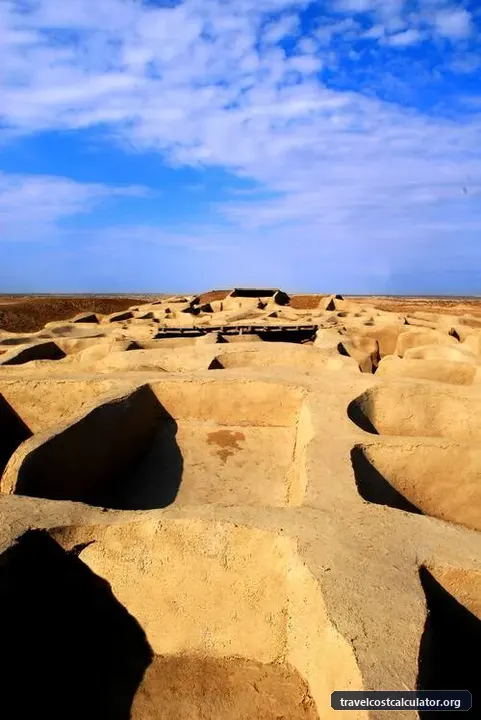
Shahr-i Sokhta, meaning ‘Burnt City’, is located at the junction of Bronze Age trade routes crossing the Iranian plateau.
Shahr-i Sokhta
🏛️ Overview & Historical Significance
Rising like a mythical bronze desert wraith out of the dust of the Dasht-e Lut rim in southeastern Iran, Shahr-i Sokhta (meaning "The Burnt City") stands as one of the most astonishing yet enigmatic urban settlements of the ancient world. Founded around 3200 BCE and flourishing until its mysterious abandonment near 1800 BCE, this 151-hectare Bronze Age metropolis served as the vital heartbeat connecting the early civilizational cradles of Mesopotamia, the Iranian Plateau, and the Indus Valley.
In 2014, UNESCO designated Shahr-i Sokhta as a World Heritage site under Criteria II, III, and IV. The site represents an unparalleled testament to early human ingenuity, complex urban design, and cross-cultural trade. Unlike many contemporary Bronze Age settlements, archaeological excavations reveal that Shahr-i Sokhta was a remarkably peaceful society—lacking massive military fortifications or weaponry, yet boasting advanced civil planning, sophisticated water distribution networks, specialized industrial quarters, and an egalitarian social framework.
World-Changing Archaeological Discoveries
Excavations at Shahr-i Sokhta have unearthed groundbreaking artifacts that redefined our understanding of human innovation:
-
✦
The World's Earliest Artificial Eyeball: Discovered in the socket of a 4,800-year-old female priestess or noblewoman, this prosthetic eye was crafted from lightweight bituminous paste, coated with gold leaf, and engraved with delicate golden iris lines.
-
✦
The Birthplace of Animation: A famous earthenware goblet found at the site features five sequential frames of a Persian desert ibex leaping to eat leaves from a tree—recognized by cinema historians as the world’s oldest known attempt at visual animation.
-
✦
Ancient Brain Surgery (Trepanation): Archaeological evidence includes a skull belonging to a 13-year-old girl showing clear signs of deliberate cranial surgery and post-operative bone healing, proving advanced prehistoric medical knowledge.
-
✦
The First Backgammon Set: The site yielded an intricate 60-piece game board carved from snake wood alongside 60 carved ivory/stone playing counters and dice, pre-dating similar findings across Western Asia.
Despite its name—given by modern locals who mistook the vast layers of windblown ash for catastrophic fire destruction—archaeologists now understand that Shahr-i Sokhta suffered several localized fires over its 1,400-year history, but its ultimate demise was driven by environmental shifts. As the ancient Helmand (Hirmand) River diverged its course, desertification overwhelmed the city's vast canal systems, forcing its inhabitants to gradually disperse into history.
🎟️ Entrance Fees, Opening Hours & Ticket Booking Tips
Navigating travel logistics in Iran requires practical financial preparation. Due to international banking sanctions, foreign credit and debit cards (Visa, Mastercard, Amex) do not function in Iran. Visitors must carry sufficient physical cash (USD or Euros) to convert locally into Iranian Rials (IRR) or load onto an Iranian prepaid tourist debit card (such as MahCard or DaricPay) upon arrival at major airports.
Estimated 2026 Ticket Pricing
-
✦
Foreign Tourists: 1,500,000 IRR to 2,000,000 IRR (approximately $3.00 – $5.00 USD at 2026 open-market exchange rates).
-
✦
Domestic / Iranian Nationals: 150,000 IRR (approx. $0.30 – $0.50 USD).
-
✦
On-Site Museum Entry: Included with the main entrance ticket.
Operating Hours
-
✦
Autumn & Winter (October – March): Daily from 8:00 AM to 5:00 PM.
-
✦
Spring & Summer (April – September): Daily from 8:00 AM to 7:00 PM.
Pro Tips for Buying Tickets & Entry
Tickets must be purchased directly at the visitor center kiosk at the entrance of the archaeological park. While domestic travelers often use local bank cards, foreign visitors should present physical Iranian Rial banknotes or their Iranian tourist card. Advance online booking is not available for international travelers, but queue lines at Shahr-i Sokhta are virtually non-existent due to its off-the-beaten-path desert location. Always carry your physical passport for security checkpoints along the regional highways of Sistan and Baluchestan Province.
🚌 How to Get There & Local Transit Costs
Shahr-i Sokhta is located in the desert interior of Sistan and Baluchestan Province in southeastern Iran, situated along the main highway connecting the border city of Zabol (56 km to the north) and the provincial capital of Zahedan (170 km to the south).
Step 1: Reaching the Base Cities (Zahedan or Zabol)
-
✦
By Air: Fly into Zahedan International Airport (ZAH) or Zabol Airport (ACZ) from Tehran Travel Budget (THR). Domestic round-trip flights operated by Mahan Air or Iran Air typically cost between $40 and $80 USD return.
-
✦
By Train: A scenic overnight train connects Tehran Railway Station directly to Zahedan (approx. 21–22 hours). First-class 4-berth sleeper compartments cost around $15 – $25 USD per bed.
Step 2: Transit from Zabol or Zahedan to the Site
-
✦
From Zabol (Recommended & Closest Hub):
- Private Taxi (Round Trip + Wait Time): The most comfortable option. Hiring a driver in Zabol to take you to Shahr-i Sokhta, wait 3 hours, and return costs approximately 12,000,000 to 18,000,000 IRR ($15 – $22 USD).
-
✦
Shared Intercity Taxi (Savari): Catch a shared taxi heading south toward Zahedan from Zabol’s main south terminal. Ask the driver to drop you at the Shahr-i Sokhta Entrance. Cost is around 1,500,000 IRR ($2.00 – $3.00 USD) per seat. Returning requires flagging a northbound shared taxi along the highway.
- Private Charter Day Taxi: Given the 170 km distance (approx. 2-hour drive each way), a private driver from Zahedan costs around 25,000,000 to 35,000,000 IRR ($30 – $45 USD) for a full day excursion.
📸 Best Photography Spots & Insider Visit Hacks
Photographing Shahr-i Sokhta is an extraordinary experience; the muted clay tones of ancient foundations contrast strikingly against the deep cobalt skies of the Sistan desert basin. Because the site spans across rolling natural hills (tepes), wide-angle perspectives highlight the sheer scale of this Bronze Age metropolis.
Top Photography Angles
-
✦
The Monumental Area (Palace District): Capture the multi-room mud-brick architectural remains from the elevated western mound during the golden hour to accentuate structural shadows.
-
✦
The Central Industrial Zone: Frame the preserved kilns, smelting ovens, and ancient water drainage pipes with the desert horizon behind them.
-
✦
The Ancient Necropolis Vantage Point: Shoot from the crest overlooking the vast burial grounds where over 40,000 graves lie, showing the stark, desolate beauty of the surrounding landscape.
-
✦
The Archaeological Site Museum: Capture detailed high-macro shots of replica artifacts, reconstructed graves, and detailed architectural models.
Insider Hacks for an Optimal Visit
-
✦
Timing & Climate Strategy: Visit between November and March. Summer temperatures regularly exceed 45°C (113°F). Furthermore, between late May and August, the region experiences the fierce "120-Day Winds of Sistan" (Bad-e Sad-o-Bist Roozeh), bringing intense dust storms and hot gales.
-
✦
Optimal Hour of the Day: Plan to arrive around 2:30 PM in late autumn/winter. Explore the open ruins during the soft afternoon sun, capture sunset reflections off the mud brick, and wrap up with the indoor site museum.
-
✦
Gear & Protection: Bring lens-cleaning blowers and tight camera bag seals. Fine silica dust is prevalent across the open site. Wear sturdy trekking shoes, sunglasses, a wide-brim hat, and bring at least 2 liters of drinking water per person.
-
✦
Hire a Local Certified Guide: Engaging an English-speaking local guide via the Cultural Heritage Department in Zabol elevates the site’s mud-brick walls into vivid stories of ancient medicine, trade, and engineering. Expect to pay $15 – $25 USD for a guided walk.
🏨 Nearby Accommodation & Daily Budget Allocation
While there are no luxury resorts directly adjacent to the archaeological park, comfortable accommodations can be found in nearby Zabol or the regional capital of Zahedan.
Where to Stay
-
✦
Zabol (56 km North):
- Hotel Seistan (Mid-Range): Traditional accommodation in Zabol city center offering private air-conditioned rooms, clean amenities, and breakfast. ($25 – $40 USD / night).
-
✦
Local Desert Ecolodges / Traditional Guesthouses: Located in surrounding Sistani villages, offering authentic floor-mattress bedding, home-cooked regional meals, and cultural hospitality ($15 – $25 USD / night).
- Grand Hotel Esteglal Zahedan (4-Star / Upper Mid-Range): The premier full-service hotel in the province featuring modern amenities, on-site dining, wifi, and private parking ($45 – $75 USD / night).
Dining Costs & Local Culinary Specialties
Dining in Sistan is remarkably affordable. Local dishes include Kabab Koubideh, Abgoosht-e Sistani (a rich lamb and chickpea stew spiced with local desert herbs), and traditional hot flatbread (Nan-e Sistani).
-
✦
Traditional Restaurant Meal: $3.00 – $7.00 USD per person.
-
✦
Casual Street Food / Bakery Snack: $0.50 – $1.50 USD.
Daily Budget Allocation (2026 Estimates)
| Traveler Style | Accommodation | Meals & Drinks | Transport & Entrance | Total Estimated Daily Cost |
|---|---|---|---|---|
| Budget Backpacker | $15 (Ecolodge / Shared Room) | $6 (Local eateries) | $8 (Shared taxis & ticket) | $29 USD / day |
| Mid-Range Explorer | $35 (3-Star Hotel in Zabol) | $15 (Standard restaurants) | $25 (Private taxi charter & guide) | $75 USD / day |
| Comfort Traveler | $65 (4-Star Hotel in Zahedan) | $25 (Top dining options) | $45 (Full-day private driver) | $135 USD / day |
Frequently Asked Questions
Essential visitor FAQs for Shahr-i Sokhta
What is the entrance fee for Shahr-i Sokhta?
How much time do you need to explore Shahr-i Sokhta?
How do I get to Shahr-i Sokhta from the nearest city?
📊 Heritage Quick Specs
Visiting Iran on a Budget?
Calculate your full daily travel budget for Iran — including hotel costs, local transport, food, and sightseeing expenses.
View Iran Daily Travel Costs →Explore more UNESCO World Heritage Sites
🏛️ All 1,200+ Heritage Sites →