
 South Korea
Seokguram Grotto and Bulguksa Temple
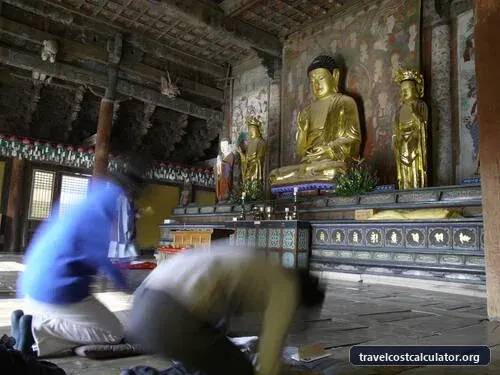
Established in the 8th century on the slopes of Mount Toham, the Seokguram Grotto contains a monumental statue of the Buddha looking at the sea in the bhumisparsha mudra position.
Seokguram Grotto and Bulguksa Temple
🏛️ Overview & Historical Significance
High on the slopes of Mount Tohamsan in Gyeongju Travel Budget, South Korea, sits one of East Asia's undisputed masterworks of Buddhist art and architectural engineering: Seokguram Grotto and Bulguksa Temple. Designated as a joint UNESCO World Heritage Site in 1995 (South Korea’s very first alongside Haeinsa Temple and Jongmyo Shrine), this complex represents the pinnacle of the Golden Age of the Unified Silla Kingdom during the 8th century.
Commissioned around 751 AD by Prime Minister Kim Dae-seong, legend records that Bulguksa was built in memory of his parents in his present life, while the secluded Seokguram Grotto was constructed for his parents from a previous life. Beyond emotional resonance, the pair reflects an extraordinary dual conceptual framework of Mahayana Buddhism:
-
✦
Bulguksa ("Temple of the Buddha Land"): Designed as a tangible realization of the pure land of Buddha on Earth. Its elevated stone platforms, intricate bridges, and dual pagodas (Dabotap and Seokgatap) map out the spiritual hierarchy of the Buddhist cosmos.
-
✦
Seokguram Grotto: An artificial stone cavern engineered from white granite, housing a majestic 3.5-meter-tall seated Shakyamuni Buddha staring serenely east over the Sea of Japan (East Sea). The grotto was an absolute architectural marvel of ancient physics, using passive airflow, humidity control, and precise mathematical proportions (including the Golden Ratio) to preserve the statue for over twelve centuries without modern climate systems.
Visiting Seokguram and Bulguksa in 2026 allows travelers to experience not just religious sacred sites, but an enduring monument to ancient geometry, stone masonry, and deep spiritual philosophy that defined medieval East Asia.
🎟️ Entrance Fees, Opening Hours & Ticket Booking Tips
In a major cultural preservation shift across South Korea, basic entry fees to major Jogye Order national temples were eliminated. As of 2026, admission to both temple grounds remains 100% Free for all domestic and international visitors. However, logistical and transportation costs still apply.
2026 Pricing & Breakdown
-
✦
Bulguksa Temple Admission: Free (0 KRW / $0.00 USD)
-
✦
Seokguram Grotto Admission: Free (0 KRW / $0.00 USD)
-
✦
Bulguksa Museum (Optional Entry): ₩2,000 KRW (~$1.50 USD) for adults, ₩1,000 KRW (~$0.75 USD) for youth.
-
✦
Parking Fees (per vehicle): ₩2,000 – ₩3,000 KRW (~$1.50 – $2.25 USD) per day at both Bulguksa and Seokguram parking areas.
-
✦
Inter-Site Shuttle Bus (#12): ₩1,500 KRW (~$1.15 USD) each way (payable via T-Money or contactless transit cards).
Opening Hours & Operational Tips
-
✦
Bulguksa Operating Hours: 09:00 – 17:30 (Weekdays) | 08:30 – 17:30 (Weekends & National Holidays). Last entry is 30 minutes before closing.
-
✦
Seokguram Grotto Hours: 09:00 – 17:30 daily. (Note: Winter hours Nov–Feb close slightly earlier at 17:00).
-
✦
Booking Requirements: No advance ticket reservation is required. You can walk straight through the main gates (Iljuman Gate).
-
✦
Money-Saving Pro-Tip: Load a Korean transit card (T-Money or Climate Card/NAMANE Card) before arriving in Gyeongju. It provides seamless payment for local city buses (#10, #11, #12) without needing exact cash.
🚌 How to Get There & Local Transit Costs
Gyeongju is located in the southeastern province of Gyeongsangbuk-do. Most international travelers reach Gyeongju via Seoul Travel Budget or Busan Travel Budget before taking local transit to Mount Tohamsan.
Step 1: Reaching Gyeongju City
-
✦
From Seoul (KTX High-Speed Train): Depart from Seoul Station to Singyeongju Station (Approx. 2 hours 10 minutes). Ticket cost: ~₩50,000 KRW ($38.00 USD) one way.
-
✦
From Busan (KTX Train): Depart from Busan Station to Singyeongju Station (Approx. 30 minutes). Ticket cost: ~₩11,000 KRW ($8.30 USD) one way.
-
✦
From Busan (Intercity Bus): Depart Nopo Busan Central Bus Terminal to Gyeongju Intercity Bus Terminal (Approx. 50 minutes). Ticket cost: ~₩6,500 KRW ($4.90 USD).
Step 2: Gyeongju City Center to Bulguksa Temple
From downtown Gyeongju (Gyeongju Intercity/Express Bus Terminal or Gyeongju Station area), you have two primary options:
-
✦
Local Bus #10 or #11: Hop on Bus #10 (clockwise route) or Bus #11 (counter-clockwise route). Both stop directly in front of the Bulguksa main parking lot.
- Travel Time: 35–45 minutes depending on traffic.
-
✦
Fare: ₩1,500 KRW (~$1.15 USD) with a T-Money transit card.
- Travel Time: 25–35 minutes.
Step 3: Bulguksa Temple to Seokguram Grotto
Seokguram sits approximately 7 km further up Mount Tohamsan. You can reach it via two methods:
-
✦
Local Bus #12 (Recommended): Departs from the bus stop near Bulguksa’s lower parking lot once every hour on the hour (08:40 to 16:40).
- Travel Time: 20 minutes along a winding mountain road.
-
✦
Fare: ₩1,500 KRW (~$1.15 USD).
- Duration: 45–60 minutes uphill (moderate gradient). Highly recommended in spring and autumn!
📸 Best Photography Spots & Insider Visit Hacks
Top Photography Angles
-
✦
Cheongungyo and Baegungyo Bridges (Bulguksa): The iconic view of the "Blue Cloud and White Cloud" double staircase leading up to Jahamun Gate. Frame your shot from the front courtyard lawn to capture the ancient stone arches against the timber wooden eaves.
-
✦
Dabotap Pagoda: Located inside the main Daeungjeon courtyard, this highly decorative 8th-century granite pagoda features complex stone-carved bamboo patterns and a single remaining stone lion. (Appears on the South Korean 10-won coin!).
-
✦
Anyangmun Gate Viewpoint: Look back down from the top of the stone bridges toward the lotus flower bridges (Chilbogyo and Yeonhwagyo) for an impressive elevated perspective of Silla masonry.
-
✦
Seokguram Path Entrance: Capture the tranquil mountain trail shrouded in cedar and pine trees, especially beautiful during early morning mist.
Crucial Visitor Hacks & Photography Rules
-
✦
NO Photography Inside Seokguram Grotto: Photography inside the glass-enclosed rotunda of Seokguram is strictly prohibited to respect the sacred Buddha and preserve the integrity of the site. You may take photos of the grotto's exterior entrance building and the surrounding mountain valley.
-
✦
Timing is Everything: Arrive at Bulguksa by 08:30–09:00 AM on a weekday. Tour buses typically arrive after 10:30 AM. Taking the first shuttle up to Seokguram guarantees peaceful contemplation.
-
✦
Seasonal Highlights:
- Spring (April): The road to Bulguksa is framed by full cherry blossoms (King Cherry trees blossom near the park area).
-
✦
Autumn (Late October – Mid November): The mountain glows with intense crimson Japanese maples and golden ginkgo trees.
🏨 Nearby Accommodation & Daily Budget Allocation
To fully experience Gyeongju’s ancient heritage without rushing, spend at least 1 to 2 nights in the city. Accommodation options range from traditional hanok stays in the historic center to comfortable resorts near Bomun Lake.
Recommended Accommodations
-
✦
Budget ($25 – $50 USD / night): Gyeongju Hwangnam-dong Hostels & Guesthouses. Located in the lively Hwangridan-gil area with easy bus access to Bulguksa. Clean dorms and private budget rooms.
-
✦
Mid-Range ($75 – $140 USD / night): Yobok Hanok Stay or Dorandoran Guesthouse. Authentic Korean timber-and-tile hanok guest houses near Daereungwon Tomb Park featuring underfloor heating (ondol) and serene private courtyards.
-
✦
Luxury / Resort ($180 – $350 USD / night): Lahan Select Gyeongju (Bomun Lake) or Hwangnamguan Hanok Hotel. High-end modern amenities, lake views, or luxury traditional Silla architecture.
Local Dining Highlights near Bulguksa
Don't leave the Bulguksa area without trying Gyeongju Ssambap (rice wrap set meal). Local restaurants right outside the temple gates serve feast-style tables featuring 15–20 small side dishes (banchan), grilled pork or beef bulgogi, soybean paste stew (doenjang-jjigae), and fresh leafy vegetables for wrapping.
Average Ssambap Meal Price: ₩15,000 – ₩22,000 KRW (~$11.50 – $16.50 USD) per person.
Estimated 2026 Daily Budget Breakdown (per person)
-
✦
Budget Traveler ($45 – $65 USD / day):
- Accommodation (Dorm or simple guesthouse): $25
-
✦
Food (Local soups, street food, light ssambap): $18
-
✦
Transit (T-Money card for city buses): $4
-
✦
Attractions (Bulguksa & Seokguram are free entry): $0
- Accommodation (Private Hanok or 3-star hotel): $85
Frequently Asked Questions
Essential visitor FAQs for Seokguram Grotto and Bulguksa Temple
What is the entrance fee for Seokguram Grotto and Bulguksa Temple?
How much time do you need to explore Seokguram Grotto and Bulguksa Temple?
How do I get to Seokguram Grotto and Bulguksa Temple from the nearest city?
📊 Heritage Quick Specs
Visiting South Korea on a Budget?
Calculate your full daily travel budget for South Korea — including hotel costs, local transport, food, and sightseeing expenses.
View South Korea Daily Travel Costs →Explore more UNESCO World Heritage Sites
🏛️ All 1,200+ Heritage Sites →