
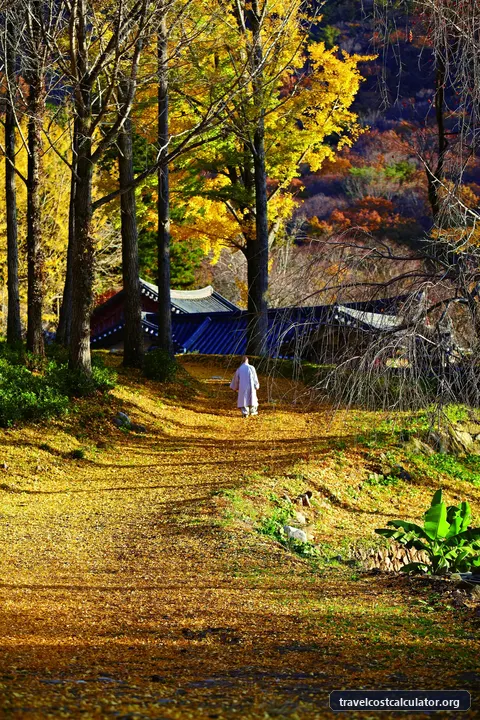
 South Korea
Sansa, Buddhist Mountain Monasteries in Korea
The Sansa are Buddhist mountain monasteries located throughout the southern provinces of the Korean Peninsula.
Sansa, Buddhist Mountain Monasteries in Korea
🏛️ Overview & Historical Significance
Nestled across the forested slopes of South Korea’s southern provinces, Sansa, Buddhist Mountain Monasteries in Korea represents an unbroken 1,400-year lineage of living sacred heritage. Inscribed as a UNESCO World Heritage site in 2018, this serial property comprises seven distinct mountain monasteries: Tongdosa, Buseoksa, Bongjeongsa, Beopjusa, Magoksa, Seonamsa, and Daeheungsa. Established between the 7th and 9th centuries during the Three Kingdoms and Unified Silla periods, these sanctuaries have survived centuries of dynamic geopolitical shifts, dynastic changes, and foreign invasions while maintaining their spiritual core.
UNESCO awarded these seven monasteries World Heritage status under Criterion (iii), recognizing them as outstanding visual and spatial testimonies to Korean Mahayana Buddhism. Unlike many historical sites across Asia that have transitioned into purely static monuments or museums, the Sansa temples remain active centers of daily monastic life, meditation, ritual, and spiritual pilgrimage. They embody a unique Korean synthesis of classical Buddhist philosophy and indigenous mountain worship (San-shin), evident in the dedicated mountain spirit shrines (Sanshingak) integrated alongside traditional Buddhist halls.
Architecturally, the Sansa monasteries reflect an extraordinary mastery of Pungsu-jiri (Korean geomancy). Rather than imposing grand, rigid structures upon nature, Korean master builders arranged the complex around central courtyards (Madang Travel Budget) nestled seamlessly within natural mountain topography. Key architectural highlights include:
-
✦
Tongdosa (Yangsan): Known as the "Jewel Temple of the Buddha," famous for lacking a traditional Buddha statue in its main hall; instead, it enshrines authentic relics (sarira) of the Historical Buddha beneath a stone stupa.
-
✦
Buseoksa (Yeongju): Home to the Muryangsujeon (Hall of Infinite Life), one of South Korea's oldest surviving wooden structures, celebrated for its exquisite bracket structure and panoramic ridge views.
-
✦
Beopjusa (Boeun): Dominating the Songnisan valley with its breathtaking 33-meter-tall Bronze Golden Maitreya Buddha statue and Palsangjeon, the country's only surviving five-story wooden pagoda.
-
✦
Bongjeongsa (Andong): Preserves Geungnakjeon, verified as one of the oldest timber-frame buildings in South Korea.
-
✦
Magoksa, Seonamsa, and Daeheungsa: Renowned for their tranquil stream-crossing layouts, tea cultures, traditional monk monastic schools, and ancient timber-bridge architecture.
🎟️ Entrance Fees, Opening Hours & Ticket Booking Tips
Visiting the Sansa monasteries in 2026 offers an incredible value proposition for budget-conscious and cultural travelers alike. Following historic legislative updates to South Korea's Cultural Heritage Protection Act, general admission fees to national and state-designated cultural sites within mountain temples were completely abolished.
2026 Estimated Costs & Fee Breakdown
-
✦
Temple Grounds Admission: FREE (0 KRW / $0.00 USD) across all seven UNESCO Sansa monasteries.
-
✦
Vehicle Parking Fees: 2,000 KRW to 5,000 KRW ($1.50 – $3.75 USD) per regular vehicle for full-day parking.
-
✦
Museum / Special Exhibition Access: 1,000 KRW to 3,000 KRW ($0.75 – $2.25 USD) per person at select temple museums (e.g., Tongdosa Museum).
-
✦
Overnight Templestay Program: 70,000 KRW to 100,000 KRW ($52.00 – $75.00 USD) per person per night, including traditional monastic lodging, two vegan temple meals, monk tea conversations (Yadam), and meditation sessions.
Opening Hours & Logistics
The temple grounds operate according to natural daylight cycles. Standard operating hours across all seven locations are generally from 06:00 to 18:30 during Spring/Summer and 07:00 to 17:30 during Autumn/Winter. Monastic chants (Yebul) occur twice daily near dawn (around 04:30) and dusk (around 18:00); visitors are welcome to observe quietly from outside the main halls.
Booking Tips & Seasonal Guidance
No advance tickets are required for general day visits to any of the seven temples. However, if you plan to join an official Templestay program, advance reservation is essential. You must book at least 2 to 4 weeks in advance via the official Cultural Corps of Korean Buddhism portal, especially for autumn foliage dates (late October to early November) or around Buddha's Birthday (May in 2026).
🚌 How to Get There & Local Transit Costs
Because the Sansa properties are distributed across South Korea’s central and southern mountain ranges, major transportation hubs like Seoul Travel Budget, Busan Travel Budget, and Daegu serve as primary launching points via Korea’s efficient high-speed KTX/SRT rail network and intercity express buses.
1. Getting to Tongdosa (Near Busan/Ulsan)
-
✦
From Seoul/Busan: Take the KTX train to Ulsan Station (Tongdosa) (approx. 2 hours 10 minutes from Seoul, ~53,000 KRW / $40.00 USD; 15 minutes from Busan, ~8,400 KRW / $6.30 USD).
-
✦
Local Transfer: Catch Express Bus #3000 right outside Ulsan KTX station directly to Tongdosa Bus Terminal (~3,000 KRW / $2.25 USD, 25 minutes), followed by a 10-minute scenic walk through the pine forest trail.
2. Getting to Buseoksa (Near Yeongju/Andong)
-
✦
From Seoul: Board the KTX-Eum high-speed train from Cheongnyangni Station in Seoul to Punggi Station or Yeongju Station (approx. 1 hour 45 minutes, ~23,000 KRW / $17.25 USD).
-
✦
Local Transfer: Take local Bus #27 or #55 from Yeongju/Punggi to Buseoksa (~1,500 KRW / $1.15 USD using a T-Money card, 35 minutes).
3. Getting to Beopjusa (Songnisan National Park)
-
✦
From Seoul: Take an express bus from Seoul Central City (Express Bus Terminal) directly to the Songnisan Bus Terminal (approx. 3 hours 30 minutes, ~16,000 KRW / $12.00 USD).
-
✦
Local Transfer: Walk 15 minutes through the Songnisan National Park entrance path directly to the Beopjusa temple gates.
4. Getting to Magoksa (Gongju City)
-
✦
From Seoul: Take the KTX to Gongju Station (1 hour, ~25,000 KRW / $18.75 USD) or express bus to Gongju Intercity Bus Terminal.
-
✦
Local Transfer: Board City Bus #770 from Gongju Terminal directly to Magoksa (~1,500 KRW / $1.15 USD, 40 minutes).
Transit Pass Advice: If you intend to visit 3 or more Sansa temples across South Korea over a short period, purchase a 3-Day or 5-Day KORAIL Pass (approx. 135,000 – 210,000 KRW / $100 – $155 USD), which grants unlimited KTX rides nationwide. Keep a rechargeable T-Money card topped up for local feeder buses.
📸 Best Photography Spots & Insider Visit Hacks
Iconic Photography Angles
-
✦
Muryangsujeon Viewpoint at Buseoksa: Stand at the top elevation of Buseoksa near the Muryangsujeon wooden hall right at golden hour. Looking south over the wooden roof timber towards the undulating waves of the Sobaeksan mountain range yields one of South Korea's ultimate architectural landscape shots.
-
✦
Seungseongyo Stone Bridge at Seonamsa: Frame the rainbow-curved 18th-century stone arch bridge (Seungseongyo) so that the wooden Gangseonru pavilion is perfectly visible through the semicircular arch reflection in the clear stream below.
-
✦
Palsangjeon & Golden Buddha at Beopjusa: Position your camera at a low angle near the courtyard to frame the impressive 33-meter Bronze Golden Maitreya Buddha standing alongside the intricate multi-tiered wooden facade of Palsangjeon Pagoda.
-
✦
Mupung Hansong-gil (Pine Tree Walk) at Tongdosa: Capture the atmospheric morning light filtering through centuries-old, twisted red pine trees along the 1-kilometer approach trail following the stream.
Insider Travel Hacks
-
✦
Avoid the Midday Crowd: Tour buses generally arrive between 10:30 and 14:00. Aim to arrive right at opening time (07:00–08:30) to experience true monastic tranquility, chantings, and birdsong.
-
✦
Autumn Foliage Peak (Danpung): The ultimate season to visit Sansa is late October through early November, when mountain maples turn brilliant shades of crimson, gold, and amber.
-
✦
Dress Code & Temple Etiquette: Wear modest clothing covering shoulders and knees. Remove shoes when stepping onto wooden verandas or entering any hall with tatami/cushioned flooring. Walk along the edges of pathways—the central path is traditionally reserved for head monks and spirit walk. Never point camera lenses directly at meditating monks or during active prayer services without explicit permission.
🏨 Nearby Accommodation & Daily Budget Allocation
To fully experience the serene environment of Korea's mountain monasteries, staying either directly inside the temple via an official Templestay or lodging in nearby traditional Hanok guesthouses is highly recommended.
Recommended Places to Stay
-
✦
Official Templestay Program (Best Authentic Option): Available at Tongdosa, Beopjusa, Magoksa, Seonamsa, and Daeheungsa. Offers immersive stay packages including clean single/shared rooms with traditional floor heating (ondol), monastic meals, and meditation workshops (~70,000 – 100,000 KRW / $52 – $75 USD per night).
-
✦
Traditional Hanok Stays (Mid-Range): Located in nearby historic centers like Andong (near Bongjeongsa) or Gongju (near Magoksa). Places like Gurume Hanok Resort or local guesthouses range from 60,000 KRW to 150,000 KRW ($45 – $112 USD) per night.
-
✦
Boutique Hotels & Resorts (Comfort/Luxury): Lotte Resort Gongju (near Magoksa) or high-end hotels in nearby major cities like Busan/Daegu offer upscale amenities (~180,000 – 350,000 KRW / $135 – $260 USD per night).
Recommended Local Dining
No visit to a Sansa temple is complete without enjoying Sanchae-jeongsik (Wild Mountain Herb Set Menu) at traditional restaurants operating right outside the temple gates. These multi-dish banquets feature 15 to 20 seasonal mountain greens, sautéed mushrooms, wild roots, homemade soybean paste stew (doenjang-jjigae), and savory potato or mung bean pancakes (pajeon). Expect to pay approximately 15,000 KRW to 25,000 KRW ($11 – $19 USD) per person.
Estimated Daily Travel Budget Allocation (2026 Prices per Person)
-
✦
Backpacker / Budget Traveler: $45 – $65 USD (60,000 – 87,000 KRW) per day.
- Transit: Regional/local buses + T-Money card (~10,000 KRW)
-
✦
Meals: Simple local eateries, Bibimbap, market stalls (~25,000 KRW)
-
✦
Lodging: Budget guesthouse/hostel dorm or simple Hanok (~30,000–45,000 KRW shared)
-
✦
Entry: Temple entry is FREE ($0)
- Transit: KTX high-speed train + local taxis (~35,000 KRW)
- Transit: Private car rental or long-distance direct taxis (~120,000 KRW)
Frequently Asked Questions
Essential visitor FAQs for Sansa, Buddhist Mountain Monasteries in Korea
What is the entrance fee for Sansa, Buddhist Mountain Monasteries in Korea?
How much time do you need to explore Sansa, Buddhist Mountain Monasteries in Korea?
How do I get to Sansa, Buddhist Mountain Monasteries in Korea from the nearest city?
📊 Heritage Quick Specs
Visiting South Korea on a Budget?
Calculate your full daily travel budget for South Korea — including hotel costs, local transport, food, and sightseeing expenses.
View South Korea Daily Travel Costs →Explore more UNESCO World Heritage Sites
🏛️ All 1,200+ Heritage Sites →