
 Indonesia
Sangiran Early Man Site
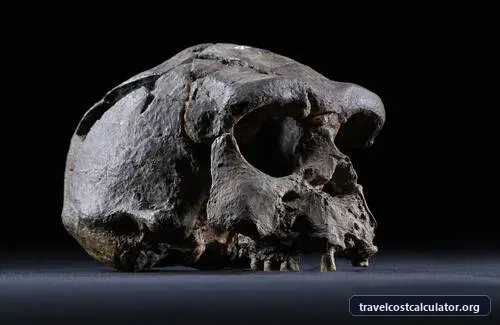
Excavations here from 1936 to 1941 led to the discovery of the first hominid fossil at this site.
Sangiran Early Man Site
🏛️ Overview & Historical Significance
Located in the lush Solo River valley of Central Java, Indonesia, the Sangiran Early Man Site is recognized by paleoanthropologists worldwide as one of the most critical fossil sites for unravelling human evolution. Inscribed as a UNESCO World Heritage Site in 1996 under Criteria (iii) and (vi), Sangiran spans over 56 square kilometers and contains an extraordinarily rich record of hominid fossils, faunal remains, and stone tools dating from 1.5 million to 2.4 million years ago.
Sangiran first rose to global scientific prominence in the 1930s when Dutch paleoanthropologist Gustav Heinrich Ralph von Koenigswald conducted extensive excavations in the region. Von Koenigswald unearthed fossils belonging to Homo erectus (famously known historically as Pithecanthropus erectus or "Java Man"). Today, Sangiran has yielded more than 50 specimens of Homo erectus—representing over 50 percent of all world hominid fossil discoveries. This site provides irreplaceable evidence of human adaptation, cranial evolution, and migratory paths during the Pleistocene epoch.
Beyond human evolutionary history, Sangiran offers a preserved timeline of ancient ecosystems. Visitors can examine layers of marine sedimentary rock, volcanic ash deposits, and alluvial soils that record Central Java's transition from a shallow ocean floor to a lush tropical rainforest inhabited by prehistoric megafauna—including Stegodon (extinct elephant ancestors), giant rhinos, river hippos, and ancient crocodiles.
🎟️ Entrance Fees, Opening Hours & Ticket Booking Tips
Visiting Sangiran is extremely affordable, making it one of the best value-for-money cultural heritage sites in Southeast Asia. The site operates on a multi-cluster museum system, with the Krikilan Cluster serving as the primary visitor center and main exhibition hall.
Current Entrance Fees & Rates
-
✦
International Visitors (Krikilan Main Museum): IDR 75,000 (~$4.80 USD) per person.
-
✦
International Visitors Full Cluster Pass (Krikilan + Bukuran + Dayu + Ngebung): IDR 120,000 (~$7.70 USD) per person.
-
✦
Domestic Visitors (Indonesian Citizens / KITAS Holders): IDR 15,000 – IDR 20,000 (~$1.00 – $1.30 USD).
-
✦
Local Audio Guide / English-Speaking Site Guide: IDR 100,000 – IDR 150,000 (~$6.50 – $9.50 USD) per group (highly recommended for context).
-
✦
Parking Fees: IDR 5,000 (~$0.32 USD) for scooters; IDR 10,000 (~$0.65 USD) for cars.
Opening Hours & Schedule
-
✦
Tuesday to Sunday: 08:00 AM – 04:00 PM (Ticketing counter closes at 03:00 PM).
-
✦
Mondays: CLOSED for museum maintenance and ongoing conservation work.
-
✦
Public Holidays & Ramadan: Open on most holidays, though hours may shorten during the month of Ramadan and public Eid celebrations. Check official government announcements locally before visiting.
Ticket Booking & Payment Tips
Advance online booking is rarely required for individual travelers; tickets can easily be purchased on arrival at the Krikilan main entrance counter. Electronic payments via local QRIS are widely accepted, but international travelers should carry cash in Indonesian Rupiah (IDR) in small denominations (10,000 to 50,000 notes), as credit card terminals can occasionally experience network outages in rural Sragen Regency.
🚌 How to Get There & Local Transit Costs
Sangiran is situated in the Sragen Regency, roughly 15 kilometers (9.3 miles) north of Surakarta (Solo) and approximately 75 kilometers northeast of Yogyakarta. Surakarta serves as the practical base city for all transportation connections to the site.
1. Online Ride-Hailing (Grab / Gojek) – Most Convenient
The most hassle-free way to reach Sangiran from downtown Solo is via local ride-hailing apps like Grab or Gojek.
-
✦
Cost: IDR 80,000 – IDR 130,000 (~$5.10 – $8.30 USD) one-way for a private car; IDR 35,000 – IDR 50,000 (~$2.25 – $3.20 USD) for a motorbike taxi (Ojek).
-
✦
Travel Time: 30 to 45 minutes depending on Solo city traffic.
-
✦
Insider Tip: Securing a return Grab from Sangiran back to Solo can sometimes involve a 15-to-20-minute wait due to fewer drivers in rural areas. Negotiate with your driver to wait for 2–3 hours for a small add-on fee of IDR 100,000 (~$6.50 USD).
2. Public Bus (Trans Jateng) – Budget Option
For budget travelers, Central Java’s Trans Jateng public bus offers a cheap link to the museum complex.
-
✦
Route: Board the Trans Jateng bus heading toward Sumberlawang from Solo’s Tirtonadi Bus Terminal. Ask the conductor to drop you at the Simpang Tiga Sangiran (Sangiran Junction).
-
✦
Cost: IDR 4,000 (~$0.25 USD) for the bus fare. From the main junction, take a short 2 km motorcycle taxi (Ojek) ride to the museum entrance for IDR 10,000 – IDR 15,000 (~$0.65 – $1.00 USD).
-
✦
Travel Time: 60 to 75 minutes.
3. Scooter / Motorbike Rental
Independent travelers can rent an automatic scooter in Solo city center.
-
✦
Cost: IDR 75,000 – IDR 95,000 (~$4.80 – $6.00 USD) per 24 hours.
-
✦
Directions: Ride north along the main road Jl. Raya Solo - Purwodadi. The route is direct and well-paved, featuring clear brown tourist signage pointing toward the UNESCO site.
📸 Best Photography Spots & Insider Visit Hacks
Capturing the essence of Sangiran involves documenting both its modern, state-of-the-art museum spaces and the scenic, undulating rural landscapes where million-year-old bones are still occasionally unearthed by rain erosion.
Top Photography Highlights
-
✦
Hall 1 Dioramas (Krikilan Cluster): Life-sized, anatomically detailed reconstructions of Homo erectus family units in their natural Pleistocene habitat provide striking subject photos.
-
✦
The Skull Display Vault: Glass cases showcasing precise replicas of famous hominid fossils, including Sangiran 17 (the most complete Homo erectus skull discovered in Java), set against dramatic moody lighting.
-
✦
Bukuran Cluster Architectural Pavilion: Located 3 km from the main site, this satellite museum features ultra-modern wooden slatted walkways overlooking lush Javanese ravines—perfect for architectural and landscape shots.
-
✦
Dayu Excavation Stratigraphy Wall: At the Dayu Cluster, photographers can capture actual soil cross-sections displaying distinct geological strata layered over millions of years.
Insider Hacks to Maximize Your Visit
-
✦
Arrive Early: Plan to arrive at 08:30 AM. School field trips frequently arrive by 11:00 AM, filling the quiet galleries with energy and noise. Early mornings also keep you clear of Central Java's intense afternoon humidity.
-
✦
Visit the Satellite Clusters: 90% of tourists visit only the main Krikilan Museum and leave. If you have extra time, take a scooter or taxi to the Bukuran (focused on human evolution) and Dayu (focused on soil geology and excavation) clusters for a serene, crowd-free experience.
-
✦
Engage a Local Guide: Museum signage in secondary halls is mostly in Bahasa Indonesia. Hiring a certified local English-speaking guide at the Krikilan entrance costs under $10 USD and drastically enriches your understanding of fossil strata and hominid taxonomy.
-
✦
Respect Fossil Trade Laws: Local villagers outside the museum gate sometimes offer to sell small fossilized bone fragments or ancient shark teeth. Purchasing these items is illegal under Indonesian cultural heritage preservation laws and strictly prohibited by UNESCO regulations. Stick to buying handcrafted souvenir replicas.
🏨 Nearby Accommodation & Daily Budget Allocation
Most visitors choose to stay in the vibrant culture-rich city of Surakarta (Solo), which offers a wide spectrum of lodging, excellent dining, and convenient transit links to Sangiran.
Recommended Hotels in Surakarta (Solo)
-
✦
Budget: Griya Solopos / Front One Cabin Solo – Clean, minimalist, air-conditioned rooms located near transport hubs. Rates: $14 – $24 USD / night (IDR 220,000 – 380,000).
-
✦
Mid-Range: Solia Zigna Kampung Batik / Swiss-Belinn Saripetojo – Stylish modern comfort featuring outdoor swimming pools and buffet breakfasts. Rates: $38 – $65 USD / night (IDR 600,000 – 1,000,000).
-
✦
Luxury / Heritage: Alila Solo / The Royal Surakarta Heritage MGallery – World-class luxury, luxury spa facilities, and rich Javanese royal decor. Rates: $85 – $160 USD / night (IDR 1,350,000 – 2,500,000).
Food & Dining Costs
Central Java is famed as one of Indonesia's most wallet-friendly culinary destinations. Trying local specialties like Nasi Liwet (savory coconut rice) or Soto Seger is a must.
-
✦
Local Street Food / Warung (Near Sangiran or Solo): IDR 15,000 – IDR 30,000 (~$1.00 – $1.90 USD) per meal.
-
✦
Mid-Range Cafe / Restaurant: IDR 50,000 – IDR 100,000 (~$3.20 – $6.50 USD) per person.
-
✦
Fresh Young Coconut (Outside Museum): IDR 12,000 (~$0.75 USD).
Daily Budget Allocation (Estimates per Person)
-
✦
Backpacker Tier: $22 – $32 USD / day
- Hostel/Budget room: $12
-
✦
Trans Jateng bus + Ojek: $3
-
✦
Sangiran entry ticket: $5
-
✦
Street food meals: $5
-
✦
Incidentals & water: $3
- 3-Star / 4-Star Hotel: $30 (shared double)
- 5-Star Heritage Hotel: $90+
Frequently Asked Questions
Essential visitor FAQs for Sangiran Early Man Site
What is the entrance fee for Sangiran Early Man Site?
How much time do you need to explore Sangiran Early Man Site?
How do I get to Sangiran Early Man Site from the nearest city?
📊 Heritage Quick Specs
Visiting Indonesia on a Budget?
Calculate your full daily travel budget for Indonesia — including hotel costs, local transport, food, and sightseeing expenses.
View Indonesia Daily Travel Costs →Explore more UNESCO World Heritage Sites
🏛️ All 1,200+ Heritage Sites →