
 Iraq
Samarra Archaeological City
Samarra Archaeological City is the site of a powerful Islamic capital city that ruled over the provinces of the Abbasid Empire extending from Tunisia to Central Asia for a century.
Samarra Archaeological City
🏛️ Overview & Historical Significance
Rising dramatically from the sun-drenched plains of the Saladin Governorate along the East Bank of the Tigris River, Samarra Archaeological City represents one of the most architectural and historical accomplishments of the Islamic Golden Age. Established in 836 AD by the Abbasid Caliph Al-Mu'tasim to serve as the new imperial capital of the Abbasid Empire, Samarra served as the seat of global Islamic power for nearly half a century. Unlike many ancient metropolises whose architectural footprints were overwritten by subsequent civilizations, Samarra retains its original, master-planned urban layout—spanning an astonishing 15,000 hectares, making it the largest preserved ancient city footprint in the world.
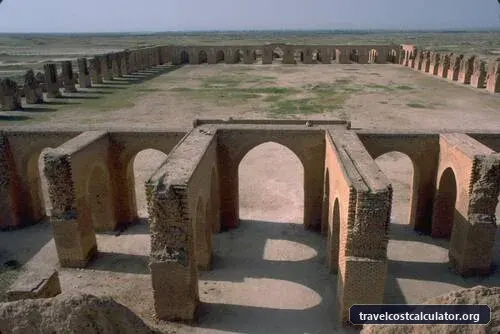
In 2007, UNESCO designated Samarra an World Heritage Site while simultaneously placing it on the List of World Heritage in Danger. UNESCO cited its unique urban planning, architectural innovations (such as carved stucco wall decorations known as the Samarra styles), and its unparalleled scale. The crown jewel of the complex is the Great Mosque of Samarra and its world-famous Malwiya Minaret—an astonishing 52-meter-high cone surrounded by a spiral ramp that defies conventional medieval engineering. Additional key structures include the Abu Dulaf Mosque with its smaller spiral minaret, the fortified residential palace of Qasr al-Ashiq (The Lover's Palace), and the vast caliphal residence of Dar al-Khilafah.
As of 2026, ongoing international heritage partnerships between Iraqi authorities, UNESCO, and international preservation teams have significantly stabilized key monuments, enabling safer, more structured access for cultural travelers and historians keen to experience this ancient capital firsthand.
🎟️ Entrance Fees, Opening Hours & Ticket Booking Tips
Visiting Samarra requires navigating local site logistics, as Iraq's tourism infrastructure relies primarily on cash transactions and physical ticketing offices rather than digital pre-booking systems.
-
✦
International Visitor Ticket: ~25,000 IQD (Approximately $18.50 USD). This ticket grants entry to the Great Mosque complex and the Malwiya Minaret.
-
✦
Iraqi Citizens & Resident Visa Holders: ~3,000 – 5,000 IQD ($2.25 – $3.70 USD).
-
✦
Secondary Archaeological Sites (Qasr al-Ashiq & Abu Dulaf): Access is occasionally included in the main ticket, though individual site wardens may collect a nominal fee of ~5,000 to 10,000 IQD ($3.70 – $7.40 USD) per vehicle or entry point.
-
✦
Operating Hours: 8:00 AM to 5:00 PM daily during spring/summer; 8:30 AM to 4:30 PM during winter months. Opening times may shift during the holy month of Ramadan.
Crucial 2026 Ticket Booking Tips:
-
✦
Cash Only Policy: Credit cards, mobile pay platforms, and international debit cards are not accepted at the site ticket booth. Bring physical Iraqi Dinars (IQD) in clean, crisp bills.
-
✦
No Advance Online Sales: There is no official government web portal for purchasing tickets online. You must buy your tickets directly at the primary entrance booth near the Malwiya Minaret base.
-
✦
Passport Inspection: The ticketing desk operates alongside local heritage police. You must present your original passport (with valid 2026 Iraqi e-Visa or physical visa stamp) to purchase entry tickets.
🚌 How to Get There & Local Transit Costs
Samarra lies approximately 125 kilometers (78 miles) north of Baghdad Travel Budget along Highway 1. Because Samarra acts as both an archaeological hotspot and a major religious destination home to the revered Al-Askari Shrine, security along the transit route remains structured, featuring multiple Federal Police and military checkpoints.
1. Private Vehicle with Local Driver / Licensed Tour Operator (Recommended)
The safest, most efficient way to reach Samarra in 2026 is by hiring a private vehicle with an experienced local Iraqi driver or authorized guide from Baghdad.
-
✦
Cost: 115,000 IQD – 175,000 IQD ($85 USD – $130 USD total for a full-day round trip, including wait time and return journey).
-
✦
Duration: Approximately 2 to 2.5 hours each way, depending on checkpoint flow.
-
✦
Advantage: Your driver handles conversations at federal security checkpoints along the Salah ad-Din highway, ensuring smooth clearance.
2. Shared Taxis (Garage Al-Nahda or Garage Al-North, Baghdad)
For budget-conscious backpackers, shared intercity taxis (known locally as Kiya minivans or shared yellow sedans) run daily between Baghdad and Samarra.
-
✦
Cost: 15,000 IQD – 20,000 IQD ($11 USD – $15 USD) per seat, one-way.
-
✦
Process: Head to Garage Al-Nahda in central Baghdad early in the morning. Taxis depart once all seats are filled. Upon arrival at Samarra’s outer transport garage, you will need to hire a local taxi for 5,000 IQD ($3.70 USD) to transfer to the archaeological zone.
Checkpoints & Logistics Briefing for 2026
Expect 3 to 5 security checkpoints along the Baghdad-Samarra route. Keep your original passport, physical visa printouts, and at least 3 paper photocopies of your passport main page ready. Uniformed officers will review your documents; maintaining a friendly, polite demeanor keeps checkpoint processing times under 10 minutes per stop.
📸 Best Photography Spots & Insider Visit Hacks
Capturing the scale of Samarra’s Abbasid architecture requires tactical planning due to harsh midday lighting and vast spatial distances between ruins.
Top Photography Vantage Points
-
✦
The Spiral Base Angle: Position yourself at the southeastern base of the Malwiya Minaret shooting upward with a wide-angle lens (16mm–24mm) to emphasize the spiraling geometry against the blue sky.
-
✦
The Great Courtyard Perimeter: Walk the surviving outer wall ramparts of the Great Mosque to frame the spiral minaret within the historic brick archways.
-
✦
Qasr al-Ashiq Vista: Head across the river valley to the elevated platform of Qasr al-Ashiq during golden hour for sweeping panoramic views of the Tigris basin framing the distant skyline of ancient Samarra.
Insider Visit Hacks
-
✦
Seasonal Timing: Visit between October and April. Winter daylight temperatures average a pleasant 18°C – 22°C (64°F – 72°F). Avoid summer months (June–August), when temperatures regularly surpass 45°C (113°F), making outdoor exploration dangerous.
-
✦
Minaret Climbing Rules: In 2026, climbing the upper spirals of the Malwiya Minaret is periodically restricted or regulated by site wardens based on safety and restoration work. If permitted during your visit, exercise extreme caution: there are no outer handrails or safety guardrails along the winding edge path. Wear high-traction footwear.
-
✦
Drone Regulations: Flying drones over or near Samarra Archaeological City and surrounding security zones is strictly illegal without high-level clearance from the Iraqi Ministry of Culture and defense authorities. Unapproved drones will be confiscated at checkpoints.
-
✦
Cultural Attire Expectations: Dress modestly. Men should wear full-length trousers and shirts covering the shoulders. Women should wear loose-fitting clothing covering legs and arms, and keep a light headscarf accessible, particularly if visiting nearby cultural sites inside Samarra city.
🏨 Nearby Accommodation & Daily Budget Allocation
Most international travelers visit Samarra as a day trip based out of Baghdad, where international-standard hotel infrastructure, secure transport links, and dining options are widely available.
Accommodation Options (Baghdad Base)
-
✦
Budget Hostels & Guesthouses: Located around Karrada and Al-Saadoon Street in Baghdad. Rates range from 45,000 IQD to 70,000 IQD ($33 USD – $52 USD per night). Basic amenities, AC, and local breakfast included.
-
✦
Mid-Range Hotels: Options such as Shanasheel Palace Hotel or Al-Mansour Hotel. Rates range from 110,000 IQD to 200,000 IQD ($80 USD – $148 USD per night). Includes private security, international power outlets, reliable Wi-Fi, and buffet breakfast.
-
✦
Local Samarra Stays: Basic pilgrim hotels exist near the Al-Askari shrine in central Samarra (approx. $25 – $40 USD/night), but require additional security registration for foreign nationals.
Estimated Daily Budget Breakdown for a Samarra Day Trip (2026)
-
✦
Transport (Shared transport vs. Private driver Split Travel Budget): $15 USD – $60 USD
-
✦
Entrance Fees (Main Complex + Sub-sites): $18.50 USD – $25 USD (~25,000 – 34,000 IQD)
-
✦
Food & Refreshments (Traditional Iraqi Kebab, Masgouf lunch, local bottled water): $10 USD – $20 USD
-
✦
Local Guide / Driver Tip / Incidentals: $10 USD – $20 USD
-
✦
Total Estimated Day-Trip Expense: $53.50 USD – $125 USD per person
Frequently Asked Questions
Essential visitor FAQs for Samarra Archaeological City
What is the entrance fee for Samarra Archaeological City?
How much time do you need to explore Samarra Archaeological City?
How do I get to Samarra Archaeological City from the nearest city?
📊 Heritage Quick Specs
Visiting Iraq on a Budget?
Calculate your full daily travel budget for Iraq — including hotel costs, local transport, food, and sightseeing expenses.
View Iraq Daily Travel Costs →Explore more UNESCO World Heritage Sites
🏛️ All 1,200+ Heritage Sites →