
 Nepal
Nepal
Sagarmatha National Park
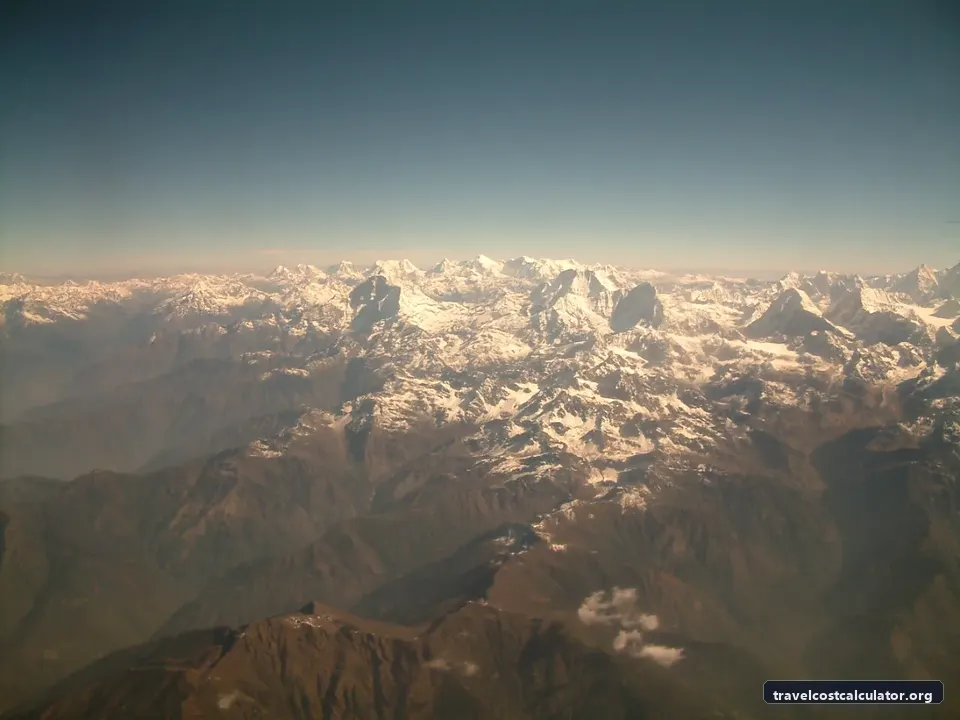
Sagarmatha is an exceptional area with dramatic mountains, glaciers and deep valleys, dominated by Mount Everest, the highest peak in the world (8,848 m).
Sagarmatha National Park
🏛️ Overview & Historical Significance
Inscribed as a UNESCO World Heritage site in 1979, Sagarmatha National Park is a sanctuary of global geological and ecological importance. Spanning 1,148 square kilometers in the Solukhumbu District of eastern Nepal, the park encompasses the southern slopes of the High Himalayas, dominated by the majestic Mount Everest (known locally in Nepali as Sagarmatha, meaning "Goddess of the Sky," and in Tibetan as Chomolungma, "Mother Goddess of the World") standing at 8,848.86 meters (29,031.7 ft).
UNESCO designated the park under natural criteria (vii) for its exceptional natural beauty and dramatic mountain landscapes—including soaring peaks like Lhotse, Nuptse, Cho Oyu, and Ama Dablam—and criteria (x) for its critical biodiversity conservation. The park features extreme verticality, ranging from subalpine pine and hemlock forests at 2,800 meters up to permanent ice fields above 5,500 meters. This vertical range shelters rare and endangered wildlife, such as the elusive snow leopard, musk deer, red panda, and Himalayan tahr, along with over 200 species of alpine birds including the Himalayan monal (Nepal's national bird).
Beyond its ecological value, Sagarmatha National Park is the spiritual heartland of the Sherpa people. Migrating from Tibetan regions over 400 years ago, the Sherpa community has cultivated a unique high-altitude culture deeply rooted in Nyingma Buddhism. Scattered throughout the park are sacred monasteries—most notably Tengboche Monastery—as well as mani stones carved with Buddhist mantras, colorful prayer flags carrying blessings on the wind, and chortens that anchor the landscape in spiritual tradition.
🎟️ Entrance Fees, Opening Hours & Ticket Booking Tips
Entering Sagarmatha National Park requires specific permits regulated by the Nepalese Department of National Parks and Wildlife Conservation alongside the local Khumbu government. As of 2026, visitors must obtain two mandatory permits before or upon entering the region.
Required Permits & 2026 Pricing
-
✦
Sagarmatha National Park Entry Permit:
- Foreign Nationals: NPR 3,000 + 13% Government VAT = NPR 3,390 (~$25.50 USD) per person.
-
✦
SAARC Country Nationals: NPR 1,500 + 13% VAT = NPR 1,695 (~$12.80 USD) per person.
-
✦
Nepali Citizens: NPR 100 per person.
-
✦
Children under 10 years old enter free of charge.
- All Foreigners & SAARC Nationals: NPR 3,000 (~$22.50 USD) per person.
Opening Hours & Checkpoints
The park technically remains open 24/7, but standard permit checkpoints operate from 6:00 AM to 5:00 PM daily. The main official park entry gate is located in Monjo (approx. 2,835 meters elevation), where your physical permits are checked, logged, and stamped.
Insider Booking & Permit Hacks
-
✦
Payment Method: Permits must be paid in cash using Nepalese Rupees (NPR) at local entry points. Credit card processing at mountain checkpoints is unreliable or unavailable.
-
✦
Where to Buy: You can purchase the Sagarmatha National Park Entry Permit at the Nepal Tourism Board (NTB) office in Kathmandu Travel Budget (Bhrikutimandap) or directly at the entry gate in Monjo. The Khumbu Local Permit can only be purchased upon arrival in Lukla or at the Monjo checkpoint.
-
✦
Documentation Needed: Always carry your valid passport (minimum 6 months validity) and at least 4 physical passport-sized photos for paper applications and trail registration.
🚌 How to Get There & Local Transit Costs
Sagarmatha National Park has no direct road access into its high-altitude core. Reaching the park requires a flight into the gateway airport at Lukla, followed by multi-day trekking, or an extended overland journey for budget travelers.
Option 1: The Mountain Flight Route (Kathmandu / Ramechhap to Lukla)
The fastest route to the Everest region is flying to Tenzing-Hillary Airport in Lukla (LUA).
-
✦
Peak Season Flights (March–May & September–November): Due to air traffic congestion at Kathmandu's airport (KTM), domestic flights to Lukla operate out of Manthali Airport in Ramechhap (RCH).
- Kathmandu to Ramechhap Transit: A 4- to 5-hour drive via shared tourist van costs approximately $15 – $25 USD (NPR 2,000 – 3,300) each way, usually departing Kathmandu at 1:30 AM. Private cars cost around $120 – $150 USD.
-
✦
Ramechhap to Lukla Flight: Flight time is 12–15 minutes. One-way fare for foreign nationals in 2026 is approximately $180 – $210 USD.
- Kathmandu to Lukla Flight: Flight time is 30 minutes. One-way foreign fare is approximately $220 – $240 USD (round-trip ~$440 – $480 USD).
Option 2: The Overland Budget Route (Kathmandu to Salleri / Tham Danda)
For budget travelers avoiding mountain flights or seeking extra acclimatization time:
-
✦
Take a local 4WD shared Jeep from Kathmandu (Chabahil area) to Salleri / Phaplu or further to Tham Danda / Bupsa.
-
✦
Transit Cost: NPR 2,500 – 3,500 (~$20 – $27 USD) per seat one-way. The drive takes 9 to 12 hours over bumpy mountain roads.
-
✦
From Tham Danda, it requires a 1.5 to 2-day trek to reach Lukla and enter the lower boundaries of Sagarmatha National Park.
Option 3: Helicopter Charter / Seat Sharing
-
✦
Shared Helicopter (Lukla to Kathmandu or vice versa): $450 – $650 USD per seat (subject to availability).
-
✦
Private Helicopter Charter (Kathmandu to Everest Base Camp & Kala Patthar flyover return): $3,800 – $4,800 USD (up to 5 passengers, weight restricted at altitude).
📸 Best Photography Spots & Insider Visit Hacks
Photographing Sagarmatha National Park offers dramatic glacial landforms, Himalayan light, and rich cultural traditions. Plan around seasonal weather and high altitude light dynamics for the best results.
Top 5 Viewpoints & Photography Spots
-
✦
Kala Patthar (5,545 meters / 18,192 ft): The definitive spot for unobstructed, close-up views of Mount Everest, the Khumbu Icefall, and Nuptse. Best Time: Late afternoon to sunset when the setting sun illuminates the summit of Everest in gold.
-
✦
Hotel Everest View / Syangboche (3,880 meters): Offers a 360-degree panorama of Everest, Lhotse, and Ama Dablam. Best Time: Early morning (7:00 AM – 9:00 AM) before mid-morning clouds build up.
-
✦
Gokyo Ri & The Fifth Lake (5,357 meters): Framing the deep turquoise Gokyo Lakes against the backdrop of four 8,000-meter peaks (Everest, Lhotse, Makalu, Cho Oyu).
-
✦
Tengboche Monastery Yard (3,867 meters): Offers a spectacular framing of Ama Dablam directly behind the monastic courtyard. Capture morning prayers and monks against peak vistas.
-
✦
Namche Bazaar Amphitheater: The horseshoe-shaped mountain village carved into the cliffs. Shoot from the military viewpoint above the village at sunrise for glowing light on Thamserku peak.
Seasonal Weather & Timing Hacks
-
✦
Spring (March to May): Rhododendrons bloom in lower forests (below 3,500m). Warmer weather and clear mornings. Active climbing season adds colorful expedition tent cities at Everest Base Camp.
-
✦
Autumn (September to November): The golden window for photography. Post-monsoon air is crisp, blue skies are reliable, and mountain clarity is at its annual peak.
-
✦
Avoiding Crowds: Autumn brings heavy trail traffic. To avoid crowded suspension bridges and narrow paths, start your daily trek early (6:00 AM – 6:30 AM), beating group tour departures by 1–2 hours.
-
✦
Cold Weather Tech Hack: Lithium-ion batteries drain rapidly below freezing. Keep smartphone and camera batteries stored inside your sleeping bag at night and inside an inner jacket pocket near your body warmth during the day. Carry a high-capacity power bank (20,000 mAh+).
-
✦
Altitude Sickness Prevention: Strict adherence to maximum 300–500m elevation gain per day above 3,000 meters. Schedule mandatory acclimatization rest days in Namche Bazaar (3,440m) and Dingboche (4,410m). Hydrate with 3–4 liters of clean water daily.
🏨 Nearby Accommodation & Daily Budget Allocation
Accommodation in Sagarmatha National Park primarily consists of traditional high-altitude teahouses (family-run mountain lodges). Luxury lodges are available along lower trail legs.
Accommodation Tiers & Pricing (2026 Estimates)
-
✦
Budget Teahouses: Twin-share rooms with wooden walls, twin beds, and shared bathroom facilities outside the room.
- Cost: $5 – $12 USD (NPR 650 – 1,500) per night. Note: Teahouses offer low room rates on the condition that you eat both dinner and breakfast at their attached restaurant.
- Cost: $40 – $90 USD (NPR 5,300 – 12,000) per night.
- Cost: $220 – $450 USD per night (includes breakfast and dinner).
Food, Drinks & Service Surcharges
As elevation increases, transport costs for food and electricity rise significantly. Expect higher prices at high altitude checkpoints like Gorak Shep (5,164m).
-
✦
Dal Bhat (Traditional Nepali Rice & Lentil Dish): $6 USD in Phakding; $10 – $13 USD in Gorak Shep (Includes free refills!).
-
✦
Boiled Water (1-Liter Flask): $2.00 – $4.50 USD.
-
✦
Hot Shower (Gas/Solar): $3.00 – $6.00 USD per shower.
-
✦
Wi-Fi Access (Airpass/Everest Link): $4.00 – $6.00 USD for a 10GB card usable across the region.
-
✦
Device Charging: $2.00 – $5.00 USD per hour or per device full charge.
Daily Budget Allocations (Per Person, Excluding Flights & Permits)
1. Independent / Solo Budget Trekker
-
✦
Daily Cost: $35 – $50 USD / day
-
✦
Breakdown: Basic teahouse room ($7), 3 meals consisting of local staples like Dal Bhat and porridge ($25), hot shower/device charging ($5), bottled/treated water & hot tea ($8).
2. Mid-Range Guided Trekker (Most Popular)
-
✦
Daily Cost: $110 – $170 USD / day
-
✦
Breakdown: Licensed English-speaking guide fee ($30–$40/day shared or private), porter fee ($20–$25/day), private teahouse room with attached bathroom where available ($45), western and local meals ($35), Wi-Fi, charging, and hot showers included ($15).
3. High-End Luxury Traveler
-
✦
Daily Cost: $400 – $850+ USD / day
-
✦
Breakdown: Stay in high-end luxury lodges (Yeti Mountain Home/Everest View), top-tier private mountaineering guide, dedicated porters, premium multi-course dining, and private helicopter transfers between high points.
Frequently Asked Questions
Essential visitor FAQs for Sagarmatha National Park
What is the entrance fee for Sagarmatha National Park?
How much time do you need to explore Sagarmatha National Park?
How do I get to Sagarmatha National Park from the nearest city?
📊 Heritage Quick Specs
Visiting Nepal on a Budget?
Calculate your full daily travel budget for Nepal — including hotel costs, local transport, food, and sightseeing expenses.
View Nepal Daily Travel Costs →Explore more UNESCO World Heritage Sites
🏛️ All 1,200+ Heritage Sites →