
 Kenya
Sacred Mijikenda Kaya Forests
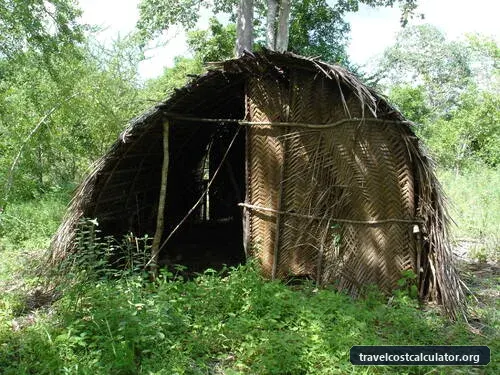
The Mijikenda Kaya Forests consist of 10 separate forest sites spread over some 200 km along the coast containing the remains of numerous fortified villages, known as kayas, of the Mijikenda people.
Sacred Mijikenda Kaya Forests
🏛️ Overview & Historical Significance
Stretching over 200 kilometers along Kenya’s Indian Ocean coastline lie the Sacred Mijikenda Kaya Forests—eleven distinct, lush forest pockets that preserve the spiritual heartland and cultural legacy of the Mijikenda ethnic group. Inscribed as a UNESCO World Heritage Site in 2008 under criteria (iii), (v), and (vi), these botanical sanctuaries represent a rare synergy of living cultural traditions, indigenous forest conservation, and sacred architectural heritage.
The word kaya translates to "home" or "settlement" in the dialects of the Mijikenda, a collective group of nine distinct Bantu-speaking sub-tribes (including the Giriama, Digo, Duruma, Rabai, Chonyi, Kauma, Kambe, Jibana, and Ribe). Originating around the 16th century, these settlements were constructed deep inside primary coastal rain forests as fortified clearings to protect the communities from hostile incursions. Surrounded by thick stone gates and dense natural barriers, each kaya served as a bustling tribal village housing political councils, residential compounds, and ancestral burial grounds.
By the early 20th century, as regional security improved, the Mijikenda gradually relocated outside the forest perimeters to establish modern farmland and villages. However, rather than abandoning their ancestral homes, they transformed the kayas into sacred spiritual sanctuaries. Today, the core clearings are safeguarded by the Wazee wa Kaya (the Council of Elders). These revered leaders preserve ancestral spirit shrines (fingo), wooden memorial grave posts (vigango), and secret ritual grounds. Because of strict spiritual taboos forbidding the cutting of trees or hunting within forest borders, these kayas now stand as vital ecological arks—protecting rare coastal lowland flora, medicinal plants, and endangered wildlife from coastal real estate expansion.
🎟️ Entrance Fees, Opening Hours & Ticket Booking Tips
Visiting the Sacred Mijikenda Kaya Forests requires navigating cultural protocol, as these remain active places of worship rather than commercial theme parks. While 11 separate sites exist, Kaya Kinondo (located near Galu and Diani Beach Travel Budget in Kwale County) is the premier site equipped for organized, respectful eco-tourism via the Kaya Kinondo Ecotourism Project.
Estimated 2026 Visitor Fees
-
✦
Non-Resident Adults: KES 2,000 – KES 2,500 (approx. $15 – $20 USD) per person.
-
✦
East African Citizens / Residents: KES 500 – KES 800 (approx. $4 – $6 USD) per person (valid ID/passport required).
-
✦
Mandatory Community Guide / Elder Honorarium: KES 1,000 – KES 1,500 (approx. $8 – $12 USD) per group. Paying this direct tip supports the local elders who maintain the trail networks and cultural integrity.
Opening Hours & Timing
Kaya Kinondo is open daily from 8:00 AM to 5:00 PM. The final guided walk of the day departs around 3:30 PM to ensure visitors exit before sunset. Most guided forest walks last between 1.5 to 2.5 hours.
Booking Tips & Essential Rules
-
✦
Payment Methods: Entrance fees at the site gate are payable via M-Pesa (Kenya’s ubiquitous mobile money service) or cash in Kenyan Shillings (KES). Credit cards are rarely accepted at the forest visitor hut.
-
✦
Advance Reservations: Individual travelers can generally walk in, but groups larger than six should notify the eco-tourism committee 24 to 48 hours in advance to arrange dedicated elder guides.
-
✦
Cultural Protocol: Before entering the sacred forest, all visitors must abide by strict traditional customs:
- You must wrap a kaniki (a traditional black or dark blue sarong provided at the entrance) around your waist regardless of your clothing.
-
✦
Headwear (hats, caps, headscarves) must be removed inside the inner sacred zones.
-
✦
Footwear must be taken off when approaching high-level spiritual altars (your elder guide will instruct you when).
-
✦
Public displays of affection (kissing, holding hands) and rowdy behavior are strictly forbidden inside the sacred groves.
🚌 How to Get There & Local Transit Costs
The primary access gateway for travelers visiting the most popular site, Kaya Kinondo, is the south coast region around Diani Beach or the port city of Mombasa Travel Budget.
From Diani Beach / Ukunda (Closest Point)
Kaya Kinondo sits at the southern end of the Diani strip in the Galu Beach zone, approximately 12 kilometers south of the Ukunda airstrip.
-
✦
By Tuk-Tuk: The most popular local mode of transport. A round-trip tuk-tuk hire from central Diani to Kaya Kinondo (including waiting time) costs between KES 600 – KES 1,000 ($5 – $8 USD).
-
✦
By Taxi / Ride-Hailing: Taxis or rideshare apps (Bolt/Uber) operate in the area. Expect to pay KES 1,500 – KES 2,500 ($12 – $20 USD) one way from northern Diani hotels.
From Mombasa City & SGR Railway Station
If traveling from Mombasa city center, Moi International Airport (MBA), or the Terminus of the Madaraka Express SGR train, you must travel south across the Likoni Channel.
-
✦
Public Matatu (Minibus): Take a matatu from Likoni Ferry south bound toward Ukunda/Galu (approx. KES 150 – KES 250 / $1.20 – $2.00 USD). From the final matatu stop in Galu, hire a local boda-boda (motorcycle taxi) for KES 100 ($0.80 USD) to reach the Kaya Kinondo reception gate. Total travel time is around 1.5 to 2 hours.
-
✦
Private Airport/SGR Transfer: Direct private transfer from Mombasa Airport or the SGR station to Kaya Kinondo ranges from KES 5,000 to KES 7,000 ($40 – $55 USD) one way.
Visiting Northern Kayas (e.g., Kaya Rabai or Kaya Giriama)
For adventurous travelers seeking off-the-beaten-path sites, northern kayas in Kilifi County can be reached by taking a matatu from Mombasa's Buxton stage toward Kaloleni or Kilifi Town (KES 200 – KES 350 / $1.50 – $2.80 USD), followed by hiring a private local guide upon arrival in the village hubs.
📸 Best Photography Spots & Insider Visit Hacks
Cultural Photography Etiquette
Photography in the Kaya forests comes with important cultural boundaries. While you are free to capture the natural canopy, ancient trees, and general trail corridors, it is strictly prohibited to photograph sacred ancestral altars (fingo) or traditional elder rituals without explicit, formal permission from the Council of Elders. Always ask your guide before framing a photograph containing cultural artifacts.
Top Photography Highlights
-
✦
The Ancient Strangler Fig Tree (Ficus): Located deep along the main loop trail of Kaya Kinondo, this towering giant features dramatic aerial root curtains, creating an evocative backdrop for eco-photography.
-
✦
The Sacred Gateways: Capture the natural archways formed by intertwined vines and timber where visitors receive traditional blessings before entering the inner forest rings.
-
✦
The Forest Canopy Light: Early morning sunlight filters through rare coastal hardwood species (such as Combretum schumannii), casting golden rays onto the leaf-littered floor.
-
✦
Native Wildlife: Keep long telephoto lenses ready for sightings of the rare Angolan Black-and-white Colobus monkey, red-legged sun squirrels, and colorful tropical butterflies endemic to the coastal canopy.
Insider Travel Hacks for 2026
-
✦
Best Season to Visit: The optimal weather window is during the dry months from July through October and January through February. Avoid the heavy long rains of April and May, when unpaved clay forest paths turn into slippery mud.
-
✦
Time of Day: Schedule your trek between 8:30 AM and 10:30 AM. Temperatures are cooler, insect activity is lower, and forest wildlife is most active.
-
✦
What to Wear: Wear lightweight, breathable long trousers and sturdy closed-toe walking shoes. You will be walking over exposed tree roots and damp soil. Apply eco-friendly insect repellent prior to arriving.
-
✦
Combine Cultural Trekking with Coastal Eco-Tours: Pair your morning Kaya trek with a afternoon visit to the nearby Colobus Conservation Center or a relaxed afternoon on Galu Beach.
🏨 Nearby Accommodation & Daily Budget Allocation
Because Kaya Kinondo is situated adjacent to the world-renowned Diani Beach coastline, visitors have access to a wide array of accommodation and dining options spanning all budget ranges.
Recommended Accommodation Near Kaya Kinondo
-
✦
Budget: Diani Backpackers / Local Eco-Lodges – Offering comfortable dormitory beds, basic private rooms, and a relaxed garden vibe within 15 minutes of the forest. Rooms range from $20 – $40 USD (KES 2,600 – 5,200) per night.
-
✦
Mid-Range: Pinewood Beach Resort & Spa / Neptune Village Beach Resort – Located in the serene Galu Beach zone close to Kaya Kinondo. These beach resorts offer beachfront access, tropical gardens, and air-conditioned rooms from $90 – $170 USD (KES 11,700 – 22,000) per night.
-
✦
Luxury: WaterLovers Beach Resort / Almanara Luxury Villa Resort – Premium luxury boutique hotels offering private villas, gourmet dining, and tailored cultural excursions. Rates range from $350 – $650+ USD (KES 45,500 – 84,500+) per night.
Dining & Coastal Swahili Cuisine
The Kenyan coast is famous for its Swahili culinary traditions, rich in coconut milk, fresh ginger, cardamoms, and sea-fresh catch. Budget roadside eateries (vibanda) serve daily staples like wali wa nazi (coconut rice) with grilled kingfish for KES 400 – KES 700 ($3 – $5.50 USD). High-end beachfront venues like Sails Beach Bar & Restaurant offer oceanfront dining options from KES 2,500 – KES 4,500 ($20 – $35 USD) per meal.
Estimated 2026 Daily Travel Budgets
-
✦
Backpacker / Low-Budget: $45 – $65 USD / day (Hostel stay, matatu transit, local meals, site entry).
-
✦
Mid-Range Traveler: $140 – $240 USD / day (3-star hotel/resort, private tuk-tuk, guided site tours, sit-down dining).
-
✦
Luxury Traveler: $500 – $900+ USD / day (Boutique beach resort, private vehicle/driver transfers, private elder-led excursions, fine seafood dining).
Frequently Asked Questions
Essential visitor FAQs for Sacred Mijikenda Kaya Forests
What is the entrance fee for Sacred Mijikenda Kaya Forests?
How much time do you need to explore Sacred Mijikenda Kaya Forests?
How do I get to Sacred Mijikenda Kaya Forests from the nearest city?
📊 Heritage Quick Specs
Visiting Kenya on a Budget?
Calculate your full daily travel budget for Kenya — including hotel costs, local transport, food, and sightseeing expenses.
View Kenya Daily Travel Costs →Explore more UNESCO World Heritage Sites
🏛️ All 1,200+ Heritage Sites →