
 Bangladesh
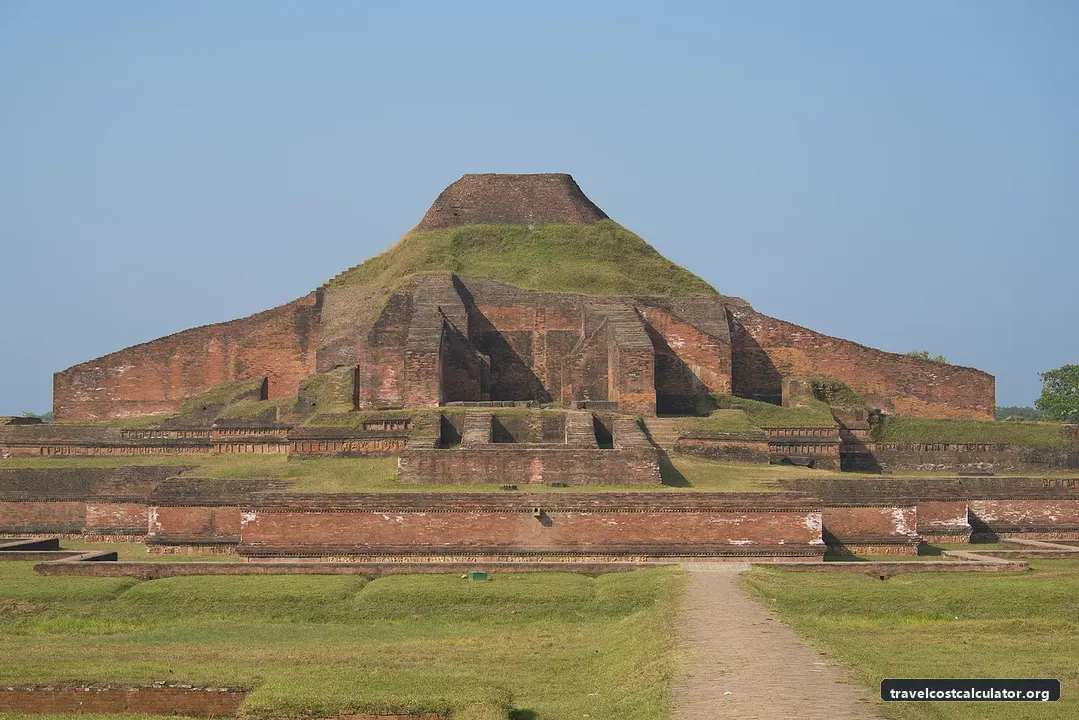
Ruins of the Buddhist Vihara at Paharpur
Evidence of the rise of Mahayana Buddhism in Bengal from the 7th century onwards, Somapura Mahavira, or the Great Monastery, was a renowned intellectual centre until the 12th century.
Ruins of the Buddhist Vihara at Paharpur
🏛️ Overview & Historical Significance
Deep in the quiet countryside of northwestern Bangladesh lies one of the most monumental archaeological treasures of ancient Asia: the Ruins of the Buddhist Vihara at Paharpur, historically known as Somapura Mahavihara. Designated as a UNESCO World Heritage site in 1985, this sprawling 27-acre monastery complex stands as a testament to the intellectual, religious, and architectural golden age of the Pala Empire, which ruled Bengal and Bihar from the 8th to the 12th century AD.
Commissioned primarily by King Dharmapala (c. 781–821 AD), the second monarch of the Pala Dynasty, Somapura Mahavihara was designed as a supreme seat of Buddhist learning. For over four centuries, monks, scholars, and pilgrims from across Tibet, China, Southeast Asia, and the Indian subcontinent converged here to study Mahayana and Vajrayana Buddhism, philosophy, astronomy, and medicine. Renowned scholar Atisha Dipamkara Srijnana lived and studied within these courtyard walls before traveling to Tibet to reform Mahayana traditions.
What makes Paharpur architecturally revolutionary—and a key reason for its 1985 UNESCO inscription under Criteria (i), (ii), and (vi)—is its singular design. Unlike traditional square monasteries of ancient India, Paharpur features a massive cruciform central temple set within a vast quadrangle of 177 individual monastic cells. This unique, multi-tiered terraced sanctuary directly influenced Southeast Asian temple design for centuries, laying the structural groundwork for iconic UNESCO sites like Prambanan and Borobudur in Indonesia and early Khmer monuments at Angkor in Cambodia.
Beyond its central pyramid-like shrine, Paharpur is celebrated for its incredible baseline friezes: over 2,000 in-situ terracotta relief plaques depicting daily 9th-century Bengali life, Hindu deities (such as Vishnu and Shiva adapted into Buddhist context), mythical creatures, musicians, dancers, and native flora and fauna. It represents a harmonious cultural synthesis that remains unmatched in South Asian archaeology.
🎟️ Entrance Fees, Opening Hours & Ticket Booking Tips
Visiting the Paharpur archaeological zone requires an entry ticket issued by the Department of Archaeology, Ministry of Cultural Affairs Bangladesh. Ticket counters are located right at the main entrance gate near the site museum.
Estimated 2026 Entrance Ticket Prices
-
✦
Foreign Tourists (Non-SAARC): 600 BDT (~$5.00 USD)
-
✦
SAARC Country Visitors: 300 BDT (~$2.50 USD)
-
✦
Bangladeshi Nationals: 50 BDT (~$0.40 USD)
-
✦
Students (with valid ID): 20 BDT (~$0.17 USD)
-
✦
Children under 5: Free entry
-
✦
Paharpur Site Museum Entry: Included in foreign/SAARC tickets (or 20 BDT for local visitors)
Operating Hours & Museum Timings
The main archaeological ruins and grounds maintain seasonal hours:
-
✦
Summer Schedule (April to September): Open Tuesday through Sunday from 9:00 AM to 6:00 PM. (On Mondays, open only from 2:30 PM to 6:00 PM).
-
✦
Winter Schedule (October to March): Open Tuesday through Sunday from 9:00 AM to 5:00 PM. (On Mondays, open only from 1:30 PM to 5:00 PM).
-
✦
Weekly Closure: The Paharpur Site Museum is completely closed on Sundays and official government holidays, though the main outdoor ruin complex remains accessible.
Pro Visitor & Booking Hacks
-
✦
Cash Only: Digital payment terminals at Paharpur can be unreliable or non-existent for foreign credit cards. Always bring exact cash in Bangladeshi Taka (BDT).
-
✦
Ticket Authenticity: Purchase tickets strictly from the official ticket booth at the main gates. Never buy tickets from unauthorized touts outside.
-
✦
Photography Fees: Standard hand-held camera photography is included in your entry ticket. However, commercial video production or professional tripods require prior written clearance from the Department of Archaeology in Dhaka Travel Budget. Drones are strictly regulated across Bangladesh and prohibited over heritage zones without military/civil aviation clearance.
🚌 How to Get There & Local Transit Costs
Paharpur is located in Badalgachhi Upazila of Naogaon District, northwestern Bangladesh. The nearest transport hub with excellent rail and road connectivity is Joypurhat (12 km north) or Bogura (Bogra) (45 km southeast). Most international travelers base themselves in Dhaka or Rajshahi before heading north.
Step 1: Traveling from Dhaka to Joypurhat / Bogura
-
✦
By Intercity Train (Recommended): Board the Ekota Express, Fastmail, or Nilsagor Express from Dhaka’s Kamalapur Railway Station to Joypurhat Station (6 to 7 hours). 2026 AC Chair (Snigdha) tickets cost approximately 750–900 BDT ($6.25–$7.50 USD), while AC Berth tickets run around 1,400–1,800 BDT ($11.50–$15.00 USD).
-
✦
By Luxury Bus: Direct AC buses operated by SR Travels, Hanif Enterprise, or Nabil Paribahan depart frequently from Dhaka (Gabtoli or Kalyanpur bus terminals) to Joypurhat or Bogura (6 to 8 hours depending on highway traffic). Expect to pay 800–1,200 BDT ($6.70–$10.00 USD) for an AC seat.
Step 2: Local Transit from Joypurhat or Bogura to Paharpur
-
✦
From Joypurhat Railway Station / Bus Stand (12 km):
- Shared CNG / Auto-Rickshaw: Readily available right outside Joypurhat station. A seat in a shared CNG costs about 40–60 BDT ($0.35–$0.50 USD) per person, dropping you at the Paharpur site gate.
-
✦
Reserved CNG Auto-Rickshaw: Hiring a private CNG round-trip (including wait time at the site) costs approximately 450–650 BDT ($3.75–$5.40 USD).
- Private Car / Taxi Hire: Renting a private AC sedan from Bogura for a full-day excursion to Paharpur costs around 4,500–6,000 BDT ($37.50–$50.00 USD).
📸 Best Photography Spots & Insider Visit Hacks
Capturing the scale of Paharpur requires planning around sunlight, shadows, and seasonal landscapes. The massive central stupa-sanctuary creates strong contrast during midday, making early morning and late afternoon ideal for photography.
Top Photography Vantage Points
-
✦
The North Staircase Ramp: Position yourself near the Northern Grand Gateway looking south. This frames the rising staircase leading up the central multi-tiered cruciform structure, emphasizing its massive scale.
-
✦
The Northwestern Terraced Mound: Climb the elevated grassy perimeter embankments to capture sweeping, wide-angle views of the 177 monastic cells surrounding the central temple.
-
✦
Baseline Terracotta Friezes: Head to the lower structural walls along the south and west faces. Using a prime lens (50mm or 85mm with a wide aperture), photograph the 1,200-year-old terracotta tiles depicting dancers, elephants, peacocks, and musicians in soft, natural light.
-
✦
The Eastern Quadrangle Lawn: During golden hour (4:00 PM – 5:00 PM in winter), stand near the eastern cell ruins to capture the central temple washed in warm orange sunlight against the deep blue sky.
Insider Travel Hacks for an Optimal Visit
-
✦
Best Time of Year: Visit between November and February. Winters in northern Bangladesh are pleasant, dry, and cool (14°C to 25°C / 57°F to 77°F). Avoid the monsoon season (June to September) when heavy rains turn dirt paths into deep mud and obscure terracotta details.
-
✦
Hire a Local Archaeology Guide: Certified Department of Archaeology guides can be hired near the ticket counter for 600–1,000 BDT ($5.00–$8.30 USD). They know exactly where the most unique terracotta plaques (such as the depiction of the Panchatantra animal fables) are tucked away.
-
✦
Beat the Local Crowds: School groups and domestic tour buses flood Paharpur on Fridays and Saturdays between 11:00 AM and 3:00 PM. Visit on a Tuesday or Wednesday morning around 9:30 AM for a quiet, contemplative experience.
-
✦
Pack Sun Protection & Water: The monastery courtyard offers minimal shade. Bring a wide-brim hat, sunscreen, and plenty of bottled water (available at small stalls outside the site gate).
🏨 Nearby Accommodation & Daily Budget Allocation
While Paharpur itself is a rural village, staying in nearby towns like Joypurhat or Bogura provides comfortable lodging options for every budget level.
Where to Stay
-
✦
Budget Lodging (Joypurhat - 12 km away): Hotel Earth or Hotel Rajdhani offer clean, basic rooms with Wi-Fi and air conditioning for 1,200–2,200 BDT ($10–$18 USD) per night.
-
✦
Mid-Range to Upper-Mid Hotels (Bogura - 45 km away): Hotel Red Castle or Hotel Naz Garden in Bogura provide excellent modern comforts, swimming pools, multi-cuisine restaurants, and airport/station pick-ups for 4,500–7,500 BDT ($37.50–$62.50 USD) per night.
-
✦
Luxury Resort Base (Bogura): Momo Inn Hotel & Resort is a premier 5-star hotel featuring a rooftop helipad, fine dining, spa services, and pool amenities ranging from 9,500–16,000 BDT ($80–$133 USD) per night.
-
✦
Heritage Rest House (On-Site): The Department of Archaeology runs an official rest house right next to the site. Rooms can be booked with advance permission from the Dept of Archaeology in Dhaka (approx. 1,000–1,500 BDT / $8.30–$12.50 USD per night), though amenities are basic.
Dining & Local Food Costs
Near the entry gates of Paharpur, small local eateries serve authentic northern Bangladeshi meals. Try traditional rice platters served with bharta (spiced mashed vegetables), ruhi fish curry, or chicken bhuna for just 150–300 BDT ($1.25–$2.50 USD) per meal. Don't leave Joypurhat without trying local Bangladeshi sweetmeats such as Roshogolla and Bogura's famous Mishti Doi (sweetened fermented yogurt, ~150 BDT / $1.25 per pot).
Estimated Daily Budget Breakdowns (2026 Rates)
-
✦
Backpacker / Low Budget: $20 – $35 USD (2,400 – 4,200 BDT) / day
Includes train travel, budget guesthouse in Joypurhat, shared CNG transport, local street food meals, and standard entry ticket. -
✦
Mid-Range Traveler: $65 – $110 USD (7,800 – 13,200 BDT) / day
Includes AC intercity train/bus, 3-star hotel in Bogura, reserved private CNG or sedan day-trip hire, sit-down dining, guide fees, and entry tickets. -
✦
Luxury Traveler: $180 – $300 USD (21,600 – 36,000 BDT) / day
Includes private chauffeured AC SUV from Dhaka or Rajshahi, 5-star stay at Momo Inn Bogura, private tour guide, luxury meals, and full concierge logistics.
Frequently Asked Questions
Essential visitor FAQs for Ruins of the Buddhist Vihara at Paharpur
What is the entrance fee for Ruins of the Buddhist Vihara at Paharpur?
How much time do you need to explore Ruins of the Buddhist Vihara at Paharpur?
How do I get to Ruins of the Buddhist Vihara at Paharpur from the nearest city?
📊 Heritage Quick Specs
Visiting Bangladesh on a Budget?
Calculate your full daily travel budget for Bangladesh — including hotel costs, local transport, food, and sightseeing expenses.
View Bangladesh Daily Travel Costs →Explore more UNESCO World Heritage Sites
🏛️ All 1,200+ Heritage Sites →