
 South Korea
Royal Tombs of the Joseon Dynasty
The Royal Tombs of the Joseon Dynasty form a collection of 40 tombs scattered over 18 locations.
Royal Tombs of the Joseon Dynasty
🏛️ Overview & Historical Significance
Inscribed as a UNESCO World Heritage site in 2009, the Royal Tombs of the Joseon Dynasty represent one of the most remarkably intact and culturally continuous royal burial complexes in human history. Spanning more than five centuries of dynastic rule (1392–1910), this UNESCO designation encompasses 40 sacred tomb clusters spread across 18 locations in South Korea (with an additional two tombs situated in Kaesong Travel Budget, North Korea). Built to honor 27 generations of Joseon kings, queens, and posthumously designated monarchs, these tombs serve as a living testament to Neo-Confucian governance, ancestral reverence, and classical East Asian landscape philosophy.
What sets the Joseon Royal Tombs apart from other global mausoleums is their deep integration with Pungsu-jiri (Korean geomancy/feng shui). Unlike the colossal, environment-altering pyramids of Egypt or China's Ming Dynasty tombs, the Joseon sovereigns sought harmony with nature rather than dominance over it. Each tomb site was selected according to strict geomantic criteria: backed by a protective mountain peak (Baesaimsu), facing a flowing stream to the south, and framed by natural ridges to cradle the sacred energy (Gi) of the earth.
Key Architectural & Sacred Layout Elements
Every Joseon royal tomb complex follows a precise three-stage spatial transition from the secular world to the spiritual realm:
-
✦
The Entry Area (Secular Realm): Marked by a natural stream crossed by a ceremonial stone bridge (Geumcheongyo), symbolizing the cleansing of the mind before stepping onto holy ground.
-
✦
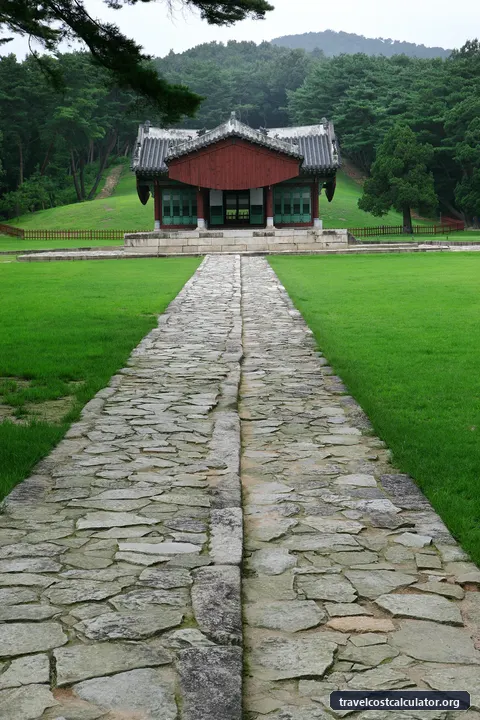
The Ritual Area (Sacred Realm): Guarded by the red-painted wooden spike gate (Hongsalmun). From here, two raised stone pathways lead to the T-shaped wooden shrine (Jeongjagak). The higher path, Sindo (Path of the Gods), was reserved exclusively for the spirits of the deceased, while the lower path, Eodo (Path of the King), was walked by the reigning monarch.
-
✦
The Burial Mound (Sanctum Realm): Situated behind the shrine on an elevated hill, the grass mound (Neung-침) is protected by carved stone guardians—including civil officers (Muninseok), military commanders (Muinseok), stone horses, sheep, and tigers.
Beyond their architectural brilliance, these sites remain culturally active. To this day, the Jeonju Lee Royal Family Association conducts solemn ancestral rites (Joseon Wangneung Jerye) complete with traditional court music and dance, preserving a unbroken ceremonial tradition that has endured for over 600 years.
🎟️ Entrance Fees, Opening Hours & Ticket Booking Tips
Visiting the Joseon Royal Tombs remains one of the most affordable high-value UNESCO site experiences in East Asia. As part of South Korea's national heritage preservation initiative, ticket prices are kept extraordinarily modest for international visitors and locals alike.
2026 Estimated Entrance Fees
-
✦
Standard Adult Ticket (Ages 19–64): 1,000 KRW (approx. $0.75 USD) per site.
-
✦
Children & Youth (Ages 7–18): 500 KRW (approx. $0.38 USD).
-
✦
Seniors (65+) & Children (6 and under): Free admission.
-
✦
Integrated Royal Palace & Tomb Pass (4-Palace & Tomb Ticket): 10,000 KRW (approx. $7.50 USD). Valid for 3 months, this pass covers Gyeongbokgung, Changdeokgung (including the Secret Garden), Changgyeonggung, Deoksugung, Jongmyo Shrine, and Seonjeongneung Royal Tomb.
Operating Hours & Seasonal Variations
Most tomb complexes operate under standardized seasonal hours. Note: All royal tomb sites are strictly closed every Monday.
-
✦
Spring & Autumn (March–May, Sept–Oct): 06:00 AM – 06:00 PM (Last ticket sales at 05:00 PM)
-
✦
Summer Season (June–August): 06:00 AM – 06:30 PM (Last ticket sales at 05:30 PM)
-
✦
Winter Season (November–February): 06:30 AM – 05:30 PM (Last ticket sales at 04:30 PM)
Pro Booking & Money-Saving Hacks
-
✦
Free Entry Days: Plan your visit on the last Wednesday of any month ("Culture Day" in South Korea) to receive free entry across all royal tombs and palaces.
-
✦
The Hanbok Exemption: Wearing traditional Korean dress (Hanbok) grants you 100% free admission to all Joseon tomb locations and royal palaces. Rental shops are plentiful near Seoul Travel Budget’s main palace districts.
-
✦
Ticketing Logistics: Automated electronic kiosks accepting foreign Visa/Mastercard and T-money transit cards are standard at every entrance gate. Advance reservations are generally unneeded for general admission, though special seasonal forest trail night walks require online ticketing via the Korea Heritage Service website.
🚌 How to Get There & Local Transit Costs
While the 40 tombs are scattered across Gyeonggi Province and Greater Seoul, several of the most historic and visually striking tomb clusters are effortlessly accessible via Seoul’s world-class public transit network. Below are step-by-step navigation guides and 2026 transit fare breakdowns for the top three tomb destinations.
1. Seonjeongneung (Most Central – Gangnam District, Seoul)
Located in the heart of modern Gangnam, this site contains the tombs of King Seongjong, Queen Jeonghyeon, and King Jungjong. It offers a dramatic contrast between ancient burial mounds and glass skyscrapers.
-
✦
By Subway: Take Seoul Subway Line 2 or the Suin-Bundang Line to Seonjeongneung Station. Take Exit 9 or 10 and walk straight for 5 minutes (approx. 400 meters).
-
✦
Transit Cost: Standard Seoul Metro base fare is 1,500 KRW ($1.15 USD) using a T-money card.
2. Donggureung (Largest Complex – Guri City)
Housing 9 royal tombs containing 17 kings and queens (including King Taejo, founder of the Joseon Dynasty), Donggureung is the expansive "Eastern Nine Tombs" complex nestled in a pristine forest reserve.
-
✦
By Subway (2026 Updated Route): Board the Subway Line 8 Extension (Byeollae Line) directly to Donggureung Station. Exit 2 puts you within a short 10-minute walk or brief local bus ride (Bus 88 or 202) to the main gate.
-
✦
Transit Cost: Subway fare from central Seoul (e.g., Myeongdong or Seoul Station) is approximately 1,750 KRW ($1.30 USD).
3. Yungneung & Geolleung (Hwaseong City)
The deeply emotional site housing Crown Prince Sado (who suffered a tragic death inside a rice chest) and his son King Jeongjo, one of Korea’s greatest enlightened monarchs.
-
✦
By Train & Bus: Take Seoul Metro Line 1 south to Byeongjeom Station (Exit 2). Transfer to local City Bus 34, 34-1, or 46 and disembark directly at the "Yunggeolleung" bus stop (approx. 15-minute bus ride).
-
✦
Transit Cost: Integrated metro-to-bus transfer fare averages 2,050 KRW ($1.55 USD).
-
✦
Taxi Option: A Kakao T app ride from Byeongjeom Station to Yungneung costs roughly 7,000–9,000 KRW ($5.25–$6.75 USD). Base taxi meter in Seoul/Gyeonggi for 2026 starts at 4,800 KRW.
📸 Best Photography Spots & Insider Visit Hacks
Top Photography Angles & Compositions
-
✦
The Hongsalmun Portal Shot: Position yourself 15 meters back from the Red Spike Gate. Use a medium telephoto lens (50mm–85mm) to compress the framing: the wooden red posts framing the stone Sindo path, leading the eye directly to the T-shaped Jeongjagak shrine behind it.
-
✦
Seonjeongneung’s Architectural Anachronism: Stand at the base of King Seongjong’s burial mound looking southwest. Frame the traditional carved stone military officer (Muinseok) in the foreground, juxtaposed against the futuristic glass towers of Teheran-ro in Gangnam.
-
✦
Geonwonneung Pampas Grass (Donggureung): Unlike other mounds covered in manicured turf, King Taejo’s tomb mound is covered in un-trimmed silver pampas grass brought directly from his home region of Hamheung. Photographing this mound in late October during the golden late-afternoon sun yields breathtaking, wind-swept textures.
Insider Visitor Hacks & Etiquette
-
✦
Golden Hour & Avoid Crowds: Visit within one hour of opening (06:00 AM – 07:30 AM). Local elderly walkers visit early, but tour groups rarely arrive before 10:00 AM. Early morning light filtering through century-old red pines creates natural sunbeams perfect for photography.
-
✦
Respect the Sacred Pathways: Never step directly on the elevated left stone path (Sindo) extending from the Hongsalmun gate to the shrine—this path is reserved for ancestral spirits. Walk on the lower right path (Eodo) intended for human visitors.
-
✦
Explore the Seasonal Forest Trails: Many tombs feature surrounding forest trails (Sopung-gil) that are opened exclusively twice a year during peak spring (May–June) and autumn (October–November). These unpaved forest paths cut deep into virgin oak and pine woods away from standard tour paths.
🏨 Nearby Accommodation & Daily Budget Allocation
Because the Joseon Royal Tombs are integrated across the Seoul Metropolitan Area, staying centrally in Seoul (Jongno, Gangnam, or Dongdaemun) provides the best springboard for day trips to both urban and suburban tomb sites.
Recommended Accommodation Tiers
-
✦
Budget (Hostel / Guesthouse): Step Inn Myeongdong or Kimchee Gangnam Guesthouse. Clean dormitory beds and private compact rooms within easy reach of Line 2 or Line 8 subways. Rates: $30 – $55 USD per night.
-
✦
Mid-Range (Boutique & 4-Star Hotels): L7 Gangnam (walking distance to Seonjeongneung) or Nine Tree Premier Hotel Insadong. Stylish rooms with modern amenities and quick metro access. Rates: $90 – $160 USD per night.
-
✦
Luxury & Cultural Heritage: Josun Palace Gangnam or a private luxury traditional home stay in Bukchon Hanok Village. High-end hospitality with curated Korean cultural aesthetics. Rates: $320 – $650 USD per night.
Dining Near the Sites
Skip Western chains and indulge in traditional Korean comfort food near the tomb grounds:
-
✦
Near Seonjeongneung: Sample Seolleongtang (ox bone soup) at Outerbaegi or traditional cold buckwheat noodles (Pyeongyang Naengmyeon). Lunch cost: 12,000–16,000 KRW ($9–$12 USD).
-
✦
Near Donggureung: Try local Guri specialties like Gamjatang (pork spine soup with potatoes) or set-menu royal dining (Hanjeongsik). Lunch cost: 14,000–25,000 KRW ($10.50–$19 USD).
Estimated Daily Budget Matrix (2026 Rates per Person)
Below is a calculated daily expenditure guide for visiting the Joseon Royal Tombs and exploring surrounding Seoul/Gyeonggi districts:
-
✦
Backpacker Tier ($45 – $65 USD / Day):
- Stay: Shared Hostel Bed ($30)
-
✦
Food: Convenience store breakfast, local market Gimbap/Tteokbokki dinner ($15)
-
✦
Transit: Daily T-money Metro Card usage ($5)
-
✦
Attractions: Single Royal Tomb Admission ($0.75)
- Stay: 3-to-4 Star Hotel ($100 per person double occupancy)
- Stay: 5-Star Hotel / Luxury Hanok Villa ($350+)
Frequently Asked Questions
Essential visitor FAQs for Royal Tombs of the Joseon Dynasty
What is the entrance fee for Royal Tombs of the Joseon Dynasty?
How much time do you need to explore Royal Tombs of the Joseon Dynasty?
How do I get to Royal Tombs of the Joseon Dynasty from the nearest city?
📊 Heritage Quick Specs
Visiting South Korea on a Budget?
Calculate your full daily travel budget for South Korea — including hotel costs, local transport, food, and sightseeing expenses.
View South Korea Daily Travel Costs →Explore more UNESCO World Heritage Sites
🏛️ All 1,200+ Heritage Sites →