
 Germany
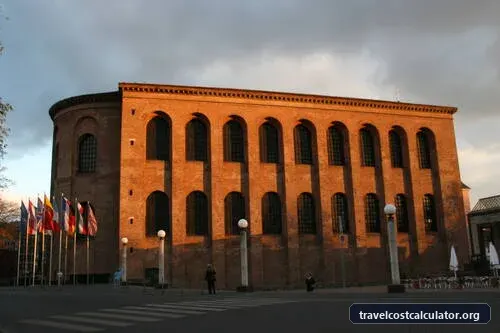
Roman Monuments, Cathedral of St Peter and Church of Our Lady in Trier
Trier, which stands on the Moselle River, was a Roman colony from the 1st century AD and then a great trading centre beginning in the next century.
Roman Monuments, Cathedral of St Peter and Church of Our Lady in Trier
🏛️ Overview & Historical Significance
Nestled along the winding banks of the Moselle River near the German-Luxembourgish border lies Trier—Germany’s oldest city, affectionately nicknamed Roma Secunda ("The Second Rome Travel Budget"). Founded in 16 BC by the Roman Emperor Augustus as Augusta Treverorum, Trier transformed over the subsequent four centuries from a provincial trading hub into a colossal imperial seat. By the late 3rd century AD, under Emperor Diocletian’s Tetrarchy, Trier served as the administrative heart of the Western Roman Empire, boasting a royal court, circus, imperial mint, and monumental civic infrastructure that rivaled Rome itself.
In 1986, UNESCO inscribed the "Roman Monuments, Cathedral of St Peter and Church of Our Lady in Trier" as a World Heritage Site. This collective designation encompasses nine world-class architectural treasures that chronicle the dramatic transition from classical pagan antiquity to early Western Christianity. The inscribed components represent the highest architectural achievements of northern Roman civilization alongside Europe's earliest Christian structures:
-
✦
Porta Nigra ("Black Gate"): Built around 170 AD from massive sandstone blocks bound without mortar, this is the largest and best-preserved Roman city gate north of the Alps. Its dark patina—caused by centuries of weathering—gives the gate its medieval name.
-
✦
Trier Cathedral (Dom St. Peter): The oldest bishop's church in Germany, built directly over a massive fourth-century Roman palace complex commissioned by Emperor Constantine Travel Budget the Great. Its layers of Roman brick, Romanesque vaults, and Baroque adornments present a continuous timeline of European architectural history.
-
✦
Church of Our Lady (Liebfrauenkirche): Adjoining the Cathedral, this light-filled structure completed in 1260 is revered as the earliest pure French Gothic-style church built on German soil, constructed on the foundation of Constantine's double basilica.
-
✦
Imperial Baths (Kaiserthermen): Built in the 4th century AD under Emperor Constantine, these sprawling thermal baths were among the largest in the entire Roman Empire, featuring an extensive underground network of subterranean service tunnels still walkable today.
-
✦
Amphitheatre: Carved into the Petrisberg hillside around 100 AD, this 20,000-seat arena hosted gladiatorial combats and chariot races, complete with preserved cellars beneath the arena floor where animals and prisoners were held.
-
✦
Roman Bridge (Römerbrücke): The oldest standing bridge north of the Alps still carrying vehicular traffic. Its massive basalt stone piers date back to 144–152 AD.
-
✦
Barbara Baths (Barbarathermen) & Viehmarkt Baths: Expansive 2nd-century public bath complexes highlighting Roman engineering, heating systems (hypocausts), and urban leisure.
-
✦
Igel Column (Igeler Säule): Located just outside Trier in the village of Igel, this 23-meter-high sandstone funerary monument, built around 250 AD by the Secundinii cloth merchants, is the only intact Roman aboveground tomb north of the Alps.
🎟️ Entrance Fees, Opening Hours & Ticket Booking Tips
Planning your visits efficiently across Trier’s distributed UNESCO sites requires understanding the pass system. While open public sites like the Roman Bridge and the exterior of the Barbara Baths are free, the major enclosed monuments operate on structured entrance ticketing managed by the State of Rhineland-Palatinate (Generaldirektion Kulturelles Erbe).
2026 Estimated Entrance Fees (Individual Sites & Combination Passes)
Prices for single admissions and multi-site passes in 2026 are estimated as follows:
-
✦
AntikenCard Trier Basic: €14.00 / ~$15.50 USD per adult. Includes entry to two Roman pay monuments (e.g., Porta Nigra + Imperial Baths) plus admission to the Rheinisches Landesmuseum Trier (Rheinish State Museum).
-
✦
AntikenCard Trier Premium: €18.00 / ~$19.80 USD per adult. The ultimate pass allowing single access to all four main fee-charging Roman sites (Porta Nigra, Kaiserthermen, Amphitheatre, Thermen am Viehmarkt) plus the Rheinisches Landesmuseum. Valid for up to 12 months from purchase.
-
✦
Individual Roman Site Ticket (Porta Nigra, Kaiserthermen, or Amphitheatre): €6.00 / ~$6.60 USD adults; €4.50 / ~$5.00 USD concessions/students.
-
✦
Dom St. Peter (Cathedral): Free entry to the main nave and cloister. The Treasury (Domschatzkammer), holding precious relics including the Holy Robe of Christ (displayed rarely) and St. Andrew's Holy Sandal, costs €6.00 / ~$6.60 USD.
-
✦
Liebfrauenkirche (Church of Our Lady): Free entry (donations appreciated).
-
✦
Römerbrücke, Barbara Baths Walkway & Igel Column: Free year-round open-air access.
Opening Hours & Insider Booking Tips
-
✦
Summer Season (April 1 – September 30): Roman monuments are open daily from 9:00 AM to 6:00 PM. Dom St. Peter is open 6:30 AM to 6:00 PM (tourist visits restricted during Holy Mass).
-
✦
Winter Season (October 1 – March 31): Roman monuments operate on reduced hours, typically 9:00 AM to 4:00 PM or 5:00 PM.
-
✦
Pro Booking Tip: Skip the ticket line at the Porta Nigra by purchasing the AntikenCard Trier Premium online via the official Trier Tourismus portal or through the Trier App. If buying in person, purchase your pass at the Rheinisches Landesmuseum ticket office where lines are historically much shorter than at the main Porta Nigra gate.
🚌 How to Get There & Local Transit Costs
Trier sits strategically in southwestern Germany along the Moselle valley, making it exceptionally accessible from major regional hubs in Germany, Luxembourg, and France.
Getting to Trier from Major Gateways
-
✦
From Luxembourg City Travel Budget (Nearest Airport & Transit Hub - 50 km): Luxembourg Airport (LUX) is the closest international airport. Public transit within the Grand Duchy of Luxembourg is completely free! Take the regional RE train from Luxembourg Central Station directly to Trier Hauptbahnhof (Hbf). You only pay for the German cross-border sector: approximately €6.00 – €9.00 / ~$6.60 – $10.00 USD one-way. Journey time is roughly 45 to 50 minutes.
-
✦
From Frankfurt am Main (FRA Airport - 180 km): Catch a Deutsche Bahn (DB) Regional-Express (RE) train via Koblenz along the scenic Middle Rhine/Moselle line, or via Saarbrücken. Travel time ranges between 2 hours 15 minutes and 2 hours 45 minutes. A single RE advance ticket ranges from €24.00 to €38.00 / ~$26.50 to $42.00 USD. If traveling across regional networks in Germany, the nationwide monthly regional pass (the Deutschlandticket, priced at ~€58.00 / ~$64 USD per month in 2026) covers all local trains (RE/RB) to Trier.
-
✦
From Cologne / Köln (CGN Airport - 170 km): Regional trains run south through the Eifel region to Trier Hbf in approximately 2.5 hours. Fares average €25.00 – €35.00 / ~$27.50 – $38.50 USD.
Navigating Within Trier & Public Transit Fares
Trier's historical city center is compact and largely pedestrianized. The distance from the main railway station (Trier Hbf) to the Porta Nigra is just 800 meters—a flat 10-minute walk down Theodor-Heuss-Allee.
-
✦
VRT Local Bus Network: Connects Trier Hbf to outlying sites like the Amphitheatre, Imperial Baths, and Igel. Single city trip (Price Level 1): €2.60 / ~$2.85 USD.
-
✦
VRT TagesTicket (24-Hour Day Pass): €6.80 / ~$7.50 USD for an individual, allowing unlimited city bus travel. A Group Day Pass (up to 5 people) costs approximately €13.50 / ~$14.85 USD.
-
✦
Taxis & Rideshares: Taxis operate from outside Trier Hbf and Hauptmarkt. A city-center ride between distant monuments (e.g., Porta Nigra to the Amphitheatre) costs roughly €11.00 – €16.00 / ~$12.00 – $17.50 USD.
📸 Best Photography Spots & Insider Visit Hacks
Capturing the scale of Roman engineering alongside high-Gothic grace requires timing and strategic viewpoints. Here are top-tier photography locations and insider strategies for your itinerary:
Prime Photography Locations
-
✦
Porta Nigra Gallery (Upper Level): Walk up the interior staircases of the gate to the open-air upper arcades. Frame a striking shot looking south down the pedestrian Simeonstraße toward the Hauptmarkt, contrasting Roman masonry with medieval timber-framed houses.
-
✦
Domfreihof Square: Position yourself at the south-western corner of Domfreihof square during the late afternoon. This spot lets you capture both the rugged, fortress-like Romanesque facade of Trier Cathedral and the adjacent delicate Gothic spires of the Liebfrauenkirche in a single wide-angle composition.
-
✦
Kaiserthermen Upper Viewing Terrace: Ascend the modern viewing gallery overlooking the Imperial Baths. Shoot toward the massive ruined apse walls with the lush green gardens below during golden hour when the red Roman bricks glow intensely.
-
✦
Moselle Banks at Römerbrücke: Walk 100 meters downriver along the western riverbank at sunset. Frame the ancient 2nd-century stone bridge piers reflected in the Moselle River with the city's vineyards in the backdrop.
Insider Visit Hacks
-
✦
Explore the Kaiserthermen Underground Tunnels: Most tourists only look at the above-ground brick walls. Walk down into the sprawling subterranean tunnels (Bedienungsgänge). Bring your smartphone flashlight to explore where Roman slaves once managed the massive furnace systems heating the imperial baths.
-
✦
Experience the "Centurio" Live Tour: Book an interactive theatrical tour at the Porta Nigra led by an actor portraying a Roman Centurion in full iron armor. It provides an immersive, E-E-A-T rich perspective on Roman garrison life on the empire's northern frontier.
-
✦
Avoid the Midday Tour Bus Surge: Tour groups from Moselle river cruises typically flood the Cathedral and Porta Nigra between 10:30 AM and 2:30 PM. Visit the Cathedral at opening (around 7:30 AM–8:30 AM) for complete tranquility, and tackle the outdoor Amphitheatre during early afternoon hours.
-
✦
Sip Riesling at the Hauptmarkt Weinstand: After touring, head to the bustling Hauptmarkt plaza. Local Moselle winemakers rotate daily at the municipal Weinstand, serving world-class slate-grown Mosel Riesling or local Elbling wine for around €3.50 – €5.00 / ~$3.85 – $5.50 USD per glass.
🏨 Nearby Accommodation & Daily Budget Allocation
Trier accommodates all travel styles, from backpackers riding regional train networks to luxury travelers seeking historic wine-estate retreats along the Moselle.
Recommended Accommodations Near the UNESCO Sites
-
✦
Budget (~€35 – €75 / ~$38 – $82 USD per night): DJH Jugendherberge Trier (Youth Hostel) – Set directly on the banks of the Moselle, offering clean private rooms and dorms within walking distance of the Roman Bridge. Alternatively, B&B Hotel Trier offers modern, budget-friendly rooms near the train station.
-
✦
Mid-Range (~€95 – €160 / ~$105 – $176 USD per night): Park Plaza Trier – A polished 4-star hotel situated in the heart of the historic center, featuring Roman-inspired interior art and a short 5-minute walk to Dom St. Peter. Another classic option is Hotel Deutscher Hof near the Imperial Baths.
-
✦
Luxury & Boutique (~€220 – €450+ / ~$242 – $495+ USD per night): Schloss Lieser (Autograph Collection) – Located a short drive up the Moselle Valley, this restored 19th-century castle hotel offers opulent accommodations and fine dining. Within Trier city, book a luxury suite at Becker’s Design Hotel & Restaurant.
Estimated Daily Budget Profiles (2026 Rates)
| Travel Style | Daily Budget (per person) | Includes |
|---|---|---|
| Budget Backpacker | €55 – €85 / ~$60 – $93 USD | Hostel dorm/budget room, AntikenCard Basic pass, grocery meals + street food (Döner/Bratwurst), public regional bus transit. |
| Mid-Range Traveler | €140 – €230 / ~$154 – $253 USD | 3/4-star central hotel, AntikenCard Premium pass, seated dinners at traditional Weinstuben (sample Mosel wine & regional cuisine), VRT 24-hr transit ticket. |
| Luxury Traveler | €350 – €650+ / ~$385 – $715+ USD | Boutique castle/4-star suite, private official UNESCO historian guide, fine dining with wine pairings (e.g., dining at Zum Domstein serving authentic Ancient Roman recipes from Apicius), private taxi/driver transfers. |
Dining Tip: Don't miss a meal at Restaurant Zum Domstein on the Hauptmarkt. They uniquely offer a special menu featuring dishes reconstructed from 1st-century Roman cookbooks by Marcus Gavius Apicius, alongside traditional Rhineland specialties like Trierer Techtelmechtel.
Frequently Asked Questions
Essential visitor FAQs for Roman Monuments, Cathedral of St Peter and Church of Our Lady in Trier
What is the entrance fee for Roman Monuments, Cathedral of St Peter and Church of Our Lady in Trier?
How much time do you need to explore Roman Monuments, Cathedral of St Peter and Church of Our Lady in Trier?
How do I get to Roman Monuments, Cathedral of St Peter and Church of Our Lady in Trier from the nearest city?
📊 Heritage Quick Specs
Visiting Germany on a Budget?
Calculate your full daily travel budget for Germany — including hotel costs, local transport, food, and sightseeing expenses.
View Germany Daily Travel Costs →Explore more UNESCO World Heritage Sites
🏛️ All 1,200+ Heritage Sites →