
 China
China
Quanzhou: Emporium of the World in Song-Yuan China
The serial site of Quanzhou illustrates the city’s vibrancy as a maritime emporium during the Song and Yuan periods (10th - 14th centuries AD) and its interconnection with the Chinese hinterland.
Quanzhou: Emporium of the World in Song-Yuan China
🏛️ Overview & Historical Significance
In July 2021, UNESCO officially inscribed "Quanzhou: Emporium of the World in Song-Yuan China" onto the World Heritage list. Known historically in Western and Islamic texts as Zaiton (or Zaitun), Quanzhou was the vibrant beating heart of the Maritime Silk Road during China’s Song (960–1279 CE) and Yuan (1271–1368 CE) dynasties. When Marco Polo and Ibn Battuta sailed into its harbour, they described a bustling metropolis where "a hundred ships loaded with pepper" would dock for every single ship arriving in Christian Europe.
Unlike single-structure heritage sites, Quanzhou’s UNESCO designation encompasses a serial network of 22 historical component sites scattered across the municipality. These include ancient docks, navigational pagodas, bridges, administrative offices, and places of worship spanning multiple global faiths. During its golden age, Quanzhou was one of the most cosmopolitan cities on Earth, fostering peaceful coexistence between Buddhists, Muslims, Taoists, Hindus, Manichaeans, and Nestorian Christians.
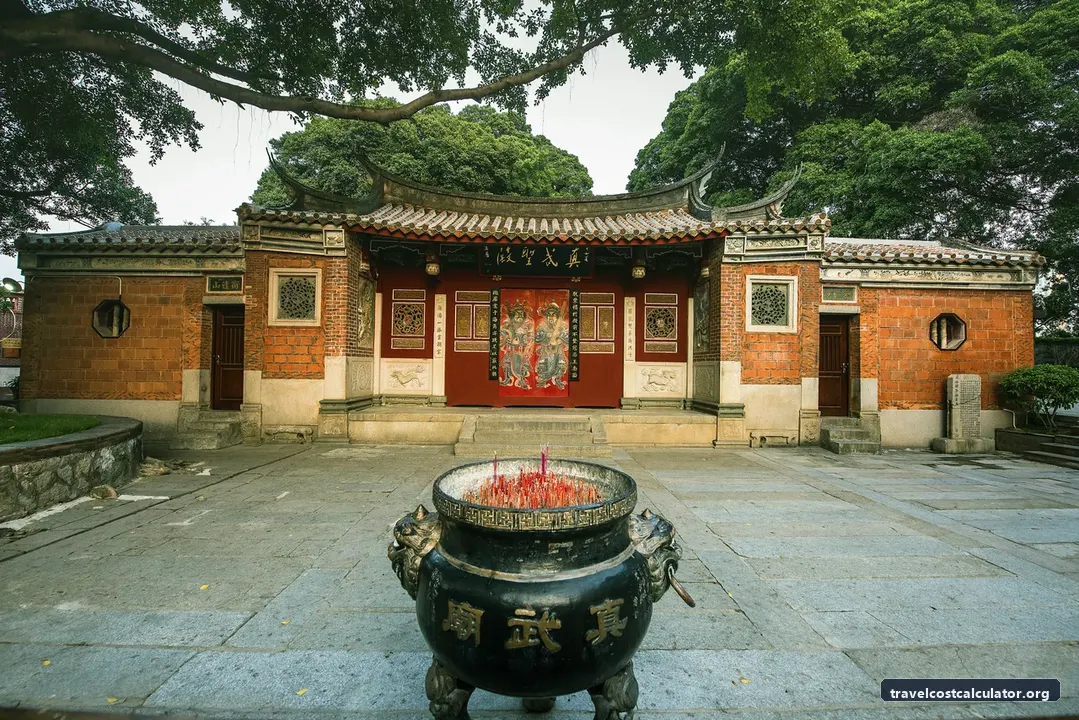
Walking through the historic Licheng District today, you witness an extraordinary living urban canvas. Ancient red-brick Minnan architecture stands alongside Islamic arches, Hindu stone carvings repurposed in Buddhist temples, and sprawling clan halls. Exploring Quanzhou offers an immersive journey into the financial, maritime, and cultural history that connected medieval Asia, Africa, and Europe.
🎟️ Entrance Fees, Opening Hours & Ticket Booking Tips
One of the most remarkable aspects of visiting Quanzhou is that the vast majority of its UNESCO heritage components are completely free of charge or carry nominal administrative fees. The local government prioritizes open cultural preservation, making Quanzhou an exceptional destination for budget-conscious culture travelers.
2026 Key Component Site Fees & Operating Hours
-
✦
Kaiyuan Temple (开元寺): Free admission. Open daily 06:30 – 18:00. (The iconic twin pagodas and main courtyard require no reservation ticket, though identity verification at entry is standard).
-
✦
Qingjing Mosque (清净寺): ¥3 RMB (~$0.45 USD). Open daily 08:00 – 17:30. This is one of China's oldest surviving Islamic structures, dating to 1009 CE.
-
✦
Luoyang Bridge (洛阳桥) & Anping Bridge (安平桥): Free admission. Accessible 24/7. Ancient stone engineering masterpieces spanning tidal estuaries.
-
✦
Tianhou Palace (天后宫) & Deji Site: Free admission. Open daily 08:00 – 17:30. Dedicated to Mazu, Goddess of the Sea.
-
✦
Confucian Temple & City School (文庙): Free admission. Open daily 08:30 – 17:30.
-
✦
Qingyuan Mountain Scenic Area (Laozi Statue): ¥70 RMB (~$9.70 USD) for adult entry. Open daily 07:30 – 17:30. Home to the massive, thousand-year-old stone sculpture of Laozi.
-
✦
Cao'an Manichaean Temple (草庵): Free admission. Open daily 08:00 – 17:00. Holds the world's only surviving stone statue of Mani the Prophet.
Essential Booking Tips for International Travelers
China operates primarily on digital real-name reservation systems. While ticket counters accept foreign passports, reserving ahead during peak Chinese holidays (May Day, October Golden Week, and Spring Festival) is critical. Use the official "泉州文旅" (Quanzhou Culture & Tourism) WeChat Mini-Program or official venue channels to reserve time slots. Always carry your physical passport, as security check gates scan identification for access even at free venues.
🚌 How to Get There & Local Transit Costs
Quanzhou is located on the southeastern coast of Fujian Province. It is exceptionally well-connected to major transit hubs via high-speed rail (HSR) and regional airports.
Arriving via Train or Plane
-
✦
From Xiamen (Nearest Major Transit Hub): High-speed trains depart every 10–15 minutes from Xiamen Railway Station or Xiamen North to Quanzhou Railway Station (泉州站) or the newer Quanzhou South Railway Station (泉州南站). Travel time is just 20 to 30 minutes. Ticket prices range from ¥25 to ¥38 RMB ($3.50 – $5.30 USD) for standard second-class seats.
-
✦
From Fuzhou: Bullet trains take approximately 45 to 60 minutes. Tickets cost roughly ¥50 to ¥75 RMB ($7.00 – $10.50 USD).
-
✦
Via Air: Quanzhou Jinjiang International Airport (JJN) handles regional flights across China and Southeast Asia. A taxi from Jinjiang Airport to the historic Licheng center takes 25 minutes and costs approximately ¥40 to ¥60 RMB ($5.60 – $8.40 USD). Alternatively, flying into Xiamen Gaoqi International Airport (XMN) and taking a 30-minute train connecting to Quanzhou is widely popular.
Getting Around Quanzhou City
-
✦
Shared E-Bikes (Yellow/Blue Bikes): Quanzhou is incredibly bike-friendly. Shared electric scooters (Hello/Meituan) are everywhere throughout the historic center. Scanning via app costs around ¥3 to ¥5 RMB ($0.40 – $0.70 USD) per 15-minute ride.
-
✦
Public Buses & Micro-Buses ("小白" Xiaobai): Quanzhou operates cute, open-air community micro-buses called Xiaobai across the historic quarter. Flag them down anywhere on designated streets for a flat fare of ¥2 RMB ($0.28 USD). Standard municipal buses cost ¥1 to ¥2 RMB.
-
✦
Ride-Hailing (Didi): Taxi and Didi fares within the core historic district rarely exceed ¥12 to ¥25 RMB ($1.70 – $3.50 USD) per trip.
📸 Best Photography Spots & Insider Visit Hacks
Quanzhou’s warm, sun-kissed brickwork, traditional swallowtail roofs, and ancient stone monuments offer remarkable photography potential. Here is how to capture the site at its best while avoiding heavy crowds:
Must-Capture Photography Locations
-
✦
West Street (Xijie) Rooftop Cafes: Head to the top floor of cafe terraces along West Street during golden hour. You get an uninterrupted panoramic frame featuring traditional orange-tiled rooftops with the massive 48-meter twin stone pagodas (East Zhenguo and West Renghou) of Kaiyuan Temple rising into the twilight sky.
-
✦
Xunpu Fishing Village (簪花围 - Zanhua Experience): Located along the estuary, Xunpu is famous for women who adorn their hair with vibrant, circular floral garlands (*Zanhua*). Reserve a traditional makeover and dress rental (~¥40 to ¥80 RMB / $5.50 – $11.00 USD) for striking portraits against historic oyster-shell wall houses.
-
✦
Luoyang Bridge at Low Tide: Capture the ancient oyster-cultivated bridge piers (*Fangsheng* technique) stretching into the river estuary early in the morning when calm waters reflect the granite statues and stone pavilions.
-
✦
Qingyuan Mountain Laozi Statue: Visit early at 08:00 AM before tour groups arrive to photograph the massive monolithic Taoist sculpture surrounded by peaceful green forest and morning mountain light.
Insider Travel Hacks
Seasonal Weather & Timing: Autumn and early winter (October through January) bring the best weather to Quanzhou—warm, dry, mild temperatures (18°C to 25°C / 64°F to 77°F) with low rainfall. Summers (June to August) are extremely humid and prone to coastal typhoons, while late Spring brings frequent light rains.
Crowd Avoidance Strategy: Kaiyuan Temple gets heavily crowded by mid-morning. Enter right at opening (06:30 AM) to experience morning chanting, pristine quiet, and soft morning light on the twin pagodas without selfie sticks obstructing your shot.
🏨 Nearby Accommodation & Daily Budget Allocation
Quanzhou offers exceptional value compared to neighboring megacities like Xiamen or Shanghai Travel Budget. Visitors can stay in boutique restored courtyard mansions, modern high-rises, or budget-friendly hostels right in the historic UNESCO zone.
Recommended Neighborhoods
-
✦
Licheng District (Historic Old Town / West Street): Best for first-timers. Walkable to Kaiyuan Temple, Confucian Temple, and Qingjing Mosque. Packed with lively night markets and atmospheric heritage guesthouses.
-
✦
Fengze District: Ideal for luxury travelers seeking international chain hotels, business amenities, and modern shopping complexes.
2026 Daily Budget Allocation Breakdown
Below is an estimated breakdown of daily travel costs per person in Quanzhou for 2026:
-
✦
Budget Backpacker: ~$35 – $50 USD / day (¥250 – ¥360 RMB)
- Hostel or basic private guesthouse: ¥120 – ¥180 RMB
-
✦
Local street food meals (Mian Xian Gao, Oyster Omelets, Bak Zhang): ¥60 – ¥90 RMB
-
✦
Transit (Buses, shared e-bikes): ¥10 – ¥20 RMB
-
✦
Sightseeing & Entry Fees: Free to ¥10 RMB
- Boutique heritage hotel/inn near West Street: ¥350 – ¥600 RMB
- 5-Star International Hotel (e.g., InterContinental Quanzhou): ¥900 – ¥1,600 RMB
Must-Try Local Culinary Delights
Do not leave Quanzhou without sampling famous local Minnan street food dishes: Mian Xian Gao (fine vermicelli soup customized with pig intestines, seafood, or mushrooms, ~¥15 RMB), Haizi Zhen (crispy Minnan oyster omelet, ~¥25 RMB), Tu Dou Zhen (rich peanut soup, ~¥10 RMB), and authentic Quanzhou Pork Zongzi served with savory peanut sauce (~¥12 RMB).
Frequently Asked Questions
Essential visitor FAQs for Quanzhou: Emporium of the World in Song-Yuan China
What is the entrance fee for Quanzhou: Emporium of the World in Song-Yuan China?
How much time do you need to explore Quanzhou: Emporium of the World in Song-Yuan China?
How do I get to Quanzhou: Emporium of the World in Song-Yuan China from the nearest city?
📊 Heritage Quick Specs
Visiting China on a Budget?
Calculate your full daily travel budget for China — including hotel costs, local transport, food, and sightseeing expenses.
View China Daily Travel Costs →Explore more UNESCO World Heritage Sites
🏛️ All 1,200+ Heritage Sites →