
 South Korea
Petroglyphs along the Bangucheon Stream
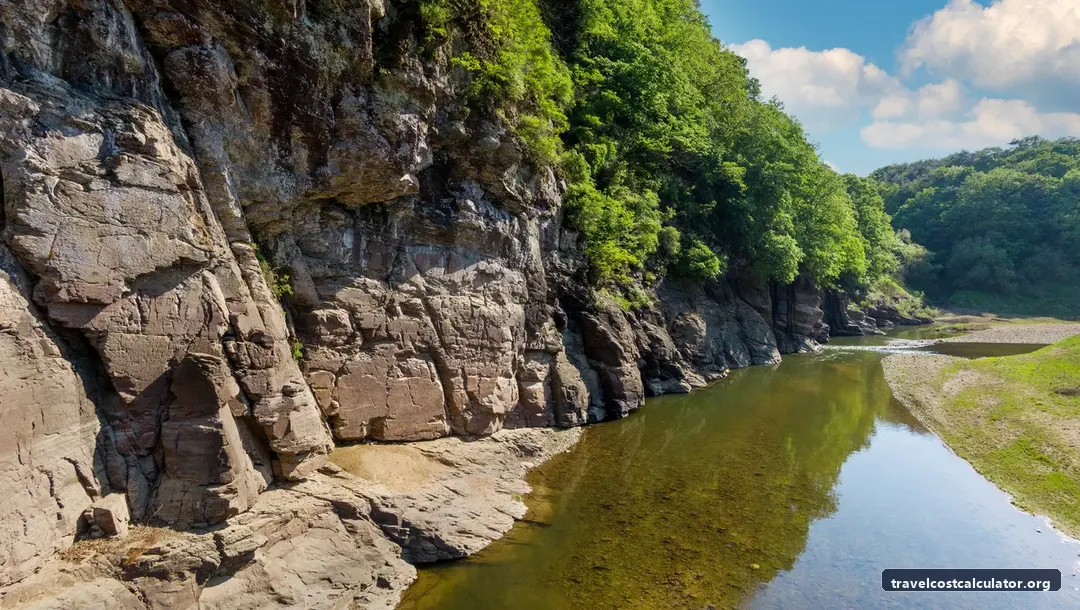
The property is located along the Bangucheon Stream on the Republic of Korea’s southeastern coast, spanning about three kilometers through a landscape of stratified cliffs.
Petroglyphs along the Bangucheon Stream
🏛️ Overview & Historical Significance
Nestled along the pristine waters of the Daegokcheon (Bangucheon) Stream in Ulju-gun, Ulsan, the Petroglyphs along the Bangucheon Stream represent one of the world's most extraordinary archaeological discoveries. Formally inscribed as a UNESCO World Heritage Site in 2025, this cultural landscape contains an unparalleled artistic archive of prehistoric human survival, coastal hunting culture, and spiritual evolution spanning thousands of years.
The UNESCO designation encompasses two masterwork rock art sites situated along a scenic river valley: the Daegok-ri Petroglyphs (Bangudae), recognized as South Korea's National Treasure No. 285, and the Cheonjeon-ri Petroglyphs, designated National Treasure No. 147. Together, they offer a rare window into the transition from late Neolithic hunting-and-gathering societies to Bronze Age settled agrarian communities and the early state formation of the Silla Kingdom.
The World's Earliest Depiction of Whaling
The crown jewel of the site is the Bangudae Petroglyphs, carved into a massive flat shale cliff measuring roughly 8 meters tall by 14 meters wide. Archaeologists date the earliest engravings back to 5000–1000 BCE. The panel features over 300 individual figures, including an astonishing 70+ detailed carvings of cetaceans. Visitors and experts alike can identify specific species—humpback whales, right whales, sperm whales, and fin whales—engraved alongside specialized whaling paraphernalia such as floats, harpoons, nets, and crewed boats holding up to 20 hunters. This makes Bangudae widely recognized as the world's oldest visual evidence of systematic marine mammal hunting.
A Continuous Canvas of Human History
Just 2.4 kilometers upstream lies the Cheonjeon-ri Petroglyph panel, situated at an inclined 45-degree angle beside the stream. Unlike the marine focus of Bangudae, Cheonjeon-ri features dense geometric patterns—concentric circles, spirals, diamonds, and stylized land animals (deer, tigers, wild boars)—dating to the Bronze Age. Lower down on the panel, fascinating runic inscriptions and scratched figures from the Silla Dynasty (6th century CE) document royal visits, noble lineages, and ritual ceremonies, effectively creating a 3,000-year continuous historic diary etched into stone.
🎟️ Entrance Fees, Opening Hours & Ticket Booking Tips
Visiting the Petroglyphs along the Bangucheon Stream is surprisingly budget-friendly, as local government initiatives promote conservation and open public access to South Korea's cultural treasures.
-
✦
Outdoor Petroglyph Trail & Observatory Access: Free (0 KRW / $0.00 USD).
-
✦
Ulsan Petroglyph Museum Admission: Free (0 KRW / $0.00 USD). Note: Interactive VR experiences inside the museum may carry a nominal token fee of ₩1,000 to ₩2,000 (~$0.75 - $1.50 USD).
Opening Hours & Operating Schedule
-
✦
Bangudae & Cheonjeon-ri Outdoor Trails: Accessible year-round during daylight hours (recommended 08:30 – 17:30).
-
✦
Ulsan Petroglyph Museum: Open Tuesday through Sunday from 09:00 to 18:00 (Last entry at 17:30). Closed every Monday (or the following Tuesday if Monday is a national holiday) and January 1st.
Pro Visitor & Booking Tips
Advance ticket reservations are not required for individual self-guided visits. However, travelers seeking an enhanced experience should keep the following tips in mind:
-
✦
Reserve Guided English Tours: Free English-speaking cultural guides can be requested at least 3–5 days in advance through the official Ulsan Culture & Tourism portal or at the museum info desk.
-
✦
Visit the Museum First: Start your journey at the Ulsan Petroglyph Museum. Because the actual Bangudae rock face sits across a river channel, seeing the museum’s 1:1 scale replica models and high-resolution 3D digital scans allows you to easily identify carved figures on the cliff face later.
🚌 How to Get There & Local Transit Costs
The Bangucheon Stream area is situated in Ulju-gun, west of Ulsan Metropolitan City, and is easily accessible via South Korea’s world-class public transport network from Seoul Travel Budget, Busan Travel Budget, or regional hubs.
Step 1: Reaching Ulsan
-
✦
From Seoul (KTX Express Train): Board the KTX from Seoul Station to KTX Ulsan Station (Tongdosa). Travel time is approximately 2 hours 15 minutes. High-speed rail fares cost approximately ₩53,500 (~$39.50 USD) one-way.
-
✦
From Busan (KTX / SRT / Bus): Take the KTX or SRT from Busan Station to KTX Ulsan Station (only 20 minutes, ~₩8,400 / $6.20 USD), or take an intercity bus from Busan Central Bus Terminal to Eonyang Intercity Bus Terminal (approx. 45 minutes, ~₩4,500 / $3.30 USD).
Step 2: Local Transport to the Petroglyphs Site
The main gateway for the petroglyph area is the Ulsan Petroglyph Museum (울산암각화박물관), where the walking trail begins.
-
✦
Option A: Direct Taxi from KTX Ulsan Station (Recommended for convenience): Taxis are readily available outside the station terminal. A direct taxi ride to the Ulsan Petroglyph Museum takes roughly 15 to 20 minutes and costs between ₩14,000 and ₩18,000 (~$10.30 - $13.20 USD) each way.
-
✦
Option B: Public Bus from KTX Ulsan Station: Take local feeder bus #348 or city bus #304 / #318 from KTX Ulsan Station stop toward the museum. Buses run roughly every 40 to 60 minutes. The journey takes around 25 minutes and costs ₩1,500 (~$1.10 USD) when paying with a standard T-Money, Cashbee, or international transit-enabled credit card.
📸 Best Photography Spots & Insider Visit Hacks
Prime Photography Angles
-
✦
Bangudae Observation Deck: Positioned across the Daegokcheon stream, this elevated platform offers a panoramic view of the ancient cliff face surrounded by lush river pine trees. Gear Tip: Bring a telephoto lens (200mm to 400mm) or a smartphone with strong optical zoom. On-site high-powered monoculars are free to use, but taking clear close-ups of specific whale carvings requires long-distance focal length.
-
✦
Cheonjeon-ri Rock Face: Located directly along the walking path, Cheonjeon-ri allows visitors to stand just feet away from the engravings. It is ideal for macro photography, detailed texture shots of Silla Dynasty inscriptions, and geometric Bronze Age patterns.
-
✦
Bangucheon River Trail & Bamboo Forest Walk: The 2.4 km nature boardwalk connecting Cheonjeon-ri and Bangudae winds through serene wetlands, bamboo groves, and dinosaur footprint fossils embedded in the bedrock. Capture reflection shots of the cliff faces mirroring off the still stream waters in early morning.
Insider Timing & Hydrology Hacks
-
✦
Mind the Water Levels (Sayeon Dam Effect): The Bangudae petroglyph panel is located near the reservoir pool of Sayeon Dam. During peak monsoon season (July–August), high water levels can partially submerge the lowest rows of carvings. The best viewing months are late autumn through spring (October to May), when water levels drop significantly, leaving the entire cliff dry and fully visible.
-
✦
Optimal Daylight Lighting: Visit the Bangudae observation deck in the mid-to-late afternoon (14:30 – 17:00). The low-angled sunlight rakes across the cliff face, throwing the carved grooves into sharp shadow relief and making low-relief petroglyphs drastically easier to discern.
🏨 Nearby Accommodation & Daily Budget Allocation
While many visitors visit on a day trip from Busan or central Ulsan, staying overnight in nearby Eonyang-eup or Ulsan City Center gives you time to fully experience the area's culinary highlights and historic surrounding sights like Tongdosa Temple.
Where to Stay
-
✦
Budget Stay (Eonyang & KTX Station Area): Clean, modern motels and local guesthouses around Eonyang Bus Terminal or KTX Ulsan Station offer comfortable private rooms with high-speed Wi-Fi starting at ₩45,000 – ₩70,000 (~$33 – $52 USD) per night.
-
✦
Mid-Range Comfort (Ulsan City Center / Nam-gu): Major business hotels like Shilla Stay Ulsan or Lotte City Hotel Ulsan offer premium international-standard rooms ranging from ₩110,000 to ₩175,000 (~$81 – $129 USD) per night.
Must-Try Local Culinary Highlight
No trip to the Bangudae area is complete without sampling Eonyang Bulgogi (언양불고기), one of South Korea's most celebrated regional beef dishes. Made from tender locally raised Korean beef (Hanwoo), thinly sliced, lightly seasoned with garlic and subtle soy, and grilled over charcoal in a flat patty pattern, it yields a smoky, melt-in-your-mouth flavor. Expect to pay between ₩22,000 and ₩28,000 (~$16 - $21 USD) per generous single serving, served alongside seasonal wild vegetable side dishes (banchan).
Estimated Daily Budget Allocations
Below is a breakdown of estimated daily expenses when visiting the Petroglyphs along the Bangucheon Stream:
-
✦
Independent Budget Backpacker (~$45 – $65 USD / ₩61,000 – ₩88,000 per day):
- Accommodation: Shared room or budget motel in Eonyang (~$25 – $35 USD)
-
✦
Transport: Local buses & T-Money card transfers (~$4 – $6 USD)
-
✦
Meals: Traditional soup places (Gukbap), local street food, & convenience snacks (~$15 – $20 USD)
-
✦
Sightseeing: Free entry to all petroglyph trail zones & museum ($0 USD)
- Accommodation: Modern hotel near KTX Station or Ulsan Nam-gu (~$85 – $120 USD)
Frequently Asked Questions
Essential visitor FAQs for Petroglyphs along the Bangucheon Stream
What is the entrance fee for Petroglyphs along the Bangucheon Stream?
How much time do you need to explore Petroglyphs along the Bangucheon Stream?
How do I get to Petroglyphs along the Bangucheon Stream from the nearest city?
📊 Heritage Quick Specs
Visiting South Korea on a Budget?
Calculate your full daily travel budget for South Korea — including hotel costs, local transport, food, and sightseeing expenses.
View South Korea Daily Travel Costs →Explore more UNESCO World Heritage Sites
🏛️ All 1,200+ Heritage Sites →