
 Yemen
Old Walled City of Shibam
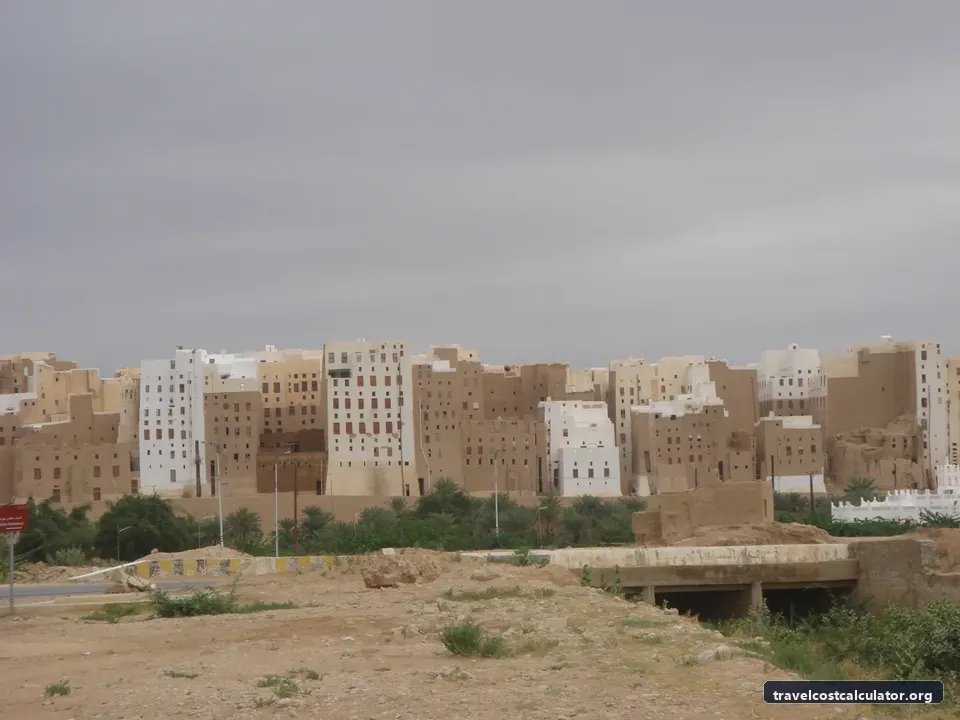
Surrounded by a fortified wall, the 16th-century city of Shibam is one of the oldest and best examples of urban planning based on the principle of vertical construction.
Old Walled City of Shibam
🏛️ Overview & Historical Significance
Rising dramatically from the floodplains of the Wadi Hadhramaut in eastern Yemen, the Old Walled City of Shibam is often hailed as the "Manhattan of the Desert"—a nickname bestowed upon it by British explorer Freya Stark in the 1930s. Inscribed as a UNESCO World Heritage site in 1982, Shibam represents one of the oldest and finest examples of urban planning based on the principle of vertical construction. The entire city, spanning roughly 400 by 300 meters, is densely packed with nearly 500 mud-brick tower houses that soar up to 11 stories (30 meters or 100 feet) into the sky, all encased within a fortified 16th-century wall.
The origin of Shibam dates back over 1,700 years to the pre-Islamic era, but its current grid-like architectural layout was meticulously constructed following a catastrophic flood in 1532. Built entirely from sun-dried mud bricks (*adobe*) mixed with straw and reinforced with *qadad* (a traditional lime plaster), these skyscrapers were designed to protect the city's inhabitants from rival bedouin raids, floodwaters, and extreme thermal shifts. The lower floors were engineered without ground-floor windows to serve as fortified grain stores and livestock shelters, while the upper levels hosted family living spaces, intricately carved wooden lattice screens (*mashrabiya*), and open-air rooftop terraces.
UNESCO designated Shibam under Criteria (iii), (iv), and (v) as an extraordinary testimony to the Hadrami civilization and an outstanding example of human settlement adapted to a harsh desert environment. However, due to lingering regional instability, extreme weather events caused by climate change, and the intense physical maintenance required to keep mud structures from eroding, UNESCO placed Shibam on the List of World Heritage in Danger in 2015. Visiting Shibam in 2026 remains a profoundly rare, bucket-list privilege that directly supports local master builders (*mu'allim*) keeping this ancient earthen craft alive.
🎟️ Entrance Fees, Opening Hours & Ticket Booking Tips
Unlike standard European heritage sites with automated turnstiles and online booking engines, visiting the Old Walled City of Shibam requires an organic, community-led entry system. There is no official government ticket counter inside the gates, but local heritage preservation committees, private homeowners, and security protocols dictate visit costs.
-
✦
Municipal & Community Conservation Contribution: $10 USD – $15 USD (~2,500 to 3,750 YER in local Hadhramaut currency notes). This informal fee is typically collected by your local guide or site caretaker to support community mud-plastering initiatives.
-
✦
Rooftop Access & Historic Home Entry: $5 USD – $10 USD per home (paid directly in cash to property owners). Entering a traditional 8-story mud tower to view the interior woodwork and step onto the roof is essential for panoramic views.
-
✦
Mandatory Local Heritage Guide Fee: $30 USD – $50 USD per day. Due to ongoing security regulations in Hadhramaut, independent unescorted walking inside Shibam by foreign nationals is strictly restricted. Hiring a certified local guide is required to pass city security checkpoints.
-
✦
Opening Hours: The physical city gates remain open 24/7 as it is a living residential city. However, daytime touring hours for visitors are strictly restricted to 7:00 AM to 5:30 PM due to local municipal curfews and security protocols.
Crucial 2026 Booking & Currency Advice: Credit cards and digital payments do not function anywhere in Wadi Hadhramaut. You must carry physical USD cash printed post-2013 (crisp, unblemished $50 and $100 bills yield the best exchange rates). While the northern and southern parts of Yemen operate on Split Travel Budget banking systems, Hadhramaut operates predominantly on the commercial market rate. Always settle guide fees and house entrance tips in USD or newly issued Yemeni Rial notes.
🚌 How to Get There & Local Transit Costs
Reaching Shibam requires careful planning. The nearest hub city and transit gateway is Seiyun, located approximately 20 kilometers (12 miles) east of Shibam. Travelers reaching Wadi Hadhramaut in 2026 generally utilize one of two main routes: an international flight into Seiyun International Airport (RIW) or an overland crossing from Oman.
Step 1: Arriving at the Gateway Hub (Seiyun)
-
✦
By Air (Recommended): Yemenia Airways operates scheduled international flights into Seiyun Airport (RIW) primarily from Cairo, Egypt (CAI), and Jeddah Travel Budget, Saudi Arabia (JED). Round-trip flights from Cairo typically cost between $850 USD and $1,100 USD.
-
✦
By Overland Route from Oman: Independent travelers and guided small groups can cross the land border from Salalah Travel Budget, Oman, via the Maziounah/Al-Ghaydah border post into Al-Mahrah province, proceeding west into Hadhramaut. A private licensed 4x4 transfer from Salalah to Seiyun takes 10–12 hours and costs approximately $250 USD – $400 USD per vehicle (including permit assistance).
Step 2: Transit from Seiyun to Shibam
Public buses do not operate on fixed schedules between Seiyun and Shibam for foreign tourists due to military checkpoints along the highway. You must arrange private transport through a registered local agency or hotel.
-
✦
Private 4x4 / Taxi with Licensed Driver (Round-Trip): Expect to pay $60 USD – $90 USD per day. This includes waiting time while you explore Shibam, fuel, and smooth navigation through the 2–3 military checkpoints between Seiyun and Shibam.
-
✦
Shared Local Minibus (For experienced Arabic speakers/locals): ~1,000 YER – 2,000 YER ($2 USD – $4 USD) from Seiyun main bazaar to Shibam main gate. *Note: Foreign travelers using shared transit will likely be stopped at checkpoints and required to hire a private escort.*
-
✦
Travel Security Permit (Tasreeh): You must carry at least 15–20 physical paper copies of your official travel permit (*Tasreeh*), issued by your sponsoring local tour operator, to hand to guards at each military checkpoint along the road.
📸 Best Photography Spots & Insider Visit Hacks
Capturing the architectural grandeur of Shibam requires strategic positioning and an understanding of light in the high desert landscape. Because the city is tightly packed, sunlight only hits the narrow interior alleys for a brief window around midday, while the exterior mud facades glow dramatically during golden hour.
Top Photography Locations
-
✦
Jabal Shibam Viewpoint (Al-Khanna Hill): Located across the dry riverbed (Wadi) directly south of the city. A brief 15-minute rocky hike up this hillside provides the iconic high-angle panoramic vista of the entire walled mud-brick skyline framed by the dramatic desert cliffs behind it.
-
✦
The South Gate Plaza (Bab al-Madina): The primary double-arched gateway entrance to the city. Frame your shots from the palm groves looking back toward the massive white-and-brown fortress walls.
-
✦
Rooftop of the Local Chief’s House / Al-Jalila Tower: Arrange with your guide to access a high rooftop near the central square. Looking down across the undulating whitewashed rooftops (*nura*) against the mud towers creates incredible geometric patterns.
Insider Hacks for 2026 Visitors
-
✦
Optimal Time of Day: Plan your visit between 3:00 PM and 6:00 PM. Arrive mid-afternoon to tour the interior streets, climb a high-rise home, and finish at the Jabal Shibam viewpoint right as sunset turns the mud skyscrapers into deep amber and gold.
-
✦
Best Season: November through February is the ideal window. Daytime temperatures average pleasant highs of 24°C–28°C (75°F–82°F), avoiding the oppressive 42°C (108°F) summer heat and severe autumn monsoon flood surges that can damage local clay roads.
-
✦
Cultural & Drone Regulations: Drones are strictly prohibited across Yemen without high-level defense ministry permits; attempting to bring one through Seiyun Airport or land borders will lead to confiscation or detention. When photographing residents in Shibam, always ask permission, especially when pointing lenses toward women or private residential windows. Dress conservatively (long trousers and covered shoulders for men; loose long clothing/headscarf recommended for women).
🏨 Nearby Accommodation & Daily Budget Allocation
Due to heritage preservation restrictions and infrastructure limitations, accommodation options directly inside the 500-year-old mud towers of Shibam are extremely limited to basic homestays. Most travelers use the nearby city of Seiyun or the historic town of Al-Hawta as their overnight base camp.
Where to Stay
-
✦
Heritage / Mid-Range Base: Hawta Palace Hotel (Al-Hawta) – Located about 15 minutes from Shibam, this converted traditional mud palace offers air conditioning, private bathrooms, beautiful gardens, and full security. Rates run $90 USD – $140 USD per night.
-
✦
Standard Hotel in Seiyun: Al-Ahqaf Hotel / City Plaza Hotel (Seiyun) – Reliable mid-range options with comfortable rooms, Wi-Fi, generator backup power, and on-site dining. Rates range between $50 USD and $80 USD per night.
-
✦
Traditional Homestay in Shibam: Arranged locally via your guide. Extremely basic (mattress on floor, shared traditional bathroom), offering unprecedented hospitality. Costs approximately $25 USD – $40 USD per night including homemade meals.
Dining & Daily Local Expenses
Hadrami cuisine is world-renowned, famous for slow-cooked meats, rich flatbreads, and high-grade sidr honey. Dining near Shibam is very affordable:
-
✦
Traditional Meal (Mandi / Zurbian rice with chicken or lamb): $4 USD – $8 USD (~1,000 to 2,000 YER) at local eateries outside Shibam gate or in Seiyun city center.
-
✦
Fresh Bread & Yemeni Saltah (Sizzling meat stew): $2 USD – $4 USD at road-side diners.
-
✦
Hadrami Red Tea with Mint or Spices: $0.50 USD per glass at local roadside stalls.
Estimated Daily Budget Breakdowns (2026 Estimates)
-
✦
Budget Backpacker (Hostel/Homestay + Shared Transport/Guide): $65 USD – $95 USD per day (Excludes long-distance flight/permits).
-
✦
Mid-Range Cultural Traveler (Private 4x4 + 3-Star Hotel + Dedicated Guide): $180 USD – $260 USD per day.
-
✦
All-Inclusive Private Tour Package (Driver, Escort, Permits, Hawta Palace Hotel): $350 USD – $500 USD per day per person.
Frequently Asked Questions
Essential visitor FAQs for Old Walled City of Shibam
What is the entrance fee for Old Walled City of Shibam?
How much time do you need to explore Old Walled City of Shibam?
How do I get to Old Walled City of Shibam from the nearest city?
📊 Heritage Quick Specs
Visiting Yemen on a Budget?
Calculate your full daily travel budget for Yemen — including hotel costs, local transport, food, and sightseeing expenses.
View Yemen Daily Travel Costs →Explore more UNESCO World Heritage Sites
🏛️ All 1,200+ Heritage Sites →