
 Sri Lanka
Old Town of Galle and its Fortifications
Founded in the 16th century by the Portuguese, Galle reached the height of its development in the 18th century, before the arrival of the British.
Old Town of Galle and its Fortifications
🏛️ Overview & Historical Significance
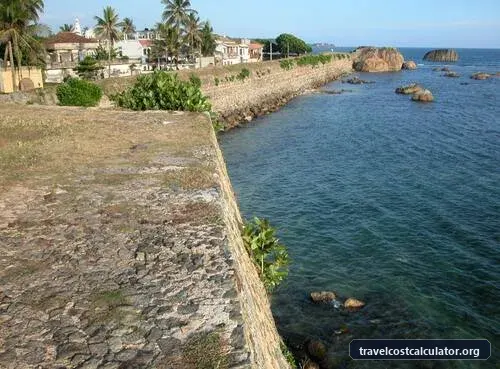
Standing dramatically on a rocky peninsula jutting into the Indian Ocean, the Old Town of Galle and its Fortifications represents one of South Asia’s most extraordinary urban architectural ensembles. Inscribed as a UNESCO World Heritage site in 1988, Galle Fort is recognized under Criterion (iv) as the finest surviving example of a fortified European colonial city in South and Southeast Asia, demonstrating an exceptional synthesis of European architectural traditions and South Asian cultural, geological, and climate-adapted building techniques.
The fort's origins trace back to 1505 when a Portuguese fleet led by Lourenço de Almeida was blown off course and anchored in Galle's natural harbor. By 1588, after initial tensions with the Kingdom of Kandy Travel Budget, the Portuguese constructed a rudimentary earthen-and-palm fortification dedicated to Santa Cruz Travel Budget. However, the architectural masterpiece seen today is largely the work of the Dutch East India Company (VOC). Following a fierce siege in 1640, the Dutch wrested control of Galle from the Portuguese and spent the next century completely reimagining the urban layout. They constructed 14 thick granite bastions across 52 hectares, engineered a sophisticated underground sewage system flushed daily by ocean tides, and built grand stone structures to protect their lucrative spice monopoly—most notably Ceylon cinnamon.
In 1796, control passed seamlessly to the British Empire, who maintained the fort as an administrative center while adding distinctive Victorian elements, including the iconic white lighthouse at Point Utrecht Bastion. Unlike many colonial forts preserved merely as open-air ruins, Galle Fort remains a vibrant living heritage town. Within its 400-year-old stone walls, roughly 2,000 residents live in restored Dutch villa-style homes alongside centuries-old churches, historic mosques, boutique gem merchants, and artisan cafes.
🎟️ Entrance Fees, Opening Hours & Ticket Booking Tips
One of the most appealing aspects of visiting the Old Town of Galle is its accessibility: entering and walking around Galle Fort is completely free. Because the site is an active municipal district, you can walk through its historical gates, stroll along the ocean-facing ramparts, and explore its cobbled alleys without purchasing a general admission ticket.
However, specific historic buildings, museums, and heritage exhibitions within the fort charge modest entrance fees for international visitors. Below is a breakdown of estimated 2026 ticket prices and logistics:
-
✦
Galle Ramparts & Historic Alleyways: Free (Open 24/7).
-
✦
Galle National Museum (Dutch Commissariat Building): ~LKR 1,500 ($4.80 USD) for adults; LKR 800 ($2.55 USD) for children. Open Tuesday – Saturday, 9:00 AM – 5:00 PM.
-
✦
National Maritime Archaeology Museum (Old Dutch Warehouse): ~LKR 2,000 ($6.45 USD) for adults; LKR 1,000 ($3.20 USD) for children. Open Tuesday – Saturday, 9:00 AM – 4:30 PM.
-
✦
Historical Mansion Museum (Pedlar Street): Free entry (Voluntary donations suggested to support the local craftsmen demonstrating traditional gem-cutting and lace-making).
-
✦
Groote Kerk (Dutch Reformed Church): Free entry (Small donation of LKR 500 / $1.60 USD recommended for historic preservation).
Pro Booking & Currency Hacks for 2026
Advance digital ticketing is generally not required for museums within Galle Fort; tickets can be purchased directly at the entrance counters using local currency. While upscale boutique hotels and fine dining establishments inside the fort universally accept Visa and Mastercard, museum counters, street vendors, and tuk-tuk drivers require cash in Sri Lankan Rupees (LKR). ATMs are located near the Main Gate and along Commercial Bank branch on Church Street.
🚌 How to Get There & Local Transit Costs
Galle is located in Sri Lanka’s Southern Province, approximately 120 km (75 miles) south of the commercial capital, Colombo Travel Budget. Traveling to Galle from Colombo or Bandaranaike International Airport (CMB) is straightforward, offering options ranging from ultra-budget scenic coastal trains to private expressway transfers.
1. Scenic Coastal Train (Best Budget & Atmosphere)
The iconic Southern Coastal Railway Line runs directly from Colombo Fort Railway Station to Galle Railway Station (located just 300 meters from the fort’s Main Gate). The journey hugging the shoreline takes roughly 2 to 2.5 hours.
-
✦
2nd Class Reserved / Unreserved: ~LKR 500 – LKR 800 ($1.60 – $2.60 USD)
-
✦
1st Class Air-Conditioned City Express: ~LKR 1,500 – LKR 2,200 ($4.80 – $7.00 USD)
-
✦
Tip: Book seat tickets 30 days in advance via the official Sri Lanka Railways portal if traveling on weekends or peak holidays. Sit on the right side of the train heading south for uninterrupted Indian Ocean views.
2. Air-Conditioned Highway Bus (Fastest Public Transport)
Modern luxury buses depart every 20-30 minutes from the Makumbura Multimodal Centre (MMC) or Kadawatha Bus Stand in Colombo, taking the Southern Expressway (E01) straight to the Galle Highway Bus Stand in roughly 1.5 to 2 hours.
-
✦
Expressway Bus Fare: ~LKR 1,200 – LKR 1,600 ($3.80 – $5.15 USD) per seat.
3. Private Taxi / Ride-Hailing Service (Maximum Comfort)
For direct door-to-door transit from Bandaranaike International Airport (CMB) to Galle Fort via the Southern Expressway, private cars or app-based services (like PickMe or Uber) are the most efficient option.
-
✦
Standard Car / SUV Transfer: ~LKR 18,000 – LKR 25,000 ($58.00 – $80.00 USD), inclusive of toll fees. Journey time: 2 to 2.5 hours.
Navigating Within Galle
The Old Town inside the Fort walls is completely walkable and vehicle-restricted on several narrow lanes. If you need to travel from Galle Railway Station to your hotel inside the fort, a local three-wheeler (tuk-tuk) should cost no more than LKR 300 – LKR 500 ($1.00 – $1.60 USD). Always ensure the driver uses a meter or agree on the fare prior to stepping in.
📸 Best Photography Spots & Insider Visit Hacks
Galle Fort offers photographers an unmatched blend of rugged 17th-century masonry, colonial Dutch architecture, tropical palm trees, and dramatic ocean surf. To capture the site’s true beauty while navigating the tropical elements, follow these tested strategies.
Must-Capture Photography Locations
-
✦
Point Utrecht Bastion & Galle Lighthouse: The classic postcard image of Sri Lanka. Capture the stark white 1939 lighthouse against a canopy of swaying emerald coconut palms. Best shot: Early morning at 7:00 AM from the base of the bastion.
-
✦
Flag Rock Bastion: The absolute best vantage point in Galle for sunset photography. Watch local daredevils jump off high rocks into the roaring sea below while the sun dips beneath the horizon.
-
✦
Pedlar Street & Leyn Baan Street: Characterized by pastel-hued Dutch colonial villas, carved wooden doorways, hanging bougainvillea, and vintage push-bicycles.
-
✦
Old Dutch Gate (Inner and Outer Facades): Note the historic contrast—the outer side features the British Royal Coat of Arms (added in 1796), while the inner archway displays the original 1669 VOC monogram flanked by two lions.
Insider Visit Hacks & Crowd Avoidance
Timing Your Visit: The ideal months to visit Galle are during the southwest dry season from December through April, when rainfall is minimal and ocean waters are clear turquoise. Avoid the heavy monsoons of May to September.
Beat the Heat & Bus Tours: Day-tour buses arriving from Colombo and coastal resorts flood the ramparts between 11:00 AM and 3:30 PM. To experience quiet cobblestone streets, plan your strolls between 6:30 AM – 8:30 AM. Midday temperatures on the exposed stone walls regularly cross 32°C (90°F) with high humidity—stay hydrated by purchasing fresh king coconuts (thambili) from local vendors for ~LKR 150 – LKR 200 ($0.50 USD).
🏨 Nearby Accommodation & Daily Budget Allocation
Whether you choose to stay within the atmospheric historic walls of the Fort or in the nearby beachfront districts of Unawatuna and Galle City, accommodation choices cater to every price point. Below are estimated 2026 pricing breakdowns to help you plan your daily travel budget.
Accommodation Options (Per Night)
-
✦
Budget (Hostels & Local Guesthouses): $18 – $35 USD (LKR 5,600 – LKR 11,000). Fantastic heritage homestays are tucked inside the fort along Parawa Street and Lighthouse Street.
-
✦
Mid-Range (Boutique Colonial Hotels): $80 – $170 USD (LKR 25,000 – LKR 53,000). Beautifully restored 18th-century Dutch merchant villas featuring courtyards, plunge pools, and colonial verandahs.
-
✦
Luxury (Heritage 5-Star Resorts): $280 – $650+ USD (LKR 88,000 – LKR 200,000+). Iconic luxury properties such as Amangalla or Fort Bazaar offer high-end spa services, fine dining, and Butler service.
Estimated Daily Travel Budgets for 2026
To help you accurately calculate your overall trip costs, here is what a typical day in Galle Fort costs across three travel tiers (including meals, local transit, entry fees, and lodging per person based on double occupancy):
-
✦
Backpacker Tier (~$35 – $50 USD / day): Bed in a cozy fort hostel, traditional Sri Lankan rice & curry from local eateries outside the Main Gate, public coastal train transport, and free self-guided rampart walks.
-
✦
Flashpacker / Mid-Range Tier (~$110 – $200 USD / day): Private room in a boutique heritage hotel, fusion cafe meals, iced coffee, entry tickets to 2 museums, AC highway bus/tuk-tuk travel, and sunset cocktails at a rampart bar.
-
✦
Luxury Tier (~$350 – $750+ USD / day): Suite stay at a luxury heritage property, fine dining seafood dinners, private chauffeur transit from Colombo, private guided walking tour, and gem purchasing experiences.
Frequently Asked Questions
Essential visitor FAQs for Old Town of Galle and its Fortifications
What is the entrance fee for Old Town of Galle and its Fortifications?
How much time do you need to explore Old Town of Galle and its Fortifications?
How do I get to Old Town of Galle and its Fortifications from the nearest city?
📊 Heritage Quick Specs
Visiting Sri Lanka on a Budget?
Calculate your full daily travel budget for Sri Lanka — including hotel costs, local transport, food, and sightseeing expenses.
View Sri Lanka Daily Travel Costs →Explore more UNESCO World Heritage Sites
🏛️ All 1,200+ Heritage Sites →