
 Yemen
Old City of Sana'a
Situated in a mountain valley at an altitude of 2,200 m, Sana’a has been inhabited for more than 2,500 years.
Old City of Sana'a
🏛️ Overview & Historical Significance
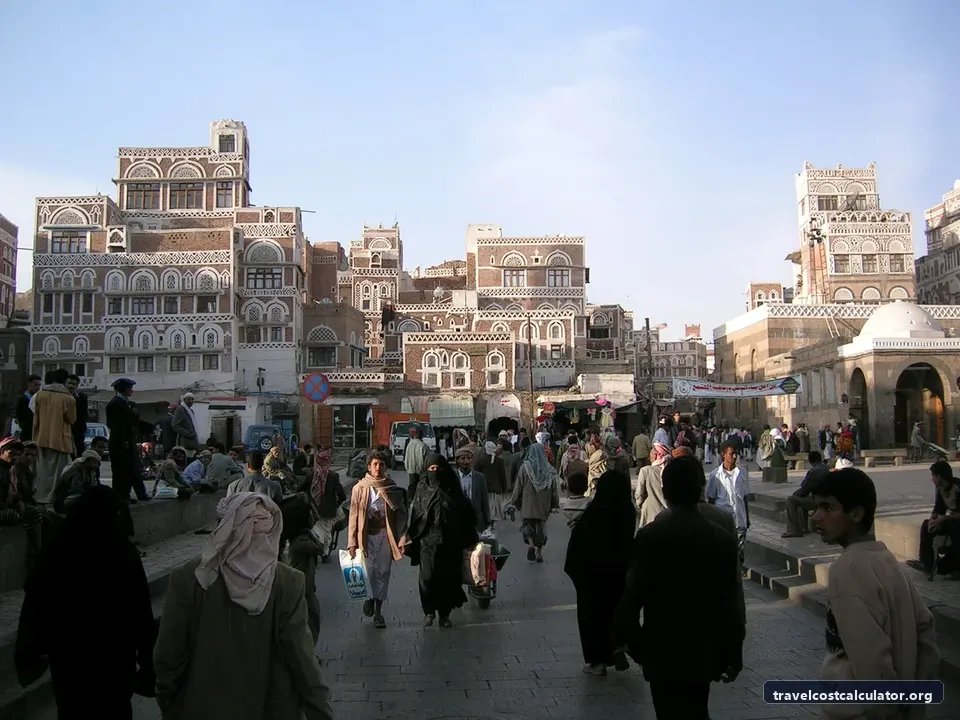
Rising like a fairytale from the high mountain valley of Yemen, the Old City of Sana'a Travel Budget stands as one of the world's oldest continuously inhabited urban settlements. Inscribed as a UNESCO World Heritage site in 1986, this living architectural masterpiece dates back over 2,500 years. According to local legend, the city was founded by Shem, the son of Noah, earning it the ancient moniker Madinat Sam (the City of Shem).
Sana'a’s UNESCO designation honors its extraordinary, homogeneous architectural landscape. The city is world-famous for its multi-story tower-houses constructed from rammed earth (pisé) and burnt brick. Rising up to nine stories high, these structures are adorned with intricate white gypsum plasterwork (qaddad), delicate geometric friezes, and radiant qamariya windows—half-moon fanlights crafted from translucent alabaster or vibrant stained glass set in plaster frames. Beyond residential architecture, the enclosed city contains over 103 mosques, 14 hammams (traditional bathhouses), and over 6,000 historic houses built prior to the 11th century.
At the spiritual heart of the city lies the Great Mosque of Sana'a (Al-Jami' al-Kabir), commissioned during the lifetime of the Prophet Muhammad in the 7th century, making it one of the earliest mosques in Islamic history. Sana'a also served as a crucial crossroads along the ancient Frankincense Trade Route and the historic pilgrimage trails to Mecca Travel Budget.
While the site was added to the UNESCO List of World Heritage in Danger due to regional instability and environmental decay, local conservationists and international cultural preservation groups continue efforts in 2026 to repair historic facades and preserve this irreplaceable jewel of Arabian heritage. Visiting Sana'a requires meticulous travel planning, but witnessing its gingerbread-like skyline at dusk remains an unmatched journey through time.
🎟️ Entrance Fees, Opening Hours & Ticket Booking Tips
The Old City of Sana'a is a functioning, inhabited metropolis rather than an enclosed open-air museum. Consequently, there is no general admission ticket required to walk through its iconic southern entrance, Bab al-Yaman, or to explore its ancient alleyways.
Estimated 2026 Costs & Site Fees
-
✦
City Access: Free (Public historic zone).
-
✦
National Museum of Yemen (Sana'a): ~2,500 YER – 5,000 YER ($5.00 – $10.00 USD). Entry subject to current operational status.
-
✦
Licensed Local Cultural Guide: $40.00 – $70.00 USD per full day (Highly recommended for safety, navigation, and accessing private rooftop viewpoints).
-
✦
Travel Clearance & Security Permits: $50.00 – $100.00 USD (Typically managed by local tour operators facilitating travel approvals).
-
✦
Rooftop Café Access & Tea: 1,000 YER – 2,500 YER ($2.00 – $5.00 USD) per person.
Opening Hours & Scheduling Tips
The Old City itself is accessible 24 hours a day, but key commercial and cultural hubs run on specific daily rhythms:
-
✦
Souk al-Milh (Salt Market): Operates daily from roughly 8:30 AM to 1:00 PM, re-opening after afternoon rest from 4:00 PM until 9:00 PM.
-
✦
Religious Sites: Non-Muslim visitors are generally restricted from entering active mosques, including the Great Mosque, though admiring the intricate courtyard facades from the perimeter is permitted outside of prayer times.
-
✦
Friday Hours: Most markets and shops close on Friday mornings for communal prayers, reopening in the late afternoon.
🚌 How to Get There & Local Transit Costs
Navigating to Sana'a in 2026 requires understanding current regional transport logistics. Overseas visitors must coordinate all transit with an established local tour operator to obtain necessary travel permits and security clearances prior to arrival.
Arriving in Sana'a
By Air: Sana'a International Airport (SAH) operates commercial flights connecting to select regional hubs such as Amman Travel Budget (Jordan) or Cairo (Egypt). Flight schedules are subject to approval; international travelers must confirm operating corridors ahead of time.
By Overland Transfer: Travelers arriving via secondary points (such as Seiyun or Aden) must arrange private 4x4 transport equipped with official security permits to clear multiple highway checkpoints across governorates. A private vehicle charter from southern entry points can cost between $250.00 and $450.00 USD depending on distance and escort logistics.
Local Transit within Sana'a
Once inside the city, the Old City's narrow, winding alleys are strictly pedestrian-only or accessible by bicycle and small motorbikes.
-
✦
Shared Minibuses (Dabbab): Fixed routes run along the outer perimeter of the historic wall (e.g., along Al-Zubairi Street or Bab al-Yaman hub). Fare: ~200 YER – 400 YER ($0.40 – $0.80 USD) per trip.
-
✦
Private City Taxis: Readily available for transport between central hotels and the historic gates. Expect to pay ~3,000 YER – 7,000 YER ($5.00 – $12.00 USD) for a short ride across town. Always agree on the price before getting in.
-
✦
Walking: Navigating on foot is the absolute best way to experience the Old City. A knowledgeable guide is indispensable to avoid getting lost in the labyrinthine alleys.
📸 Best Photography Spots & Insider Visit Hacks
The visual density of Sana'a offers extraordinary opportunities for travel photography. The interplay of burnt-sienna mudbrick, stark white plaster, and colorful stained glass creates light compositions found nowhere else on earth.
Top Photography Locations
-
✦
Bab al-Yaman Rooftops: Traditional guesthouses near the main gate feature open-air rooftops offering sweeping 360-degree vistas over the tower houses at sunset.
-
✦
Bustan al-Qasmi: An ancient sunken urban garden inside the city walls. The contrast between green vegetable plots and towering historic homes provides a quintessential Sana'a frame.
-
✦
Souk al-Milh (Salt Market): Capture atmospheric shots of artisanal craftspeople—blacksmiths forging jambiya (traditional curved daggers), spice merchants, and traditional sesame oil presses turned by camels.
-
✦
Qamariya Stained Glass Interiors: Position yourself inside a traditional reception room (mafraj) during mid-afternoon when sunlight streams through colorful arch windows, casting radiant stained-glass patterns across carpets and walls.
Insider Travel Hacks for 2026
-
✦
Optimal Weather Window: Plan your visit between October and February, when days are crisp, clear, and dry (temperatures average 18°C – 22°C). Avoid July and August due to sudden seasonal downpours that can make unpaved alleys muddy.
-
✦
Cash Is King: Credit cards and ATMs are non-functional for international travelers in Sana'a. Bring pristine, unblemished USD bills (newer series printed after 2013) to exchange locally for Yemeni Rials (YER).
-
✦
Cultural Etiquette & Respect: Dress conservatively. Men should wear long pants and collared shirts; women should wear loose-fitting, long clothing and carry a headscarf out of respect for local customs. Always ask permission before photographing individuals, particularly women and traditional street vendors.
-
✦
Hire a Local Fixer/Guide: A local guide not only provides historical narrative but also navigates neighborhood etiquette, arranges entry to private tower rooftops, and ensures safety across distinct quarters.
🏨 Nearby Accommodation & Daily Budget Allocation
Staying near or within the Old City allows travelers to experience authentic Yemeni hospitality in restored traditional tower houses known as funduqs.
Recommended Accommodations
-
✦
Traditional Heritage Funduq (Inside Old City): Properties like the restored Arabia Felix Hotel or Dawood Hotel offer authentic mudbrick rooms, hand-woven carpets, and rooftop breakfast terraces. Rates range from $40.00 – $75.00 USD per night.
-
✦
Mid-Range / Commercial Hotels (Outside City Walls): Full-service hotels located within a 10-minute taxi drive of Bab al-Yaman (e.g., Taj Sheba Hotel area) offer modernized security, air conditioning, and reliable generator power. Rates range from $90.00 – $160.00 USD per night.
Food & Dining Costs
Yemeni cuisine is rich, flavorful, and remarkably affordable. Dine at local eateries near Bab al-Yaman to sample staple dishes like Saltah (a bubbling meat and vegetable stew topped with fenugreek foam) or Fahsa, served with hot giant flatbread (khubz).
-
✦
Traditional Street Meal (Saltah/Fahsa & Bread): $3.00 – $6.00 USD (1,500 – 3,000 YER).
-
✦
Yemeni Spiced Coffee (Qishr) or Tea with Mint: $0.50 – $1.50 USD (250 – 750 YER).
-
✦
Sit-Down Restaurant Dinner: $8.00 – $15.00 USD per person.
Daily Budget Summary (2026 Estimates)
-
✦
Budget Traveler: $50.00 – $75.00 USD / day (Staying in a basic traditional guesthouse, taking shared transport, eating local street food, self-guided street walking).
-
✦
Mid-Range Traveler: $130.00 – $220.00 USD / day (Staying in a heritage hotel, hiring a private driver and licensed daily local guide, dining at top traditional restaurants).
-
✦
Luxury / Escorted Security Tour: $350.00+ USD / day (Including private armored or escorted vehicle transport, dedicated security logistics, high-end hotel accommodation, and all inclusive permits).
Frequently Asked Questions
Essential visitor FAQs for Old City of Sana'a
What is the entrance fee for Old City of Sana'a?
How much time do you need to explore Old City of Sana'a?
How do I get to Old City of Sana'a from the nearest city?
📊 Heritage Quick Specs
Visiting Yemen on a Budget?
Calculate your full daily travel budget for Yemen — including hotel costs, local transport, food, and sightseeing expenses.
View Yemen Daily Travel Costs →Explore more UNESCO World Heritage Sites
🏛️ All 1,200+ Heritage Sites →