
 CD
CD
Okapi Wildlife Reserve
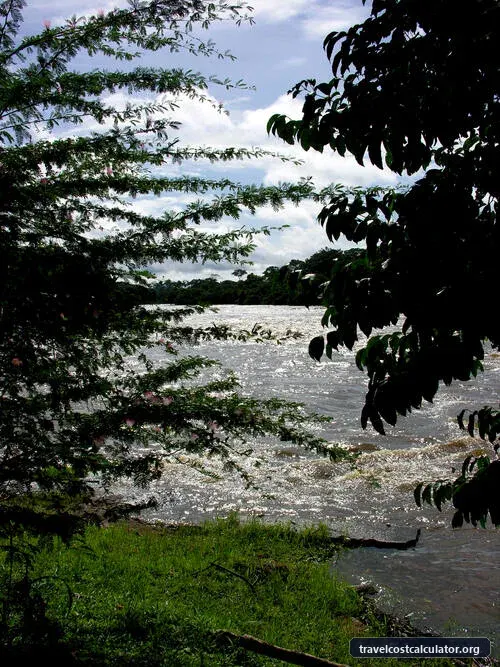
The Okapi Wildlife Reserve occupies about one-fifth of the Ituri forest in the north-east of the Democratic Republic of the Congo.
Okapi Wildlife Reserve
🏛️ Overview & Historical Significance
Deep within the heart of the Congo River Basin lies the Okapi Wildlife Reserve, an extraordinary ecological sanctuary spanning roughly 13,700 square kilometers of the Ituri Forest in the northeastern Democratic Republic of the Congo (CD). Designated as a UNESCO World Heritage site in 1996, the reserve represents one of the most vital biodiversity hotspots on the African continent. It shelters approximately one-sixth of the global population of the Okapia johnstoni—the elusive, zebra-striped forest giraffe endemic strictly to the dense tropical forests of the DRC.
The reserve's UNESCO inscription recognizes its exceptional natural beauty, unmatched evolutionary importance, and complex ecosystem. Beyond the okapi, the reserve safeguards threatened forest elephants, chimpanzees, 14 species of primates, and over 300 documented bird species. Furthermore, Okapi Wildlife Reserve is the ancestral home of the indigenous Mbuti and Efe hunter-gatherers. These forest dwellers have lived in symbiotic harmony with the rainforest for millennia, maintaining traditional nomadic foraging customs that are intrinsically tied to the conservation of this primary canopy.
Despite its global ecological value, the reserve was placed on the UNESCO List of World Heritage in Danger in 1997 due to armed conflict, illegal gold and coltan mining, and bushmeat poaching. Today in 2026, intensified joint conservation management between the Institut Congolais pour la Conservation de la Nature (ICCN) and international partners like the Wildlife Conservation Society (WCS) has strengthened security around the main station at Epulu, making controlled, official expeditions possible for seasoned travelers seeking true frontier ecotourism.
🎟️ Entrance Fees, Opening Hours & Ticket Booking Tips
Visiting the Okapi Wildlife Reserve requires official clearance, permits, and mandatory armed ranger escorts provided by the ICCN. All payments at the Epulu Station administrative office must be made in crisp, undamaged U.S. Dollars (printed post-2013) or the equivalent in Congolese Francs (CDF).
Estimated 2026 Pricing Structure
-
✦
International Tourist Park Permit: $70 USD (~196,000 CDF) per person, per day.
-
✦
Mandatory ICCN Ranger & Escort Fee: $50 USD (~140,000 CDF) per group, per day.
-
✦
Okapi Tracking & Forest Trekking Permit: $100 USD (~280,000 CDF) per person per activity.
-
✦
Indigenous Mbuti Cultural Walk Permit: $50 USD (~140,000 CDF) per person.
-
✦
Commercial Photography / Video Permit: $150 – $300 USD (~420,000 – 840,000 CDF) base rate.
Opening Hours & Administrative Logistics
The reserve headquarters at Epulu Station operates daily from 06:00 to 18:00. Forest treks and guided walks depart exclusively during daylight hours, typically initiating around 06:30 for birding and wildlife tracking.
Essential Booking & Safety Tips
-
✦
Pre-Approval is Mandatory: Do not arrive unannounced. Independent travel to Epulu is unsafe without prior arrangement. You must coordinate your visit weeks in advance through the ICCN official office in Kinshasa or Goma, or via accredited regional expedition operators working with WCS.
-
✦
Visa & Security Clearance: A valid DRC tourist visa requires an official invitation letter issued by ICCN or your licensed tour operator. Always check your home government's latest travel advisories before committing to travel in Ituri Province.
-
✦
Cash Rules: There are zero ATMs, credit card terminals, or reliable banking facilities within hundreds of kilometers of Epulu. Carry sufficient physical USD cash to cover permits, tips, emergencies, and transport costs.
🚌 How to Get There & Local Transit Costs
Reaching the Okapi Wildlife Reserve is a logistically demanding journey that requires meticulous planning, robust vehicles, and patience. The central entry point for all visitors is the conservation base located at Epulu, situated along National Route 4 (N4).
Option A: Transit via Bunia (Eastern Gateway)
Bunia is the nearest regional airport city with daily commercial domestic flights connecting from Kinshasa or Goma.
-
✦
Flight to Bunia (MUN): Round-trip domestic flights from Kinshasa or Goma cost between $350 and $550 USD.
-
✦
4x4 Private Overland Transfer (Bunia to Epulu): The distance is approximately 250 km along the unpaved, heavily rutted N4 highway. Driving takes between 8 to 12 hours depending on road conditions. Renting a rugged, modified 4x4 with an experienced driver costs $250 – $400 USD per day (excluding fuel costs, which run ~$2.50 USD per liter in remote regions).
Option B: Transit via Kisangani (Western Gateway)
Kisangani offers another entry point via Bangboka International Airport (FKI).
-
✦
4x4 Private Overland Transfer (Kisangani to Epulu): The 450 km journey east along the N4 is arduous and typically requires 1.5 to 2 days of off-road driving. Expect vehicle rental costs of $300 – $450 USD per day plus driver per diem.
Overland Public Transport (Extreme Expedition Budget)
While local heavy cargo trucks traverse the N4 highway between Bunia and Kisangani, riding aboard these open-top trucks (costing ~$40 – $70 USD / 112,000 – 196,000 CDF) is strongly discouraged due to severe safety risks, unpredictable delays lasting several days, and lack of security escorts.
📸 Best Photography Spots & Insider Visit Hacks
Capturing the primary rainforest of the Ituri Basin requires special camera preparation and strategic timing. The thick double-canopy dampens natural daylight, creating challenging low-light conditions beneath the forest floor.
Prime Photography Spots
-
✦
Epulu Station Sanctuary & Riverbanks: The banks of the Epulu River offer breathtaking golden-hour vistas at sunrise (06:00–07:00) and sunset (17:15–18:15), where reflections of ancient hardwood trees mirror off the dark water.
-
✦
Deep Forest Salt Licks (Edoro Clearing): Guided multi-day hikes to natural mineral licks deep within the interior offer the best opportunity to photograph forest primates, rare birds, and occasionally forest elephants.
-
✦
Mbuti Cultural Encampments: Capturing traditional leaf-thatched huts (mongulu) and hunting preparations offers powerful documentary imagery. Always request permission through your guide before taking portraits of community members.
Insider Hacks for 2026 Travelers
-
✦
Optimal Seasonal Weather: Plan your visit during the drier windows from December to February or June to August. Rain falls year-round, but dry months reduce mud on the N4 highway and lower leech and mosquito activity on forest trails.
-
✦
Camera Moisture Protection: Humidity inside the Ituri Forest consistently exceeds 80–90%. Carry heavy-duty dry bags, silica gel packs, and waterproof lens sleeves. Keep fast prime lenses (f/1.4 to f/2.8) in your kit to compensate for ambient darkness under the canopy.
-
✦
Crowd Avoidance: Due to extreme remoteness, overcrowding is non-existent. You will likely be among fewer than a dozen international visitors in the entire reserve during your stay.
🏨 Nearby Accommodation & Daily Budget Allocation
Infrastructure in and around the Okapi Wildlife Reserve is basic and geared primarily toward conservation staff, researchers, and self-sufficient expedition groups. All accommodations are concentrated in and around Epulu Station.
Accommodation Options at Epulu
-
✦
ICCN Visitor Station & Camping (Budget): Simple canvas tent sites or basic dorm rooms managed by park authorities. Basic shared bucket-shower facilities and pit latrines. Rates range from $25 to $45 USD per night.
-
✦
Epulu Conservation Guest House (Mid-Range): Functional, clean room accommodations featuring twin beds, solar power (available for limited evening hours), and screened windows. Managed directly in coordination with park authorities. Rates run $90 to $150 USD per night.
-
✦
Mobile Expedition Safari Camps (High-End / Tour Operators): Customized walk-in safari tents featuring cot beds, portable chemical toilets, and private camp chef services set up deep in the reserve by specialized expedition agencies. Prices range from $350 to $650+ USD per night as part of an all-inclusive tour package.
Dining & Food Expenses
There are no commercial restaurants in Epulu. Meals are prepared at the station mess tent or by your private trip cook. Local staples include cassava leaves (sombe), fried plantains, rice, beans, and fresh river fish. Expect to budget $15 to $35 USD per day for freshly prepared camp meals and purified drinking water.
Sample Daily Budget Breakdown (per person, twin share)
-
✦
Budget Backpacker / Independent Ecotourist: ~$160 – $220 USD / day (Basic entry, shared guide fees, campsite/dorm, basic mess meals).
-
✦
Mid-Range Guided Expeditioner: ~$400 – $650 USD / day (Private 4x4 transport amortized over group, guest house stay, full permits, cultural activities, dedicated cook).
Frequently Asked Questions
Essential visitor FAQs for Okapi Wildlife Reserve
What is the entrance fee for Okapi Wildlife Reserve?
How much time do you need to explore Okapi Wildlife Reserve?
How do I get to Okapi Wildlife Reserve from the nearest city?
📊 Heritage Quick Specs
Visiting CD on a Budget?
Calculate your full daily travel budget for CD — including hotel costs, local transport, food, and sightseeing expenses.
View CD Daily Travel Costs →Explore more UNESCO World Heritage Sites
🏛️ All 1,200+ Heritage Sites →