
 Senegal
Niokolo-Koba National Park
Located in a well-watered area along the banks of the Gambia river, the gallery forests and savannahs of Niokolo-Koba National Park have a very rich fauna, among them Derby elands (largest of the antelopes), ch...
Niokolo-Koba National Park
🏛️ Overview & Historical Significance
Spanning over 9,130 square kilometers (3,500 square miles) across southeastern Senegal near the border with Guinea-Bissau Travel Budget, Niokolo-Koba National Park (Parc National du Niokolo-Koba) is one of West Africa's largest and most ecologically vital protected wildernesses. Flanked by the meandering Gambia River, the park encompasses a breathtaking landscape of Sudanian savanna, gallery forests, lush floodplains, and rocky inselbergs, centered around the rugged heights of Mont Assirik.
Inscribed as a UNESCO World Heritage site in 1981, Niokolo-Koba was designated for its incredible biodiversity and unique riverine ecosystems, which serve as a critical refuge for West Africa’s dwindling megafauna. The park is historically famous as one of the final strongholds for the critically endangered West African Lion (Panthera leo leo), the world's largest antelope—the Lord Derby Eland (Taurotragus derbianus derbianus)—as well as chimpanzees, hippopotamuses, African wild dogs, leopards, and over 330 species of birds.
For several decades, the park faced severe threats from illegal commercial poaching, bushfires, drying water basins, and proposed dam constructions, leading UNESCO to place it on the List of World Heritage in Danger in 2007. However, following aggressive, multi-year conservation initiatives by the Senegalese Department of National Parks alongside global partners (including Panthera and the EU), anti-poaching ranger patrols were fortified, water points restored, and wildlife monitoring upgraded. In a historic victory for African conservation, UNESCO officially removed Niokolo-Koba from the World Heritage in Danger list. In 2026, visitors can witness an extraordinary ecological resurgence, with recovering predator populations and enhanced wilderness infrastructure restoring this West African safari jewel to its former glory.
🎟️ Entrance Fees, Opening Hours & Ticket Booking Tips
Visiting Niokolo-Koba National Park requires paying direct park entry fees alongside mandatory government ranger/guide fees and vehicle permits. Below are the estimated costs updated for the 2026 travel season (converted in West African CFA Franc [XOF] and US Dollars [$]):
-
✦
Foreign Adult Entrance Fee: 5,000 XOF (~$8.50 USD) per person, per day.
-
✦
West African (ECOWAS) National Entrance Fee: 2,000 XOF (~$3.50 USD) per person, per day.
-
✦
Mandatory Official Park Guide / Tracker: 10,000 XOF (~$16.50 USD) per group, per day. (You are legally prohibited from self-driving or walking in the park without an accredited eco-ranger).
-
✦
Vehicle Permit Fee (4x4 Required): 10,000 XOF (~$16.50 USD) per vehicle, per day.
-
✦
Gambia River Pirogue (Boat Safari): 15,000 to 25,000 XOF (~$25 - $40 USD) per boat session (up to 5 passengers).
Opening Hours & Gates
The main gates—most notably the Dar Salam Gate (the principal northern entry) and the Wassadou Gate—are open daily from 06:00 AM to 06:00 PM. Night drives are strictly restricted unless accompanied by specialized park research wardens under prior administrative permit.
Essential Ticket & Payment Hacks
-
✦
Cash is King: Payment booths at Dar Salam do NOT accept credit cards, foreign currencies, or mobile money payments. Always carry sufficient cash in West African CFA Francs (XOF), obtained in Dakar Travel Budget or Tambacounda prior to arrival.
-
✦
No Advanced Online Reservation System: Entry tickets are issued directly at the park entry gates. However, booking your accredited safari vehicle and certified ranger guide through an authorized tour operator in Tambacounda or your lodge at least 48 hours in advance is strongly recommended.
-
✦
Passport Verification: Original passports (not photocopies) must be presented at the ranger gate for all international visitors during registration.
🚌 How to Get There & Local Transit Costs
Niokolo-Koba National Park is situated in the remote southeastern corner of Senegal. The primary urban transit gateway is the regional capital city of Tambacounda, located approximately 85 km (53 miles) northwest of the park's main entry point at Dar Salam.
Step 1: Traveling from Dakar to Tambacounda
The journey from Senegal's capital, Dakar, to Tambacounda covers roughly 460 km along the N1 highway:
-
✦
Shared Taxi ("Sept-Place"): Departing from Dakar’s Gare Routière des Beaux Maraîchers, a 7-seat Peugeot taxi costs around 11,000 to 14,000 XOF (~$18 - $23 USD) per seat. Expect a 7 to 9-hour journey depending on traffic.
-
✦
Express Intercity Bus (Senegal Dem Dikk / VIP Coaches): Modern air-conditioned long-haul buses operate daily routes between Dakar and Tambacounda. Fares range between 8,000 and 12,000 XOF (~$13 - $20 USD). Booking 24 hours ahead at the terminal is advised.
-
✦
Private 4x4 Charter from Dakar: Renting a private 4x4 with a professional driver-guide from Dakar costs roughly $130 to $190 USD per day, excluding fuel. This is the most seamless option for continuing directly into the park.
Step 2: Traveling from Tambacounda into the Park
From Tambacounda, you can reach the main entry gate at Dar Salam via the N7 paved road heading toward Kédougou:
-
✦
Local Bush Taxi to Dar Salam Gate: A shared minibus or taxi from Tambacounda to Dar Salam costs roughly 2,500 to 4,000 XOF (~$4 - $7 USD) per person (approx. 1 hour).
-
✦
Hiring a 4x4 Safari Vehicle: Standard 2WD sedans and regular compact cars are strictly forbidden beyond the park gates due to deep ruts, sand, and riverbed crossings. Hiring a rugged 4x4 vehicle with a local driver in Tambacounda costs between 55,000 and 80,000 XOF (~$90 - $130 USD) per day.
📸 Best Photography Spots & Insider Visit Hacks
Optimal Visit Timing & Weather Conditions
The safari season in Niokolo-Koba runs primarily during the Dry Season from late November through May. The absolute prime time for wildlife photography is from March to May. During these scorching dry months, dense bush vegetation dies back, and water sources evaporate, forcing lions, elands, elephants, baboons, and antelopes to congregate predictably around the remaining waterholes and the Gambia River bank. (Note: Avoid the rainy season from July to October, when high grass makes animal tracking nearly impossible and roads become impassable mud tracks.)
Top Photography Locations
-
✦
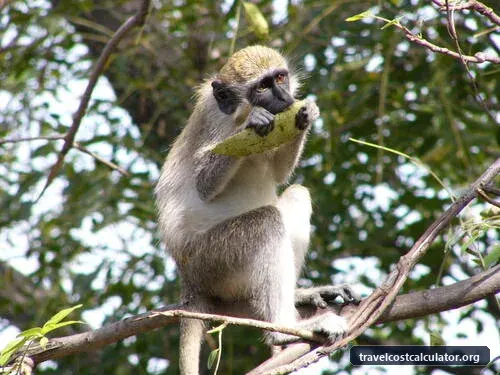
Mare de Simenti (Simenti Waterhole): A legendary natural lake in the heart of the park. Early mornings (06:30 - 09:00 AM) yield magnificent lighting and incredible sightings of waterbucks, kob, bushbucks, warthogs, green monkeys, and resident hippos cooling in the muddy shallows.
-
✦
Gambia River Pirogue Safari (Near Wassadou / Simenti): Take a quiet motorized canoe tour along the Gambia River at golden hour (04:00 - 06:00 PM). It provides unbeatable close-up photographs of Nile crocodiles, basking hippopotamuses, red colobus monkeys, and vibrant bird species like the Egyptian Plover and Carmine Bee-eater.
-
✦
Mont Assirik Foothills: The rugged terrain around Mont Assirik is famous for being one of the northernmost habitats of wild West African Chimpanzees. Early morning treks near the rocky gullies offer dramatic landscape photography of dry savanna highlands.
-
✦
The Giant Baobab Groves along the N7 Route: Capture striking silhouette photography of centuries-old baobabs against deep pink West African sunsets.
Crucial Insider Travel Hacks
-
✦
Clothing Color Advice (Beware of Tsetse Flies): Avoid wearing dark blue or black clothing! Tsetse flies are present in riverine forest patches and are biologically attracted to blue/black shades. Wear light-colored, khaki, or beige long-sleeved shirts and trousers made of lightweight breathability fabric.
-
✦
Lens Recommendation: Wildlife can be more skittish here than in East Africa's tourist-dense parks. Bring a fast telephoto lens (at least 300mm to 600mm) for crisp bird and predator shots from your vehicle.
-
✦
Health & Medical Essentials: Southeastern Senegal is an endemic zone for malaria. Bring high-strength DEET insect repellent, mosquito netting, and consult your travel doctor for anti-malarial prophylaxis.
🏨 Nearby Accommodation & Daily Budget Allocation
Accommodation options range from eco-lodges situated right on the park border along the Gambia River to urban hotels in Tambacounda. Below is a breakdown of staying near Niokolo-Koba National Park for 2026:
Recommended Lodging Options
-
✦
Hôtel de Simenti (Mid-Range / Inside Park): Located inside the park overlooking the Gambia River. While classic and basic, its terrace offers spectacular animal watching right from your breakfast table. Rooms range from 45,000 to 70,000 XOF (~$75 - $115 USD) per night.
-
✦
Campement de Wassadou (Eco-Lodge / Park Border): Beautifully perched on the banks of the Gambia River outside the park gate. Features cozy thatched bungalows, superb local dining, and direct boat safari departures. Rooms cost 30,000 to 50,000 XOF (~$50 - $82 USD) per night.
-
✦
Campement de Dar Salam (Budget Eco-Camp): Located right at the main park entry gate. Extremely affordable, authentic, and eco-friendly hut accommodations starting from 15,000 to 25,000 XOF (~$25 - $40 USD) per night.
-
✦
Hôtel Oasis Oriental Club (Tambacounda City): A comfortable urban hotel featuring a swimming pool, air-conditioned rooms, and reliable Wi-Fi. Nightly rates run 35,000 to 55,000 XOF (~$58 - $90 USD).
Daily Food & Dining Budget
Dining at nearby campements consists of fresh, hearty Senegalese dishes (such as Chicken Yassa, Thieboudienne fish rice, or beef Mafé) and continental breakfasts:
-
✦
Basic Meal (Local Restaurant / Campement): 3,500 - 6,000 XOF (~$6 - $10 USD).
-
✦
Three-Course Lodge Dinner: 8,000 - 14,000 XOF (~$13 - $23 USD).
-
✦
1.5L Bottled Mineral Water: 600 - 1,000 XOF (~$1.00 USD). (Drinking tap water in rural regions is strongly discouraged).
Estimated Daily Budget Profiles (2026 Estimates)
-
✦
Backpacker / Low-Budget Traveler: $55 - $85 USD / day (Sharing 4x4 costs among 4 travelers, staying at Campement Dar Salam, eating local meals).
-
✦
Mid-Range Traveler: $140 - $220 USD / day (Private/semi-private 4x4 rental, staying at Wassadou or Hôtel de Simenti, river boat tours, full-board lodge meals).
-
✦
Luxury / Private Safari Traveler: $350 - $550+ USD / day (Private 4x4 safari vehicle with dedicated driver-guide from Dakar, high-end lodge accommodation, private river charters, and all park fees included).
Frequently Asked Questions
Essential visitor FAQs for Niokolo-Koba National Park
What is the entrance fee for Niokolo-Koba National Park?
How much time do you need to explore Niokolo-Koba National Park?
How do I get to Niokolo-Koba National Park from the nearest city?
📊 Heritage Quick Specs
Visiting Senegal on a Budget?
Calculate your full daily travel budget for Senegal — including hotel costs, local transport, food, and sightseeing expenses.
View Senegal Daily Travel Costs →Explore more UNESCO World Heritage Sites
🏛️ All 1,200+ Heritage Sites →