
 Tanzania
Ngorongoro Conservation Area
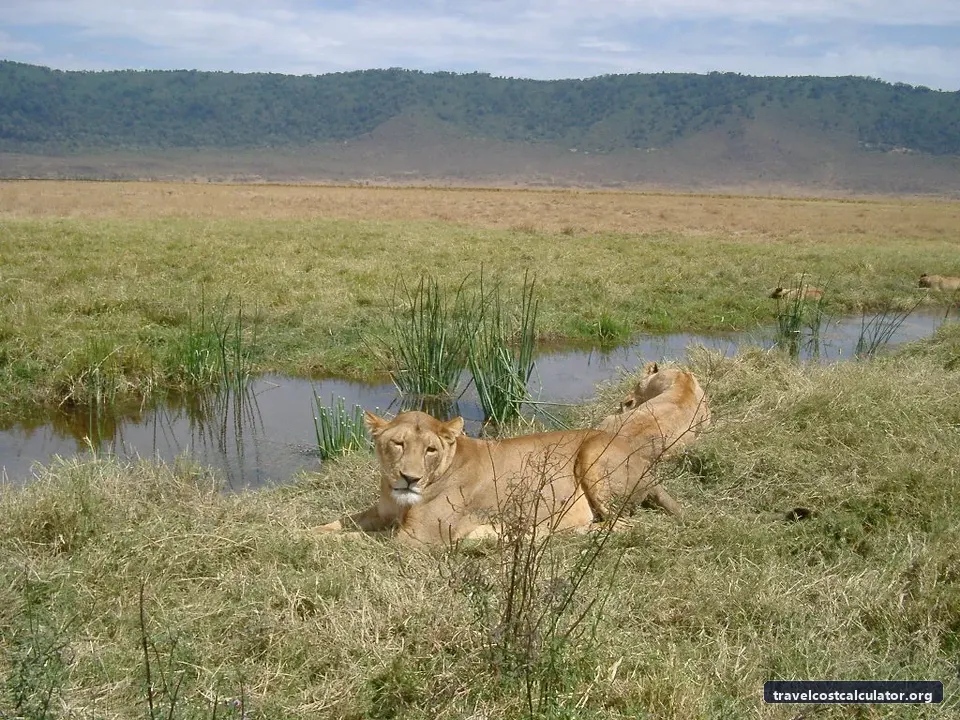
The Ngorongoro Conservation Area spans vast expanses of highland plains, savanna, savanna woodlands and forests.
Ngorongoro Conservation Area
🏛️ Overview & Historical Significance
Rising dramatically above the Great Rift Valley in northern Tanzania, the Ngorongoro Conservation Area (NCA) stands as one of the world's most breathtaking geological and ecological wonders. Covering 8,292 square kilometers (3,200 square miles), this UNESCO World Heritage Site is anchored by its crown jewel: the Ngorongoro Crater—the world's largest intact, unflooded volcanic caldera. Formed approximately 2.5 million years ago when a massive volcano estimated to rival Mount Kilimanjaro Travel Budget in height collapsed inward, the resulting crater is a 600-meter-deep (2,000-foot) natural amphitheater spanning over 260 square kilometers of grassland, acacia forests, and alkaline lakes.
Inscribed as a natural UNESCO World Heritage Site in 1979, Ngorongoro received a rare dual designation extension in 2010 to include cultural criteria. This dual status honors its extraordinary prehistoric importance alongside its biological richness. West of the crater lies the legendary Oldupai (Olduvai) Gorge and the Laetoli footprint site, where paleoanthropologists Mary and Louis Leakey unearthed hominid fossils and 3.6-million-year-old fossilized footprints of Australopithecus afarensis, cementing the region's reputation as the undisputed "Cradle of Mankind."
Beyond paleoanthropology, Ngorongoro is a global conservation benchmark due to its pioneering model of multiple land use. Unlike traditional national parks that displace local populations, the NCA was established in 1959 to harmoniously integrate wildlife protection with the traditional semi-nomadic pastoralism of the indigenous Maasai people. Today, red-shrouded Maasai warriors continue to graze their cattle along the caldera rim, sharing water holes with wild game.
Ecologically, the crater floor acts as a self-contained sanctuary for roughly 25,000 large mammals. It boasts Africa's highest density of mammalian predators—including dense lion prides, spotted hyenas, and secretive servals—and serves as one of East Africa's final strongholds for the critically endangered Eastern Black Rhinoceros (Diceros bicornis michaeli). Because the crater walls form a natural enclosure, visitors can witness the famed "Big Five" (lion, leopard, elephant, buffalo, and rhino) often within a single morning game drive.
🎟️ Entrance Fees, Opening Hours & Ticket Booking Tips
Navigating entry tariffs and vehicle permits for the Ngorongoro Conservation Area requires strict planning, as pricing operates under a regulated multi-tier fee structure administered by the Ngorongoro Conservation Area Authority (NCAA). All official tariffs are levied in USD for foreign non-residents and are subject to Tanzania's mandatory 18% Value Added Tax (VAT).
Updated 2026 Fee Breakdown
-
✦
Conservation Entry Fee (Non-Resident Adult, 16+ years): $70.00 USD + 18% VAT = $82.60 USD (approx. 215,000 TZS) per 24-hour cycle.
-
✦
Conservation Entry Fee (Non-Resident Child, 5 to 15 years): $20.00 USD + 18% VAT = $23.60 USD (approx. 61,500 TZS). Children under 5 enter free.
-
✦
Crater Service / Descent Fee (Per Vehicle): $250.00 USD + 18% VAT = $295.00 USD (approx. 767,000 TZS) per entry/descent (valid for maximum 6 consecutive hours on the crater floor).
-
✦
Vehicle Park Entry Fee (Standard 4x4 Safari Vehicle): $40.00 USD + 18% VAT = $47.20 USD (approx. 123,000 TZS) per entry.
-
✦
Public Camping Fee (Inside NCA Rim): $30.00 USD + 18% VAT = $35.40 USD (approx. 92,000 TZS) per adult per night.
-
✦
Oldupai Gorge Museum Entry Fee: $35.00 USD + 18% VAT = $41.30 USD (approx. 107,500 TZS) per adult.
Operating Hours & Gate Control
The main access gates—Lodoare Main Gate (south entrance near Karatu) and Naabi Hill Gate (northwest boundary with Serengeti Travel Budget)—operate daily from 06:00 to 18:00. Access to the crater floor itself via the descent roads opens strictly at 06:00, and all safari vehicles must ascend and clear the crater rim by 18:00. Exceeding your allocated 6-hour crater permit or 24-hour park permit triggers substantial automatic overstay fines.
Insider Booking & Payment Hacks
-
✦
No Cash Accepted at Gates: The NCAA does not process cash or standard foreign credit cards directly at entry gates. Tickets must be pre-paid via a licensed Tanzanian tour operator or purchased at the NCAA main office in Arusha using an official electronic NCAA Smart Card or government control number (GePG payment system).
-
✦
Understand the 24-Hour Rule: Park entry permits run on an exact 24-hour clock. If you enter at 14:00 on Day 1, your permit expires at 14:00 on Day 2. Plan your crater descent early on Day 2 to exit the gate before your time elapses, avoiding double entry charges.
-
✦
Split Travel Budget Vehicle Costs: Because the mandatory $295 USD Crater Descent Fee and $47.20 USD Vehicle Fee are charged per vehicle (not per person), solo travelers and couples should join small-group safari outfits in Arusha or Karatu to divide these flat vehicle costs across 4 to 6 passengers.
🚌 How to Get There & Local Transit Costs
Ngorongoro Conservation Area is situated in northern Tanzania, approximately 170 kilometers (105 miles) west of the regional safari hub city of Arusha. Transport choices range from self-organized budget road trips to direct bush flights.
Option 1: Guided Safari 4x4 (Most Popular & Practical)
The overwhelming majority of travelers reach Ngorongoro via a rented 4-wheel-drive Toyota Land Cruiser equipped with a pop-up roof and an experienced driver-guide. The drive from Arusha to Lodoare Gate takes roughly 3 to 3.5 hours over smooth, sealed asphalt roads passing through Mto wa Mbu and Karatu.
-
✦
Estimated Cost (2026): Renting a private 4x4 safari Land Cruiser with a licensed driver-guide and fuel costs between $200.00 and $350.00 USD per day total (split between vehicle occupants), excluding individual park entry fees.
Option 2: Budget DIY Transit (Public Bus + Local 4x4 Hire)
Independent budget travelers can skip high Arusha agency surcharges by utilizing public transit up to the park boundary town of Karatu (located just 15 minutes outside Lodoare Gate):
-
✦
Step 1: Public Bus to Karatu: Board a daily express coaster bus or local "matatu" from Arusha Central Bus Terminal to Karatu Bus Stand. Journey time is ~2.5 hours. Cost: 13,000 to 20,000 TZS (approx. $5.00 – $8.00 USD) one-way.
-
✦
Step 2: Charter a 4x4 in Karatu: You cannot enter the park on foot or via standard 2WD vehicles. In Karatu town, negotiate a day charter with a registered local safari driver to take you down into the crater. Cost: Approx. $180.00 – $250.00 USD per vehicle for the day (excluding park fees).
Option 3: Domestic Bush Flights (Fly-In Safaris)
Travelers pressed for time can fly from Kilimanjaro International Airport (JRO) or Arusha Airport (ARK) into local bush airstrips:
-
✦
Lake Manyara Airstrip (LKY): Located a 45-minute drive outside the conservation area gate. Scheduled flights on carriers like Auric Air or Regional Air cost $180.00 – $280.00 USD one-way per person.
-
✦
Ndutu Airstrip (NHT): Located inside the northern boundary of the conservation area (ideal during the wildebeest calving season from January to March). Flight Cost Estimator average $220.00 – $320.00 USD one-way per person.
📸 Best Photography Spots & Insider Visit Hacks
Capturing the dramatic landscapes and concentrated wildlife of Ngorongoro requires an understanding of the crater's unique lighting, microclimates, and animal movements.
Top Photography Hotspots
-
✦
Heroes Point / Crater Viewpoint (Rim): Situated along the eastern rim drive, this lookout provides a panoramic vista over the entire caldera floor 600 meters below. Shoot early in the morning around 06:30 AM to catch low-lying cloud blankets spilling over the caldera rim into the abyss.
-
✦
Lerai Forest: An atmospheric, sun-dappled forest of yellow-barked fever trees (Acacia xanthophloea) on the crater floor. It is the premier spot for photographing majestic bull elephants with towering tusks, vervet monkeys, and elusive leopards draped over high branches.
-
✦
Lake Magadi (Lake Makat): A shallow, highly alkaline soda lake in the center of the crater floor. During the wet and transition months, thousands of lesser and greater flamingos form vibrant pink borders along the water's edge, framed by wall-to-wall mountain backdrops.
-
✦
Hippo Pool (Mandusi Swamp): A dedicated photographic pull-off point where visitors can view pod hippos jostling in open pools alongside grey herons, sacred ibises, and basking Nile crocodiles.
-
✦
Seneto Descent Road: The steep, winding cobblestone and gravel track leading down the western rim into the crater offers dramatic lead-in lines for landscape photographers capturing the scale of the descent.
Seasonal Timing & Weather Considerations
-
✦
Dry Season (June – October): Wildlife visibility is unmatched. Vegetation thins out, and animals concentrate predictably around remaining water sources like Lake Magadi and Lerai Swamp. Morning temperatures on the crater rim can drop to a freezing 5°C (41°F), so pack heavy layers, thermal jackets, and beanies.
-
✦
Wildebeest Calving Season (January – March): Head to the northern Ndutu Plains within the NCA. Over 1.5 million wildebeest gather to drop ~8,000 calves daily, triggering high-octane predator action from cheetahs, lions, and hyenas.
-
✦
Green Season (November – December & April – May): Dust settles, landscapes turn lush emerald green, and migration bird life peaks. Afternoon rain showers yield dramatic sky lighting for photography, and park crowds drop significantly.
Crowd Avoidance & Photographic Etiquette
-
✦
The Early-Bird Advantage: Be lined up at the Lodoare Gate by 05:45 AM. Descending to the crater floor right as the roads open at 06:00 AM awards you two full hours of pristine morning light and predator activity before the mass influx of tour vehicles arrives at 08:30 AM.
-
✦
Avoid Peak Picnic Hours: NGO / Ngoitokitok Springs picnic site becomes extremely overcrowded between 12:00 PM and 13:30 PM. Have your driver pack a boxed breakfast to eat mid-morning on the trail, then continue photographing during lunch hour when animal sightings at vehicle turn-offs are uncrowded.
-
✦
Lens Selection: Bring a flexible telephoto lens (e.g., 100-400mm or 150-600mm) for shy black rhinos across open plains, along with a wide-angle prime (24mm or 35mm) to capture wildlife framed against the colossal crater walls.
🏨 Nearby Accommodation & Daily Budget Allocation
Where you stay heavily dictates your trip budget. Options range from ultra-luxury rim lodges perched on the edge of the crater to eco-tented camps, public campgrounds, and budget guesthouses in nearby Karatu town.
Accommodation Options
-
✦
Luxury Rim Lodges ($700.00 – $2,200.00 USD / night): Properties like andBeyond Ngorongoro Crater Lodge, Ngorongoro Serena Safari Lodge, and Lion's Paw Camp sit directly on the caldera rim, offering sweeping views, private butler service, and immediate 10-minute access down the descent roads.
-
✦
Mid-Range Karatu Safari Lodges ($150.00 – $350.00 USD / night): Located outside the park gate in Karatu (e.g., Bougainvillea Safari Lodge, Country Lodge Karatu, Farm House Valley). Staying here saves thousands of dollars while providing comfortable en-suite bungalows, gardens, swimming pools, and full-board dining.
-
✦
Budget Public Camping ($35.40 USD / night park fee + gear rental): Simba Campsite A on the crater rim is the primary public campsite. Facilities include shared block toilets, cold/warm showers, and a mess hall. Beware: wild zebras and bull elephants frequently roam through the campsite at night!
-
✦
Karatu Budget Hostels & Guesthouses ($25.00 – $60.00 USD / night): Basic local guesthouses inside Karatu town cater to backpackers traveling by public bus.
Daily Budget Allocation (2026 Estimates per Person)
Below is a realistic breakdown of daily expenses based on three distinct travel styles (assuming a 2-person shared safari vehicle setup):
1. Backpacker / Extreme Budget Tier
-
✦
Accommodation: Karatu budget hostel or Simba Public Campsite ($30.00 – $35.40 USD)
-
✦
Park & Vehicle Fees: Entry fee ($82.60 USD) + shared crater service/vehicle fees ($171.10 USD per person split by 2) = $253.70 USD
-
✦
Food & Water: Local street food/supermarket provisions ($15.00 USD)
-
✦
Transport: Shared local 4x4 charter from Karatu ($100.00 USD per person share)
-
✦
Total Daily Budget: ~$400.00 – $430.00 USD per person / day
2. Mid-Range Flashpacker Tier
-
✦
Accommodation: Karatu safari lodge, full board ($200.00 USD)
-
✦
Park & Vehicle Fees: Entry fee ($82.60 USD) + shared crater service/vehicle fees ($171.10 USD) = $253.70 USD
-
✦
Food & Drinks: Lodge full-board included + snacks ($15.00 USD)
-
✦
Transport: Private Arusha 4x4 Land Cruiser & driver ($150.00 USD per person share)
-
✦
Total Daily Budget: ~$620.00 – $670.00 USD per person / day
3. High-End Luxury Tier
-
✦
Accommodation: Crater Rim Luxury Lodge ($1,200.00 USD)
-
✦
Park & Vehicle Fees: Entry fee ($82.60 USD) + crater service/vehicle fees ($342.20 USD solo/private allocation) = $424.80 USD
-
✦
Food & Premium Drinks: Gourmet dining included ($0 extra)
-
✦
Transport: Private high-spec Land Cruiser or fly-in transfer ($300.00 USD)
-
✦
Total Daily Budget: ~$1,900.00 – $2,200.00+ USD per person / day
Frequently Asked Questions
Essential visitor FAQs for Ngorongoro Conservation Area
What is the entrance fee for Ngorongoro Conservation Area?
How much time do you need to explore Ngorongoro Conservation Area?
How do I get to Ngorongoro Conservation Area from the nearest city?
📊 Heritage Quick Specs
Visiting Tanzania on a Budget?
Calculate your full daily travel budget for Tanzania — including hotel costs, local transport, food, and sightseeing expenses.
View Tanzania Daily Travel Costs →Explore more UNESCO World Heritage Sites
🏛️ All 1,200+ Heritage Sites →