
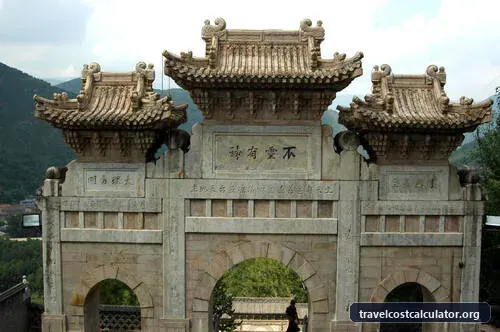
 China
China
Mount Wutai
With its five flat peaks, Mount Wutai is a sacred Buddhist mountain. The cultural landscape is home to forty-one monasteries and includes the East Main Hall of Foguang Temple, the highest surviving timber build...
Mount Wutai
🏛️ Overview & Historical Significance
Rising majestically in the Shanxi Province of northern China, Mount Wutai (Wutai Shan) is revered as one of the Four Sacred Buddhist Mountains of China and the earthly abode of Manjusri (Wenshu Pusa), the Bodhisattva of Transcendent Wisdom. In 2009, UNESCO designated Mount Wutai a World Heritage Site, celebrating its exceptional cultural landscape, sacred mountain topography, and unparalleled architectural legacy spanning over 1,000 years of Chinese history.
Unlike standard mountain ranges, Wutai Shan—meaning "Five Terrace Mountain"—is defined by five flat-topped peaks surrounding the central valley town of Taihuai. The highest peak, Yedou Feng (Northern Peak), towers at 3,058 meters (10,032 feet), earning it the moniker "the Roof of Northern China." What sets Mount Wutai apart in the Buddhist world is its rare, peaceful synthesis of Han Chinese Mahayana Buddhism and Tibetan Buddhism (Gelugpa/Yellow Hat tradition). For centuries, emperors from the Tang, Ming, and Qing dynasties made grand pilgrimages here, sponsoring the construction of monumental timber temples that survived dynastic collapses and foreign invasions.
Today, visitors can explore dozens of active monasteries housing sacred relics, imperial steles, and some of the world's oldest surviving wooden structures—including the legendary Foguang Temple and Nanchan Temple. Whether you are seeking spiritual enlightenment, architectural wonder, or breathtaking mountain panoramas, Mount Wutai offers a deeply atmospheric journey into the heart of Asian heritage.
🎟️ Entrance Fees, Opening Hours & Ticket Booking Tips
Navigating logistics for Mount Wutai requires advance planning due to daily visitor caps and real-name registration systems across China. Here is the updated financial breakdown and entry logistics for 2026:
General Admission & Shuttle Fees (2026 Rates)
-
✦
Peak Season (April 1 – October 31): ¥135 CNY (~$19.50 USD / €18.00) per adult.
-
✦
Low Season (November 1 – March 31): ¥118 CNY (~$17.00 USD / €15.50) per adult.
-
✦
Mandatory Scenic Area Eco-Shuttle Bus: ¥50 CNY (~$7.20 USD / €6.60) per person. This ticket is valid for 3 days and allows unlimited hops between major temple hubs inside the scenic zone.
-
✦
Concessions: Seniors aged 60+ and children under 1.2 meters receive free entry or 50% discounts upon presentation of a valid passport.
Individual Temple & Cable Car Add-Ons
While your main scenic ticket covers access to the mountain valley, several flagship temples and cable cars charge small supplemental admission fees at their gates:
-
✦
Tayuan Temple (White Pagoda): ¥10 CNY (~$1.45 USD)
-
✦
Xiantong Temple: ¥10 CNY (~$1.45 USD)
-
✦
Pusa Ding (Bodhisattva Peak): ¥10 CNY (~$1.45 USD)
-
✦
Dailuo Ding Cable Car: ¥50 CNY (~$7.20 USD) one-way / ¥80 CNY (~$11.50 USD) round-trip.
Opening Hours & Insider Booking Advice
Opening Hours: The main scenic zone gates operate 24/7, but individual temples are generally open from 07:30 to 17:30 (summer hours) and 08:00 to 17:00 (winter hours).
Critical Booking Tip: Foreign travelers MUST bring their physical passport for identity checks at all entry points. In 2026, tickets should be reserved 2 to 7 days in advance via the official WeChat mini-program ("五台山游客服务中心") or through international travel platforms like Trip.com. Digital payments (Alipay or WeChat Pay linked to foreign Visa/Mastercard) are standard across all ticket booths and temple souvenir shops.
🚌 How to Get There & Local Transit Costs
Mount Wutai is located approximately 230 km (143 miles) north of Taiyuan and 350 km (217 miles) southwest of Beijing Travel Budget. It is well-connected by high-speed rail, express buses, and regional flights.
Option 1: By High-Speed Train (Recommended from Beijing or Taiyuan)
The most popular route for international travelers is taking a High-Speed Rail (HSR) bullet train to Wutaishan Railway Station (located in Shahe Town) or Xinzhou West Railway Station.
-
✦
From Beijing West Station: Bullet trains run daily to Wutaishan/Xinzhou West (approx. 2.5 to 3.5 hours; ¥145–¥220 CNY / ~$21–$31 USD for 2nd Class). From Wutaishan Station, take a direct local connecting bus (¥20 CNY / ~$2.90 USD, 50 minutes) straight to the Taihuai Town tourist center.
-
✦
From Taiyuan South Station: High-speed trains take approximately 1 to 1.5 hours to Xinzhou West (¥40–¥60 CNY / ~$6–$9 USD), followed by a scenic coach bus to Taihuai (¥45 CNY / ~$6.50 USD, 1.5 hours).
Option 2: Direct Express Tourist Bus
Direct long-distance buses operate daily from Beijing Lianhuachi Bus Station or Taiyuan East Bus Station directly into Taihuai Town. Fares range from ¥80 to ¥150 CNY (~$11.50–$21.50 USD) and take 4 to 5 hours depending on highway traffic.
Option 3: Domestic Flight + Airport Shuttle
If flying, use Wutaishan Airport (WTY) located in Xinzhou city. The airport services direct flights from major hubs like Shanghai Travel Budget, Guangzhou, and Chengdu. Dedicated airport shuttle buses connect the airport to the Taihuai Scenic Zone (¥80 CNY / ~$11.50 USD; 1.5 hours duration).
📸 Best Photography Spots & Insider Visit Hacks
Unmissable Photography Locations
-
✦
Tayuan Temple (Dabaita): The iconic 50-meter-high Great White Stupa is the symbol of Mount Wutai. Frame your shots through the prayer wheel corridors during early morning light to capture devout pilgrims circumambulating the stupa.
-
✦
Pusa Ding (Bodhisattva Peak): Perched atop Mount Lingjiu, this grand imperial temple features yellow roof tiles reserved for royalty. Position yourself at the top of the 108 stone steps to photograph panoramic vistas overlooking the entire Taihuai temple cluster.
-
✦
Dailuo Ding ("Little Kora"): Accessible via a 1,080-step climb (the "Steps of Wisdom") or a scenic cable car, the summit offers an unmatched vantage point for capturing sunrise over the surrounding mountain ridges.
-
✦
Nanchan & Foguang Temples: Located outside the main Taihuai valley, Foguang Temple contains the Grand East Hall built in 857 AD—the second oldest wooden structure in China. Perfect for architectural photography buffs seeking authentic Tang Dynasty craftsmanship.
Insider Travel Hacks
-
✦
Dress in Warm Layers: Even during peak summer (July–August), morning temperatures at higher elevations drop significantly (10°C to 15°C / 50°F to 59°F). Bring a windbreaker and thermal base layer regardless of the season.
-
✦
Beat the Pilgrimage Crowds: Avoid visiting during major Buddhist festivals (such as Manjusri's Birthday on the 4th day of the 4th lunar month) and Chinese Golden Week (October 1–7) unless you book accommodation months in advance. Weekdays in May, June, and September offer cool weather and manageable crowds.
-
✦
Temple Etiquette: Always cross temple door sills by stepping over them, never on them. Walk clockwise around stupas and prayer wheels, and refrain from taking flash photography inside historical halls housing ancient clay statues.
🏨 Nearby Accommodation & Daily Budget Allocation
Most travelers base themselves in Taihuai Town, which sits right in the central valley surrounded by core temples. Accommodation options range from traditional monk-style hostel dorms to upscale luxury wellness resorts.
Recommended Places to Stay
-
✦
Budget Hostels & Guesthouses: Wutai Mountain Youth Hostel or local family-run Nongjiale inns. Expect clean, basic private rooms with heating and shared/private baths ($20–$40 USD / ¥140–¥280 CNY per night).
-
✦
Mid-Range Boutique Hotels: Yiyuan Hotel or Wutai Mountain Marriott Marriott / Flower Hotel series. Offering comfortable modern amenities, floor heating, and traditional Chinese aesthetic gardens ($60–$120 USD / ¥430–¥860 CNY per night).
-
✦
Luxury & Zen Retreats: Wutai Mountain Marriott Hotel or private zen spa retreats ($150–$280 USD / ¥1,080–¥2,000 CNY per night).
Dining & Budget Allocation
Shanxi is world-famous for its wheat noodles. Don't miss trying local Daoxiao Mian (Knife-Cut Noodles), wild mountain mushroom hotpot, and authentic temple vegetarian cuisine (Zhai Chai).
Sample 2026 Daily Budget Breakdown (Per Person)
-
✦
Budget Backpacker: $45–$65 USD / day (Hostel bed, local noodle shops, public shuttle bus, standard temple entry).
-
✦
Mid-Range Traveler: $110–$180 USD / day (3-star boutique hotel, cable car rides, mix of vegetarian banquets and local dining, entry fees & HSR transport).
-
✦
Luxury Traveler: $250–$420 USD / day (5-star hotel, private driver from train station/airport, private English-speaking cultural guide, fine dining).
Frequently Asked Questions
Essential visitor FAQs for Mount Wutai
What is the entrance fee for Mount Wutai in 2026?
How much time do you need to explore Mount Wutai?
How do I get to Mount Wutai from Beijing?
📊 Heritage Quick Specs
Visiting China on a Budget?
Calculate your full daily travel budget for China — including hotel costs, local transport, food, and sightseeing expenses.
View China Daily Travel Costs →Explore more UNESCO World Heritage Sites
🏛️ All 1,200+ Heritage Sites →