
 China
China
Mount Sanqingshan National Park
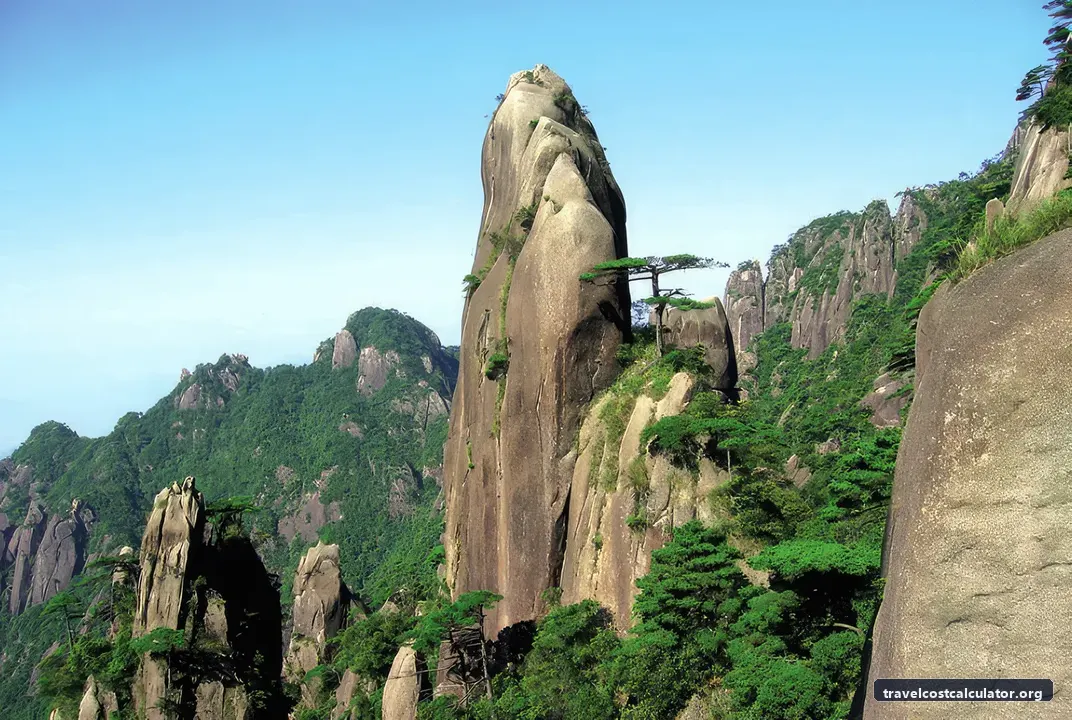
Mount Sanqingshan National Park, a 22,950 ha property located in the west of the Huyaiyu mountain range in the northeast of Jiangxi Province (in the east of central China) has been inscribed for its exceptional...
Mount Sanqingshan National Park
1. 🏛️ Overview & Historical Significance
Rising dramatically above the misty landscapes of Jiangxi Province in eastern China, Mount Sanqingshan National Park is one of the world's most spectacular geological and cultural masterpieces. Inscribed as a UNESCO World Heritage site in 2008, this 22,950-hectare park is globally renowned for its exceptional natural beauty, characterized by 48 distinct granite peaks and 89 granite pillars that resemble human silhouettes, mythical beasts, and ancient Taoist symbols carved by wind and water over hundreds of millions of years.
The name Sanqing translates to the "Three Pure Ones," referencing the three main mountain summits—Yujing, Yuxu, and Yuhua—which resemble the supreme deity triad of Taoism seated in meditation. For over 1,500 years, Mount Sanqingshan has served as an essential sanctuary for Taoist worship, alchemy, and retreat. The park seamlessly fuses high-altitude granite forestry with ancient human heritage, featuring Ming Dynasty stone temples, open-air shrines, and intricate carving pathways carved directly into vertical granite cliffs.
UNESCO designated Sanqingshan based on Criterion (vii), praising its unmatched visual aesthetics: the juxtaposition of granite monoliths, subtropical vegetation, dramatic seasonal weather patterns, and the famous "Sea of Clouds" (Yunhai). In 2026, it remains a quieter, less congested alternative to the neighboring Huangshan (Yellow Mountain), offering travelers world-class hiking boardwalks suspended over sheer abysses without the massive tour group crowding often seen at other flagship Chinese peaks.
2. 🎟️ Entrance Fees, Opening Hours & Ticket Booking Tips
Visiting Mount Sanqingshan involves a dual-ticket structure: the general park admission ticket and the round-trip cable car pass. Prices are tiered by season and remain strictly regulated by the national park authority in 2026.
Estimated 2026 Pricing Breakdown
-
✦
Peak Season (March 1 – November 30):
- Park Entrance Fee: ¥120 RMB (~$16.80 USD)
-
✦
Jinsha / Waishuangxi Cable Car (Round-Trip): ¥125 RMB (~$17.50 USD)
-
✦
Combined Full Package: ¥245 RMB (~$34.30 USD)
- Park Entrance Fee: ¥60 RMB (~$8.40 USD)
Opening Hours
-
✦
Peak Season: 7:00 AM – 5:30 PM (Weekdays) | 6:30 AM – 6:00 PM (Weekends & National Holidays)
-
✦
Off-Peak Season: 8:00 AM – 5:00 PM daily
-
✦
Note: Cable car operation shuts down promptly at closing time. If you miss the last cable car down, you face an arduous 2.5-hour downhill trek along unlit stairs.
Essential 2026 Ticket Booking Tips
China operates entirely on real-name identity verification for tourist sights. You must carry your original passport when purchasing or scanning tickets. International travelers can easily pre-book tickets through English-language platforms like Trip.com or directly at the ticket window at the Jinsha (East Gate) or Waishuangxi (South Gate) cable car stations using Alipay/WeChat Pay or major foreign credit cards. During peak autumn foliage (October) and the May Day holiday week, reserve your entrance slot at least 5 days in advance.
3. 🚌 How to Get There & Local Transit Costs
Mount Sanqingshan is situated near the city of Shangrao in Jiangxi Province. The region is integrated into China’s High-Speed Rail (HSR) network, making it easily accessible from major hubs like Shanghai Travel Budget, Hangzhou, and Nanchang.
Step 1: Arrive at Shangrao Railway Station (上饶站)
Shangrao is the main transit portal to the mountain. High-speed bullet trains (G-trains) run regularly to Shangrao:
-
✦
From Shanghai (Hongqiao Station): ~2.5 hours | ¥180 – ¥220 RMB ($25 – $31 USD)
-
✦
From Hangzhou (East Station): ~1.5 hours | ¥115 – ¥145 RMB ($16 – $20 USD)
-
✦
From Nanchang (West Station): ~1 hour | ¥75 – ¥95 RMB ($10.50 – $13.30 USD)
Step 2: Onward Transit to Mount Sanqingshan
From Shangrao Railway Station, you can choose between two main cable car entry points: Jinsha Gate (East Gate)—the most popular option—or Waishuangxi Gate (South Gate).
-
✦
Direct Tourist Express Bus (Best Value): Departs from the Shangrao Comprehensive Transport Hub (adjacent to Shangrao Train Station). Buses depart every 40 minutes to both Jinsha and Waishuangxi stations.
- Cost: ¥27 – ¥35 RMB (~$3.80 – $4.90 USD) one-way
-
✦
Travel Time: ~75 to 90 minutes
- Cost: ¥180 – ¥240 RMB (~$25 – $33.50 USD) total vehicle fare
4. 📸 Best Photography Spots & Insider Visit Hacks
Sanqingshan is famous for high-altitude cliffside plank boardwalks that wrap around sheer granite precipices, allowing visitors to walk thousands of meters above sea level without steep vertical ascents on every leg of the journey.
Top Photography Vantage Points
-
✦
The Oriental Goddess (Shennv Feng): Located in the Nanqing Yuan Scenic Area, this 128-meter-tall granite pillar naturally resembles a young woman with long hair seated serenely in the valley. Best photographed in early morning light.
-
✦
Giant Python Emerging from the Mountain (Juma Chushan): A breathtaking 128-meter tall, extremely slender granite monolith that mimics a giant cobra rising straight out of the ravine. Best shot from the northern boardwalks with mist framing the background.
-
✦
West Coast Boardwalk (Xihai Plank Road): Suspended at an elevation of 1,600 meters over deep canyons, this 4-kilometer flat boardwalk is built along vertical rock walls. The absolute top spot for sunset photography and cloud-sea captures.
-
✦
Sunshine Coast (Yangguang Hanai): Connects the eastern side of the park with the Taoist Sanqing Temple area. Features a glass-bottom viewing deck cantilevered out over the valley floor.
Insider Visit Hacks for 2026
-
✦
Choose the East Gate (Jinsha) for Speed: The Jinsha Cable Car whisks you straight up to the Nanqing Yuan area, putting you within a 20-minute flat walk of both the Oriental Goddess and Giant Python monoliths.
-
✦
The Ultimate Loop Route (5–6 Hours): Ride the Jinsha Cable Car up → Loop through Nanqing Yuan → Head across the Sunshine Coast Boardwalk → Visit the ancient Sanqing Taoist Temple → Walk back along the West Coast Boardwalk → Return down via Jinsha Cable Car.
-
✦
Weather Strategy: The mountain is at its most magical immediately after rain, when dense fog separates into rolling seas of clouds. Check 2026 weather apps (like Moji Weather) for humidity above 85% coupled with clearing skies for guaranteed cloud-sea phenomena.
-
✦
Pack Light & Wear Layers: High altitudes mean temperatures at the top are 6°C to 8°C cooler than at the base. Bring a windbreaker/rain jacket even in summer. Lightweight trail runners are better suited than stiff hiking boots due to flat, paved concrete boardwalks.
5. 🏨 Nearby Accommodation & Daily Budget Allocation
Deciding where to stay comes down to a trade-off between price and sunrise access. Staying at the base of the mountain near the Jinsha Cable Car base town offers better quality rooms and dining at lower prices, while staying at a mountaintop hotel grants front-row seats to sunrise and sunset.
Where to Stay
-
✦
Mountaintop Accommodation (Premium/Sunrise Access): Sanqingshan Goddess Hotel or Ritan Hotel. Rooms are basic to mid-range but command high prices due to location.
- Cost: ¥550 – ¥1,100 RMB ($77 – $154 USD) per night
- Budget Guesthouse/Hostel: ¥120 – ¥220 RMB ($17 – $31 USD) per night
Estimated Daily Budget Allocations (2026 Prices)
1. Low-Budget Backpacker (~$55 – $75 USD / ¥400 – ¥540 RMB per day):
-
✦
Accommodation: Shared room or budget guesthouse at base town (¥150 RMB / $21 USD)
-
✦
Meals: Local street-side noodle shops, steamed buns, packed snacks (¥70 RMB / $10 USD)
-
✦
Transport: Tourist express bus round-trip from Shangrao (¥60 RMB / $8.40 USD)
-
✦
Attractions: Off-peak or peak full package pass amortized (¥185 – ¥245 RMB / $26 – $34.30 USD)
2. Mid-Range Traveler (~$140 – $200 USD / ¥1,000 – ¥1,440 RMB per day):
-
✦
Accommodation: 3 or 4-star boutique hotel near Jinsha Gate or mountaintop hotel (¥450 RMB / $63 USD)
-
✦
Meals: Sit-down meals at local Jiangxi restaurants featuring localized farm dishes like bamboo shoots and river fish (¥180 RMB / $25 USD)
-
✦
Transport: High-speed rail connection + direct shuttle/Didi combination (¥150 RMB / $21 USD)
-
✦
Attractions: Full combined park ticket + cable car (¥245 RMB / $34.30 USD)
3. Luxury Traveler (~$320 – $480 USD / ¥2,300 – ¥3,450 RMB per day):
-
✦
Accommodation: 5-star mountain resort near South Gate (¥1,200 RMB / $168 USD)
-
✦
Meals: High-end resort dining and specialized private tasting menus (¥500 RMB / $70 USD)
-
✦
Transport: Private chauffeur round-trip from Shanghai/Hangzhou or Shangrao Train Station (¥600 RMB / $84 USD)
-
✦
Attractions & Extras: VIP fast-track cable car booking, private English-speaking trekking guide (¥600 RMB / $84 USD)
Frequently Asked Questions
Essential visitor FAQs for Mount Sanqingshan National Park
What is the entrance fee for Mount Sanqingshan National Park?
How much time do you need to explore Mount Sanqingshan National Park?
How do I get to Mount Sanqingshan National Park from the nearest city?
📊 Heritage Quick Specs
Visiting China on a Budget?
Calculate your full daily travel budget for China — including hotel costs, local transport, food, and sightseeing expenses.
View China Daily Travel Costs →Explore more UNESCO World Heritage Sites
🏛️ All 1,200+ Heritage Sites →