
 China
China
Mount Huangshan
Huangshan, known as 'the loveliest mountain of China', was acclaimed through art and literature during a good part of Chinese history (e.g.
Mount Huangshan
🏛️ Overview & Historical Significance
Rising like a mythical ink painting from the mist of Anhui Province in eastern China, Mount Huangshan (literally "Yellow Mountain") is globally renowned as one of the world's most breathtaking natural wonderlands. Inscribed as a UNESCO World Heritage Site in 1990 for both its exceptional natural beauty (Criterion vii) and its profound cultural legacy (Criterion x), Huangshan represents a rare dual site where geology and human artistry converge.
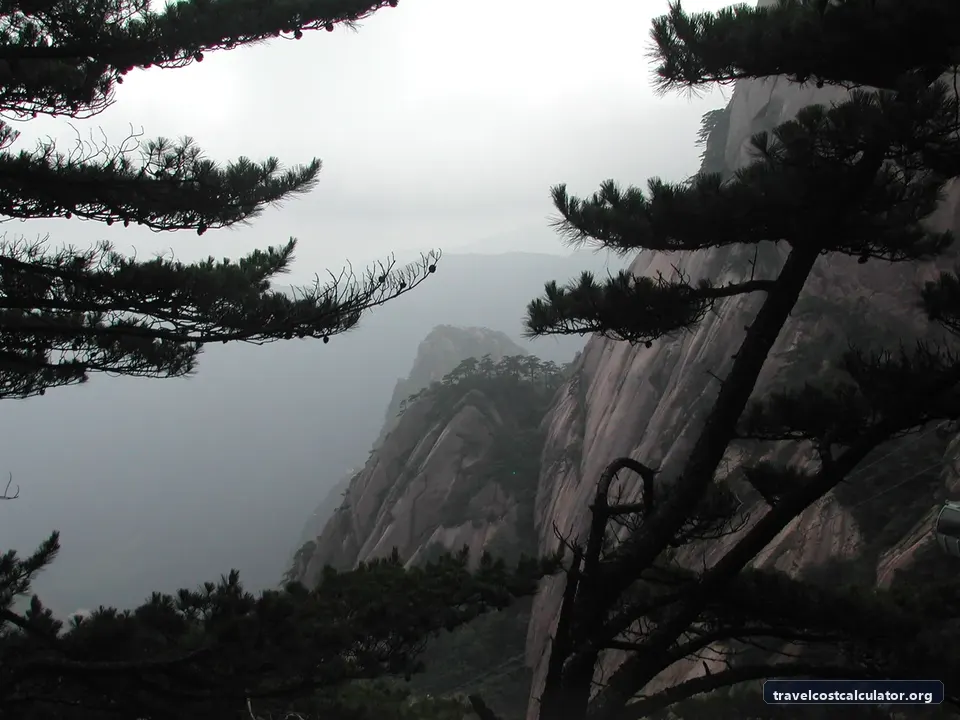
The mountain’s iconic aesthetic—dramatic granite peaks piercing through shifting layers of fog, twisted ancient pine trees clinging improbably to sheer cliff faces, and vast ocean-like cloud formations—formally codified the aesthetic ideal of the Shanshui (Mountain-Water) school of Chinese landscape painting. During the Ming and Qing dynasties (particularly the 17th century), artists of the famous "Huangshan School" created works that forever established Yellow Mountain as the ultimate symbol of spiritual tranquility and wild nature in East Asian art.
Geologically, Huangshan’s surreal landscape was forged during the Mesozoic era over 100 million years ago through intense tectonic uplift and glacier erosion, carving out over 72 named peaks that exceed 1,000 meters (3,280 feet) in altitude. Beyond its artistic legacy, the mountain serves as a crucial ecological refuge, hosting thousands of flora and fauna species, including ancient Pinus hwangshanensis trees that are hundreds of years old. Today, visiting Mount Huangshan in 2026 remains a bucket-list pilgrimage for landscape photographers, hikers, and culture enthusiasts worldwide.
🎟️ Entrance Fees, Opening Hours & Ticket Booking Tips
Visiting Mount Huangshan requires planning ahead, as China's National Parks utilize strict daily visitor caps and real-name ticketing systems. In 2026, all international visitors must book tickets using their valid passport numbers via official digital channels prior to arrival.
2026 Park Admission Pricing
-
✦
Peak Season Admission (March 1 – November 30): 190 RMB (~$26.50 USD) per adult.
-
✦
Off-Peak Season Admission (December 1 – February 28): 150 RMB (~$21.00 USD) per adult.
-
✦
Discounted Admission: Seniors (ages 60-64) receive a 50% discount (~95 RMB / $13.25 USD); seniors aged 65+ and children under 1.2 meters (or under 6 years old) enter for free upon presenting identification.
Cable Car & Mountain Transport Fees (2026 Rates)
-
✦
Yungu Cable Car (East Side - Base to White Goose Ridge): 80 RMB (~$11.00 USD) one-way (Peak) / 65 RMB (~$9.00 USD) off-peak.
-
✦
Yuping Cable Car (West Side - Base to Mercy Light Temple/Greeting Pine): 90 RMB (~$12.50 USD) one-way (Peak) / 75 RMB (~$10.50 USD) off-peak.
-
✦
Taiping Cable Car (North Side): 80 RMB (~$11.00 USD) one-way (Peak) / 65 RMB (~$9.00 USD) off-peak.
-
✦
West Sea Grand Canyon Monorail (Funicular): 100 RMB (~$14.00 USD) one-way.
-
✦
Scenic Area Shuttle Bus (Tangkou Visitor Center to Cable Stations): 19 RMB (~$2.65 USD) each way.
Operating Hours & Peak Season Realities
The park gates and cable cars generally open from 06:00 to 17:30 during peak season (April to October) and from 07:00 to 16:30 during the winter months. Cable cars may temporarily suspend operations during severe wind, heavy ice, or thunder storms.
Essential Ticket Booking Hacks for 2026
-
✦
Book Early via WeChat Mini-Programs: Search for the official "Huangshan Tourism" (黄山旅游) WeChat Mini-Program or purchase through official travel partners like Trip.com. Reservations open up to 7 days in advance.
-
✦
Passport Registration Required: Input your legal passport name and passport number exactly as written. Physical passports must be scanned at the turnstiles to gain entry.
-
✦
Avoid Chinese Golden Weeks: Never visit during May Day Holiday (first week of May) or National Day Golden Week (October 1–7). Daily ticket limits sell out in seconds, and summit paths experience severe pedestrian traffic jams.
🚌 How to Get There & Local Transit Costs
Mount Huangshan is located in Huangshan City, Anhui Province. The primary gateway to the mountain is Tangkou Town (汤口镇), situated right at the foot of the scenic area.
Step 1: Arrive at Huangshan City (Transit Hub)
The main arrival hub for modern high-speed trains is Huangshan North Railway Station (Huangshanbei / 黄山北站). You can easily reach this station via China's bullet train network:
-
✦
From Shanghai Travel Budget (Shanghai Hongqiao): ~2.5 to 3 hours by G-series bullet train; ticket cost ranges from 190 RMB to 310 RMB (~$26 – $43 USD) second class.
-
✦
From Hangzhou (Hangzhou East): ~1.5 to 2 hours; ticket cost ranges from 100 RMB to 160 RMB (~$14 – $22 USD).
-
✦
From Beijing Travel Budget (Beijing South): ~5.5 to 6.5 hours; ticket cost ranges from 450 RMB to 550 RMB (~$63 – $77 USD).
-
✦
By Air: Fly into Huangshan Tunxi International Airport (TXN), which handles domestic flights from major hubs like Guangzhou, Shenzhen, and Chengdu.
Step 2: Transfer from Huangshan City to Tangkou Town
Once you arrive at Huangshan North Station or Tunxi Airport, you must take local transit to Tangkou Town (the mountain base):
-
✦
Tourist Express Bus (Recommended): Direct buses depart every 20–30 minutes from the Huangshan North Railway Station Bus Terminal directly to the Tangkou Transfer Center. Travel time is ~50 minutes; ticket cost is 30 RMB (~$4.20 USD) per person.
-
✦
Taxi / Didi Ride-Hail: A taxi or Didi ride from Huangshan North Station to Tangkou Town takes about 45 minutes and costs approximately 130 RMB – 180 RMB (~$18 – $25 USD). From Tunxi Airport, expect around 180 RMB – 220 RMB (~$25 – $30 USD).
Step 3: Tangkou Transfer Center to the Summit Routes
Private cars and standard taxis are strictly forbidden inside the main scenic park limits. Everyone must enter the Tangkou Scenic Area Transfer Center (新国线换乘中心) and board an official electric shuttle bus:
-
✦
To Yungu Cable Car Station (East Route): 19 RMB (~$2.65 USD), ~20-minute bus ride. Ideal for standard ascent.
-
✦
To Mercy Light Temple / Yuping Cable Car (West Route): 19 RMB (~$2.65 USD), ~20-minute bus ride. Ideal for steep hiking or reaching the Guest-Greeting Pine.
📸 Best Photography Spots & Insider Visit Hacks
Capturing the iconic "Four Wonders" of Huangshan—Peculiar Pines, Grotesque Rocks, Sea of Clouds, and Hot Springs—requires strategic timing and route positioning.
Unmissable Photography Locations
-
✦
Guest-Greeting Pine (Yingke Song / 迎客松): Perched on Yuping Peak (Jade Screen Peak), this 1,000-year-old pine tree is the iconic image of Chinese hospitality. Tip: Photograph in early morning light before tour groups arrive around 09:30.
-
✦
Bright Summit (Guangming Ding / 光明顶): The second-highest peak (1,860 meters), offering an unobstructed 360-degree view. This is the single best location on the mountain for capturing both sunrise and sunset above the Sea of Clouds.
-
✦
Beginning-to-Believe Peak (Shixin Feng / 始信峰): Renowned for hosting the mountain's most uniquely shaped pines (Black Tiger Pine, Harp Pine) jutting out of vertical granitic precipices.
-
✦
West Sea Grand Canyon (Xihai Canyon / 西海大峡谷): A vast, jaw-dropping abyss with suspension walkways carved into sheer granite cliffs. Take the funicular down to the canyon floor for dramatic upward angles.
-
✦
Monkey Gazing at the Sea (Houzi Guan Hai / 猴子观海): Located near Lion Peak, a natural rock formation resembling a monkey perched atop a cliff looking over the cloud layer.
Insider Hacks for an Optimal Visit
-
✦
Check Peak Rotation Schedules: To allow environmental recovery, Huangshan rotates closures of its highest peaks. Tiandu Peak (Heavenly Capital Peak) reopened recently after a 5-year closure, while Lotus Peak (Lianhua Feng) is undergoing its designated environmental resting phase in 2026. Always verify active peak trails before planning steep climbs.
-
✦
Pack Ultralight (Leave Heavy Luggage at the Base): Hiking up thousands of stone steps is physically demanding. Store heavy luggage at your Tangkou hotel or the bus station locker (~10-20 RMB/day) and carry only a lightweight daypack onto the summit.
-
✦
Invest in Trekking Poles & Spikes: Quality wooden or collapsible trekking poles (sold at the base for 10-20 RMB) are essential to relieve knee stress. If visiting between December and March, clip-on shoe microspikes are mandatory for icy steps.
-
✦
Chasing the "Sea of Clouds": Cloud seas form most reliably right after rainstorms or winter snowfall, when high humidity meets temperature drops. Spring (April–May) and Autumn (September–November) offer the clearest mountain weather.
🏨 Nearby Accommodation & Daily Budget Allocation
Your choice of accommodation depends on whether you plan to stay overnight on top of the mountain to catch the sunrise or stay down in Tangkou Town and execute a day trip via cable car.
Accommodation Options
-
✦
Base Town (Tangkou Town - Budget & Convenience): Stay here the night before your climb. Highly recommended mid-range hotels like Chengjin Hotel or Tangkou Memory Hotel cost around $35 to $70 USD (250 - 500 RMB) per night and often provide free logistics briefings and luggage storage. Budget hostel dorm beds run around $12 to $25 USD (80 - 180 RMB).
-
✦
Mountain Summit Hotels (Must-book months in advance): Staying at the top allows you to step directly out onto sunrise viewpoints. Standard options include Xihai Hotel, Beihai Hotel, and Paiyunlou Hotel. Summit standard double rooms range from $160 to $350+ USD (1,150 - 2,500 RMB) due to the high cost of portering supplies up the mountain. Basic summit capsule dorm beds run approximately $45 to $70 USD (320 - 500 RMB).
Dining Costs & Budget Considerations
Due to manual porter haulage costs up stone steps, food pricing at the summit carries a high markup compared to the base:
-
✦
Summit Dining: Buffet dinners at summit hotels cost ~120-180 RMB ($17-$25 USD). Simple summit snacks (instant noodles, sausages) cost ~15-25 RMB ($2-$3.50 USD). Carry energy bars and dry snacks in your pack.
-
✦
Tangkou Town Dining: Enjoy authentic Anhui Huizhou cuisine (such as Stinky Mandarin Fish or Mao Tofu) for ~50-90 RMB ($7-$13 USD) per person at local base restaurants.
Daily Budget Estimations (Per Person, 2026)
| Travel Style | Est. Daily Budget (USD) | Est. Daily Budget (CNY) | What It Covers |
|---|---|---|---|
| Backpacker / Budget | $65 – $95 | ¥460 – ¥680 | Hostel in Tangkou, hike up without cable cars (or 1 cable car down), packed snacks, regional bus transport. |
| Mid-Range Traveler | $160 – $280 | ¥1,150 – ¥2,000 | 1 night base hotel + 1 night summit dorm/basic room, round-trip cable cars, scenic shuttle, local restaurant meals. |
| Luxury / Comfort | $400 – $650+ | ¥2,850 – ¥4,650+ | Top-tier summit hotel 4/5-star suite, round-trip cable cars + monorail, private Didi transfers from train station, high-end dining. |
Frequently Asked Questions
Essential visitor FAQs for Mount Huangshan
What is the entrance fee for Mount Huangshan in 2026?
How much time do you need to explore Mount Huangshan?
How do I get to Mount Huangshan from the nearest city?
📊 Heritage Quick Specs
Visiting China on a Budget?
Calculate your full daily travel budget for China — including hotel costs, local transport, food, and sightseeing expenses.
View China Daily Travel Costs →Explore more UNESCO World Heritage Sites
🏛️ All 1,200+ Heritage Sites →