
 Afghanistan
Minaret and Archaeological Remains of Jam
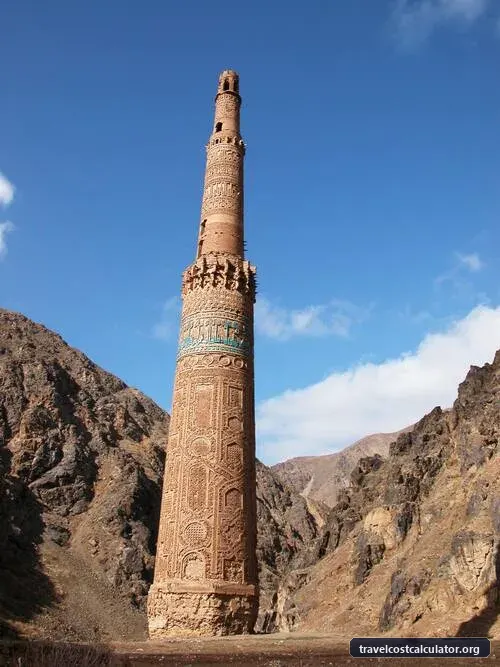
The 65m-tall Minaret of Jam is a graceful, soaring structure, dating back to the 12th century.
Minaret and Archaeological Remains of Jam
🏛️ Overview & Historical Significance
Rising 65 meters (213 feet) out of a dramatically isolated river canyon in the rugged Ghor Province of western Afghanistan, the Minaret of Jam is one of the world's most astonishing architectural masterpieces. Constructed around 1194 under the reign of the Ghurid Empire's Sultan Ghiyath al-Din, this solitary tower stands at the confluence of the Hari and Jam rivers as a testament to an Islamic empire that once stretched from eastern Iran to northern India.
The minaret is widely believed to mark the site of Firuzkuh (The Turquoise Mountain), the legendary summer capital of the Ghurid Dynasty that was destroyed by Genghis Khan’s Mongol armies in the 1220s. Remarkably, while the city surrounding it was razed to the ground, the slender brick minaret survived intact through centuries of extreme weather, earthquakes, and geopolitical isolation.
In 2002, UNESCO designated the Minaret and Archaeological Remains of Jam as Afghanistan's first World Heritage Site, simultaneously placing it on the List of World Heritage in Danger. Its international historical value stems from its exceptional artistic craftsmanship: the tower is entirely constructed of baked bricks intricately layered with geometric patterns, blue glazed turquoise tilework, and extensive Kufic calligraphy. Crucially, the exterior band features the complete text of Surah Maryam (Chapter 19 of the Quran), highlighting the shared lineage between Abrahamic faiths—a message carved in stone over eight centuries ago.
Today in 2026, visiting Jam represents the pinnacle of extreme heritage travel. The site remains vulnerable to hydrological erosion from the adjacent Hari River and structural tilting, making conservation efforts—and responsible, authorized visits—more critical than ever.
🎟️ Entrance Fees, Opening Hours & Ticket Booking Tips
Visiting an off-grid UNESCO site in central Afghanistan is vastly different from touring standard European or Asian monuments. There are no online ticket portals, digital skip-the-line passes, or official tourist offices on-site. All access is managed through provincial administrative permits and local village custodians.
Estimated 2026 Costs & Fee Breakdown
-
✦
Site Entry Fee: 500 AFN – 1,000 AFN (Approx. $7.50 – $15.00 USD) paid directly to the local Ministry of Information and Culture representative or site caretakers in Jam village.
-
✦
Provincial Travel Permits: 1,000 AFN – 1,500 AFN (Approx. $15.00 – $22.00 USD) per person. Permits must be issued by the Directorate of Information and Culture in Herat Travel Budget or Kabul Travel Budget prior to departure.
-
✦
Local Heritage Guide/Guard Fee: 1,500 AFN – 2,500 AFN (Approx. $20.00 – $35.00 USD per day) paid to local site caretakers who accompany visitors along the riverbank and canyon trails.
Opening Hours & Site Access Rules
The open-air site is technically accessible during daylight hours, roughly from 6:00 AM to 6:00 PM. However, actual entry is strictly bound to when local caretakers are present to unlock access gates and verify your government permits.
Essential Ticket & Permit Logistics for 2026
-
✦
No Advance Online Booking: Avoid any third-party websites claiming to sell "e-tickets" to Jam. Tickets and access permissions must be obtained in-person in Herat, Kabul, or at the local district level in Firozkoh (Chaghcharan).
-
✦
Strict Cash Economy: Electronic payments, international credit cards, and ATMs do not exist in Ghor Province. Bring pristine, uncreased US Dollars (post-2013 design) or exact Afghan Afghanis (AFN) for all transactions.
-
✦
Interior Climbing Restrictions: As of 2026, climbing the internal double-spiral staircase inside the minaret is strictly prohibited due to severe structural risk and ongoing stabilization efforts. Violating this rule risks safety and immediate permit revocation.
🚌 How to Get There & Local Transit Costs
Reaching the Minaret of Jam is an expedition in the truest sense. Located deep in the Hindu Kush mountains, the site is accessible only via unpaved mountain tracks that test both travelers and vehicles.
Step 1: Arrive in the Regional Hub (Herat)
The primary launch point for Jam is Herat in western Afghanistan. Regular domestic flights operate into Herat Airport (HEA) from Kabul via domestic carriers such as Kam Air or Ariana Afghan Airlines. Expect to pay between $90 and $140 USD for a one-way domestic flight in 2026.
Step 2: Overland 4x4 Expedition from Herat to Jam
There are no regular passenger trains or direct public buses running into the Jam canyon. Travelers must hire a heavy-duty 4x4 vehicle (such as a Toyota Land Cruiser) equipped with an experienced high-altitude driver.
-
✦
Route Details: Drive east from Herat through the central mountain corridor toward Firozkoh (Chaghcharan), branching south into the Jam valley. The journey covers approximately 200–300 km over rough terrain and takes between 12 and 16 hours depending on weather and road conditions.
-
✦
Private 4x4 Rental with Driver (Recommended): $180 – $280 USD per day (including fuel and driver expenses). A typical 4-day expedition costs between $720 and $1,120 USD total, Split Travel Budget among your travel group.
-
✦
Shared Minivan / Local Transport (Budget Option): Shared local 4x4 minivans leave intermittently from Herat to Firozkoh for 1,800 – 2,500 AFN ($25 – $35 USD) per seat. From Firozkoh, you must hire a local driver or motorbike to reach Jam (another 3–5 hours for $50–$80 USD). Note: Shared transit is extremely rugged, unpredictable, and not recommended for travelers carrying delicate photography gear.
📸 Best Photography Spots & Insider Visit Hacks
Capturing the immense scale of the 65-meter minaret against the stark, tan-colored cliffs of the Hari River gorge requires tactical planning and proper lighting.
Prime Photography Angles
-
✦
The North Bank of the Hari River: Position yourself directly across the riverbank opposite the minaret. This vantage point allows you to frame the entire height of the tower alongside the turquoise waters of the river and the towering canyon walls.
-
✦
The Southern Hillside Trail: Hike up the steep trail on the mountain slope behind the minaret for a elevated panoramic perspective that highlights the sheer isolation of the site within the central Afghan highlands.
-
✦
Telephoto Detail Shots: Bring a 200mm–400mm lens to capture the intricate Kufic calligraphy band near the top of the tower and the lingering fragments of turquoise tilework that have survived for over 800 years.
Ideal Timing & Weather Considerations
The optimal shooting window is during early morning (6:30 AM – 8:30 AM), when soft golden sunlight strikes the eastern face of the minaret, bringing out the rich textures of the carved brickwork. Late afternoon light creates dramatic shadows across the canyon, though the sun drops quickly behind the high cliffs.
The recommended travel season is during the dry windows of May to June or September to October. Avoid early spring (March–April), as heavy snowmelt causes the Hari River to flood severely, blocking access tracks and risking flash floods. Winter (November–March) brings sub-zero temperatures and snowbound mountain passes that render the roads impassable.
Insider Travel Hacks for 2026
-
✦
Dress Culturally & Respectfully: Men should wear the local perahan tunban (traditional long shirt and trousers), while women must wear loose, full-coverage clothing with a modest headscarf. Dressing locally ensures smooth interactions at provincial security checkpoints.
-
✦
Bring Offline Satellite Communications: Mobile network coverage is non-existent in the valley around Jam. Carrying a satellite communicator (e.g., Garmin InReach) is critical for emergency navigation and safety.
-
✦
Power Off-Grid: Carry high-capacity power banks and solar chargers. There is zero grid electricity in the immediate vicinity of the minaret.
🏨 Nearby Accommodation & Daily Budget Allocation
Due to its remote location, modern travel amenities, luxury resorts, and boutique hotels do not exist near the Minaret of Jam. Visitors must prepare for rugged, traditional Afghan hospitality.
Accommodation Options
-
✦
Jam Village Homestays / Local Chaikhona: Basic local guesthouses (*chaikhana*) or village homes in Jam offer floor-mattress accommodation (*toshak*) with shared pit-latrine facilities. Expect basic amenities, warm tea, and home-cooked meals. Cost: $10 – $25 USD per night (1,000 – 1,800 AFN).
-
✦
Firozkoh (Chaghcharan) Guesthouses: Located roughly 3–4 hours away by 4x4, the provincial capital offers modest local hotels with basic private rooms and electricity via generator. Cost: $25 – $45 USD per night.
-
✦
Herat Base Camp Hotels: Before and after your expedition, high-standard lodging can be found in Herat (e.g., Nazary Hotel or Hotel Tezeria). Cost: $55 – $95 USD per night for mid-range international standard comfort.
Estimated Daily Budget Profiles (2026 Pricing)
Budget Backpacker / Self-Guided Expedition: $50 – $80 USD / day
-
✦
Shared local transit/motorbike transfers: $25
-
✦
Simple village homestay / chaikhona lodging: $15
-
✦
Local Afghan meals (flatbread, rice, mutton broth, green tea): $10
-
✦
Site permits and local guides: $15
Mid-Range / Expedited Private 4x4 Tour: $220 – $380 USD / day
-
✦
Private 4x4 vehicle rental with dedicated driver & fuel (split by group): $150 – $220
-
✦
Comfortable private local guesthouse stay: $35
-
✦
Full meal service and bottled water: $20
-
✦
Dedicated local heritage guide and administrative clearance fees: $35
Frequently Asked Questions
Essential visitor FAQs for Minaret and Archaeological Remains of Jam
What is the entrance fee for Minaret and Archaeological Remains of Jam?
How much time do you need to explore Minaret and Archaeological Remains of Jam?
How do I get to Minaret and Archaeological Remains of Jam from the nearest city?
📊 Heritage Quick Specs
Visiting Afghanistan on a Budget?
Calculate your full daily travel budget for Afghanistan — including hotel costs, local transport, food, and sightseeing expenses.
View Afghanistan Daily Travel Costs →Explore more UNESCO World Heritage Sites
🏛️ All 1,200+ Heritage Sites →