
 Rwanda
Memorial sites of the Genocide: Nyamata, Murambi, Gisozi and Bisesero
Between April and July 1994, an estimated one million people were killed across Rwanda by armed militias called Interahamwe that targeted Tutsi, but also executed moderate Hutu and Twa people.
Memorial sites of the Genocide: Nyamata, Murambi, Gisozi and Bisesero
🏛️ Overview & Historical Significance
In September 2023, during the 45th extended session of the World Heritage Committee, UNESCO officially inscribed "Memorial sites of the Genocide: Nyamata, Murambi, Gisozi and Bisesero" onto the UNESCO World Heritage list. This landmark designation recognized four sacred physical locations in Rwanda that stand as global symbols of remembrance, human resilience, and the universal imperative of anti-genocide education. Between April and July 1994, an estimated 800,000 Tutsi, along with moderate Hutu and Twa who opposed the massacres, were systematically murdered in a 100-day tragedy that shocked the international community. Rather than razing these tragic spaces, the nation of Rwanda preserved them to bear witness to history, honor the victims, and foster national reconciliation under the ethos of Kwibuka ("Remember").
Each of the four component sites offers a distinct, deeply emotional lens into the events of 1994:
-
✦
Gisozi (Kigali Travel Budget Genocide Memorial): Situated on a hill overlooking the capital city of Kigali, Gisozi serves as the central administrative and educational heart of memorialization in Rwanda. It is the final resting place for over 250,000 victims recovered from mass graves across the capital region. The complex houses a world-class exhibition center documenting the historical roots of divisionism, the 100-day genocide, and other global genocides of the 20th century.
-
✦
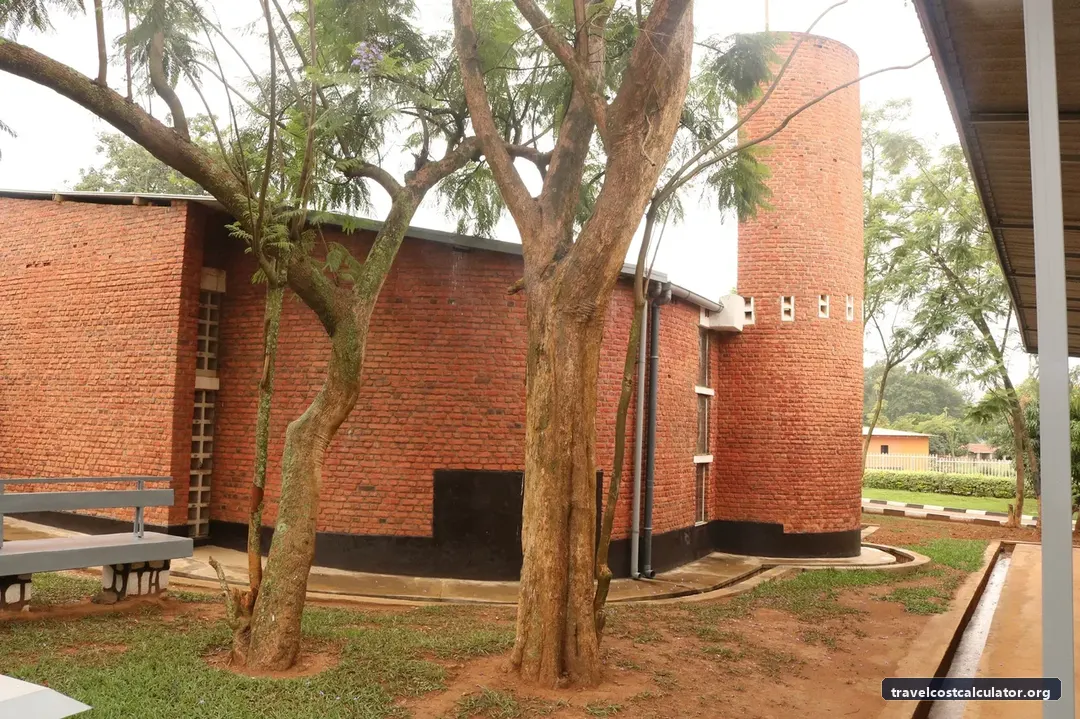
Nyamata Genocide Memorial: Located roughly 30 kilometers south of Kigali in the Bugesera region, Nyamata is a former Catholic church complex. Thousands of civilians fled inside its sanctuary, believing that holy ground would protect them from the *Interahamwe* militia. Instead, the church doors were forced open, resulting in a horrific massacre. Today, the church remains preserved exactly as it was found, with clothing of victims piled on pews, blood-stained altar cloths, and bullet-pocked brickwork serving as unyielding evidence.
-
✦
Murambi Genocide Memorial: Nestled in the rolling hills of Nyamagabe District in southern Rwanda, Murambi was an unfinished technical school where over 50,000 Tutsi gathered under the false promise of safety from local authorities. Surrounded and cut off from food and water, the victims were slaughtered in April 1994. Murambi is widely considered one of the most visceral memorial sites on Earth, as several school dormitories exhibit lime-preserved, calcified bodies of victims preserved in their final moments of agony.
-
✦
Bisesero Genocide Memorial: Located in the high-altitude terrain of Karongi District overlooking Lake Kivu Travel Budget, Bisesero is renowned as the "Hill of Resistance." Unlike other sites where defenseless victims were trapped, the Tutsi at Bisesero organized a brave, sustained armed self-defense using stones, sticks, and captured weapons under the leadership of local elder Aminadabu Birara. Though the majority were eventually overwhelmed by heavy weaponry, Bisesero's striking terraced monument stands as a monument to human courage, defiance, and self-preservation.
UNESCO designated these serial sites under Criterion (vi), recognizing their direct association with events of outstanding universal significance. Today in 2026, these four locations operate not merely as cemeteries, but as active global educational centers dedicated to combating hate speech, Holocaust and genocide denial, and promoting peace-building initiatives worldwide.
🎟️ Entrance Fees, Opening Hours & Ticket Booking Tips
To ensure universal access to history, education, and human rights awareness, the Government of Rwanda and managing partner organizations (such as the Aegis Trust) maintain a zero-fee entry policy for base access to all four serial genocide memorial sites. However, operating costs, archive preservation, and educational outreach rely heavily on audio-guide rentals, expert guided tours, and direct visitor donations.
Updated 2026 Pricing & Service Breakdown
-
✦
General Site Admission (All Sites): FREE / 0 RWF
-
✦
Kigali Memorial (Gisozi) Audio Guide Rental: 20,000 RWF (~$15.00 USD) per device (available in Kinyarwanda, English, French, Kinyarwanda, German, Spanish, and Dutch).
-
✦
Kigali Memorial (Gisozi) Personal Resident Guide: 35,000 RWF (~$26.00 USD) per small group (up to 4 people). Highly recommended for contextual depth.
-
✦
Local Site Guide Tip/Donation (Nyamata, Murambi, Bisesero): While local survivor-guides do not charge mandatory fees, a recommended direct contribution of 15,000 RWF to 25,000 RWF (~$11.00 to $18.50 USD) per group directly supports community survivor funds and site upkeep.
-
✦
Documentary & Camera Permits: Professional film crews, journalists, and media researchers must secure an official media permit prior to filming. Standard personal smartphone photos are permitted only in designated outdoor gardens (strictly prohibited indoors).
Opening Hours & Holiday Schedules (2026)
-
✦
Gisozi (Kigali): Open daily from 8:00 AM to 5:00 PM (Last entry at 4:00 PM). Open 365 days a year, except on the last Saturday of each month (Umuganda community service day), when it opens at 1:00 PM.
-
✦
Nyamata, Murambi, & Bisesero: Open daily from 8:00 AM to 4:30 PM.
-
✦
Kwibuka Period (April 7 to July 4): During the official 100 days of national mourning, site hours may shift to accommodate national memorial services. April 7th is a national public holiday; main indoor exhibitions may have restricted access during official morning ceremonies.
Insider Booking & Protocol Hacks
For visiting the main Kigali Genocide Memorial (Gisozi), advance online reservation is strongly advised during peak tourist months (June to September and December to February) and throughout the April Kwibuka period. Walk-in entry is permitted, but booking a timeslot via the official Kigali Genocide Memorial web portal guarantees your entry during crowded mid-morning hours. For regional sites (Nyamata, Murambi, Bisesero), no advance online tickets exist; simply check in at the on-site reception office upon arrival.
🚌 How to Get There & Local Transit Costs
Rwanda’s public transit and road infrastructure are among the cleanest, safest, and most efficient in East Africa. Because the four constituent UNESCO sites are spread across the Central, Southern, and Western provinces, planning your transit logistics is crucial.
1. Kigali Genocide Memorial (Gisozi) — Central Province
Located within Kigali city limits, approximately 10 minutes drive north of the Central Business District (CBD).
-
✦
Moto-Taxi (Motorcycle): The fastest option in Kigali. Expect to pay 1,500 RWF to 2,500 RWF (~$1.10 – $1.85 USD) from downtown or Kimihurura using cash or mobile money.
-
✦
Ride-Hailing / Taxi: Use local apps like Move by Volkswagen or Yego Cab. A comfortable 4-seater car ride from downtown Kigali or Kigali International Airport (KGL) costs 6,000 RWF to 12,000 RWF (~$4.50 – $9.00 USD).
2. Nyamata Genocide Memorial — Eastern Province (Bugesera)
Located approximately 33 kilometers south of Kigali in Nyamata town.
-
✦
Public Express Bus: Take a coaster bus (operated by companies like Ritco or Horizon) from the Nyabugogo Intercity Bus Park in Kigali direct to Nyamata Town Terminal. Tickets cost approximately 1,500 RWF (~$1.10 USD) one-way and take 45–60 minutes. From Nyamata bus terminal, take a 5-minute moto-taxi to the church site for 1,000 RWF (~$0.75 USD).
-
✦
Private Taxi Hire: A dedicated private taxi driver from Kigali to Nyamata and back (including 2 hours of waiting time) costs approximately 50,000 RWF to 70,000 RWF (~$37.00 – $52.00 USD).
3. Murambi Genocide Memorial — Southern Province (Nyamagabe/Huye)
Located roughly 150 kilometers southwest of Kigali near the town of Nyamagabe (formerly Gikongoro), close to Huye (Butare).
-
✦
Public Coaster Bus: Take an express bus from Nyabugogo Station in Kigali to Huye/Butare (~4,500 RWF / $3.30 USD, 2.5 hours). From Huye main park, board a local connecting bus or moto-taxi to Nyamagabe town (~2,000 RWF / $1.50 USD). The final 3km leg up to the Murambi memorial hill via moto-taxi costs 1,000 RWF (~$0.75 USD).
-
✦
Private Vehicle Rental: Renting a self-drive SUV or hiring a car with driver in Kigali for a full-day trip to Murambi costs around $120.00 – $150.00 USD (including fuel).
4. Bisesero Genocide Memorial — Western Province (Karongi)
Situated in the rugged hills of Karongi District near Lake Kivu, roughly 140 kilometers west of Kigali.
-
✦
Public Transit + Local Hire: Take an express bus from Kigali to Karongi (Rubengera/Kibuye) for approximately 6,000 RWF (~$4.45 USD, 3.5 hours). Because Bisesero is perched high on a remote mountain ridge 30 km off the main lakeside road, public buses do not run directly to the site entrance. You must hire a private 4WD taxi or high-powered motorcycle from Karongi town (roundtrip wait-and-return hire costs around 25,000 RWF to 40,000 RWF / ~$18.50 – $30.00 USD).
📸 Best Photography Spots & Insider Visit Hacks
Strict Photography Etiquette & Respect Rules
Visitors must remember that all four sites are active burial grounds, sacred historic shrines, and scenes of mass atrocity. Photography regulations are enforced strictly across all four locations:
-
✦
Interior Exhibitions & Crypts (NO PHOTOS): Photography, video recording, and audio recording are strictly forbidden inside display rooms, burial crypts, clothing halls, and body preservation chambers (especially at Murambi and Nyamata). Mobile phones must be switched off or placed on silent before entering indoor exhibition structures.
-
✦
Outdoor Grounds & Gardens (PERMITTED): Respectful photography is permitted in outdoor areas such as the Wall of Names and Gardens of Reflection at Gisozi, as well as the external architectural monument structures at Bisesero.
-
✦
Behavioral Guidelines: Maintain absolute silence and decorum. Casual posing, selfies, smoking, chewing gum, eating, or loud talking are prohibited. Modest dress covering shoulders and knees is strongly recommended out of respect for local customs.
Insider Visit Hacks & Emotional Preparation
-
✦
Emotional Readiness: Visiting Murambi and Nyamata is intensely sobering. Murambi’s rooms hold preserved human remains, and Nyamata contains blood-stained clothing and human bones. Prepare yourself mentally, and do not hesitate to step into outdoor gardens if you feel overwhelmed. On-site staff and grief counselors are available at the Kigali Genocide Memorial.
-
✦
Optimal Sequence for a 4-Site Tour: Start your journey at Gisozi (Kigali) to acquire deep historical context on the political, social, and colonial factors leading up to 1994. Follow with Nyamata to understand the destruction of sanctuary spaces, move to Murambi for stark physical evidence of institutional betrayal, and conclude at Bisesero to reflect on human resilience and defense.
-
✦
Best Time of Day & Season: Visit early in the morning (8:30 AM – 11:00 AM) when temperature levels are cool and student tour groups are minimal. The dry seasons (June to September and December to February) offer dry road conditions, essential for navigating the steep unpaved mountain roads leading up to Bisesero.
🏨 Nearby Accommodation & Daily Budget Allocation
To experience all four constituent sites comfortably, visitors generally use Kigali as a primary base, with optional overnight stays in Huye (for Murambi) and Karongi / Lake Kivu (for Bisesero).
Where to Stay: Accommodation Options (2026 Rates)
-
✦
Kigali (Base for Gisozi & Nyamata):
- Budget: Yambi Hostel or Mamba Backpackers ($20 – $35 USD/night, dorms & private budget rooms).
-
✦
Mid-Range: Onomo Hotel Kigali or Heaven Restaurant & Boutique Hotel ($95 – $150 USD/night).
-
✦
Luxury: The Retreat by Heaven, Kigali Serena Hotel, or Radisson Blu ($280 – $480 USD/night).
- Budget: Credo Hotel Huye or local church guesthouses ($25 – $45 USD/night).
- Budget: Home Saint Jean ($30 – $50 USD/night, excellent high-ridge Lake Kivu views).
Daily Travel Budget Travel Cost Calculator (Estimates for 2026)
Below is a realistic daily spending guide per person for exploring Rwanda's UNESCO Genocide Memorial sites across three travel styles:
-
✦
Shoestring Backpacker Budget Planner (~$35 – $55 USD / day):
- Accommodation: Hostel dorm bed or budget guesthouse (~$20 – $25 USD).
-
✦
Transport: Public coaster buses and local moto-taxis (~$5 – $8 USD).
-
✦
Meals: Local Rwandan Mélange buffet lunch & street food (~$5 – $8 USD).
-
✦
Site Contributions: Audio guide rental & small guide tip (~$8 – $12 USD).
- Accommodation: Comfortable 3-star boutique hotel (~$80 – $130 USD).
- Accommodation: 5-star international hotel or luxury lake lodge (~$280 – $450 USD).
Frequently Asked Questions
Essential visitor FAQs for Memorial sites of the Genocide: Nyamata, Murambi, Gisozi and Bisesero
What is the entrance fee for Memorial sites of the Genocide: Nyamata, Murambi, Gisozi and Bisesero?
How much time do you need to explore Memorial sites of the Genocide: Nyamata, Murambi, Gisozi and Bisesero?
How do I get to Memorial sites of the Genocide: Nyamata, Murambi, Gisozi and Bisesero from the nearest city?
📊 Heritage Quick Specs
Visiting Rwanda on a Budget?
Calculate your full daily travel budget for Rwanda — including hotel costs, local transport, food, and sightseeing expenses.
View Rwanda Daily Travel Costs →Explore more UNESCO World Heritage Sites
🏛️ All 1,200+ Heritage Sites →