
 Laos
Laos
Megalithic Jar Sites in Xiengkhuang – Plain of Jars
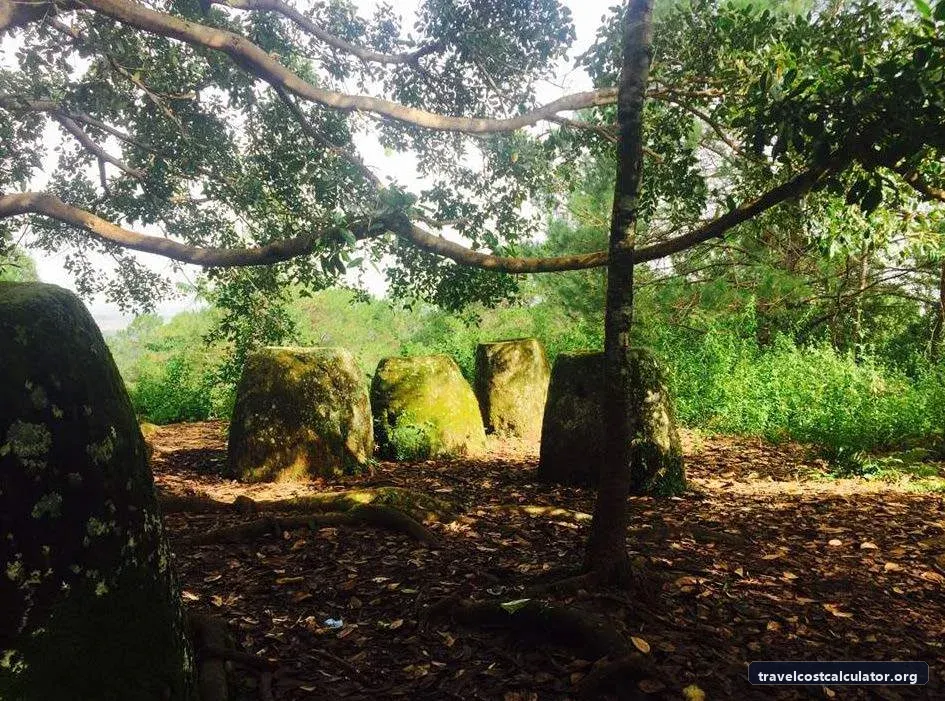
The Plain of Jars, located on a plateau in central Laos, gets its name from more than 2,100 tubular-shaped megalithic stone jars used for funerary practices in the Iron Age.
Megalithic Jar Sites in Xiengkhuang – Plain of Jars
🏛️ Overview & Historical Significance
Scattered across the cool, windswept highlands of central Laos’s Xiengkhuang Plateau lie thousands of mysterious, colossal stone vessels. Known collectively as the Megalithic Jar Sites in Xiengkhuang – Plain of Jars, this ancient archaeological landscape represents one of Southeast Asia's most enigmatic prehistoric wonders. In 2019, UNESCO formally inscribed 15 distinct components of the Plain of Jars as a World Heritage Site, recognizing its extraordinary testimony to an advanced Iron Age civilization that flourished between 500 BCE and 500 CE.
Archaeological evidence—pioneered in the 1930s by French researcher Madeleine Colani and expanded by modern Lao and international teams—reveals that these hand-carved stone jars served central roles in complex funerary practices. Carved predominantly from sandstone, granite, conglomerate, and limestone, the jars range in height from 1 to over 3 meters and can weigh up to 14 metric tons. Excavations inside and around the jars have unearthed human remains, cremation ashes, secondary burial offerings, glass beads, bronze ornaments, and ceramic vessels. Researchers believe the jars functioned as primary distillation or decomposition chambers during multi-stage burial rituals before final interment.
Adding a poignant modern layer to its ancient history, the Plain of Jars carries deep scars from the 20th century. During the U.S. Secret War in Laos (1964–1973), Xiengkhuang Province became one of the most heavily bombed places on Earth per capita. Today, ancient stone jars sit directly adjacent to massive bomb craters left by B-52 strikes. Through painstaking clearance efforts by organizations like the Mines Advisory Group (MAG), major public sites have been demined, creating a rare historical junction where Iron Age mysteries sit side-by-side with modern geopolitical memory.
🎟️ Entrance Fees, Opening Hours & Ticket Booking Tips
Visiting the Plain of Jars requires individual entry passes for each accessible site. As of 2026, admission fees are collected in local Lao Kip (LAK) at official entry checkpoints. Cash is strictly required; credit cards and foreign mobile payments are not accepted at site gates.
-
✦
Site 1 (Thong Hai Hin): 50,000 LAK per person (approx. $2.30 USD). This ticket includes admission to the primary jar field, the Visitor Interpretation Center, the natural cremation cave, and the electric shuttle service from the main gate to the hill.
-
✦
Site 2 (Ban Salato): 30,000 LAK per person (approx. $1.40 USD). Covers both the eastern and western ridge clusters.
-
✦
Site 3 (Ban Lat Khai): 30,000 LAK per person (approx. $1.40 USD). Covers the scenic agricultural walk and hilltop jar field.
-
✦
Opening Hours: All major public sites are open daily from 8:00 AM to 5:00 PM year-round, including national holidays.
Insider Ticket & Booking Tips:
-
✦
Cash Preparation: Withdraw sufficient Lao Kip in the regional capital of Phonsavan before setting out. ATMs are unavailable at Sites 2 and 3, and ticket booths cannot break large 100,000 LAK bills easily.
-
✦
Combined Visits: There is currently no single universal multi-site ticket. Plan to pay separately at each gate house.
-
✦
MAG Information Centre Pre-Visit: Before visiting the jar fields, visit the MAG UXO Information Centre in downtown Phonsavan (free admission, donations welcomed). Understanding the UXO clearance process will vastly enrich your context and safety awareness on-site.
🚌 How to Get There & Local Transit Costs
The strategic transit hub for visiting the Plain of Jars is Phonsavan, the capital city of Xiengkhuang Province. Reaching Phonsavan can be accomplished via regional air routes or overland transit from key Lao hubs such as Luang Prabang Travel Budget, Vang Vieng, or Vientiane Travel Budget.
1. Reaching Phonsavan (The Base Hub)
-
✦
By Air (Fastest): Lao Skyway operates domestic flights connecting Vientiane (VTE) to Xieng Khouang Airport (XKH) roughly 3 to 4 times weekly. Flight duration is approximately 45 minutes, with one-way fares ranging from $65 to $95 USD.
-
✦
By High-Speed Train + Minivan (Recommended Overland Route): Take the Lao-China Railway (LCR) train from Vientiane or Luang Prabang to Vang Vieng or Muang Xai, then connect to a shared minivan running Route 7 directly to Phonsavan. The minivan segment from Luang Prabang to Phonsavan takes roughly 6 to 7 hours through scenic mountain passes and costs 350,000 to 450,000 LAK ($16 to $21 USD).
-
✦
By Direct Bus / Minivan: Direct sleeper buses run overnight from Vientiane’s Northern Bus Terminal to Phonsavan (approx. 9–10 hours, 300,000 LAK / $14 USD).
2. Navigating from Phonsavan to the Jar Sites
-
✦
Scooter / Motorcycle Rental: Renting a semi-automatic or automatic 125cc scooter in Phonsavan costs 150,000 to 220,000 LAK ($7 to $10 USD) per day, plus gas. Site 1 is a smooth 15-minute paved ride (8 km south), while Sites 2 and 3 are located 25 km and 30 km south via partially unpaved secondary roads.
-
✦
Private Tuk-Tuk / Songthaew Charter: Hiring a local driver with a Songthaew (covered pickup truck) for a full-day loop covering Sites 1, 2, and 3 costs approximately $35 to $50 USD total. This fee can be Split Travel Budget among up to 4 to 6 travelers.
-
✦
Organized Guided Tours: Local travel agencies in Phonsavan offer full-day small group tours (including transport, licensed guide, and site entry fees) starting at $25 to $40 USD per person.
📸 Best Photography Spots & Insider Visit Hacks
Capturing the dramatic landscape of Xiengkhuang requires strategic timing and absolute adherence to safety protocols. Here are the top photographic vantage points and logistical hacks for your journey:
Top Photography Spots
-
✦
Site 1 - The "King’s Jar" (Hai Cheam): Located near the upper ridge of Site 1, this massive jar weighs over 6 tons and features intricate rim carvings. Frame your shot facing west to capture the jar framed against bomb craters and distant pine trees.
-
✦
Site 1 - Natural Limestone Cave: Photographers can capture dramatic silhouettes looking out from inside the cave entrance, where ancient human remains were cremated, framed by hanging vegetation.
-
✦
Site 2 - Twin Hill Ridges: Site 2 is bisected by a rural dirt path into two forested knolls. Position yourself on the eastern ridge to photograph the stone jars tucked beneath mature Frangipani trees with sunlight filtering through the canopy.
-
✦
Site 3 - Ban Lat Khai Rice Field Approach: The walk to Site 3 crosses a wooden footbridge over lush paddy fields. Photographing the elevated jar cluster from the bottom of the farm fields offers an authentic slice of rural Lao agrarian life juxtaposed against antiquity.
Insider Visit Hacks & Safety Rules
-
✦
STRICT UXO SAFETY PROTOCOL: Never step outside marked pedestrian paths. Safe, cleared zones are strictly defined by concrete markers painted white on one side and red on the other. Always stay on the side of the white markers. Never touch unidentifiable metallic objects on the ground.
-
✦
Optimal Seasonal Timing: The ideal period to visit is during the dry season from November to February, when temperatures are comfortably cool (15°C–24°C / 59°F–75°F) and skies are bright blue. The wet season (June to October) yields stunning emerald green grass surrounding the jars, but brings heavy mud on the road to Sites 2 and 3. Avoid March and April due to seasonal agricultural burning (smog).
-
✦
Beat the Midday Heat: Arrive at Site 1 at 8:00 AM sharp to enjoy the site in peaceful morning light long before tour buses arrive around 10:30 AM.
🏨 Nearby Accommodation & Daily Budget Allocation
Phonsavan provides a broad spectrum of budget-friendly accommodation and hearty local dining options geared toward culture seekers and history enthusiasts.
Recommended Accommodations in Phonsavan
-
✦
Budget Guesthouses: Sipanya Guesthouse or Kongkeo Guesthouse — Clean, family-run rooms with private hot showers, free Wi-Fi, and travel desk support. ($12 – $22 USD per night).
-
✦
Mid-Range Hotels: Vansana Plain of Jars Hotel or Favanhmai Hotel — Panoramic hilltop locations overlooking the town, offering air-conditioned rooms, full breakfasts, and professional transport coordination. ($35 – $65 USD per night).
-
✦
Boutique & Heritage Stays: Charming eco-lodges situated outside the town center offering bungalow-style accommodation amidst organic farmland. ($70 – $110 USD per night).
Dining & Culinary Highlights
Phonsavan features unique culinary specialties influenced by its high altitude and Vietnam border proximity. Try Khao Piak Sen (thick tapioca noodle soup), local highland sticky rice, and wild mountain herbal teas. Popular spots in town include Craters Restaurant and Bamboo Lounge, both decorated with deactivated Secret War bomb casings and offering western-Lao fusion menus ($3 to $8 USD per meal).
Estimated Daily Budget Breakdown (2026 Rates)
Below is a realistic spending blueprint for traveling in the Plain of Jars region:
-
✦
Backpacker Budget Planner: $25 – $35 USD / day
- Guesthouse private room: $14
-
✦
Scooter rental + gas: $9 (shared)
-
✦
Site entrance fees: $5
-
✦
Street food & local noodles: $7
- 3-Star Hotel room with breakfast: $45
- Top-tier resort/lodge: $90
Frequently Asked Questions
Essential visitor FAQs for Megalithic Jar Sites in Xiengkhuang – Plain of Jars
What is the entrance fee for Megalithic Jar Sites in Xiengkhuang – Plain of Jars?
How much time do you need to explore Megalithic Jar Sites in Xiengkhuang – Plain of Jars?
How do I get to Megalithic Jar Sites in Xiengkhuang – Plain of Jars from the nearest city?
📊 Heritage Quick Specs
Visiting Laos on a Budget?
Calculate your full daily travel budget for Laos — including hotel costs, local transport, food, and sightseeing expenses.
View Laos Daily Travel Costs →Explore more UNESCO World Heritage Sites
🏛️ All 1,200+ Heritage Sites →