
 Morocco
Medina of Tétouan (formerly known as Titawin)
Tétouan was of particular importance in the Islamic period, from the 8th century onwards, since it served as the main point of contact between Morocco and Andalusia.
Medina of Tétouan (formerly known as Titawin)
🏛️ Overview & Historical Significance
Nestled dramatically at the foot of the Rif Mountains in northern Morocco, the Medina Travel Budget of Tétouan (formerly known as Titawin) stands as one of the most authentic and culturally rich urban ensembles in the Islamic world. The name Titawin originates from the local Amazigh (Berber) language, meaning "the eyes" or "the water springs"—a nod to the abundant natural freshwater streams that initially attracted settlers to this fertile valley near the Martil River.
In 1997, UNESCO designated the Medina of Tétouan a World Heritage Site due to its exceptional historical preservation and its unique role as the primary bridge between Andalusia (Southern Spain) and North Africa. While originally founded in the 3rd century BCE as a Mauretanian settlement known as Tamuda, the city was razed by the Portuguese in the late 14th century. Its golden era began in the late 15th century when it was rebuilt by Abu al-Hasan Ali al-Mandri, an Andalusian noble who fled Spain following the fall of Granada Travel Budget in 1492.
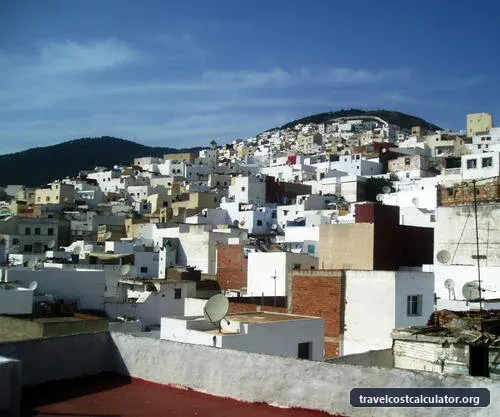
For centuries, Tétouan served as the main sanctuary for successive waves of Muslim and Jewish refugees expelled from the Iberian Peninsula during the Reconquista and Spanish Inquisition. These Andalusian refugees brought with them sophisticated urban planning, intellectual traditions, musical heritage (Al-Ala), and exquisite architectural mastery. The Medina evolved into a distinct Hispano-Moorish architectural masterpiece, characterized by multi-story whitewashed houses, intricate wrought-iron balconies, interior courtyards (riads), ornate zellij tilework, and carved plaster ceilings.
Unlike the sprawling medinas of Fes or Marrakech Travel Budget, Tétouan’s Medina remains remarkably intact, unblemished by modern urbanization or heavy commercialization. It operates today much as it did hundreds of years ago—a vibrant, working center of artisan guilds (leather tanners, silk weavers, woodworkers, and zellij craftsmen) divided into seven historic quarters, including the historic Jewish quarter known as the Mellah (El Jalaâ).
🎟️ Entrance Fees, Opening Hours & Ticket Booking Tips
Because the Medina of Tétouan is a functioning, residential city district home to over 40,000 residents, there is no master entrance fee to walk through its historic gates. However, visiting specific museums, cultural centers, and hiring official guides carry small costs. Below are the estimated 2026 rates for key attractions within and around the Medina:
-
✦
Medina Street Network & Souks: Free (Open 24/7).
-
✦
Tétouan Ethnographic Museum (Bab El Oqla): ~70 MAD (~$7.00 USD) for international adult visitors.
-
✦
Archaeological Museum of Tétouan: ~70 MAD (~$7.00 USD) for international adult visitors.
-
✦
School of Traditional Arts & Crafts (Dar El Sanaa): ~20 MAD (~$2.00 USD) self-guided entry; modest tips appreciated for master artisans.
-
✦
Royal Palace Precinct (Place Hassan II / Mechouar): Free to view from the exterior. (Interior is closed to the general public).
-
✦
Official Licensed Tour Guide (Half-Day / 3-4 Hours): ~250–350 MAD ($25.00–$35.00 USD) total per group.
Opening Hours & Timing Logistics for 2026
The street life of the Medina follows a traditional daily rhythm. Souks and artisan workshops typically open between 9:00 AM and 9:30 AM, remaining active until around 7:30 PM. Fridays are sacred: many shops, especially in the textile and jewelry sectors, close completely or operate on limited hours between 11:30 AM and 3:30 PM for Friday midday prayers. Museums generally operate Wednesday through Monday from 9:00 AM to 4:00 PM (closed Tuesdays and major Islamic holidays).
Ticket Booking Tips & Smart Travel Advice
-
✦
No Advance Tickets Needed: Museums operate on a walk-up cash basis. Online ticketing is not utilized for local historical sites in Tétouan, so always carry physical cash in Moroccan Dirhams (MAD).
-
✦
Hire an Official Guide: Tétouan's Medina contains over 500 narrow alleys and dead-end residential cul-de-sacs. Hire an accredited guide through the official Regional Delegation of Tourism (located near Place Moulay El Mehdi) or ask your riad reception. Accredited guides wear an official brass badge; avoid unlicensed street hustlers ("false guides") near Bab El Oqla or Place Hassan II.
-
✦
Cash-Only Economy: Credit cards are accepted only at higher-end riads and specialized boutique shops. Carry small notes (10, 20, and 50 MAD) for market purchases, tips, and museum entry. ATMs are readily available along the perimeter of Place Hassan II and Rue Mohammed V.
🚌 How to Get There & Local Transit Costs
Tétouan is conveniently positioned in northern Morocco, acting as the gateway between the Strait of Gibraltar and the Rif region. Most international travelers reach Tétouan via Tangier, the nearest major international transport hub located approximately 60 km (37 miles) west.
1. Travel from Tangier to Tétouan
-
✦
Shared Grand Taxi (Most Popular & Fast): Grand taxis (usually white passenger vans or Mercedes sedans) run constantly from Tangier's main Grand Taxi hub (near Gare Routière) directly to Tétouan’s Station de Grand Taxi.
- Cost (2026): ~35–40 MAD ($3.50–$4.00 USD) per seat.
-
✦
Duration: ~55–65 minutes.
-
✦
Pro-Tip: If traveling with luggage or seeking comfort, you can buy all seats in a sedan taxi for ~210–240 MAD ($21.00–$24.00 USD) to enjoy a private ride.
- Cost (2026): ~35–50 MAD ($3.50–$5.00 USD) one-way, plus 5 MAD per checked bag.
2. Travel from Chefchaouen to Tétouan
If combining your trip with the "Blue City" of Chefchaouen (65 km south):
-
✦
Grand Taxi: ~45–50 MAD ($4.50–$5.00 USD) per seat; duration is around 1.5 hours across the scenic Rif mountain pass.
-
✦
CTM / Supratours Bus: ~40–55 MAD ($4.00–$5.50 USD); runs multiple times daily.
3. Local Transit within Tétouan
Tétouan’s urban transit is cheap and straightforward. Because the Medina itself is entirely pedestrianized (no motorized vehicles allowed), you will drop off at its perimeter gates (Bab El Oqla, Bab Tout, or Place Hassan II).
-
✦
Petit Taxis: Identified by their vibrant golden-yellow or light-blue paint, these small vehicles move anywhere within the city limits. By law, drivers must use the taximeter (compteur). A typical ride across town costs between 10 and 20 MAD ($1.00–$2.00 USD). Note that a 50% surcharge applies after 8:00 PM.
📸 Best Photography Spots & Insider Visit Hacks
Prime Photography Locations
-
✦
Place Hassan II (The Mechouar): The dramatic central square linking the old Medina with the Spanish Colonial Ensanche district. Frame the Royal Palace’s classic Moorish archways and decorative turrets against the majestic backdrop of the Rif mountains. Best light: Early morning (8:00 AM – 9:30 AM).
-
✦
Bab El Oqla Gate: One of the Medina’s seven main historic city gates. Capture the contrast of centuries-old stone masonry and vibrant morning market life spilling out around the gateway.
-
✦
The Leather Tanneries (Dar Dbagh): Unlike the massive commercial tanneries of Fes, Tétouan’s tanneries near Bab El Bassa offer an intimate look at traditional natural dye pits. Ask local leather shop owners for rooftop access to capture panoramic photos over the stone vats.
-
✦
Calle Mellah (El Jalaâ Quarter): Photograph the distinct Andalusian architecture—narrow lanes lined with whitewashed residential facades, traditional green-tiled doorways, and classic Spanish wrought-iron window grilles.
-
✦
Rooftop Panorama Viewpoints: Head to upper dining terraces (such as El Reducto or Riad Blanco) at sunset. You’ll capture breathtaking views of thousands of whitewashed structures cascading down the slopes of Mount Jbel Dersa under soft golden light.
Insider Visit Hacks for 2026
-
✦
Avoid the Crowds & Heat: Visit during the shoulder seasons—March to May or September to November. Summer (July–August) temperatures frequently cross 32°C (90°F) and draw heavy local coastal tourism.
-
✦
Photography Etiquette: Tétouan is a living city, not an open-air museum. Residents and traditional artisans appreciate privacy. Always ask permission ("May I take a photo?" or in French, "Puis-je prendre une photo?") before photographing individuals or their shop goods up close.
-
✦
Navigation Strategy: The Medina is divided into lower and upper sections across seven quarters (including Suqa, Tranqat, and El Jalaâ). Keep track of major axis streets that connect main gates (e.g., from Bab Tout to Bab El Oqla). Download offline maps (Google Maps or Maps.me) before entering, as cellular signals can weaken deep inside stone alleyways.
-
✦
Sample Local Specialties: Stop by traditional bakeries in the Mellah for Pastilla Tétouanaise (a savory-sweet chicken pie dusted with sugar and cinnamon, distinctive for its rich egg-and-lemon base) and fresh almond pastries.
🏨 Nearby Accommodation & Daily Budget Allocation
To truly absorb the historic atmosphere of Medina of Tétouan (formerly known as Titawin), stay inside a restored traditional riad or historic mansion inside the old walls, or in the adjacent Spanish Ensanche quarter.
Recommended Accommodation Tiers (2026 Pricing)
-
✦
Budget Hostels & Guesthouses: 180–350 MAD ($18.00–$35.00 USD) per night. Clean, modest private rooms or dorm beds in converted family homes, often including traditional mint tea and simple breakfast. (Examples: Hostal El Yacout, Pension Djenane).
-
✦
Mid-Range Traditional Riads: 650–1,300 MAD ($65.00–$130.00 USD) per night. Beautifully restored Andalusian courtyards with zellij tiles, modern ensuite bathrooms, rooftop views, and generous Moroccan breakfasts. (Examples: Riad Blanco, Hotel El Reducto, Riad Dar El Machna).
-
✦
Boutique Luxury Riads: 1,500–2,800 MAD ($150.00–$280.00 USD) per night. High-end historical properties offering luxury suites, onsite hammam/spa services, private dining rooms, and tailored city tours. (Examples: Riad Al Mandari, Suite Blanco).
Estimated Daily Budget Breakdown (per person, 2026)
Planning your financial strategy for visiting Tétouan? Here is what you can expect to spend depending on your travel style:
| Expense Category | Backpacker Tier | Mid-Range Traveler | Luxury Traveler |
|---|---|---|---|
| Accommodation | $20 USD (Guesthouse bed) | $80 USD (Charming Riad room) | $220 USD (Boutique Riad Suite) |
| Food & Drinks | $12 USD (Street food & local cafés) | $30 USD (Mid-range riad dining) | $75 USD (Fine dining & tasting menus) |
| Local Transport | $4 USD (Shared taxis/buses) | $12 USD (Private Petit Taxis) | $45 USD (Private driver service) |
| Activities & Sightseeing | $7 USD (Museum entries) | $25 USD (Shared private guide fee) | $60 USD (Private guide + Artisan workshops) |
| Total Estimated Daily Budget | ~$43 USD / day | ~$147 USD / day | ~$400 USD / day |
Frequently Asked Questions
Essential visitor FAQs for Medina of Tétouan (formerly known as Titawin)
What is the entrance fee for Medina of Tétouan (formerly known as Titawin)?
How much time do you need to explore Medina of Tétouan (formerly known as Titawin)?
How do I get to Medina of Tétouan (formerly known as Titawin) from the nearest city?
📊 Heritage Quick Specs
Visiting Morocco on a Budget?
Calculate your full daily travel budget for Morocco — including hotel costs, local transport, food, and sightseeing expenses.
View Morocco Daily Travel Costs →Explore more UNESCO World Heritage Sites
🏛️ All 1,200+ Heritage Sites →