
 Tunisia
Medina of Sousse
Sousse was an important commercial and military port during the Aghlabid period (800–909) and is a typical example of a town dating from the first centuries of Islam.
Medina of Sousse
🏛️ Overview & Historical Significance
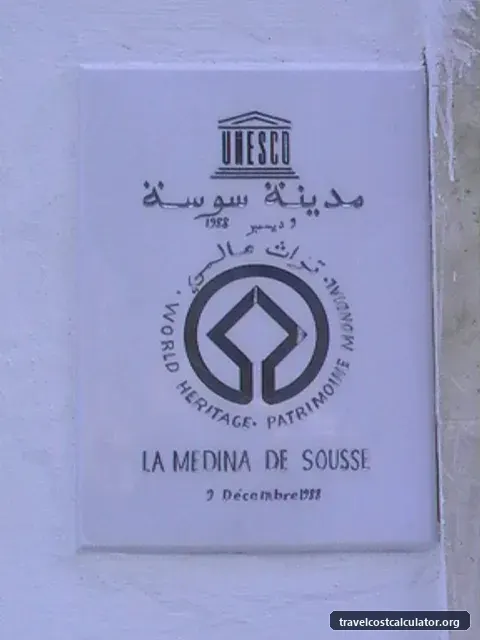
Rising dramatically above the turquoise waters of the Mediterranean, the Medina Travel Budget of Sousse Travel Budget stands as one of the most complete and formidable coastal fortresses of the early Islamic world. Inscribed as a UNESCO World Heritage site in 1988, this ancient fortified quarter in central Tunisia offers an exceptional window into the military maritime architecture of the Ifrīqiya region during the 9th century. Built predominantly during the reign of the Aghlabid dynasty (800–909 AD), Sousse served as a vital naval base and trade hub protecting the Islamic frontier from Byzantine fleet incursions and piracy.
Unlike many historic North African quarters that evolved into sprawling commercial mazes, Sousse’s Medina retains its austere, harmonious military-urban layout. The entire enclosure is wrapped within 2.25 kilometers of towering 9th-century crenellated limestone ramparts. Inside these ancient fortifications lies a dense tapestry of white-washed residences, vaulted souks, underground cisterns, and monuments that haven't changed their footprint in over a millennium.
Key Architectural & Cultural Landmarks
-
✦
The Ribat of Sousse (796–821 AD): The absolute crown jewel of the Medina. This fortified monastery housed the murabitun—pious soldier-monks who divided their days between prayer and military watch. Its slender cylindrical watchtower (nador) served dual duty as an observation post against pirate vessels and a minaret.
-
✦
The Great Mosque (851 AD): Built by the Aghlabid ruler Abu al-Abbas Muhammad, this mosque is unique across North Africa for lacking a traditional minaret. Because it sat adjacent to the Ribat, the mosque relied on the Ribat's tower for the call to prayer. Its heavy battlements and horseshoe arcades reflect defensive necessity.
-
✦
The Kasbah & Sousse Archaeological Museum: Perched on the highest point of the Medina, the Kasbah features the towering 9th-century Khalaf al-Fata tower. Today, it houses the world-renowned Archaeological Museum, which boasts the second largest collection of Roman and Byzantine mosaics on earth after Tunis Travel Budget's Bardo Museum.
-
✦
The Sofra Cisterns: A vast network of subterranean Roman and Aghlabid vaulted water reservoirs that sustained the walled city during naval blockades.
🎟️ Entrance Fees, Opening Hours & Ticket Booking Tips
Visiting the Medina of Sousse remains one of the most budget-friendly UNESCO cultural experiences in the Mediterranean. While walking the Medina streetscapes and souks is completely free, major monuments require individual entry tickets purchased on-site at official ticket booths (managed by the Agence de Mise en Valeur du Patrimoine et de Promotion Culturelle - AMVPPC).
2026 Ticket Price Breakdown
-
✦
Ribat of Sousse: 10.00 TND (~$3.20 USD) per adult. A photography permit fee of 1.00 TND (~$0.32 USD) applies if using DSLR equipment.
-
✦
Sousse Archaeological Museum (Kasbah): 12.00 TND (~$3.85 USD) per adult. Includes access to the museum galleries, inner courtyards, and upper fortress ramparts.
-
✦
Great Mosque of Sousse: 5.00 TND (~$1.60 USD) per non-Muslim visitor. Grants access to the grand prayer courtyard outside of active prayer hours.
-
✦
Combined Medina Pass: Select ticketing kiosks at the Ribat occasionally offer a combined pass for 15.00 TND (~$4.80 USD) covering the main heritage sites.
Opening Hours & Schedule (Updated for 2026)
-
✦
High Season (May 1 – September 30): Daily from 8:00 AM to 7:00 PM. (Great Mosque opens for non-Muslim visitors 8:00 AM – 2:00 PM daily, excluding Friday prayer times).
-
✦
Low Season (October 1 – April 30): Daily from 8:30 AM to 5:30 PM.
-
✦
Ramadan Operating Hours: During the holy month of Ramadan, sites close early around 3:00 PM. Plan your visit strictly for early morning.
Pro Tips for Ticket Purchases & Money Savings
Cash is Essential: Credit card readers at government monument booths can be unreliable due to cellular signal dropouts in the thick stone structures. Carry small denomination Tunisian Dinars (TND). ATMs (Banque de Tunisie and BIAT) are readily available along Place Farhat Hached outside the main Medina gate.
First Sunday Free Entry: Tunisian citizens and foreign residents with official registration cards receive free entry on the first Sunday of every month. Expect higher local foot traffic on these days.
🚌 How to Get There & Local Transit Costs
Sousse is situated along Tunisia’s central eastern coast (the Sahel region), making it easily accessible via express train, regional shared taxis (louages), and public buses from the capital city of Tunis, as well as nearby international airports.
From Tunis (Capital City) to Sousse
If you are basing your journey in Tunis (140 km north), you have two main convenient options:
-
✦
SNCFT Express Train: Departs regularly from Gare de Tunis-Ville directly to Sousse Ville Station (which sits right on the edge of the Medina).
- Duration: 2 hours 15 minutes.
-
✦
2026 Cost: 12.50 TND (~$4.00 USD) for 2nd class; 18.00 TND (~$5.75 USD) for 1st class Comfort seat. Train tickets should be purchased at the station 30 minutes before departure.
- Duration: 1 hour 45 minutes via the A1 Toll Highway.
From Regional Airports (Monastir & Enfidha)
-
✦
From Monastir Habib Bourguiba Airport (MIR - 15 km away): Take the Sahel Suburban Metro train directly from the airport terminal station to Sousse Bab Jedid station. Runs every 45 minutes; tickets cost just 2.20 TND (~$0.70 USD). Alternatively, a yellow metered taxi costs around 25–35 TND (~$8.00–$11.00 USD).
-
✦
From Enfidha-Hammamet Airport (NBE - 40 km away): A taxi to Sousse costs roughly 60–80 TND (~$19.00–$25.00 USD). Shared airport vans cost around 15 TND (~$4.80 USD).
Getting Around Within Sousse
Once at the Medina, no vehicular transport is needed inside the pedestrianized walls. To travel between the Medina and the beach district (Bou Jaafar) or Port El Kantaoui, use the iconic Yellow Taxis. Drivers are legally required to run the meter (compteur). A typical ride within the city costs between 3.50 TND and 7.00 TND ($1.10 – $2.25 USD). A night surcharge of 50% applies after 9:00 PM.
📸 Best Photography Spots & Insider Visit Hacks
Capturing the stark contrast between ancient golden limestone walls, crisp white domestic architecture, vibrant textiles, and deep blue seas requires precise timing and tactical navigation.
Top 4 Photography Hotspots
-
✦
The Ribat Watchtower (Nador): Climb the steep internal spiral staircase to the top of the tower for an unmatched 360-degree vantage point. You will capture bird's-eye angles over the Great Mosque courtyard, the red-tiled roofs of the Medina, and the sparkling Mediterranean harbor. *Best time: Early morning light (8:30 AM–10:00 AM).*
-
✦
Kasbah Fortress Upper Ramparts: The southwestern elevated bastion offers dramatic panoramic vistas of the whole UNESCO complex sprawling down toward the gulf. *Best time: Golden hour prior to sunset.*
-
✦
Souk El Caid & Rue El Aghaliba: Covered vaulted alleys lined with colorful ceramic lamps, brass trays, woven rugs, and historic horseshoe arches. *Best time: Mid-morning when light rays pierce through the wooden rafters.*
-
✦
Rue Ali Bey Exterior Walls: Capture the massive ancient city gates (Bab El Gharbi) set against giant olive trees and vibrant Bougainvillea blossoms.
Insider Hacks to Avoid Crowds & Heat
-
✦
Beat the Cruise Ship & Tour Bus Rush: Tour buses carrying day-trippers from coastal resorts (Hammamet/Port El Kantaoui) typically arrive between 10:30 AM and 1:30 PM. Visit the Ribat right at 8:00 AM opening to have the courtyard and tower entirely to yourself.
-
✦
Optimal Seasonal Window: The best months to visit Sousse are April to June and September to November. Summer (July–August) heat inside the stone Medina routinely exceeds 36°C (97°F), making climbing towers uncomfortable. Winter (December–February) brings pleasant 18°C (64°F) walking weather with very few tourists.
-
✦
Dress Code & Etiquette: Sousse Medina is a living, working residential area. Modest dress covering shoulders and knees is recommended out of respect for local customs. Women must cover their heads with a scarf (provided at the door if needed) when stepping into the Great Mosque grounds.
-
✦
Bargaining Etiquette in Souks: When shopping for leather goods, ceramics, or olive wood crafts, original quoted prices for tourists are inflated. Offer roughly 40–50% of the initial quote and negotiate with a smile and lighthearted humor.
🏨 Nearby Accommodation & Daily Budget Allocation
Staying inside or directly adjacent to the Medina lets you experience the magically quiet atmospheric evenings after day-trippers depart. Sousse offers exceptional accommodation choices ranging from restored traditional courtyard homes (Dars) inside the city walls to high-end beachfront resorts a short taxi ride away.
Recommended Places to Stay (2026 Rates)
-
✦
Budget Option - Hostels & Guest Houses: Dar Souiri or Dar Baaziz. Authentically restored traditional guesthouses located inside the Medina offering private rooms with courtyard fountains and traditional breakfast.
Cost: $25 – $45 USD per night. -
✦
Mid-Range Option - Historic Heritage Boutique: Dar Antonia. A stunning, luxury-style boutique Dar inside the Medina featuring classic Andalusian-Tunisian tilework, rooftop terrace lounges, and bespoke service.
Cost: $85 – $140 USD per night. -
✦
Luxury Option - Beachfront Resort: Mövenpick Resort & Marine Spa Sousse. Located just a 5-minute yellow taxi ride from the Medina gate. Offers private beach access, saltwater pools, and panoramic sea view suites.
Cost: $170 – $290 USD per night. -
✦
Luxury Heritage Alternative: Hotel Sousse Palace & Spa. Located on Avenue Habib Bourguiba, directly between the Mediterranean beach and the Medina gates.
Cost: $110 – $180 USD per night.
Dining & Authentic Cuisine Costs
Food near the Medina is incredibly affordable, fresh, and rich in local Mediterranean spices, olive oil, and seafood.
-
✦
Street Food Snacks: Try a hot Brik au thon (crispy fried pastry with egg and tuna) or a Fricassé (savory fried donut filled with harissa, tuna, and olives) for 2.50 to 5.00 TND ($0.80 – $1.60 USD).
-
✦
Local Medina Eateries: Enjoy a hearty bowl of Lablabi (garlic chickpea soup) or traditional Ojja with Merguez (spiced tomato scrambled eggs with lamb sausage) for 8.00 – 14.00 TND ($2.50 – $4.50 USD).
-
✦
Sit-down Seafood Restaurants: Feast on fresh Mediterranean sea bass or Couscous Royale at authentic spots near the port like Restaurant Le Scribe or Le Jardin for 35.00 – 65.00 TND ($11.00 – $21.00 USD).
Daily Budget Allocation Framework (2026 Rates)
To help you budget accurately for your trip to Sousse, review these daily estimated costs per person:
-
✦
Backpacker Budget Planner: $30 – $45 USD / day
- Accommodation: Budget Guesthouse / Private room in Medina ($25)
-
✦
Meals: Local street food & market produce ($10)
-
✦
Monuments & Transit: Louage transport & 1 monument ticket ($8)
- Accommodation: Boutique Heritage Dar ($70 - $90)
- Accommodation: 5-Star Beach Resort Suite ($200 - $270)
Frequently Asked Questions
Essential visitor FAQs for Medina of Sousse
What is the entrance fee for Medina of Sousse monuments in 2026?
How much time do you need to explore Medina of Sousse?
How do I get to Medina of Sousse from Tunis?
📊 Heritage Quick Specs
Visiting Tunisia on a Budget?
Calculate your full daily travel budget for Tunisia — including hotel costs, local transport, food, and sightseeing expenses.
View Tunisia Daily Travel Costs →Explore more UNESCO World Heritage Sites
🏛️ All 1,200+ Heritage Sites →