
 China
China
Mausoleum of the First Qin Emperor
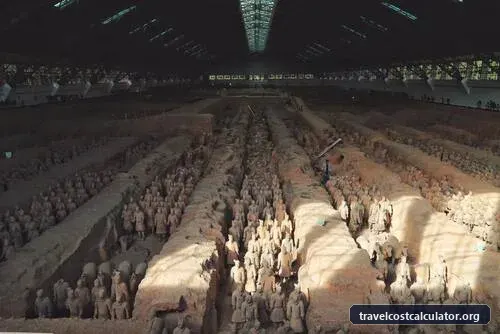
No doubt thousands of statues still remain to be unearthed at this archaeological site, which was not discovered until 1974.
Mausoleum of the First Qin Emperor
🏛️ Overview & Historical Significance
The Mausoleum of the First Qin Emperor (popularly known as the home of the Terracotta Army or Terracotta Warriors) stands as one of the most astonishing archaeological discoveries in human history. Located at the northern foot of Mount Lishan in the Lintong District of Xi'an Travel Budget, Shaanxi Province, this vast subterranean necropolis was constructed between 246 BCE and 208 BCE under the orders of Qin Shi Huang—the ambitious monarch who unified China’s warring states into its first central empire.
In March 1974, local farmers digging a water well uncovered clay pottery shards, leading to the excavation of an estimated 8,000 life-sized terracotta soldiers, 130 chariots with 520 horses, and 150 cavalry horses. What amazed historians was the unprecedented level of individual detail: no two facial features, hair braids, or armor plates are identical. Each figure was crafted by royal artisans using specialized module assembly, individually sculpted, painted with brilliant lacquer pigments, and stationed in tactical battle formations to protect the Emperor in the afterlife.
In 1987, UNESCO officially designated the Mausoleum of the First Qin Emperor as a World Heritage site based on several critical criteria:
-
✦
Unrivaled Scale & Artistic Mastery: It represents an extraordinary artistic accomplishment, showcasing the peak of ancient bronze casting, ceramic production, and military engineering.
-
✦
Symbol of Imperial Unification: The site serves as tangible proof of the administrative, technological, and cultural consolidation of China during the 3rd century BCE.
-
✦
Intact Funerary Complex: The central burial mound remains unexcavated to protect delicate organic materials and secret traps (legendary rivers of mercury recorded by historian Sima Qian), making it one of the largest preserved royal tombs on Earth.
🎟️ Entrance Fees, Opening Hours & Ticket Booking Tips
Visiting the museum in 2026 requires advance digital planning due to strict daily visitor quotas implemented by the Shaanxi Provincial Bureau of Cultural Heritage to preserve the site's microclimate.
Official 2026 Admission Pricing
-
✦
Peak Season Combined Ticket (March 1 – November 30): ¥120 CNY (Approx. $17.00 USD / €15.50 EUR) per adult.
-
✦
Off-Peak Season Combined Ticket (December 1 – February 28): ¥100 CNY (Approx. $14.00 USD / €13.00 EUR) per adult.
-
✦
Concession Tickets: Minors under 16 years old enter for free with a valid passport. Full-time undergraduate university students (under age 24) receive a 50% discount (¥60 CNY / $8.50 USD). Senior citizens (age 60+) enter for free upon presenting passport identification.
Note: The combined ticket grants access to both the primary Emperor Qinshihuang's Mausoleum Site Museum (Pits 1, 2, and 3) and the Lishan Garden (the actual tomb mound, Acrobatics Pit, and Bronze Armor Pit located 1.5 km away), along with the free electric shuttle bus connecting both parks.
Opening Hours & Schedule
-
✦
Peak Season: 08:30 – 18:00 (Last entry at 17:00).
-
✦
Off-Peak Season: 08:30 – 17:30 (Last entry at 16:30).
-
✦
Operating Days: Open 365 days a year, including national holidays.
Crucial 2026 Ticket Booking Tips
-
✦
Real-Name Passport System: Physical tickets are no longer sold at on-site booths. All visitors must book online using their physical passport number. Scans or smartphone photos of passports are strictly rejected at the automated security turnstiles.
-
✦
7-Day Rolling Reservation Window: Tickets open precisely 7 days in advance at 08:00 AM China Standard Time (CST). During Chinese peak holidays (Golden Week in October, Spring Festival, and July–August summer peak), daily quotas sell out within minutes.
-
✦
Where to Book: International travelers can book directly via the official WeChat Mini-Program (search for "Emperor Qinshihuang's Mausoleum Site Museum" using WeChat’s built-in translation) or through authorized global travel portals like Trip.com, Klook, or GetYourGuide.
-
✦
Licensed Guide & Audio Headset Costs: Official audio guides in English cost ¥30 CNY ($4.25 USD) plus a refundable deposit. Hiring a licensed, English-speaking expert guide at the visitor center main gate costs roughly ¥200 to ¥300 CNY ($28 – $42 USD) per group for a 2.5-hour tour—highly recommended to comprehend the archaeological context.
🚌 How to Get There & Local Transit Costs
The site is situated approximately 40 kilometers (25 miles) east of downtown Xi'an (near the Bell Tower). Modern infrastructure updates make traveling between central Xi'an and Lintong fast and budget-friendly.
Option 1: Xi'an Metro Line 9 + Local Bus (Most Popular & Cost-Effective)
-
✦
Board Xi'an Metro Line 1 or Line 6 from central Xi'an and transfer to Line 9 at Fangzhicheng Station.
-
✦
Ride Line 9 to Huaqing Chi Station (Exit C). Metro transit time from downtown Xi'an to Huaqing Chi is approximately 50 minutes.
-
✦
Upon exiting Huaqing Chi Station, transfer to local public Lintong Bus 602 or Special Tourist Bus 613. The bus drops off directly at the main square of the museum in 15–20 minutes.
-
✦
Total Cost: Metro (~¥8 CNY) + Local Bus (¥5 CNY) = ¥13 CNY (~$1.85 USD) one way.
Option 2: Ride-Hailing (Didi) or Taxi (Convenient for Groups)
You can hail a cab or use China's Didi app (fully supported in English and compatible with international credit cards like Visa/Mastercard):
-
✦
Downtown Xi'an (Bell Tower) to Museum Gate: 45 to 60 minutes via the G30 Lianyungang–Khorgas Expressway.
-
✦
Fare Estimate: ¥120 – ¥160 CNY ($17 – $23 USD) one way, including highway toll fees (~¥20 CNY). This option is ideal if traveling in a group of 3 or 4.
Option 3: High-Speed Train via Lintong North Station
For visitors traveling directly from other provinces or Xi'an North High-Speed Railway Station (Xi'anbei):
-
✦
Take a high-speed intercity train from Xi'an North Station to Lintong North Railway Station (15 minutes travel time, ¥12 CNY / $1.70 USD).
-
✦
From Lintong North Railway Station, take a 15-minute taxi/Didi directly to the museum gate (approx. ¥25 CNY / $3.50 USD).
📸 Best Photography Spots & Insider Visit Hacks
Prime Photography Locations
-
✦
Pit 1 Main Viewpoint (The Army Formation): Position yourself on the front elevated balcony near the main entrance. You get the iconic panoramic view of over 2,000 fully restored infantry soldiers standing in rectangular columns facing east.
-
✦
Pit 2 Display Cabinets (Up-Close Portraits): Pit 2 features glass cases displaying individual masterworks. Capture macro photographs of the Kneeling Archer (showing the intricate tread details on the bottom of his shoe) and the High-Ranking General. Flash photography is strictly forbidden; set your mobile camera to ISO 800-1600 or Night Mode to deal with indoor museum spotlighting.
-
✦
Bronze Chariots and Horses Exhibition Hall: Located inside the main exhibit complex, this hall houses two 1/2-scale bronze imperial carriages with intricately painted reins and gold-and-silver elements. Shoot at a 45-degree angle to avoid reflective glare from the protective glass cases.
-
✦
Lishan Garden Mound Viewpoint: Head to the Emperor's burial mound at Lishan Garden. The tree-covered earthen pyramid surrounded by pine trees offers scenic outdoor photography contrasting with the indoor excavation pits.
Strategic Visit Hacks
-
✦
Execute the "Reverse Route": 95% of tour groups follow the standard path: Pit 1 → Pit 2 → Pit 3. Beat the crowds by entering right at opening time (08:30 AM) and proceeding immediately to Pit 3 (The Command Headquarters), then Pit 2, and finally visiting Pit 1 around 12:30 PM when group tours head off for lunch.
-
✦
Do NOT Skip Lishan Garden: Many tourists mistakenly leave after seeing the main pits, unaware that their ticket includes access to Lishan Garden (Emperor Qin Shi Huang’s Tomb Mound Park). Free green shuttle buses run continuously between the museum exit and Lishan Garden. Inside Lishan Garden, you can explore the active excavation zones of Pit K9901 (Civil Officials and Acrobats) and Pit K9801 (Stone Armor Pit) with far smaller crowds.
-
✦
Digital Wallet Readiness: Cash is rarely accepted at gift shops or snack stands. Set up Alipay or WeChat Pay linked to your foreign credit card prior to arrival in China for quick QR payments.
-
✦
Optimal Seasons & Weather: The ideal months to visit are April to May and September to November (pleasant temperatures between 15°C and 22°C / 59°F–72°F). Avoid the extreme summer heat of July–August (temperatures frequently top 38°C / 100°F) and the early October National Day Golden Week holiday.
🏨 Nearby Accommodation & Daily Budget Allocation
Travelers can choose between staying in Central Xi'an (which offers rich nightlife, historic city walls, and diverse dining) or in Lintong District (ideal for hot springs resorts near the museum).
Accommodation Options
-
✦
Budget Hostels (Central Xi'an): HanTing Express / Xiangzimen Youth Hostel (Near South Gate). Clean dorm beds or private rooms starting at ¥120 – ¥220 CNY ($17 – $31 USD) per night.
-
✦
Mid-Range Hotels (Lintong / Downtown): Holiday Inn Express Xi'an Lintong or Novotel Xi'an SCPG. Modern amenities, English-fluent front desk staff, priced at ¥400 – ¥700 CNY ($56 – $98 USD) per night.
-
✦
Luxury & Hot Springs Resorts: Angsana Xi'an Lintong (located 10 minutes from the Terracotta Army, famous for natural hot spring baths) or Sofitel Legend Peoples Grand Hotel Xi'an. Nightly rates range from ¥1,300 – ¥2,400 CNY ($182 – $336 USD).
Daily Travel Budget Allocations (Per Person, 2026 Pricing)
1. Backpacker / Budget Level: ~$45 – $65 USD per day (¥320 – ¥460 CNY)
-
✦
Lodging: Hostel dorm bed / budget hotel: ¥140 CNY ($20 USD)
-
✦
Meals: Local Shaanxi street food (Biangbiang noodles, Roujiamo Chinese burger, cold skin noodles): ¥70 CNY ($10 USD)
-
✦
Transport: Metro Line 9 + local bus round-trip: ¥26 CNY ($3.70 USD)
-
✦
Attractions & Guides: Museum ticket + audio guide: ¥150 CNY ($21.30 USD)
2. Mid-Range Traveler: ~$140 – $220 USD per day (¥1,000 – ¥1,560 CNY)
-
✦
Lodging: 4-Star hotel (double occupancy share): ¥350 CNY ($50 USD)
-
✦
Meals: Sit-down Shaanxi specialty restaurants, Dumpling Banquet at De Fa Chang: ¥220 CNY ($31 USD)
-
✦
Transport: Didi / taxi transfers: ¥150 CNY ($21 USD)
-
✦
Attractions & Guides: Museum ticket + private English licensed guide share: ¥320 CNY ($45 USD)
3. Luxury / VIP Traveler: ~$380 – $650 USD per day (¥2,700 – ¥4,600 CNY)
-
✦
Lodging: 5-Star Hot Spring Resort / Executive Suite: ¥1,800 CNY ($252 USD)
-
✦
Meals: Fine dining imperial banquets & wine pairing: ¥600 CNY ($84 USD)
-
✦
Transport: Chauffeur-driven private van service for the full day: ¥800 CNY ($112 USD)
-
✦
Attractions & VIP Packages: Express VIP museum tickets + private expert archaeologist guide: ¥500 CNY ($70 USD)
Frequently Asked Questions
Essential visitor FAQs for Mausoleum of the First Qin Emperor
What is the entrance fee for Mausoleum of the First Qin Emperor?
How much time do you need to explore Mausoleum of the First Qin Emperor?
How do I get to Mausoleum of the First Qin Emperor from the nearest city?
📊 Heritage Quick Specs
Visiting China on a Budget?
Calculate your full daily travel budget for China — including hotel costs, local transport, food, and sightseeing expenses.
View China Daily Travel Costs →Explore more UNESCO World Heritage Sites
🏛️ All 1,200+ Heritage Sites →