
 Peru
Manú National Park
This huge 1.5 million-ha park has successive tiers of vegetation rising from 150 to 4,200 m above sea-level.
Manú National Park
🏛️ Overview & Historical Significance
Stretching from the frigid high-Andean crests of Paucartambo at over 4,000 meters (13,100 feet) down to the lush, steaming lowland Amazon basin at 150 meters above sea level, Manú National Park (Parque Nacional del Manú) is widely recognized by ecologists as the most biodiverse protected area on Earth. Covering nearly 1.7 million hectares (4.2 million acres) in southeastern Peru across the departments of Cusco Travel Budget and Madre de Dios, Manú encapsulates an unbroken ecological gradient found almost nowhere else on the planet.
In 1987, UNESCO recognized Manú National Park as a World Heritage Site (and previously designated it a Biosphere Reserve in 1977) under natural criteria (ix) and (x). The United Nations highlighted its extraordinary concentration of endemic species and un-fragmented ecosystems. Because the park protects entire river watersheds without dams, roads, or major industrial human settlements in its core zone, natural evolutionary processes continue here completely uninterrupted.
Unrivaled Global Biodiversity
The statistical magnitude of Manú’s biodiversity is staggering:
-
✦
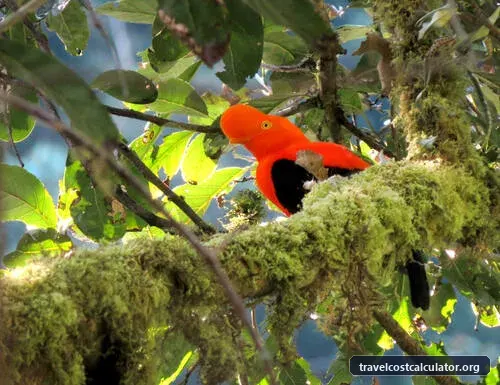
Birds: Over 1,000 documented species—representing roughly 10% of all bird species on Earth and more than the total number of species found in North America and Europe combined. Highlights include the fiery-orange Andean Cock-of-the-Rock, Harpy Eagle, and 13 species of macaws.
-
✦
Mammals: More than 200 species, including healthy breeding populations of the Jaguar (Panthera onca), Giant River Otter (Pteronura ethnicensis), South American Tapir, Black Caiman, and 14 distinct species of primates (such as the endangered Emperor Tamarin and Black-faced Black Spider Monkey).
-
✦
Flora & Insects: Over 15,000 species of vascular plants (with up to 250 species of trees per single hectare) and an estimated 500,000+ insect species, including brilliant Blue Morpho butterflies and giant leaf-cutter ant colonies.
Indigenous Heritage & Uncontacted Peoples
Beyond its flora and fauna, Manú is a vital cultural sanctuary. The park is home to several indigenous Amazonian groups, including the Matsigenka, Harakmbut, and Yine communities who practice traditional, low-impact subsistence living in designated cultural territories. Crucially, the deeper, strictly protected wilderness zones harbor the Mashco-Piro—one of the largest remaining uncontacted or voluntarily isolated indigenous tribes in the world. Park policies rigorously defend their right to isolation, ensuring that human intrusion into core zones remains outlawed to prevent the spread of foreign diseases and preserve their ancestral way of life.
🎟️ Entrance Fees, Opening Hours & Ticket Booking Tips
Visiting Manú National Park requires navigating Peru’s strictly regulated park administration system managed by SERNANP (Servicio Nacional de Áreas Naturales Protegidas por el Estado). The park is divided into three primary management zones, each with distinct access rules and fee structures updated for 2026:
1. Zonal Breakdown & Official 2026 Ticket Pricing
-
✦
Cultural / Buffer Zone (Zona Cultural): Located on the outer perimeter along the upper cloud forest and Alto Madre de Dios River. Independent travel is permitted here, though accredited guides are recommended.
2026 Entrance Fee: 50 PEN (~$13.50 USD) per person (valid for up to 5 days). -
✦
Reserved Zone (Zona Reservada): The pristine middle basin where wildlife viewing is at its absolute peak (including oxbow lakes like Cocha Salvador and Cocha Otorongo). Independent access is strictly illegal. You MUST enter with a SERNANP-licensed eco-tour operator.
2026 Entrance Fee: 300 PEN (~$80.00 USD) per person (valid for up to 5 days). This park permit is almost always bundled directly into your multi-day tour package price. -
✦
Restricted / Intangible Zone (Zona Intangible): Dedicated exclusively to scientific research and the protection of uncontacted indigenous tribes. Closed to all tourism.
2. Operating Hours & Visit Regulations
-
✦
Park Access Hours: River checkpoints (such as Limonal Guard Station) operate from 6:00 AM to 4:00 PM daily. Boat traffic along the Manu River is prohibited after dark for safety and environmental conservation reasons.
-
✦
Guided Excursions: Eco-lodges inside the park organize dawn birdwatching trips (starting around 5:00 AM) and night-walks within lodge trail systems (typically 7:00 PM – 9:00 PM).
3. Essential 2026 Booking Tips
-
✦
Book Authorized Operators Only: Ensure your tour operator displays a valid SERNANP certification badge. Authorized companies employ licensed naturalist guides, carry satellite communications, and pay fair wages to indigenous boat crews and lodge staff.
-
✦
Advance Reservations: Daily visitor quotas in the Reserved Zone are capped to protect the habitat. Book your tour 3 to 6 months in advance if traveling during the peak dry season (June through August).
-
✦
Vaccination Requirements: In 2026, proof of Yellow Fever vaccination remains mandatory for entry into the Peruvian Amazon basin. Carry your ICVP (International Certificate of Vaccination) alongside your passport. Malaria prophylaxis and up-to-date Tetanus shots are strongly advised.
🚌 How to Get There & Local Transit Costs
Reaching Manú National Park is an extraordinary adventure in itself. The overland journey takes you from the Andean highlands near Cusco down through dizzying cloud forests into the lowland Amazon basin before transitioning to river transportation.
Primary Gateway: Cusco to Manú via the Manu Road
The standard overland route starts in Cusco, taking the famous "Manu Road"—a winding, dramatic track that descends over 3,500 vertical meters.
-
✦
Leg 1: Cusco to Cloud Forest / San Pedro Travel Budget (Overland 4x4 or Bus)
Depart Cusco early morning toward Paucartambo, a historic colonial village. From Paucartambo, cross the high pass at Tres Cruces (3,900m) and descend into the cloud forest around San Pedro.
Duration: 6 to 8 hours.
Cost: Public colectivos (shared vans) from Cusco to Paucartambo cost around 40 – 60 PEN ($11 – $16 USD). However, all-inclusive tour vehicles cover this entire stretch. -
✦
Leg 2: Cloud Forest to Atalaya Port or Shintuya Port
Continue descending the narrow, unpaved mountain road past misty forests to the river ports of Atalaya or Shintuya on the Alto Madre de Dios River.
Duration: 3 to 4 hours driving. -
✦
Leg 3: River Transit to Lowland Lodges & Reserved Zone Entry
Board a motorized motorized dugout canoe (known locally as a peke-peke or covered speed-launch equipped with outboard motors). Travel down the Alto Madre de Dios River to the confluence with the Manu River, passing the Limonal Ranger Station into the core Reserved Zone.
Duration: 4 to 8 hours by boat depending on water levels and lodge location.
Alternative Air Option: Charter Flights
For visitors with tight schedules or higher budgets, small charter flights can occasionally be arranged from Cusco to the small airstrip at Boca Manu.
2026 Charter Flight Cost Estimator: Expect to pay between $300 and $550 USD per person one-way (subject to strict weather availability and luggage weight limits of 10-15 kg).
📸 Best Photography Spots & Insider Visit Hacks
Top Photography Spots in Manú
-
✦
San Pedro Andean Cock-of-the-Rock Lek: Situated in the cloud forest at approximately 1,400 meters elevation. Arrive at the hide by 5:30 AM to photograph Male Travel Budget Cocks-of-the-Rock performing their vibrant lekking displays. Lens recommendation: 70-200mm f/2.8 fast telephoto (due to low light).
-
✦
Cocha Salvador (Oxbow Lake): Located deep in the Reserved Zone. Silent catamarans (floating wooden platforms pushed by wooden poles) allow photographers to glide quietly past Giant River Otter families, Black Caimans, and Hoatzins (prehistoric-looking "dinosaur" birds). Lens recommendation: 100-400mm or 200-600mm telephoto.
-
✦
Blanquillo Macaw & Parrot Clay Lick (Colpa): A strategically built camouflage blind positioned across from a massive clay cliff on the Alto Madre de Dios River. At dawn, hundreds of Red-and-Green Macaws, Mealy Parrots, and Cobalt-winged Parakeets flock to eat mineral-rich clay. Lens recommendation: 400mm+ super-telephoto with a sturdy tripod.
-
✦
Manu River Sandbars (July–September): During peak dry season, driving along the river opens up opportunities to spot and photograph elusive Jaguars sunbathing on exposed gravel sandbars, as well as Tapirs crossing the shallow waters.
Insider Visit Hacks for 2026
-
✦
Beat the High Humidity (Protecting Gear): Tropical humidity in Manú routinely tops 90%. Store your cameras, lenses, and electronics in airtight dry bags packed with heavy-duty silica gel packs or rechargeable desiccant canisters. Never change lenses in rainy or dusty environments.
-
✦
Dress for the Sandflies (Manta Blanca): Unlike mosquitoes, the tiny biting blackflies (*manta blanca*) near riverbanks can penetrate light mesh clothing. Wear tightly woven, long-sleeved shirts and trousers treated with Permethrin. Apply Picaridin or high-percentage DEET repellent to exposed skin.
-
✦
Optimal Seasonal Timing:
- Dry Season (May to October): The absolute Best Time to Visit Planner. Lower water levels concentrate wildlife around remaining rivers and oxbow lakes, trail hiking is cleaner, and jaguar sightings spike.
-
✦
Wet Season (November to April): Characterized by heavy downpours, muddy conditions, and potential river overtopping. However, bird activity is high, vegetation is brilliantly lush, and temperatures are slightly cooler.
🏨 Nearby Accommodation & Daily Budget Allocation
Because independent camping inside the Reserved Zone is prohibited, accommodation in Manú ranges from rustic biological station dormitories to high-end eco-lodges integrated seamlessly into the rainforest canopy.
Accommodation Options
-
✦
Budget / Cultural Zone Lodges ($35 – $85 USD / night): Simple wooden cabins with shared or private bathrooms, mosquito netting, and limited generator power (e.g., Bamboo Lodge, Paradise Lodge near San Pedro). Ideal for short 3-to-4-day cloud forest excursions.
-
✦
Mid-Range Eco-Lodges ($150 – $320 USD / night per person all-inclusive): Comfortable private rooms with en-suite bathrooms, solar-powered charging stations, filtered drinking water, and delicious local dining options (e.g., Pantiacolla Lodge, Cock-of-the-Rock Lodge, Manu Learning Centre).
-
✦
High-End / Deep Jungle Wilderness Lodges ($450 – $850+ USD / night per person all-inclusive): Top-tier conservation lodges providing private bungalows, gourmet meals, hot showers, private naturalist guides, and canopy walkway access (e.g., Manu Wildlife Center, Romero Rainforest Lodge, Matsigenka Tapir Lodge).
Estimated Daily Budget Allocations for 2026
Most visitors experience Manú as an all-inclusive multi-day expedition package (covering transport from Cusco, meals, lodgings, permits, and guides). Below is a daily financial breakdown based on standard 2026 trip structures:
1. Backpacker / Cultural Zone Budget (3-4 Day Trips)
-
✦
Daily Cost: ~$120 – $180 USD per day
-
✦
Includes: Shared van transit via Manu Road, basic lodge accommodation in the Cultural Zone, hearty traditional meals (lomo saltado, fresh trout, Amazonian fruit), local guide fees, and Cultural Zone permit (50 PEN).
2. Mid-Range Explorer (5-7 Day Reserved Zone Expedition)
-
✦
Daily Cost: ~$260 – $420 USD per day
-
✦
Includes: Private 4x4 overland transport, motorized riverboat travel, 4-night stay deep in the Reserved Zone (e.g., Casa Matsigenka / Treehouses), full SERNANP permit (300 PEN), professional bilingual biologist guide, all meals, and oxbow lake catamaran tours.
3. Luxury & Specialist Wildlife Photographer (7-10 Day Comprehensive Package)
-
✦
Daily Cost: ~$600 – $950+ USD per day
-
✦
Includes: Top-tier eco-lodges (Manu Wildlife Center), private dedicated master guide, specialized photo hides (Blanquillo Macaw Clay Lick), private boat charter, premium meals, and optional flight transfers via Boca Manu airstrip.
Frequently Asked Questions
Essential visitor FAQs for Manú National Park
What is the entrance fee for Manú National Park?
How much time do you need to explore Manú National Park?
How do I get to Manú National Park from the nearest city?
📊 Heritage Quick Specs
Visiting Peru on a Budget?
Calculate your full daily travel budget for Peru — including hotel costs, local transport, food, and sightseeing expenses.
View Peru Daily Travel Costs →Explore more UNESCO World Heritage Sites
🏛️ All 1,200+ Heritage Sites →