
 United States
Mammoth Cave National Park
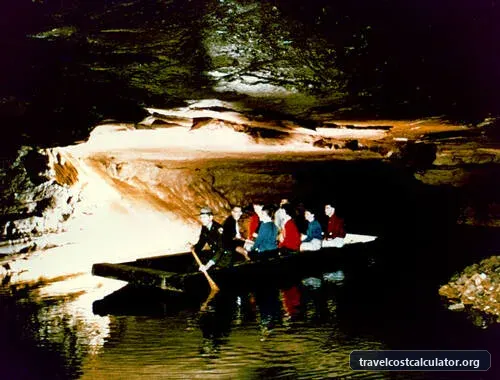
Mammoth Cave National Park, located in the state of Kentucky, has the world's largest network of natural caves and underground passageways, which are characteristic examples of limestone formations.
Mammoth Cave National Park
🏛️ Overview & Historical Significance
Inscribed as a UNESCO World Heritage site in 1981 and recognized as an International Biosphere Reserve, Mammoth Cave National Park in central Kentucky protects the world’s longest known cave system. As of 2026, researchers have mapped over 426 miles (685 km) of subterranean passages, with ongoing speleological surveys discovering new interconnecting chambers almost every year. The system’s scale is so vast that it is more than double the length of the world’s second-longest cave, Mexico's Sac Actun system.
Geologically, Mammoth Cave is a masterpiece of karst topography. Over tens of millions of years, acidic groundwater trickled through thick layers of Mississippian limestone, capped by an insoluble sandstone cover. This unique sandstone "roof" protected the lower limestone levels from collapsing, preserving sprawling, multi-tiered labyrinths, soaring rotundas, and delicate mineral dripstones across millions of cubic feet of underground space.
Beyond its geological majesty, Mammoth Cave holds deep human and cultural history spanning over 5,000 years:
-
✦
Prehistoric Indigenous Footprints: Indigenous peoples explored deep into the dark zone of the cave around 3,000 to 4,000 years ago, mining minerals like gypsum and epsomite using burning cane torches. Dried torches, woven slippers, and petroglyphs remain remarkably preserved by the cave's constant humidity and temperature.
-
✦
1812 Saltpeter Mining: During the War of 1812, enslaved laborers mined potassium nitrate (saltpeter) from the cave soil to manufacture gunpowder for the United States military effort.
-
✦
Enslaved Guides & Early Tourism: In the 19th century, enslaved men served as the primary pioneers and tour guides of the cave. Most notable was Stephen Bishop, who mapped crucial sections, discovered subterranean eyeless fish, and named iconic landmarks like Bottomless Pit and Fat Man's Misery.
-
✦
Biological Diversity: The cave hosts over 130 species of cave-dwelling fauna, including rare troglobitic organisms that have adapted entirely to life in darkness, such as the eyeless cave fish (Amblyopsis spelaea) and the Kentucky cave shrimp.
🎟️ Entrance Fees, Opening Hours & Ticket Booking Tips
Unlike many major U.S. National Parks, Mammoth Cave National Park charges no entrance fee to access the park grounds, visitor center, or surface hiking trails. However, entering the cave itself requires a ticketed, ranger-guided tour.
2026 Estimated Tour Prices & Options
Prices vary depending on tour length, physical difficulty, and seasonal demand. Below are expected rates in USD (and approximate EUR equivalents):
-
✦
Historic Tour (2 hours, 2 miles, 540 stairs): $22 - $25 USD (~€20 - €23 EUR). A classic walk through massive rotundas, narrow squeezes, and saltpeter mining remnants.
-
✦
Domes & Dripstones Tour (2 hours, 0.75 miles, 500+ descending stairs): $25 - $28 USD (~€23 - €26 EUR). Features dramatic stalactites, stalagmites, and deep vertical shafts.
-
✦
Frozen Niagara Tour (1.25 hours, 0.25 miles, low difficulty): $18 - $22 USD (~€16 - €20 EUR). Ideal for families, seniors, or those wanting a shorter walk to see dense curtain formations.
-
✦
Extended Explorer / Wild Cave Tour (3.5 to 6 hours, intense crawling): $75 - $95 USD (~€69 - €87 EUR). Requires helmets, kneepads, and squeezing through tight crevices.
-
✦
Self-Guided Discovery Tour (Summer & Peak Season only): $12 - $15 USD (~€11 - €14 EUR). A flexible, shorter route through the cave entrance at your own pace.
Opening Hours & Time Zone Trap
The Visitor Center operates year-round (except Christmas Day), typically open from 8:00 AM to 4:30 PM in winter and 8:00 AM to 6:00 PM during peak summer months. Cave tour departures run throughout the day.
CRITICAL INSIDER TIP: Mammoth Cave is located in the Central Time Zone (CT). However, nearby regional hubs like Louisville, Lexington, and Elizabethtown operate on Eastern Time (ET), which is one hour ahead. Hundreds of travelers miss their pre-booked tours every year due to this shift!
Booking Tips
-
✦
Book Months in Advance: Tour reservations open up to 6 months in advance on Recreation.gov. Popular tours (especially historic and weekend slots) sell out weeks in advance during spring break, summer, and October.
-
✦
America the Beautiful Interagency Pass: While the pass grants free access to most federal lands, it does not cover cave tour fees here, though it may provide small discounts on select campsites or specialty tours.
🚌 How to Get There & Local Transit Costs
Mammoth Cave is located in south-central Kentucky, situated off Interstate 65 (I-65) between Louisville, KY, and Nashville, TN. Because public transportation within rural Kentucky is virtually non-existent, renting a car is highly recommended.
Nearest Major Airports & Driving Times
-
✦
Louisville Muhammad Ali International Airport (SDF): ~85 miles north (1 hour 20 minutes drive via I-65 South to Exit 53 or 48).
-
✦
Nashville International Airport (BNA): ~90 miles south (1 hour 25 minutes drive via I-65 North to Exit 48 or 53).
Transport Options & Estimated Costs (2026)
-
✦
Rental Car (Recommended): Renting a standard sedan from SDF or BNA airport ranges from $45 to $75 USD/day. Gas expenses from either airport round-trip will run approximately $20 to $30 USD.
-
✦
Bus & Rideshare Hybrid: Take a regional Greyhound bus from Nashville or Louisville to Bowling Green, KY (approx. $25 - $40 USD one-way). From Bowling Green (roughly 30 miles from the park), a rideshare (Uber/Lyft) to the Visitor Center costs approximately $45 - $65 USD one-way. Warning: Finding a returning Uber/Lyft out of the park can be difficult due to limited cellular coverage.
📸 Best Photography Spots & Insider Visit Hacks
Top Underground & Surface Photo Opportunities
-
✦
The Rotunda: One of the massive rooms near the historic entrance, spanning over a quarter-acre. Capture the towering limestone ceiling and historic saltpeter vats.
-
✦
Frozen Niagara Formation: The park’s iconic flowstone cascade that resembles a frozen waterfall. Use low-light camera settings to highlight the rich mineral drapery.
-
✦
Green River Bluffs Overlook: A serene surface viewpoint overlooking the dense hardwood forest and the winding Green River. Best during golden hour and peak fall foliage (late October).
-
✦
Cedar Sink Trail: A unique 1-mile surface loop leading into a massive collapsed sinkhole where an underground river briefly surfaces before plunging back into the earth.
Insider Travel Hacks
-
✦
Temperature Control: Regardless of whether it is 95°F (35°C) outside in July or freezing in January, the cave maintains a constant year-round temperature of approximately 54°F (12°C). Bring a jacket or hoodie and wear pants for all cave tours.
-
✦
Shoe Requirements & Decontamination: Sturdy, non-slip rubber-soled walking shoes or hiking boots are mandatory. To protect bat populations from White-Nose Syndrome (a devastating fungal disease), all visitors must walk across bio-security disinfectant mats after exiting the cave.
-
✦
Camera Equipment Rules: Tripods, monopods, and selfie sticks are strictly prohibited on almost all cave tours to maintain group pace and safety. Focus on hand-held low-light techniques (bump ISO to 3200–6400, use a fast lens with an f/1.8 or f/2.8 aperture, and rely on natural cave accent lights). Flash photography is permitted on select tours, but respect tour guides' instructions.
🏨 Nearby Accommodation & Daily Budget Allocation
Where to Stay
-
✦
Inside the Park:
- The Lodge at Mammoth Cave: Located directly next to the Visitor Center. Offers historic cottages and modern hotel rooms ($140 - $240 USD/night).
-
✦
Mammoth Cave Campground: Tent and RV sites available from April to October ($25 - $35 USD/night).
- Cave City & Horse Cave: Budget motels, roadside diners, and chain hotels ($70 - $130 USD/night).
Estimated Daily Budget Allocations (2026 Rates)
1. Backpacker / Budget Tier (~$65 - $95 USD / day)
-
✦
Accommodation: Camping site inside the park or basic motel room in Cave City Split Travel Budget between travelers (~$25 - $40/person).
-
✦
Food: Groceries, picnic lunches, and fast-casual dining (~$25/day).
-
✦
Activities: 1 standard cave tour (e.g., Historic or Self-Guided) + surface hiking (~$15 - $22/day).
-
✦
Transport: Shared fuel costs (~$10/day).
2. Mid-Range Tier (~$175 - $280 USD / day)
-
✦
Accommodation: Mid-range hotel in Cave City or room at The Lodge at Mammoth Cave (~$120 - $160/night).
-
✦
Food: Sit-down breakfasts, Southern BBQ diners, and casual dinners (~$45 - $60/day).
-
✦
Activities: 2 cave tours (e.g., Domes & Dripstones + Frozen Niagara) (~$45 - $50/day).
-
✦
Transport: Car rental share + gas (~$35/day).
3. Comfort / Luxury Tier (~$380 - $550+ USD / day)
-
✦
Accommodation: Suite at The Lodge at Mammoth Cave or boutique B&B (~$220 - $300/night).
-
✦
Food: Fine Southern dining, craft distilleries, and restaurant dining in Bowling Green (~$90 - $130/day).
-
✦
Activities: Specialized tours (Wild Cave or Private Lantern tours) plus kayaking/canoe rentals on the Green River (~$80 - $120/day).
-
✦
Transport: Full-size rental SUV (~$70 - $90/day).
Frequently Asked Questions
Essential visitor FAQs for Mammoth Cave National Park
What is the entrance fee for Mammoth Cave National Park?
How much time do you need to explore Mammoth Cave National Park?
How do I get to Mammoth Cave National Park from the nearest city?
📊 Heritage Quick Specs
Visiting United States on a Budget?
Calculate your full daily travel budget for United States — including hotel costs, local transport, food, and sightseeing expenses.
View United States Daily Travel Costs →Explore more UNESCO World Heritage Sites
🏛️ All 1,200+ Heritage Sites →