
 Belgium
Major Mining Sites of Wallonia
The four sites of the property form a strip 170 km long by 3–15 km wide, crossing Belgium from east to west, consisting of the best-preserved 19th- and 20th-century coal-mining sites of the country.
Major Mining Sites of Wallonia
🏛️ Overview & Historical Significance
Stretching across the industrial coal basin of southern Belgium, the Major Mining Sites of Wallonia represent a profound chapter in European history. Designated as a collective UNESCO World Heritage site in 2012, this ensemble comprises four exceptionally preserved 19th- and 20th-century coal mining complexes: Grand-Hornu, Bois-du-Luc, Le Bois du Cazier, and Blegny-Mine. Together, they offer the best-preserved testimony to the Industrial Revolution in mainland Europe, encapsulating technical innovation, architectural idealism, and the deeply human cost of heavy industry.
During the 19th century, Wallonia was an economic powerhouse second only to Great Britain. Coal extraction powered the nation's burgeoning steel mills, locomotive works, and glass foundries. UNESCO recognized these four specific sites because each highlights a distinct facet of industrial heritage:
-
✦
Grand-Hornu (Boussu/Mons): Built between 1810 and 1830 by industrialist Henri De Gorge, this complex is a masterpiece of Neoclassical industrial architecture. It incorporated an ambitious utopian vision featuring an integrated town, housing for 400 families, a school, and wide paved avenues. Today, it houses the Museum of Contemporary Arts (MACS) and the Center for Innovation and Design (CID).
-
✦
Bois-du-Luc (La Louvière): Built between 1838 and 1853, Bois-du-Luc is one of the world's oldest intact model worker villages. The site preserves an entire self-contained ecosystem—complete with worker cottages, a hospital, brewery, school, church, and the historic Saint-Emmanuel pithead.
-
✦
Le Bois du Cazier (Marcinelle/Charleroi): A site of immense emotional weight, Le Bois du Cazier is forever etched into European labor history. On August 8, 1956, a tragic fire trapped in the shafts claimed the lives of 262 miners from 12 different nations (including 136 Italian guest workers). This disaster triggered sweeping mine safety reforms across Europe and marked a turning point in international labor regulations.
-
✦
Blegny-Mine (Blegny/Liège): Located east of Liège, Blegny-Mine offers a rare, immersive look into deep underground mining. It is one of the very few authentic coal mines in Europe where visitors can descend via elevator cage down into the subterranean shafts to experience the exact conditions under which miners worked until its closure in 1980.
In 2026, as Europe continues to transition toward green energy, visiting the Walloon mining sites provides an indispensable historical lens. It honors the multinational migrant workforce that rebuilt postwar Europe under the European Coal and Steel Community—the direct predecessor of today's European Union.
🎟️ Entrance Fees, Opening Hours & Ticket Booking Tips
Because the four sites operate under distinct local management boards across Wallonia, ticketing can be purchased individually or via regional cultural passes. Below are the updated estimated admission fees and operational details for 2026.
Individual Site Ticket Prices (2026 Estimates)
-
✦
Blegny-Mine (Includes Underground Shaft Tour):
- Adults: €15.50 (~$17.00 USD)
-
✦
Seniors (65+) & Students: €13.50 (~$14.80 USD)
-
✦
Children (3–12): €10.00 (~$11.00 USD)
- Adults: €10.50 (~$11.50 USD)
- Adults: €12.00 (~$13.10 USD)
- Adults: €10.00 (~$11.00 USD)
Opening Hours & Booking Strategy
Most sites operate Tuesday through Sunday from 10:00 AM to 5:00 PM or 6:00 PM. Sites are generally closed on Mondays, except during peak Belgian summer holidays (July–August) at Blegny-Mine.
Insider Ticket Hacks for 2026:
-
✦
Museum Pass Musées: If you are spending several days traveling in Belgium, buy the Museum Pass Musées (€59.00 / ~$65.00 USD). It grants unlimited annual access to over 230 Belgian museums, including Grand-Hornu, Bois du Cazier, and Bois-du-Luc.
-
✦
Reserve Blegny-Mine in Advance: The underground cage descent at Blegny-Mine has strict safety capacities per elevator run. Group slots fill fast; book your timed slot at least 5–7 days ahead on their official web portal.
-
✦
Free First Sundays: Grand-Hornu offers free entrance on the first Sunday of every month, making it an exceptional budget travel option.
🚌 How to Get There & Local Transit Costs
The four mining sites span an east-west axis of roughly 130 kilometers across southern Belgium. Brussels Travel Budget, Charleroi, Mons, and Liège serve as the primary transport hubs. Belgium's national railway system (SNCB/NMBS) paired with the regional bus network (TEC) makes public transit straightforward.
1. Accessing Le Bois du Cazier (from Charleroi)
-
✦
Train: Board an SNCB direct train from Brussels-Central to Charleroi-Central (approx. 35 minutes; €11.20 / ~$12.30 USD one-way).
-
✦
Local Bus: From Charleroi-Central, take TEC Bus Line 1 or Line 52 directly to the Marcinelle Bois du Cazier stop (15 minutes; €2.50 single ride fare).
2. Accessing Grand-Hornu (from Mons)
-
✦
Train: Take the train from Brussels-Central to Mons (approx. 50 minutes; €12.80 / ~$14.00 USD one-way).
-
✦
Local Bus: From Mons station, board TEC Bus Line 7 or Line 9 toward Boussu and disembark at the Hornu Grand-Hornu stop (20 minutes; €2.50).
3. Accessing Bois-du-Luc (from La Louvière)
-
✦
Train: Take an IC train from Brussels-Central to La Louvière-Sud (approx. 45 minutes; €10.80 / ~$11.80 USD).
-
✦
Local Bus: Take TEC Bus Line 37 or 82 to the Houdeng-Aimeries Bois-du-Luc stop (10 minutes; €2.50).
4. Accessing Blegny-Mine (from Liège)
-
✦
Train: Take an IC train from Brussels-Central to Liège-Guillemins (approx. 50 minutes; €17.50 / ~$19.20 USD).
-
✦
Local Bus: From Liège-Guillemins, take TEC Bus Line 67 directly to Blegny Domaine de Blegny-Mine (35 minutes; €3.50).
Car Rental Alternative: Renting a car at Brussels Airport or Charleroi Airport (CRL) costs approximately €35–€55 per day ($38–$60 USD) in 2026. Driving along the E42/E19 highway corridor allows you to conveniently visit all four UNESCO sites across a 2-day road trip, with free on-site parking available at every site.
📸 Best Photography Spots & Insider Visit Hacks
To capture the industrial aesthetic and stark architecture of Wallonia’s mining heritage, keep these camera angles and practical hacks in mind:
Top Photography Angles
-
✦
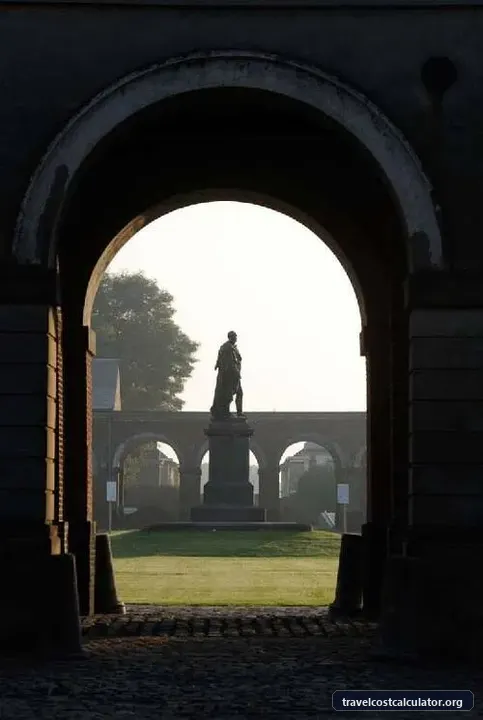
Grand-Hornu’s Elliptical Courtyard: Stand at the western entrance archway of Grand-Hornu to frame the sweep of the central oval courtyard. The contrast between yellow brick Neoclassical arcades and blue skies is breathtaking. Best time: Mid-afternoon light.
-
✦
The Twin Shaft Frames at Bois du Cazier: Frame the historic red steel headframes (chevalements) against the backdrop of the reclaimed green slag heaps (terrils). For a dramatic elevated shot, trek to the top of Terril No. 1.
-
✦
The Workers' Terraces at Bois-du-Luc: Stand at the intersection of Rue du Bois to photograph the endless perspective of identical 19th-century brick cottages, highlighting early urban planning aesthetics.
-
✦
Subterranean Shafts at Blegny-Mine: Capture low-light ambient shots of the coal seam corridors. Use a camera with strong low-light performance (ISO 3200+), as flash photography is restricted underground for safety.
Insider Visit Hacks
-
✦
Dress Warmly for Underground Blegny: Regardless of outside summer heat, the underground shafts of Blegny-Mine remain at a chilly 10°C to 12°C (50°F–54°F) year-round with high humidity. Bring a jacket and sturdy closed-toe shoes.
-
✦
Conquer the Slag Heaps (Terrils): Don't miss hiking the terrils surrounding Bois du Cazier and Blegny. These artificial coal waste mounds have transformed into lush nature reserves offering sweeping 360-degree panoramic views over the Walloon landscape.
-
✦
Language Tip: Wallonia is French-speaking. While museum staff at all four sites speak English and Dutch, knowing basic French greetings ("Bonjour", "Merci") goes a long way with local transit drivers and cafe staff.
🏨 Nearby Accommodation & Daily Budget Allocation
Because the mining sites are spread across Wallonia, setting up a central base in Mons, Charleroi, or Liège keeps transit simple. Below is a realistic 2026 financial breakdown for visiting the region.
Estimated Daily Budget Allocations (2026)
-
✦
Backpacker / Low-Budget Traveler: €65 – €85 per day (~$71 – $93 USD)
- Hostel bed or budget room: €30 – €45
-
✦
Public regional train + TEC bus pass: €15
-
✦
1 Site entry ticket: €10 – €15.50
-
✦
Self-catering & casual snacks (Friteries): €15
- 3-star hotel room (double occupancy): €80 – €120
- Boutique hotel / restored estate: €160 – €230
Recommended Stays Near the Sites
-
✦
Budget Pick: Auberge de Jeunesse Charleroi-Youth Hostel (Charleroi) – Modern, ultra-clean hostel steps from Charleroi-Central train station. Beds start at €32/night ($35 USD).
-
✦
Mid-Range Pick: Martin's Dream Hotel (Mons) – A unique 4-star boutique hotel set inside a converted 19th-century neo-Gothic chapel, located 15 minutes from Grand-Hornu. Rooms average €120–€150/night ($131–$164 USD).
-
✦
Heritage Stay: Gîte du Bois-du-Luc (Houdeng-Aimeries) – Stay directly within the historic UNESCO site precincts in restored miners' housing. Double rooms average €95–€130/night ($104–$142 USD).
Culinary Tip: While visiting Wallonia, sample local culinary staples such as Carbonnade Flamande (beef stew braised in dark Belgian beer), authentic Walloon gaufres de Liège (pearl-sugar waffles), and local craft brews like Abbaye des Rocs or Blanche de Charleroi at bistro spots near the sites.
Frequently Asked Questions
Essential visitor FAQs for Major Mining Sites of Wallonia
What is the entrance fee for Major Mining Sites of Wallonia?
How much time do you need to explore Major Mining Sites of Wallonia?
How do I get to Major Mining Sites of Wallonia from the nearest city?
📊 Heritage Quick Specs
Visiting Belgium on a Budget?
Calculate your full daily travel budget for Belgium — including hotel costs, local transport, food, and sightseeing expenses.
View Belgium Daily Travel Costs →Explore more UNESCO World Heritage Sites
🏛️ All 1,200+ Heritage Sites →