
 Australia
Macquarie Island
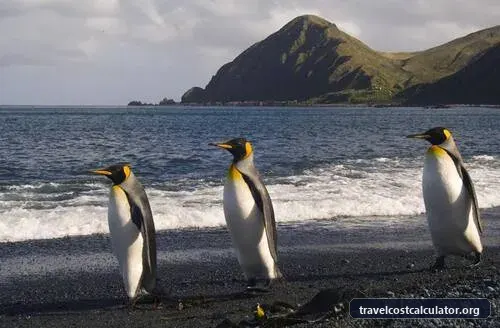
Macquarie Island (34 km long x 5 km wide) is an oceanic island in the Southern Ocean, lying 1,500 km south-east of Tasmania and approximately halfway between Australia and the Antarctic continent.
Macquarie Island
🏛️ Overview & Historical Significance
Rising abruptly from the turbulent waters of the Southern Ocean, approximately halfway between Tasmania and Antarctica, Macquarie Island (affectionately known by scientists and expeditioners as "Macca") is one of the most remote and geologically remarkable places on Earth. In 1997, UNESCO designated Macquarie Island as a World Heritage Site due to its exceptional natural beauty and unparalleled geological value. It stands as the only place on Earth where rocks from the Earth's mantle (located 6 km below the ocean floor) are actively exposed above sea level.
This tectonic wonder was created by the continuous collision of the Indo-Australian and Pacific tectonic plates. As the ocean floor buckled and uplifted over millions of years, deep-sea ophiolites and oceanic crustal layers were pushed into the open air. For geologists, visiting Macquarie Island is the terrestrial equivalent of walking along the bottom of the ocean mantle.
Beyond its geological prestige, Macquarie Island is a critical Sub-Antarctic biological ark. The 34-kilometer-long island hosts breathtaking concentrations of wildlife:
-
✦
The World's Only Royal Penguin Breeding Ground: 100% of the global population of Royal Penguins (approx. 850,000 pairs) breeds exclusively on Macquarie Island.
-
✦
Massive Marine Mammal Congregations: Over 80,000 Southern Elephant Seals transform the beaches into dramatic territory battlegrounds during the breeding season.
-
✦
Abundant Avian Diversity: Millions of King, Gentoo, and Rockhopper penguins, alongside endangered Wandering Albatrosses and Giant Petrels, nest along its rugged cliffs.
Discovered in 1810 by seal hunter Frederick Hasselborough, the island suffered a century of devastating exploitation where seals and penguins were slaughtered for blubber and oil. Relentless conservation efforts culminated in 1933 when it was declared a Sanctuary, followed by a groundbreaking alien pest eradication program completed in 2014 that successfully eliminated all invasive rats, mice, and rabbits. Today, managed under strict environmental guidelines by the Tasmania Parks and Wildlife Service (PWS) and the Australian Antarctic Division (AAD), Macquarie Island represents one of history's greatest ecological restoration triumphs.
🎟️ Entrance Fees, Opening Hours & Ticket Booking Tips
Access to Macquarie Island is strictly regulated to protect its delicate tundra ecosystem and vulnerable wildlife colonies. Independent travel is impossible; visitors can only set foot on the island via authorized Sub-Antarctic expedition cruise ships carrying official Tasmania Parks and Wildlife Service (PWS) guides.
Estimated Access Fees & Permits (2026 Costs)
-
✦
Tasmania PWS Sub-Antarctic Conservation Permit Fee: ~$350 AUD – $500 AUD (~$230 USD – $330 USD per person). This specialized permit fee is typically itemized or bundled directly into your total expedition voyage fare.
-
✦
All-Inclusive Expedition Voyage Fares (2026 Season): $12,500 USD – $26,000 USD ($18,800 AUD – $39,000 AUD) per person for a 14 to 28-day Sub-Antarctic itinerary (which usually includes New Zealand's Sub-Antarctic Islands or Antarctica's Ross Sea).
-
✦
Island Opening Hours / Visitor Season: The visiting window is restricted to the Austral summer month program from late November through February. Landings are restricted to daytime hours (approx. 06:00 to 18:00) and are subject to immediate cancellation depending on Southern Ocean swells.
Crucial Booking Tips for 2026
Because visitor quotas are capped at under 1,000 tourists per year across all permit-holding expedition vessels, planning requires strict discipline:
-
✦
Book 12 to 18 Months in Advance: Operators like Heritage Expeditions, Aurora Expeditions, Scenic, and Silversea open bookings for the 2026/2027 season well ahead of departure dates. Spots sell out rapidly due to small ship capacity limits.
-
✦
Strict Biosecurity Inspections: Prior to landing, park rangers conduct aggressive biosecurity checks on all gear. Every pocket, velcro strap, camera bag, and boot tread must be completely free of dirt, seeds, or organic material.
-
✦
Mandatory Expedition Insurance: All operators require comprehensive emergency medical evacuation insurance covering Sub-Antarctic latitudes, minimum $500,000 USD coverage.
🚌 How to Get There & Local Transit Costs
Reaching Macquarie Island is an adventure reserved for sea voyagers. There are no landing strips for commercial flights, no passenger ferries, and no marina docks. The island sits in the notorious "Furious Fifties" ocean currents, roughly 1,500 km (930 miles) southeast of Tasmania and 1,300 km (800 miles) southwest of New Zealand.
Transit Step-by-Step
-
✦
International Flight to Hub: Fly to Hobart, Tasmania (Australia) or Dunedin/Invercargill (New Zealand). International airfares range from $1,200 USD to $2,400 USD depending on your origin city.
-
✦
Board an Ice-Class Expedition Ship: Embark from Hobart or Bluff (NZ) aboard a specialized polar vessel. Crossing the Southern Ocean takes approximately 3 to 4 days of open sea sailing each way.
-
✦
Zodiac Ship-to-Shore Transfers: Upon arrival off the coast of Macquarie Island, transit from ship to shore occurs exclusively via heavy-duty Zodiac inflatable boats through heavy surf conditions.
Local Transport & Logistics Breakdown
-
✦
Transit Buses / Taxis on Macquarie Island: Non-existent. There are zero paved roads, motorized vehicles for tourists, or public transit options on the island.
-
✦
On-Island Transit Method: Guided walking on foot only. Visitors traverse marked beach zones, specialized raised timber boardwalks, and managed tracks under ranger supervision.
-
✦
Hobart Transit (Pre-Voyage): Hobart Airport (HBA) taxi/rideshare to Hobart Port Waterfront costs roughly $45 AUD – $60 AUD ($30 – $40 USD). Local Metro Tasmania city buses cost $3.50 AUD ($2.30 USD) per ride.
📸 Best Photography Spots & Insider Visit Hacks
Photographers visiting Macquarie Island are presented with wildlife density found almost nowhere else on Earth. However, salt spray, sub-zero wind chills, and relentless rain require tactical preparation.
Top Photography Locations
-
✦
Sandy Bay: The crown jewel of Macquarie Island landings. Here, hundreds of thousands of endemic Royal Penguins with their vibrant yellow crests share a curving black-sand beach with King Penguins and colossal Southern Elephant Seals. Frame low-angle shots against the dramatic green-tussock hillsides.
-
✦
Lusitania Bay: Located along the southeast coast, this is home to a massive mega-colony of over 100,000 King Penguin pairs. Landing on shore here is typically prohibited to protect the colony, but Zodiac cruising near the shoreline offers spectacular telephoto opportunities of penguins entering and exiting the waves.
-
✦
The Isthmus & Buckles Bay: The narrow strip of land connecting Wireless Hill to the main island body. It features historic seal-oil try-pots, dramatic wave crashes on both ocean sides, and the Australian Antarctic Division (AAD) research station.
Insider Travel & Gear Hacks
-
✦
Respect Wildlife Distance Laws: Parks Tasmania strictly enforces minimum wildlife distance rules: stay at least 5 meters (16 feet) away from penguins and 15 meters (50 feet) away from breeding Elephant Seals. Pro tip: Sit down quietly on the pebbles, and curious young Royal Penguins will often approach you directly!
-
✦
Weatherproofing is Paramount: Bring full dry-bags, neoprene camera rain covers, and lens cleaning kits with microfibers. Marine salt spray mixed with fine windblown sand will coat front lens elements within minutes.
-
✦
Lens Selection: A 70-200mm f/2.8 or 100-400mm lens is ideal. Avoid switching lenses on shore due to airborne salt water and windblown moisture.
🏨 Nearby Accommodation & Daily Budget Allocation
Because Macquarie Island is a strictly preserved Nature Reserve, there are no hotels, hostels, commercial lodges, or public campgrounds on the island. The only land structures belong to the Australian Antarctic Division research station, reserved strictly for scientists and operational staff.
Where You Stay
Your accommodation is entirely mobile: your cabin aboard your polar expedition ship anchor off shore. Pre- and post-expedition nights are spent in Hobart (Tasmania) or Invercargill (New Zealand).
Recommended Pre/Post Voyage Hotels in Hobart, Australia
-
✦
Budget Option: YHA Hobart Central (Central Hobart) – Approx. $40 AUD – $70 AUD ($26 – $46 USD)/night for dorms; $120 AUD ($79 USD) for private rooms. Clean, reliable, and close to port terminals.
-
✦
Mid-Range Option: Old Woolstore Apartment Hotel – Approx. $220 AUD – $320 AUD ($145 – $210 USD)/night. Excellent self-contained apartments located a short walk from Franklin Wharf.
-
✦
Luxury Option: MACq 01 Hotel or The Henry Jones Art Hotel – Approx. $450 AUD – $750 AUD ($295 – $490 USD)/night. Premium waterfront boutique stays directly facing the expedition ship departure docks.
Daily Budget Allocation Table (2026 Estimated Costs)
Planning for a Sub-Antarctic voyage requires a unique financial structure where costs are front-loaded into all-inclusive expedition fares:
-
✦
Expedition Cruise Package (Per Day Cost Breakdown): $800 USD – $1,600 USD per day (Covers all onboard accommodation, gourmet meals, Zodiac shore landings, expert lectures, and permits).
-
✦
On-Island Daily Expenses: $0 USD (Commercial trading, shops, cafes, and ATMs do not exist on Macquarie Island).
-
✦
Hobart Dining & Logistics (Per Day Pre-Cruise):
- Budget Meal (Local Cafe / Pub): $18 AUD – $28 AUD ($12 – $18 USD)
-
✦
Mid-Range Waterfront Dining: $65 AUD – $120 AUD ($43 – $79 USD)
Frequently Asked Questions
Essential visitor FAQs for Macquarie Island
What is the entrance fee for Macquarie Island?
How much time do you need to explore Macquarie Island?
How do I get to Macquarie Island from the nearest city?
📊 Heritage Quick Specs
Visiting Australia on a Budget?
Calculate your full daily travel budget for Australia — including hotel costs, local transport, food, and sightseeing expenses.
View Australia Daily Travel Costs →Explore more UNESCO World Heritage Sites
🏛️ All 1,200+ Heritage Sites →