
 Tanzania
Kondoa Rock-Art Sites
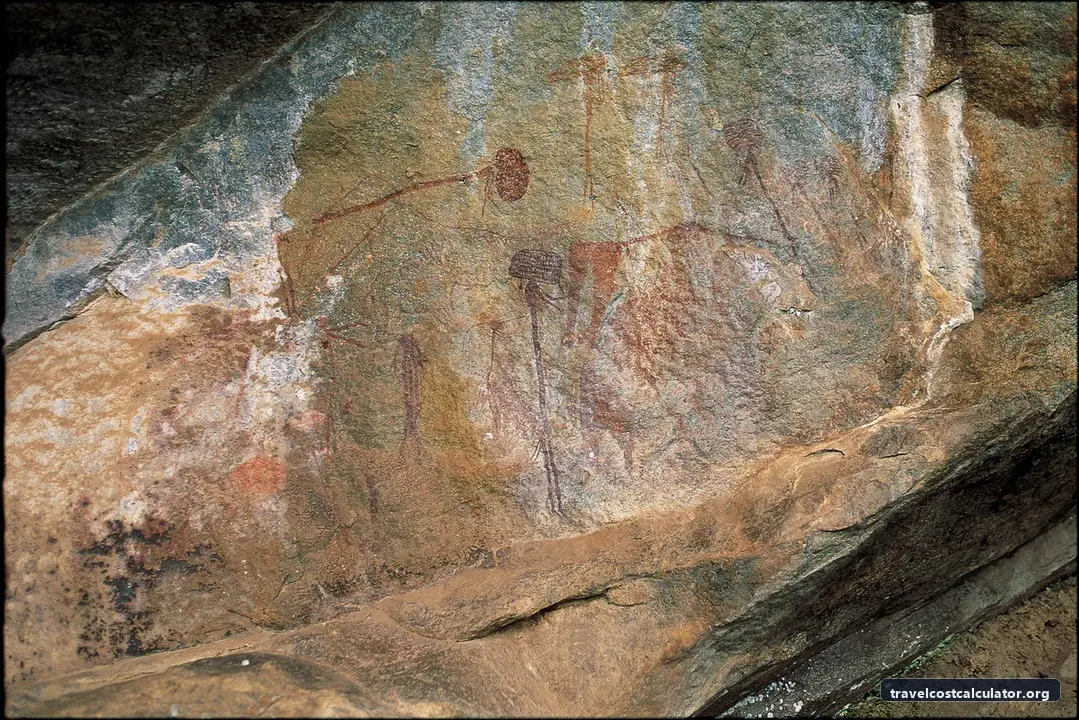
On the eastern slopes of the Masai escarpment bordering the Great Rift Valley are natural rock shelters, overhanging slabs of sedimentary rocks fragmented by rift faults, whose vertical planes have been used for rock paintings for at least two millennia.
Kondoa Rock-Art Sites
🏛️ Overview & Historical Significance
Inscribed as a UNESCO World Heritage site in 2006, the Kondoa Rock-Art Sites constitute one of the world's most significant and densely packed collections of prehistoric cave art. Spanning the rugged granite slopes of the Maasai Escarpment on the western rim of the Great Rift Valley in central Tanzania, this archaeological treasure trove encompasses between 150 and 450 decorated rock shelters scattered across more than 2,330 square kilometers.
The art of Kondoa provides an unbroken visual record of human occupation, spiritual evolution, and ecological adaptation spanning at least two millennia. Archaeologists and anthropologists categorize the artwork into two distinct, fascinating traditions:
-
✦
The Red Ochre Paintings: Attributed to ancestral hunter-gatherer communities (historically linked to the modern Sandawe and Hadza peoples), these ancient, fine-line depictions showcase naturalistic portrayals of wildlife—including elands, giraffes, and elephants—alongside stylized human figures engaged in hunting, dancing, and shamanic rituals.
-
✦
The White Geometric Paintings: Painted by incoming Bantu-speaking agropastoralist groups over the last several centuries, these later works feature abstract motifs, handprints, and symbolic patterns connected to initiation rites, tribal identity, and rainmaking ceremonies.
What sets Kondoa apart from many other global rock-art locations is its living cultural heritage. Several of these overhangs remain active ritual sites for local communities, who continue to perform traditional healing, rainmaking, and ancestral worship rituals at the foot of these ancient canvases. Visiting Kondoa in 2026 offers a rare, raw glimpse into the dawn of human artistic expression far off the typical tourist track.
🎟️ Entrance Fees, Opening Hours & Ticket Booking Tips
Visiting the Kondoa Rock-Art Sites requires checking in at the official Kolo Antiquities Information Centre, situated in Kolo Village along the main Dodoma Travel Budget–Babati highway. You cannot purchase tickets online in advance; all permits, conservator fees, and guides are arranged on-site upon arrival.
Estimated 2026 Entrance & Administration Fees
-
✦
Non-Resident Foreign Adult Permit: ~$15 USD (approx. 40,000 TZS) per person.
-
✦
Non-Resident Foreign Child/Student Permit: ~$8 USD (approx. 21,000 TZS) per person.
-
✦
East African Community (EAC) Citizens: ~10,000 TZS (~$3.80 USD).
-
✦
Mandatory Department of Antiquities Guide / Conservator Fee: ~$15 to $25 USD (approx. 40,000–65,000 TZS) per group/vehicle.
-
✦
Vehicle Access & Security Escort Fee: ~$10 USD (approx. 26,000 TZS) per 4x4 vehicle.
Opening Hours & Insider Booking Hacks
The Kolo Antiquities Information Centre is open daily from 8:00 AM to 5:00 PM, including weekends and public holidays. However, site entries usually stop by 3:00 PM to ensure visitors return from remote shelters before dark.
-
✦
Payment Methods: In 2026, the Tanzanian Ministry of Natural Resources and Tourism requires entry payments via government electronic control numbers (GePG). While card terminals (Visa/Mastercard) are available at the Kolo station, remote network connections in Dodoma region can be spotty. Always carry back-up local cash in Tanzanian Shillings (TZS).
-
✦
Always Hire an Official Guide: It is illegal and culturally disrespectful to visit the shelters without an assigned conservator from the Kolo office. Your guide acts as both a navigator over unpaved terrain and an interpreter of local traditions.
-
✦
Tipping Etiquette: Tipping your Antiquities guide and driver is customary. A tip of $10 to $15 USD (approx. 25,000–40,000 TZS) for a half-day tour is greatly appreciated.
🚌 How to Get There & Local Transit Costs
The Kondoa Rock-Art Sites are situated in central Tanzania's Dodoma Region. The primary access hub is Kolo Village, located about 25 km north of Kondoa Town and 180 km north of Dodoma (Tanzania's capital).
Step 1: Reaching Kolo or Kondoa Town
-
✦
From Dodoma (Nearest Major Hub & Airport): Take a regional express bus heading north toward Babati or Arusha along the paved A104 highway. Ask the driver to drop you directly at the Kolo Antiquities Station.
- Travel Time: 2.5 to 3 hours.
-
✦
Bus Fare (2026): ~$5 to $8 USD (13,000–20,000 TZS) one-way.
- Travel Time: 4 to 5 hours (approx. 240 km).
Step 2: Navigating from Kolo Station to the Rock Shelters
The main rock shelters (such as Kolo 1 / Mongomi wa Kolo, Pahi, and Cheke) are located off-road, deep within the hills across rough dirt tracks.
-
✦
Local 4x4 Hire (at Kolo/Kondoa): If arriving by public bus, you can hire a local 4x4 vehicle at Kolo or Kondoa town to take you and your guide to the shelters. Expect to pay $50 to $80 USD for a half-day circuit.
-
✦
Motorbike Taxi (Boda-Boda): For solo budget travelers, hiring local motorbikes to reach closer sites like Kolo 1 is possible during the dry season for around $12 to $20 USD (30,000–50,000 TZS) round trip. Ensure you wear a helmet and carry proper dust protection.
📸 Best Photography Spots & Insider Visit Hacks
Top Shelters for Photography & Exploration
-
✦
Mongomi wa Kolo (Kolo 1): The flagship shelter of the reserve. It features remarkably clear red ochre depictions of human figures wearing ritual elaborate headgear, high-strung bows, and naturalistic eland antelopes.
-
✦
Pahi Sites: Located near Pahi village, these shelters feature extensive displays of white-style geometric art, symbols, and superimposed layers showing centuries of evolving artistic techniques.
-
✦
Cheke 3: Renowned for its rich superimpositions where later white geometric shapes were painted directly over older, detailed red hunter-gatherer figures.
Lighting, Timing & Seasonal Weather Hacks
-
✦
Best Time of Day: Photographers should visit in the early morning (8:30 AM – 11:00 AM) or late afternoon (3:00 PM – 4:30 PM). Midday sunlight creates harsh shadows over the shallow cave overhangs, making faint pigment details difficult to capture.
-
✦
Best Season: Visit during the Dry Season (June to October and January to February). During the heavy rainy season (March to May), the unpaved dirt tracks accessing remote shelters turn into impassable clay mud.
-
✦
Strict Photography Rules: FLASH PHOTOGRAPHY IS STRICTLY PROHIBITED, as UV light degrades ancient pigments. Never touch the paintings, brush against the stone walls, or apply water/liquids to make faint drawings clearer (a destructive habit of past decades).
-
✦
What to Wear & Pack: Wear sturdy hiking shoes with strong grip for climbing smooth granite outcrops. Pack sun lotion, a wide-brim hat, insect repellent (tsetse flies can occasionally be present in brush areas), and at least 2 liters of drinking water per person.
🏨 Nearby Accommodation & Daily Budget Allocation
Kondoa is a rural destination with modest infrastructure. Visitors typically choose between basic guesthouses in Kondoa Town, eco-lodges near Babati, or staying in Dodoma for a day-trip circuit.
Accommodation Options
-
✦
Budget (Kondoa Town & Kolo):
- Kondoa Executive Lodge / Local Guesthouses: Clean, basic rooms with private bathrooms, fan, and mosquito nets in Kondoa Town. Cost: $15 – $35 USD per night.
- Lake Babati Lodges & Country Hotels: More comfortable mid-range hotels featuring hot showers, on-site restaurants, and lush gardens. Cost: $55 – $110 USD per night.
Daily Budget Allocation Breakdown (2026 Estimates)
Below is a realistic daily spending breakdown per person for exploring the Kondoa Rock-Art Sites:
-
✦
Backpacker / Low-Budget Traveler (Public Transit + Shared Boda-Boda):
- Accommodation (Budget Guesthouse): $20 USD
-
✦
Food & Water (Local eateries / street food): $10 USD
-
✦
Transport (Public bus + shared local transit): $15 USD
-
✦
UNESCO Entry & Guide Fee Share: $25 USD
-
✦
Total Daily Budget: ~$70 USD
- Accommodation (Mid-Range Hotel in Babati or Kondoa): $75 USD
Frequently Asked Questions
Essential visitor FAQs for Kondoa Rock-Art Sites
What is the entrance fee for Kondoa Rock-Art Sites?
How much time do you need to explore Kondoa Rock-Art Sites?
How do I get to Kondoa Rock-Art Sites from the nearest city?
📊 Heritage Quick Specs
Visiting Tanzania on a Budget?
Calculate your full daily travel budget for Tanzania — including hotel costs, local transport, food, and sightseeing expenses.
View Tanzania Daily Travel Costs →Explore more UNESCO World Heritage Sites
🏛️ All 1,200+ Heritage Sites →