
 Canada
Kluane / Wrangell-St. Elias / Glacier Bay / Tatshenshini-Alsek
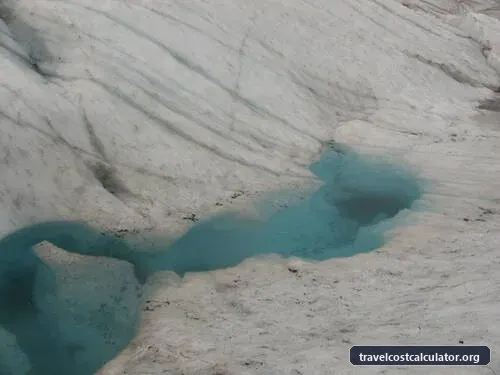
These parks comprise an impressive complex of glaciers and high peaks on both sides of the border between Canada (Yukon Territory and British Columbia) and the United States (Alaska).
Kluane / Wrangell-St. Elias / Glacier Bay / Tatshenshini-Alsek
🏛️ Overview & Historical Significance
Stretching across 9.7 million hectares (over 24 million acres) of wild, glaciated terrain along the border of Canada and the United States, the Kluane / Wrangell-St. Elias / Glacier Bay / Tatshenshini-Alsek transboundary park system is one of the grandest protected natural spaces on Earth. Inscribed as a UNESCO World Heritage site in 1979—and expanded in 1992 and 1994—this massive sanctuary comprises four distinct, interconnected national and provincial parks: Kluane National Park and Reserve (Yukon, Canada), Tatshenshini-Alsek Provincial Park (British Columbia, Canada), Wrangell-St. Elias National Park & Preserve (Alaska, USA), and Glacier Bay National Park & Preserve (Alaska, USA).
UNESCO designated this international complex for its unparalleled natural beauty and exceptional geological processes. It houses the world’s largest non-polar icefield system, featuring colossal valley glaciers like the Hubbard Glacier, root-glaciers, and dramatic tidewater glaciers that carve directly into ocean fjords. The region is shaped by dynamic tectonic activity, continuous alpine uplifting, and active glaciation. Towering above this frozen wilderness is Mount Logan (5,959 meters / 19,551 feet), Canada’s highest peak, alongside Mount St. Elias (5,489 meters / 18,008 feet), the second-highest peak in both Canada and the United States.
Beyond its glacial architecture, the site serves as a vital ecological corridor for North American megafauna. It protects critical habitat for North America's highest concentration of grizzly bears, alongside Dall sheep, mountain goats, moose, wolves, and the rare Glacier Bear (a silver-blue color phase of the black bear). The coastal and marine reaches of Glacier Bay provide critical feeding grounds for humpback whales, killer whales, and Steller sea lions. Rich in indigenous heritage, these lands have been stewardship zones for Indigenous peoples—including the Champagne and Aishihik First Nations, Kluane First Nation, White River First Nation, Tlingit, and Athabascan tribes—for thousands of years.
🎟️ Entrance Fees, Opening Hours & Ticket Booking Tips
Because this World Heritage site is managed across two countries by multiple agencies (Parks Canada, BC Parks, and the US National Park Service), fee structures and operational hours vary across individual park sectors in 2026. General entrance to the US national parks is completely free, while Canadian parks charge modest daily user fees.
2026 Estimated Fees by Park Sector
-
✦
Kluane National Park & Reserve (Yukon, Canada):
- Daily Adult Admission: ~$8.50 CAD ($6.25 USD) per person.
-
✦
Parks Canada Discovery Pass: ~$75.25 CAD ($55.00 USD) for an individual annual pass; ~$151.25 CAD ($111.00 USD) for a family/group pass.
-
✦
Backcountry Camping Permit: ~$12.75 CAD ($9.50 USD) per person/night, plus a ~$11.50 CAD ($8.50 USD) online reservation fee.
- General Admission: Free.
- General Park Entry: Free.
- General Park Entry: Free.
Opening Hours & Visitor Center Operations
The wilderness areas of all four parks remain accessible 24/7/365, but extreme arctic winter weather limits full access primarily to late May through early September. Main visitor facilities operate seasonally:
-
✦
Kluane Visitor Centre (Haines Junction, YT): Open daily from mid-May to mid-September, 9:00 AM to 5:00 PM.
-
✦
Tatshenshini Visitor Center (Blanchard River, BC): Open daily mid-June to Labour Day, 9:00 AM to 5:00 PM.
-
✦
Glacier Bay Visitor Center (Bartlett Cove, AK): Open daily late May to early September, 8:00 AM to 5:00 PM.
-
✦
Wrangell-St. Elias Visitor Center (Copper Center, AK): Open daily mid-May to late September, 9:00 AM to 5:00 PM.
🚌 How to Get There & Local Transit Costs
Due to the vast scale of this World Heritage site, transport strategies depend heavily on which park unit you intend to visit. Whitehorse (Yukon) is the primary gateway for Canadian parks, while Anchorage and Juneau (Alaska) serve the US sides.
1. Accessing Kluane & Tatshenshini-Alsek (via Whitehorse, Yukon)
Fly into Erik Nielsen Whitehorse International Airport (YXY). From Whitehorse, driving west via the Alaska Highway (Highway 1) brings you to Haines Junction, the gateway to Kluane National Park.
-
✦
Car Rental (Whitehorse Airport): Standard 4WD / SUV rental costs ~$95.00–$145.00 CAD ($70.00–$105.00 USD) per day in peak summer. Fuel costs average ~$1.85 CAD per liter.
-
✦
Driving Time: Whitehorse to Haines Junction takes roughly 1.5 to 2 hours (155 km / 96 miles). Continuing south on the Haines Highway (Highway 3) leads directly into Tatshenshini-Alsek Provincial Park (another 1 to 2 hours drive).
-
✦
Private Regional Shuttles: Shared van shuttles between Whitehorse and Haines Junction run seasonally at ~$120.00 CAD ($88.00 USD) per passenger one-way.
2. Accessing Glacier Bay (via Juneau & Gustavus, Alaska)
Glacier Bay is not connected to the road system. Travel requires air or sea transport from Juneau (JNU).
-
✦
Flights (Juneau to Gustavus): Alaska Airlines or Alaska Seaplanes operate daily flights between Juneau and Gustavus Airport (GST). Round-trip tickets cost ~$160.00–$280.00 USD ($218.00–$380.00 CAD).
-
✦
Ferry (Alaska Marine Highway System): Passengers can ride the public ferry from Juneau to Gustavus. Fares are ~$55.00–$75.00 USD ($75.00–$102.00 CAD) per person one-way for foot passengers.
-
✦
Local Taxi / Shuttle in Gustavus: A 10-mile shuttle from Gustavus Airport or ferry terminal to Bartlett Cove costs ~$15.00–$25.00 USD ($20.00–$34.00 CAD) per seat.
3. Accessing Wrangell-St. Elias (via Anchorage, Alaska)
Fly into Ted Stevens Anchorage International Airport (ANC). Drive east along the Glenn Highway (AK-1) to Copper Center or Chitina.
-
✦
Driving & McCarthy Road Shuttle: From Chitina, the unpaved McCarthy Road runs 60 miles to the footbridge outside Kennecott/McCarthy. Driving a rental car often requires an gravel-road rental waiver. Alternatively, round-trip van shuttles from Chitina to McCarthy cost ~$120.00–$150.00 USD ($163.00–$204.00 CAD).
-
✦
Air Taxi / Bush Flights: Scheduled air taxis from Chitina to McCarthy Airport cost ~$160.00 USD ($218.00 CAD) round-trip. Flightseeing charter flights from Anchorage directly into backcountry strips run $400.00–$800.00 USD per seat.
📸 Best Photography Spots & Insider Visit Hacks
Photographing this landscape requires planning for variable arctic lighting, fast-changing weather, and massive geological features. Here are the ultimate locations and strategies for capturing the region:
Top Photography Locations
-
✦
Kathleen Lake & King's Throne (Kluane): Capture the glass-like morning reflections of Mount Decli and the rocky amphitheater of King’s Throne across Kathleen Lake. Early morning light (5:00 AM – 7:00 AM during mid-summer) provides calm waters and golden highlights on the peaks.
-
✦
Kennecott Mill Building & Root Glacier (Wrangell-St. Elias): Frame the towering 14-story red wooden copper mill against the ice-blue expanse of the Root Glacier in early evening light.
-
✦
Margerie & Lamplugh Glaciers (Glacier Bay): Position yourself on the upper deck of the day tour boat. Use a fast shutter speed (1/1000s or faster) with a telephoto lens (70-200mm) to freeze massive ice towers during active calving events.
-
✦
Haines Highway Summit (Tatshenshini-Alsek): Drive the Haines Highway near the BC/Alaska border during late August or early September to photograph sweeping tundra clad in fiery crimson fall colors against snowy peaks.
-
✦
Aerial Glaciers from a Flightseeing Plane: Book a glacier flight out of Haines Junction or McCarthy to shoot the endless ice-fields surrounding Mount Logan and Mount St. Elias. Polarization filters are essential to cut through glacier glare.
Insider Visit Hacks
-
✦
Cross-Border Logistics: Traveling through this park system frequently involves crossing the Canada–US border (e.g., driving from Haines Junction to Haines, Alaska). Always carry a valid passport, ensure appropriate ETA/ESTA authorization, and keep current 2026 border regulations in mind.
-
✦
Safety in Bear Country: Grizzly and black bear densities are among the highest in North America. Carrying bear spray is mandatory for hikers. Backcountry campers must store food in Parks Canada-approved or US NPS-approved Bear Resistant Food Canisters (BRFCs), available for loan at regional visitor centers.
-
✦
Midges and Mosquito Protection: Mosquitoes and black flies peak between mid-June and late July. Head nets, high-DEET or Picaridin bug spray, and long sleeves are essential equipment.
-
✦
Timing for Aurora Borealis: While June and July offer near 24-hour daylight (the Midnight Sun), early September visits offer the perfect balance: daytime temperatures are cool, fall foliage is at peak, and darkness returns long enough to view the Northern Lights over alpine lakes.
🏨 Nearby Accommodation & Daily Budget Allocation
Accommodation options range from primitive wilderness camping to rustic backcountry lodges and comfortable eco-resorts located in boundary communities such as Haines Junction (Yukon), McCarthy/Kennecott (Alaska), and Gustavus (Alaska).
Accommodation Options by Tier (2026 Rates)
-
✦
Budget Options:
- Parks Canada / BC Parks / NPS Established Campgrounds: ~$15.00–$30.00 CAD ($11.00–$22.00 USD) per night (e.g., Kathleen Lake Campground in Kluane, Bartlett Cove Campground in Glacier Bay—which is free but requires registration).
-
✦
Hostels & Bunkhouses: Shared dormitory bunkhouses in Haines Junction or McCarthy cost ~$65.00–$95.00 USD ($88.00–$130.00 CAD) per bed.
- Motels & Cabins in Haines Junction: Standard hotel rooms or private rustic log cabins run ~$180.00–$260.00 CAD ($132.00–$190.00 USD) per night.
- Glacier Bay Lodge (Inside the park at Bartlett Cove): ~$380.00–$550.00 USD ($515.00–$750.00 CAD) per night.
Daily Budget Allocations (Per Person, 2026 Estimates)
Backpacker / Budget Tier: ~$75.00–$115.00 USD ($100.00–$155.00 CAD) per day
-
✦
Accommodation: Campsite fee or hostel bed (~$20.00–$65.00 USD)
-
✦
Food: Grocery store self-catering & campfire cooking (~$30.00 USD)
-
✦
Transport: Fuel share in standard vehicle (~$20.00 USD)
-
✦
Activities: Self-guided day hikes & visitor center exhibits (~$5.00 USD)
Mid-Range Tier: ~$320.00–$520.00 USD ($435.00–$705.00 CAD) per day
-
✦
Accommodation: Private cabin or mid-range lodge (~$220.00 USD per room, Split Travel Budget shared)
-
✦
Food: Sit-down lodge dining, casual cafes (~$75.00 USD)
-
✦
Transport: Car rental share + fuel or local shuttles (~$65.00 USD)
-
✦
Activities: Day tour boat in Glacier Bay or Kennecott historic mine tour (~$70.00–$150.00 USD averaged per day)
Luxury / Expedition Tier: ~$900.00–$2,100.00+ USD ($1,220.00–$2,850.00 CAD) per day
-
✦
Accommodation: All-inclusive fly-in backcountry eco-lodge (~$1,200.00 USD)
-
✦
Food: Full-board gourmet meals & wine pairing (Included in lodge rate)
-
✦
Transport: Private floatplane charter flights & bush transfers (~$400.00 USD)
-
✦
Activities: Guided glacier walks, private boat charters, and flightseeing over Mt. Logan (~$300.00–$500.00 USD)
Frequently Asked Questions
Essential visitor FAQs for Kluane / Wrangell-St. Elias / Glacier Bay / Tatshenshini-Alsek
What is the entrance fee for Kluane / Wrangell-St. Elias / Glacier Bay / Tatshenshini-Alsek?
How much time do you need to explore Kluane / Wrangell-St. Elias / Glacier Bay / Tatshenshini-Alsek?
How do I get to Kluane / Wrangell-St. Elias / Glacier Bay / Tatshenshini-Alsek from the nearest city?
📊 Heritage Quick Specs
Visiting Canada on a Budget?
Calculate your full daily travel budget for Canada — including hotel costs, local transport, food, and sightseeing expenses.
View Canada Daily Travel Costs →Explore more UNESCO World Heritage Sites
🏛️ All 1,200+ Heritage Sites →