
 India
India
Kaziranga National Park
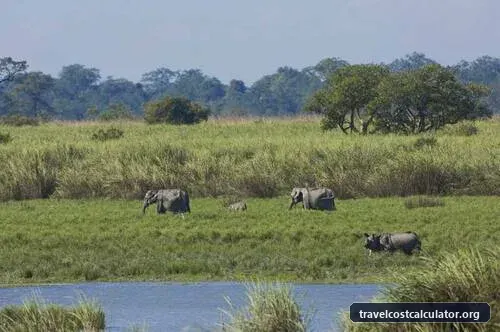
In the heart of Assam, this park is one of the last areas in eastern India undisturbed by a human presence.
Kaziranga National Park
🏛️ Overview & Historical Significance
Sprawling across the floodplains of the mighty Brahmaputra River in the northeastern state of Assam, Kaziranga National Park represents one of the world's most successful conservation stories. Spanning approximately 430 square kilometers of tall elephant grass, dense tropical moist broadleaf forests, and interconnected marshlands (beels), Kaziranga was designated a UNESCO World Heritage site in 1985 under criteria (ix) and (x) for its extraordinary ongoing ecological processes and irreplaceable natural habitats.
The sanctuary's history dates back to 1905, when Baroness Mary Travel Budget Curzon—wife of the Viceroy of India, Lord Curzon—visited the area and found zero One-horned Rhinoceroses despite their historical abundance. Prompted by her insistence, the British Indian administration declared Kaziranga a Reserve Forest. Over the past century, rigorous anti-poaching measures, habitat restoration, and active community management have transformed the park into the global stronghold of the Great One-horned Rhinoceros (Rhinoceros unicornis), housing over two-thirds (approx. 2,600+) of the global population.
In addition to rhinos, Kaziranga was declared a Tiger Reserve in 2006, boasting one of the highest densities of Royal Bengal Tigers in the world. It is also a critical refuge for the "Big Five of Kaziranga": the Indian Rhino, Asian Elephant, Royal Bengal Tiger, Wild Water Buffalo, and the endangered Eastern Swamp Deer (Barasingha). Furthermore, the park lies along the Central Asian Flyway, making its vast wetlands a winter sanctuary for tens of thousands of migratory waterfowl, eagles, and endangered bird species like the Bengal Florican.
🎟️ Entrance Fees, Opening Hours & Ticket Booking Tips
Kaziranga National Park operates strictly on a seasonal schedule. Due to monsoon flooding from the Brahmaputra, the park is closed from May/June through October. The official safari season runs from November 1 through April 30. Daily operations are divided into two primary safari slots: Morning (07:30 AM – 10:00 AM) and Afternoon (01:30 PM – 03:30 PM).
Total cost for a Kaziranga safari comprises several independent fees: base park entry, guard fees, vehicle permits, jeep hire, and camera permits. Below are the estimated costs for the 2026 season in both Indian Rupees (INR) and US Dollars (USD):
1. Base Park Entry & Administrative Fees (Per Person)
-
✦
Indian Nationals: ₹100 INR (~$1.20 USD)
-
✦
Foreign Tourists: ₹750 INR (~$9.00 USD)
-
✦
Student / Child Discount: ₹50 INR (~$0.60 USD) for Indians; ₹400 INR (~$4.80 USD) for foreign students with valid ID.
2. Vehicle & Safari Costs (Per Jeep, Max 6 Passengers)
-
✦
Jeep Rental Fee: ₹2,500 – ₹3,200 INR ($30.00 – $38.00 USD) per vehicle depending on the zone (Kohora, Bagori, Agaratoli, or Burapahar).
-
✦
Vehicle Entry Tax: ₹300 INR (~$3.60 USD) per vehicle.
-
✦
Armed Forest Guard Toll: ₹250 INR (~$3.00 USD) per vehicle (Mandatory).
3. Elephant Safaris (Subject to Availability & Forest Department Rules)
-
✦
Indian Nationals: ~₹1,200 INR ($14.00 USD) per person.
-
✦
Foreign Tourists: ~₹3,200 INR ($38.00 USD) per person.
4. Camera & Video Permits
-
✦
Still Digital Camera: ₹100 INR (~$1.20 USD) for Indians / ₹200 INR (~$2.40 USD) for Foreigners.
-
✦
Professional Video / Telephoto Lenses (>300mm): ₹500 – ₹1,000 INR ($6.00 – $12.00 USD).
Pro Booking Tips: Safari slots for the Central (Kohora) and Western (Bagori) ranges sell out weeks in advance during peak season (December to February). Book your safari at least 30–45 days ahead via the official Assam Forest Department E-Booking Portal or through your eco-resort. Always carry your original passport or Government photo ID matching your online booking confirmation.
🚌 How to Get There & Local Transit Costs
Kaziranga is situated in upper Assam along National Highway 27 (NH27). The primary transit gateways are Guwahati (193 km to the west) and Jorhat (97 km to the east).
Step 1: Reaching the Regional Hub
-
✦
By Air: Fly into Lokpriya Gopinath Bordoloi International Airport (GAU) in Guwahati, which connects directly to major Indian hubs (Delhi, Mumbai Travel Budget, Kolkata, Bengaluru). Alternatively, regional flights land at Jorhat Airport (JRH).
-
✦
By Train: The nearest major railway stations are Guwahati (GHY), Furkating (FKG) (75 km from Kaziranga), and Jakhalabandha (JKB) (40 km from Kaziranga).
Step 2: Transit from Guwahati to Kaziranga (Kohora Gate)
-
✦
State Transport / AC Buses (ASTC & Private): Direct express buses run daily from Inter-State Bus Terminus (ISBT) Guwahati and Paltan Bazaar to Kohora. Journey time is approximately 4.5 to 5 hours.
- Non-AC State Bus: ₹350 – ₹450 INR ($4.20 – $5.40 USD) one-way.
-
✦
Luxury AC Volvo / Sleeper Bus: ₹650 – ₹900 INR ($7.80 – $10.80 USD) one-way.
Local Transit within Kaziranga
Between safari ranges (e.g., Kohora to Bagori or Agaratoli), local auto-rickshaws cost ₹300 – ₹600 INR ($3.60 – $7.20 USD). Pre-booked safari jeeps generally pick you up directly from your resort within a 5 km radius of the park gates.
📸 Best Photography Spots & Insider Visit Hacks
To capture Kaziranga's iconic wildlife and landscapes, understanding the unique characteristics of each safari range is essential:
1. Zone-by-Zone Photography Guide
-
✦
Western Range (Bagori): Highest concentration of One-horned Rhinos and Wild Water Buffaloes. Excellent for close-up animal portraits against open grasslands. Early morning light creates dramatic silhouettes through mist.
-
✦
Central Range (Kohora): Features varied habitats—wetlands, river channels, and open fields. Ideal for shooting swamp deer, rhinos crossing water bodies at the Daflang Beel lookout tower, and elephant herds.
-
✦
Eastern Range (Agaratoli): A photographer's birdwatching dream. Home to the Sohola Beel, where thousands of pelicans, bar-headed geese, and fish eagles congregate. Higher chance of Bengal Tiger sightings along forest tracks.
-
✦
Burapahar Range: Rugged terrain covered in hill forests. Best for photographing primate species like the Capped Langur and Hoolock Gibbon.
2. Timing & Lighting Hacks
-
✦
Golden Hour Safaris: Afternoon safaris (2:00 PM – 4:30 PM) offer warm lighting against dust particles kick-started by grazing herds. Morning safaris (6:30 AM – 9:30 AM) offer atmospheric light with mist rising off water bodies.
-
✦
March/April Advantage: While Nov–Feb offers green scenery, late March and April are ideal for wildlife photography. Forest authorities perform controlled burning of tall elephant grass during these months, dramatically improving visibility for spotting elusive tigers and leopard cats.
3. Essential Insider Gear Tips
Bring a telephoto lens (300mm to 600mm equivalent) for safe wildlife capture. Pack a lightweight beanbag to steady long lenses on the safari jeep frame, plus a dust bag or rain cover to protect equipment from fine road dust during dry months.
🏨 Nearby Accommodation & Daily Budget Allocation
Accommodation in Kaziranga is concentrated along the NH27 stretch around Kohora town. Options range from basic eco-homestays to high-end safari lodges.
Accommodation Tiers
-
✦
Budget Homestays & Hostels ($15 – $35 USD / ₹1,200 – ₹3,000 INR per night): Clean, family-run guesthouses providing authentic local hospitality, simple rooms, and home-cooked meals (e.g., local eco-camps around Kohora village).
-
✦
Mid-Range Resorts ($60 – $130 USD / ₹5,000 – ₹11,000 INR per night): Comfortable eco-lodges with private balconies, swimming pools, AC, and attached restaurants (e.g., IORA The Retreat, Wild Grass Lodge, Borgos Resort).
-
✦
Luxury Safari Lodges ($250 – $550+ USD / ₹21,000 – ₹46,000+ INR per night): All-inclusive luxury accommodations offering private river views, gourmet local/international dining, and dedicated naturalists (e.g., Diphlu River Lodge, Infinity Resort).
Dining & Local Cuisine Costs
Sample traditional Assamese cuisine at local roadside eateries (dhabas) along the highway. A typical Assamese Thali (rice, dal, pitika, vegetable curries, and choice of local river fish or duck curry) costs ₹180 – ₹400 INR ($2.10 – $4.80 USD). Resort dining ranges from ₹600 to ₹1,500 INR ($7.20 – $18.00 USD) per person per meal.
Estimated Daily Budget Profiles (2026)
| Travel Style | Daily Budget (USD) | Daily Budget (INR) | Includes |
|---|---|---|---|
| Backpacker | $35 – $50 USD | ₹3,000 – ₹4,200 INR | Budget homestay, bus transit, shared jeep safari, local thalis. |
| Mid-Range Explorer | $110 – $190 USD | ₹9,300 – ₹16,000 INR | 3-star eco-resort, private taxi transfers, 2 private jeep safaris, resort dining. |
| Luxury Wildlife Enthusiast | $400 – $700+ USD | ₹34,000 – ₹60,000+ INR | 5-star riverside lodge, private naturalists, all safaris & premium transfers included. |
Frequently Asked Questions
Essential visitor FAQs for Kaziranga National Park
What is the entrance fee for Kaziranga National Park in 2026?
How much time do you need to explore Kaziranga National Park?
How do I get to Kaziranga National Park from the nearest city?
📊 Heritage Quick Specs
Visiting India on a Budget?
Calculate your full daily travel budget for India — including hotel costs, local transport, food, and sightseeing expenses.
View India Daily Travel Costs →Explore more UNESCO World Heritage Sites
🏛️ All 1,200+ Heritage Sites →