
 El Salvador
Joya de Cerén Archaeological Site
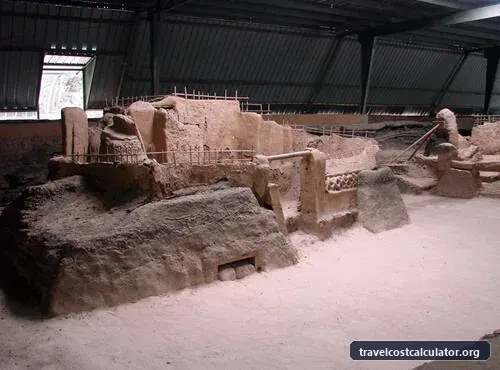
Joya de Cerén was a pre-Hispanic farming community that, like Pompeii and Herculaneum in Italy, was buried under an eruption of the Laguna Caldera volcano c.
Joya de Cerén Archaeological Site
🏛️ Overview & Historical Significance
Often referred to as the "Pompeii of the Americas," the Joya de Cerén Archaeological Site stands as one of the most remarkable pre-Hispanic cultural landmarks in Mesoamerica. Located in the Zapotitán Valley of El Salvador's La Libertad Department, this extraordinary village was entombed beneath up to eight meters of volcanic ash following the sudden eruption of the Loma Caldera volcano around 600 AD. Designated a UNESCO World Heritage Site in 1993, Joya de Cerén offers an unprecedented window into the daily existence of ordinary Maya agriculturalists—a stark contrast to the grand pyramids, royal tombs, and ceremonial centers found at nearby sites like Tazumal or Copán.
The site was accidentally uncovered in 1976 during bulldozer operations for an agricultural silo project. Subsequent excavations led by archaeologist Dr. Payson Sheets revealed that the ash blanketed the settlement so rapidly and at such a moderate temperature that organic materials were preserved in exquisite detail. Unlike Pompeii, no human remains have been discovered at Joya de Cerén, indicating that the villagers likely noticed preliminary tremors and fled in time, leaving behind their household belongings, working tools, harvested crops, and half-eaten meals.
UNESCO granted Joya de Cerén World Heritage status because it fulfills criteria (iii) and (iv) for cultural significance. It serves as an exceptional, intact testimony to a vanished civilization, preserving structural footprints made of bajareque (wattle-and-daub), thatched roofs, garden plots, sleeping mats (petates), kitchenware, and even the impressions of cultivated crops like maize, beans, and cassava (manioc). Visitors can explore excavated complexes including residential quarters, storehouses, communal kitchens, a shaman’s dwelling, and a fully preserved temazcal (traditional sweat bath).
🎟️ Entrance Fees, Opening Hours & Ticket Booking Tips
Visiting Joya de Cerén in 2026 is affordable and well-regulated by El Salvador's Ministry of Culture. Tickets can be purchased directly at the site's official visitor center box office using cash or major credit cards. (Note: While El Salvador recognizes Bitcoin as legal tender, U.S. Dollars (USD) remain the primary medium for day-to-day cash transactions.)
2026 Ticket Pricing
-
✦
International Tourists (Non-Central American): $10.00 USD
-
✦
Central American Foreign Residents: $5.00 USD
-
✦
Salvadoran Citizens & Legal Residents: $3.00 USD
-
✦
Children under 12, Adults over 60, & Visitors with Disabilities: Free admission with valid ID
-
✦
Vehicle Parking: $1.00 USD (motorcycles) / $2.00 USD (cars and light SUVs)
Opening Hours & Insider Booking Tips
The archaeological park is open Tuesday through Sunday from 9:00 AM to 4:00 PM. It remains closed on Mondays for maintenance and conservation work.
-
✦
Advance Booking: Advance tickets are generally not required for independent travelers, as capacity limits are rarely reached. However, if traveling during peak holiday periods (Holy Week in April or August Festivals), arriving before 10:00 AM guarantees smooth entry.
-
✦
Hire a Local Guide: Official bilingual guides are available at the entrance center. While not mandatory, hiring an accredited guide ($10.00–$15.00 USD tip/fee per group) dramatically enriches the experience, as they point out faint organic casts, historical nuances, and complex architectural features.
-
✦
Cash Currency: Bring small bills ($1, $5, and $10 USD). The ticket booth and small local vendors near the entrance frequently run low on change for $20 or $50 bills.
🚌 How to Get There & Local Transit Costs
Joya de Cerén is situated roughly 35 kilometers (22 miles) northwest of the capital city, San Salvador Travel Budget, and 30 kilometers southeast of Santa Ana Travel Budget, making it easily accessible via public transit, private vehicle, or rideshare services.
Option 1: By Public Bus (Chicken Bus / Direct Bus) — Budget Choice
Public transportation in El Salvador is inexpensive, safe on major routes, and frequent:
-
✦
From San Salvador: Head to the Terminal de Occidente or board Bus #108 (heading toward San Juan Opico) near the Metrocentro area. Ask the driver to drop you off at "Entrada a Joya de Cerén". The ride takes approximately 60 to 75 minutes and costs roughly $1.25 USD per person.
-
✦
From Santa Ana: Take Bus #201 toward San Salvador along the Pan-American Highway (CA-1W) and get off at the Sitio del Niño / Opico junction ($1.50 USD). From the junction, take a short local microbús or mototaxi directly to the site gates for $0.50–$1.00 USD.
Option 2: By Uber or Private Taxi — Convenient Choice
Rideshare services operate seamlessly across the greater San Salvador metropolitan area. An Uber ride from central San Salvador (San Benito or Escalón neighborhoods) to Joya de Cerén costs between $22.00 USD and $32.00 USD one-way depending on traffic. You can easily request a return Uber from the site entrance, though waiting times may extend up to 15–20 minutes.
Option 3: Rental Car
If driving yourself, take the Pan-American Highway (CA-1W) west out of San Salvador toward Santa Ana, then exit onto Highway RN-5W toward San Juan Opico. Highways are paved, well-marked, and navigation apps like Waze or Google Maps work accurately right up to the designated parking lot.
📸 Best Photography Spots & Insider Visit Hacks
Because Joya de Cerén's earthen structures are fragile, protective solar-panel-roof complexes cover the excavation pits. Lighting can vary sharply between bright tropical sunshine and deep shade under the canopies, requiring thoughtful photography planning.
Top Photography Spots
-
✦
Structure 9 (The Temazcal): The best-preserved ancient sweat bath in Mesoamerica. Capture the rounded clay dome and low entrance doorway from the raised wooden viewing platform.
-
✦
Structure 3 (The Large Residential Dwelling): Photograph the distinct division between living space, sleeping platforms, and outer porch, showcasing intact wattle-and-daub walls.
-
✦
The Botanical Gardens & Agricultural Trails: Walk along the outdoor paths surrounding the protective structures to take clear shots of native crops (cassava plants, cocoa trees, and agave) grown alongside ancient furrow impressions.
-
✦
Museum Artifact Exhibit: Inside the air-conditioned interpretive museum, frame close-up shots of preserved ceramic bowls, volcanic stone metates (grinding stones), and replicas of carbonized seeds.
Insider Visit Hacks
-
✦
Camera Settings: Set your camera or smartphone camera to a slightly higher ISO (400–800) when photographing under the protective roof structures to compensate for high contrast between shade and ambient sunlight. Flash photography is prohibited inside the museum.
-
✦
Beat the Midday Heat: Temperatures in the Zapotitán Valley often reach 32°C (90°F) by midday. Arrive right when doors open at 9:00 AM to enjoy comfortable temperatures, low humidity, and quiet wooden walkways without tour groups.
-
✦
Combine the "Ruta Maya" Circuit: Maximize your travel budget by combining Joya de Cerén with the nearby San Andrés Archaeological Park (just 10 minutes away) and Tazumal in Chalchuapa on a single day trip.
-
✦
Pack Essentials: Carry insect repellent, reusable water bottles, sun protection (hat and sunscreen), and light linen clothing.
🏨 Nearby Accommodation & Daily Budget Allocation
While there are few hotels directly adjacent to Joya de Cerén itself, most travelers base themselves in either San Salvador (35 km away) or Santa Ana (30 km away), both of which offer robust accommodation and dining ecosystems.
Recommended Places to Stay
-
✦
Budget ($15 – $35 USD/night): Hostels in Santa Ana (e.g., Captain Morgan Hostel, Pool House Hostel) or San Salvador’s Colonia Escalón offering dorm beds, shared kitchens, and tour bookings.
-
✦
Mid-Range ($55 – $110 USD/night): Boutique hotels in San Salvador’s trendy San Benito district (e.g., Hotel Villa Terra, Beverly Hills Hotel) or lakeside cabins near Lake Coatepeque.
-
✦
Luxury ($140 – $250+ USD/night): Upscale chain properties in San Salvador like the Hyatt Centric Las Cascadas, Real InterContinental, or luxury villas overlooking Lake Coatepeque.
Local Dining Near the Site
Directly outside the archaeological park entrance and along Highway RN-5W, small local eateries (pupuserías and comedores) serve traditional Salvadoran dishes. Don't leave without ordering authentic pupusas (thick corn tortillas stuffed with cheese, beans, or pork), which cost between $0.75 USD and $1.50 USD each. A complete lunch featuring a local plate (plato típico with grilled meat, rice, beans, plantains, and fresh cheese) costs approximately $4.00 – $7.00 USD.
Estimated Daily Travel Budget Allocation (2026)
| Expense Category | Backpacker / Budget | Mid-Range Traveler | Luxury / Tour Traveler |
|---|---|---|---|
| Accommodation | $20 USD (Dorm bed) | $75 USD (3-Star Hotel room) | $180 USD (5-Star / Boutique) |
| Food & Drink | $12 USD (Pupusas & local comedores) | $30 USD (Sit-down cafes & restaurants) | $75 USD (Fine dining & cocktails) |
| Transport | $3 USD (Public chicken buses) | $25 USD (Uber / Shared shuttle) | $80 USD (Private car + driver) |
| Site Entry & Tours | $10 USD (Self-guided ticket) | $20 USD (Ticket + shared guide) | $50 USD (All-inclusive day tour fee) |
| TOTAL DAILY ESTIMATE | $45 USD | $150 USD | $385 USD |
Frequently Asked Questions
Essential visitor FAQs for Joya de Cerén Archaeological Site
What is the entrance fee for Joya de Cerén Archaeological Site?
How much time do you need to explore Joya de Cerén Archaeological Site?
How do I get to Joya de Cerén Archaeological Site from the nearest city?
📊 Heritage Quick Specs
Visiting El Salvador on a Budget?
Calculate your full daily travel budget for El Salvador — including hotel costs, local transport, food, and sightseeing expenses.
View El Salvador Daily Travel Costs →Explore more UNESCO World Heritage Sites
🏛️ All 1,200+ Heritage Sites →