
 China
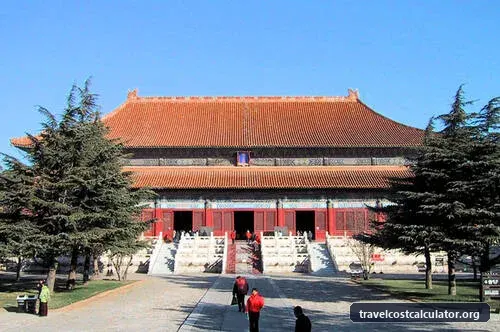
Imperial Tombs of the Ming and Qing Dynasties
It represents the addition of three Imperial Tombs of the Qing Dynasty in Liaoning to the Ming tombs inscribed in 2000 and 2003.
Imperial Tombs of the Ming and Qing Dynasties
🏛️ Overview & Historical Significance
The Imperial Tombs of the Ming and Qing Dynasties represent one of the most magnificent cultural landscape achievements in human history. Designated as a UNESCO World Heritage Site in 2000 (with expansion inscriptions added in 2003 and 2004), this serial property spans multiple regions across eastern China, encapsulating over five centuries of imperial rule under the Ming (1368–1644) and Qing (1644–1911) dynasties.
At its core, this UNESCO site is far more than a collection of mausoleums—it is a physical manifestation of ancient Chinese cosmology, imperial power, and Feng Shui (geomancy). The locations were chosen strictly according to traditional principles where human architecture is harmonized with surrounding mountains, rivers, and natural topography. Key component sites include:
-
✦
The Ming Tombs (Shisanling, 十三陵): Situated in Changping District, approximately 50 kilometers northwest of central Beijing Travel Budget. Here, 13 Ming emperors rest in a quiet basin backed by Mount Tianshou. The site features the famous 7-kilometer Spirit Way (Sacred Way), the grand unpainted nanmu timber arches of Changling, and the excavated subterranean complex of Dingling.
-
✦
Ming Xiaoling Tomb: Located on Mount Zijin in Nanjing, Jiangsu Province. Built for Emperor Zhu Yuanzhang (the founding Ming emperor), this 14th-century architectural masterpiece set the structural standard for all subsequent Ming and Qing tombs.
-
✦
Qing Eastern & Western Tombs: Located in Zunhua and Yixian (Hebei Province), respectively. These vast complexes house the lavish resting places of Emperor Kangxi, Emperor Qianlong, and the powerful Empress Dowager Cixi, known for subterranean palaces lined with solid gold leaf and intricate white marble carvings.
-
✦
Shengjing Three Tombs & Xianling Tomb: Early Ming and Qing imperial tombs located in Shenyang (Liaoning) and Zhongxiang (Hubei), providing the evolutionary bridge between early regional traditions and classical Beijing imperial designs.
UNESCO awarded World Heritage status because these sacred sites remain unmatched evidence of Chinese funerary rituals, stone masonry, timber architecture, and natural integration. For today's traveler, exploring these quiet valleys provides a hauntingly beautiful counterweight to the urban bustle of modern China.
🎟️ Entrance Fees, Opening Hours & Ticket Booking Tips
Visiting the Imperial Tombs requires navigating individual entry points across different tomb areas. The primary tourist destination is the Ming Tombs Complex near Beijing. Below are the finalized estimates for entrance fees, operational hours, and ticketing procedures.
2026 Estimated Entrance Fees (Beijing Ming Tombs Area)
-
✦
Sacred Way (Shendao / 神道): 35 RMB (~$4.90 USD) Peak / 20 RMB (~$2.80 USD) Off-Peak
-
✦
Changling Tomb (长陵 - Largest Tomb): 50 RMB (~$7.00 USD) Peak / 30 RMB (~$4.20 USD) Off-Peak
-
✦
Dingling Tomb (定陵 - Underground Palace): 65 RMB (~$9.10 USD) Peak / 45 RMB (~$6.30 USD) Off-Peak
-
✦
Jhaoling Tomb (昭陵): 35 RMB (~$4.90 USD) Peak / 20 RMB (~$2.80 USD) Off-Peak
-
✦
Ming Tombs Joint Through Ticket (Combo Pass): 130 RMB (~$18.20 USD) Peak / 90 RMB (~$12.60 USD) Off-Peak. (Highly recommended if visiting multiple tombs in a single day.)
Other Key UNESCO Component Tickets
-
✦
Ming Xiaoling Tomb (Nanjing): 70 RMB (~$9.80 USD) single entry ticket.
-
✦
Qing Eastern Tombs (Hebei): 108 RMB (~$15.10 USD) combined area ticket including internal tourist shuttle.
Note: Peak Season runs from April 1 to October 31. Off-Peak Season runs from November 1 to March 31. Exchange rates reflect 2026 market standards (~1 USD = 7.15 RMB).
Opening Hours (Beijing Ming Tombs)
-
✦
Peak Season (Apr – Oct): 08:00 – 17:30 (Ticket gates close at 16:30)
-
✦
Off-Peak Season (Nov – Mar): 08:30 – 17:00 (Ticket gates close at 16:00)
Essential 2026 Ticket Booking & Passport Hacks
China operates a strict Real-Name System for all cultural heritage sites. Foreign passport holders must present physical passports at entrance turnstiles.
-
✦
Book via Official WeChat Mini-Program or Trip.com: Ticket windows at the sites have limited walk-up tickets. Search for "Ming Tombs Official" (十三陵) on WeChat or book hassle-free through Trip.com up to 7 days in advance.
-
✦
Seamless 2026 Digital Payments: Cash is rarely accepted at smaller vendor stalls inside the scenic zone. Set up Alipay or WeChat Pay linked to your international Visa or Mastercard before arriving.
-
✦
Avoid National Holidays: Skip visiting during Chinese National Day Golden Week (October 1–7) and Labor Day Holiday (May 1–5), when crowd capacity reaches absolute maximum limits.
🚌 How to Get There & Local Transit Costs
Most international visitors access the UNESCO sites via Beijing. Getting from downtown Beijing to the Ming Tombs in Changping District is straightforward via China’s modernized transit network.
Option 1: Subway + Local Bus (Most Economical)
The Beijing Subway network directly connects the capital to Changping District:
-
✦
Take Subway Line 8 or Line 13 and transfer to the Changping Subway Line (昌平线).
-
✦
Ride to Changping Dongguan Station (Exit C) or Ming Tombs Scenic Area Station (十三陵景区站).
-
✦
From Changping Dongguan Station, board local Bus 872, which drops passengers directly at the entrance of the Sacred Way and Changling Tomb.
-
✦
Total Cost: ~11 RMB to 15 RMB ($1.50 – $2.10 USD) one-way. Transit time is roughly 80 to 90 minutes.
Option 2: High-Speed Rail (HSR) + Taxi (Fastest Public Route)
China’s high-speed train system makes getting to northern Beijing effortless:
-
✦
Board a bullet train from Beijing North Station or Qinghe Railway Station to Changping North Station or Badaling Changping Station (approx. 20–25 minutes; ~15 RMB / $2.10 USD).
-
✦
Take a short 15-minute Didi (Chinese Uber) or local taxi straight to the Sacred Way entrance.
-
✦
Total Cost: ~45 RMB to 65 RMB ($6.30 – $9.10 USD) one-way per person. Total travel time is under 50 minutes.
Option 3: Private Didi Rideshare or Taxi Direct from Central Beijing
If traveling in a small group or with family, booking a direct ride on the Didi app from central Beijing (e.g., Tiananmen/Forbidden City area) directly to the Ming Tombs takes around 60 to 75 minutes depending on traffic.
-
✦
Cost: ~160 RMB to 220 RMB ($22.50 – $31.00 USD) one way for a standard sedan.
-
✦
Full-Day Private Driver Charter: Chartering a car for 8 hours (combining the Ming Tombs and the nearby Badaling Great Wall) averages 700 RMB to 950 RMB ($98 – $133 USD) per car.
📸 Best Photography Spots & Insider Visit Hacks
Capturing the epic scale of Chinese imperial architecture requires timing and location awareness. Here are the top photo locations and strategic visitor hacks:
Top 4 Photography Locations
-
✦
The Sacred Way (Shendao Statue Alley): The 800-meter section flanked by 24 stone animals (elephants, camels, mythical xiezhi) and 12 imperial officials. Shoot early in the morning when golden sunlight filters through the ancient willow and pine trees.
-
✦
Ling'en Hall at Changling Tomb: Built entirely of massive, unpainted nanmu timber pillars. Stand in the central aisle using a wide-angle lens (16–35mm equivalent) to emphasize the breathtaking height of these 600-year-old wooden pillars.
-
✦
Dingling Underground Palace: Descend 27 meters below the ground surface into the actual burial vault of Emperor Wanli. Capture the monumental marble throne chairs and massive stone vault doors. (Low-light lens recommended; tripods and flash photography are strictly prohibited.)
-
✦
Elephant Trunk Road (Ming Xiaoling, Nanjing): If traveling to the Nanjing component, visit in mid-to-late November. The arched stone statues lining the tree-covered path framed by brilliant yellow ginkgo leaves create one of China’s most iconic autumn landscape photos.
Insider Visit Hacks
-
✦
Reverse the Tour Bus Itinerary: 90% of organized tour groups visit the Badaling Great Wall in the morning and head to the Ming Tombs around 11:30 AM to 1:00 PM. Beat the crowds by visiting the Ming Tombs at 08:30 AM, enjoying empty walkways, and heading to the Wall or back to Beijing in the early afternoon.
-
✦
Wear Proper Footwear: Visiting the Sacred Way, Changling, and Dingling involves walking over 10,000 steps on uneven flagstones and descending/ascending steep steps into the underground vault at Dingling. Wear broken-in walking shoes.
-
✦
Autumn Colors Are Unmatched: The absolute Best Time to Visit Planner is late September through early November. Crisp autumn air in northern China keeps smog low, skies clear blue, and surrounding mountain foliage bright orange and gold.
🏨 Nearby Accommodation & Daily Budget Allocation
While most visitors stop at the Ming Tombs as a day trip from central Beijing, staying overnight in Changping District offers access to natural hot springs, quiet rural mountain hamlets, and easy morning entry to the tombs before city day-trippers arrive.
Accommodation Options
-
✦
Budget / Hostels: Peking Station Hostel or Leo Hostel (Central Beijing base) / Changping Youth Stay — $18 – $35 USD (130 RMB – 250 RMB) per night for dormitory beds or basic private rooms.
-
✦
Mid-Range Comfort: Courtyard by Marriott Beijing Changping or Days Hotel by Wyndham Changping — $65 – $110 USD (460 RMB – 780 RMB) per night. Comfortable international standards near subway connections.
-
✦
Luxury / Resort: Sino-Swiss Hotel Beijing or boutique huton courtyard stays like The Orchid Beijing (in central Beijing) — $220 – $420 USD (1,550 RMB – 3,000 RMB) per night. Includes full concierge transport arrangements.
Local Dining Options
Do not leave Changping without sampling local farm-to-table cuisine (Nongjiakai). Try the famous Kangling Spring Pancake (康陵春饼), thin handmade pancakes stuffed with braised pork belly, scrambled eggs, chives, bean sprouts, and fresh mountain veggies. A full feast near the tombs costs just 50 RMB – 80 RMB ($7 – $11 USD) per person.
Estimated Daily Budget Allocations (Per Person, 2026 Rates)
| Traveler Profile | Transit & Tickets | Food & Dining | Lodging (Per Night) | Total Daily Estimated Budget |
|---|---|---|---|---|
| Backpacker / Budget | $18 USD (Subway + Combo Pass) | $12 USD (Spring pancakes / street stalls) | $25 USD (Hostel bed) | $55 USD (¥390 RMB) |
| Mid-Range Traveler | $35 USD (High-Speed Rail + Didi + Pass) | $30 USD (Sit-down restaurants) | $85 USD (3-4 Star Hotel) | $150 USD (¥1,070 RMB) |
| Luxury / Private Tour | $130 USD (Private car/driver + VIP entry) | $80 USD (Gourmet Peking Duck & fine dining) | $300 USD (5-Star Luxury Hotel) | $510 USD (¥3,640 RMB) |
Frequently Asked Questions
Essential visitor FAQs for Imperial Tombs of the Ming and Qing Dynasties
What is the entrance fee for Imperial Tombs of the Ming and Qing Dynasties?
How much time do you need to explore Imperial Tombs of the Ming and Qing Dynasties?
How do I get to Imperial Tombs of the Ming and Qing Dynasties from the nearest city?
📊 Heritage Quick Specs
Visiting China on a Budget?
Calculate your full daily travel budget for China — including hotel costs, local transport, food, and sightseeing expenses.
View China Daily Travel Costs →Explore more UNESCO World Heritage Sites
🏛️ All 1,200+ Heritage Sites →