
 Brazil
Iguaçu National Park
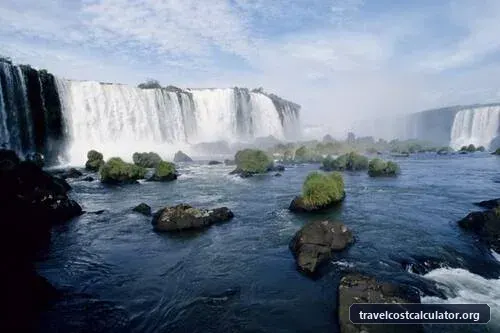
The park shares with Iguazú National Park in Argentina one of the world’s largest and most impressive waterfalls, extending over some 2,700 m.
Iguaçu National Park
🏛️ Overview & Historical Significance
Spanning over 185,000 hectares of pristine Atlantic Forest in the state of Paraná, Iguaçu National Park (Parque Nacional do Iguaçu) protects one of the most awe-inspiring natural phenomena on Earth. Designated a UNESCO World Heritage Site in 1986, the park contains the world’s largest system of waterfalls—a staggering amphitheater of 275 individual drops stretching across nearly 2.7 kilometers. While roughly 80% of the falls physically reside on the Argentine side, the Brazilian side provides unmatched, sweeping panoramic vistas of this colossal cascade system.
The UNESCO designation recognizes Iguaçu not only for its superlative natural beauty (Criterion VII) but also for its crucial role in biodiversity conservation (Criterion X). The park houses one of the last major remnants of the inland Interior Atlantic Forest, a critically endangered ecosystem. Within its dense subtropical canopy, highly endangered species find sanctuary, including the jaguar (Panthera onca), giant anteater, ocelot, South American tapir, and the rare harpy eagle. Visitors regularly encounter vibrant bands of ring-tailed coatis, toucans, and brilliant morpho butterflies along the trail networks.
Indigenous Guarani legend holds that the falls were created in a fit of rage by a serpent god named M'Boi, who sliced the Iguaçu River bed when a mortal warrior, Tarobá, fled down the river in a canoe with his lover, Naipú. Historically, European explorers first documented the site in 1542 when Spanish conquistador Álvar Núñez Cabeza de Vaca stumbled upon the thunderous drop. Today, as managed under strict conservation guidelines, Iguaçu stands as a global benchmark for sustainable eco-tourism in South America.
🎟️ Entrance Fees, Opening Hours & Ticket Booking Tips
Visiting Iguaçu National Park requires advance planning, as park management caps daily visitor numbers to preserve the local ecology and maintain high visitor standards.
Official 2026 Entrance Fee Structure
Ticket pricing includes the mandatory conservation fee, park access, and round-trip transport on the double-decker internal visitor buses. All ticket prices are listed in Brazilian Reais (BRL) with estimated USD conversions:
-
✦
International Adult Visitors: R$ 110.00 (~$21.50 USD)
-
✦
Mercosur Residents & Passport Holders: R$ 92.00 (~$18.00 USD)
-
✦
Brazilian Nationals: R$ 80.00 (~$15.50 USD)
-
✦
Children (Ages 2–11) & Seniors (60+ for select nationalities): R$ 18.00 (~$3.50 USD)
-
✦
Internal Shuttle Bus Pass: Included in standard admission.
Operating Hours & Capacity
The park is open 365 days a year. General public operating hours are 9:00 AM to 4:00 PM on weekdays, and 8:30 AM to 4:00 PM on weekends and peak national holiday periods. Note that 4:00 PM represents the final entry time; visitors inside the park can remain until the final shuttle bus departs around 6:30 PM.
Insider Booking Strategies for 2026
-
✦
Mandatory Online Reservations: Tickets are sold online via timed-entry slots. You must purchase tickets through the official portal (cataratasdoiguacu.com.br). Walk-up ticket windows at the Visitor Center are limited to self-service kiosks that frequently sell out early during peak months (December–February and July).
-
✦
Slot Optimization: Book the earliest entry time of the day (8:30 AM or 9:00 AM). Arriving on the first internal bus guarantees 30–45 minutes of crowd-free access at the main viewpoints.
-
✦
Identification Requirement: Keep your physical passport (or official national ID card for South American residents) accessible. The name on your online ticket must match your legal travel identification precisely.
🚌 How to Get There & Local Transit Costs
Iguaçu National Park is situated approximately 18 kilometers outside downtown Foz do Iguaçu, the primary gateway city in southern Brazil. Conveniently, Foz do Iguaçu International Airport (IGU) is located just 3 kilometers from the park's main entrance gates.
Public Transit Options
The cheapest and most reliable public transport is the municipal bus service:
-
✦
Bus Line 120 (Aeroporto / Parque Nacional): Departs every 20 minutes from the Urban Transit Terminal (TTU - Terminal de Transporte Urbano) in downtown Foz do Iguaçu. It stops directly at IGU Airport terminal before terminating at the Iguaçu National Park Visitor Center.
-
✦
Transit Fare: R$ 5.50 (~$1.05 USD) single fare. Payment can be made in cash (BRL) to the bus conductor or via local transit cards.
-
✦
Travel Time: Approximately 35–45 minutes from downtown; 5 minutes from the airport.
Rideshares, Taxis & Private Shuttles
-
✦
Rideshare Apps (Uber / 99): Widely available throughout Foz do Iguaçu. A one-way fare from downtown to the park entrance costs between R$ 45.00 and R$ 65.00 (~$8.50 – $12.50 USD), depending on surge pricing.
-
✦
Official Taxis: Flat rates from downtown Foz do Iguaçu to the park range from R$ 75.00 to R$ 90.00 (~$14.50 – $17.50 USD). Taxis parked outside the visitor center will charge fixed tariffs for return trips.
-
✦
Hotel Transfers: Many mid-range and luxury accommodations offer round-trip shared van transfers for roughly R$ 50.00 to R$ 70.00 (~$10.00 – $13.50 USD) per person.
Crossing from Argentina (Puerto Iguazú)
If travelling across the border from Puerto Iguazú, Argentina, international shuttles or private taxis can carry you across the Tancredo Neves International Bridge. Allow at least 60–90 minutes for border control processing. Private cross-border taxis charge roughly R$ 150.00 – R$ 200.00 (~$29.00 – $38.00 USD) each way.
📸 Best Photography Spots & Insider Visit Hacks
Capturing the scale of Iguaçu requires understanding the park's light cycles, spray dynamics, and terrain layout. The primary walking path, the 1.5-kilometer Trilha das Cataratas, winds along the edge of the canyon, delivering progressively dramatic perspectives.
Top Photography Locations
-
✦
Belmond Hotel Lookout (Stop 3): The starting point of the main trail offers a sweeping, panoramic wide-angle frame of the entire waterfall complex across the canyon.
-
✦
The Lower Catwalk (Garganta do Diabo Boardwalk): An elevated wooden walkway extending directly over the churning waters of the Iguaçu River. It brings photographers right into the jaw of the Devil’s Throat, creating framed shots surrounded by mist, dramatic swells, and perpetual rainbows.
-
✦
Naipi Tower Elevator: A glass elevator located at the end of the trail that ascends alongside the cliffside. The upper deck presents an eye-level, top-down perspective of the upper cascades pounding into the abyss below.
Photography & Logistics Hacks
-
✦
Lighting Strategy (Afternoon Light): Because the Brazilian side faces east toward Argentina, morning light causes heavy backlighting and harsh lens flare over the falls. Afternoon light (1:00 PM – 4:30 PM) illuminates the cascades directly, filling the canyon with warm light and generating frequent, vivid rainbows over the spray.
-
✦
Protective Gear: The mist generated at the end of the boardwalk is intense and relentless—equivalent to walking into a torrential downpour. Bring heavy-duty dry bags for electronic equipment, lens cloths, and high-quality waterproof phone cases or underwater camera housings.
-
✦
Beat the Crowds Strategy: When boarding the double-decker park shuttle at the entrance, skip the early stops and disembark immediately at the Trilha das Cataratas stop (in front of the Belmond Hotel). Walk the trail swiftly to reach the boardwalk before the tour groups accumulate.
-
✦
Macuco Safari Upgrade: For an adrenaline-filled perspective, book the Macuco Safari inside the park (approx. R$ 385.00 / ~$74.00 USD). This eco-adventure includes a electric jungle trek followed by a high-powered zodiac boat ride directly under the Three Musketeers spray. (Warning: You will get 100% soaked; dry bags are provided).
🏨 Nearby Accommodation & Daily Budget Allocation
Travelers visiting Iguaçu National Park can select accommodations ranging from ultra-luxury properties located inside the park boundary to budget-friendly design hostels in downtown Foz do Iguaçu.
Accommodation Options
-
✦
Luxury (Inside the Park): Belmond Hotel das Cataratas. The only hotel situated within the national park grounds. Guests enjoy exclusive access to the waterfall trails before the park gates open to the public in the morning and after closing in the evening. Rooms average $600 – $950 USD per night.
-
✦
Mid-Range (Near Park Entrance / Airport Corridor): Bourbon Cataratas Do Iguaçu Thermas Eco Resort or Sanma Hotel. Located along Av. das Cataratas, offering easy access to both the airport and park gates. Double rooms range from $90 – $170 USD per night.
-
✦
Budget / Hostels (Downtown Foz): Tetris Container Hostel or Concept Design Hostel. Located in central Foz do Iguaçu with direct access to Bus 120, local restaurants, and night markets. Private rooms range from $35 – $60 USD per night; dorm beds cost $16 – $25 USD per night.
Daily Budget Tiers for 2026
1. Backpacker / Low-Budget Tier ($45 – $65 USD / day)
-
✦
Lodging: Hostel dorm bed in downtown Foz ($18 – $24 USD)
-
✦
Transportation: Bus 120 round-trip fare ($2.10 USD)
-
✦
Park Entry: Standard adult international ticket ($21.50 USD)
-
✦
Food & Drink: Local Prato Feito (executive lunch plate) and supermarket supplies ($15 – $20 USD)
2. Flashpacker / Mid-Range Tier ($140 – $260 USD / day)
-
✦
Lodging: 3-star or 4-star hotel in Foz do Iguaçu ($80 – $130 USD)
-
✦
Transportation: Uber rideshare back and forth to park ($20 USD)
-
✦
Park Entry & Tour: Entrance ticket + Macuco Safari boat adventure ($95.50 USD)
-
✦
Food & Drink: Traditional Brazilian Churrascaria (steakhouse buffet) lunch & evening drinks ($35 – $55 USD)
3. Luxury Tier ($850 – $1,400+ USD / day)
-
✦
Lodging: Belmond Hotel das Cataratas ($700 – $950 USD)
-
✦
Transportation: Private airport and park chauffeur ($80 USD)
-
✦
Activities: Park ticket, Macuco Safari boat adventure, and a scenic 10-minute helicopter flight with Helisul over the canyon ($230 USD)
-
✦
Food & Drink: Fine dining at Ipê Restaurant or Itaipu Restaurant ($100 – $160 USD)
Frequently Asked Questions
Essential visitor FAQs for Iguaçu National Park
What is the entrance fee for Iguaçu National Park?
How much time do you need to explore Iguaçu National Park?
How do I get to Iguaçu National Park from the nearest city?
📊 Heritage Quick Specs
Visiting Brazil on a Budget?
Calculate your full daily travel budget for Brazil — including hotel costs, local transport, food, and sightseeing expenses.
View Brazil Daily Travel Costs →Explore more UNESCO World Heritage Sites
🏛️ All 1,200+ Heritage Sites →