
 Vietnam
Hoi An Ancient Town
Hoi An Ancient Town is an exceptionally well-preserved example of a South-East Asian trading port dating from the 15th to the 19th century.
Hoi An Ancient Town
🏛️ Overview & Historical Significance
Nestled along the banks of the Thu Bon River in central Vietnam's Quang Nam Province, Hoi An Travel Budget Ancient Town stands as an exceptionally preserved testament to Southeast Asia's maritime trading era. Designated as a UNESCO World Heritage site in 1999, Hoi An (formerly known to European traders as Faifo) flourished between the 15th and 19th centuries as a vital commercial nexus along the maritime Silk Road. Ships from China, Japan, India, Persia, Portugal, Spain, and the Netherlands converged here, driven by trade winds to exchange silk, porcelain, spices, lacquerware, and precious metals.
What makes Hoi An globally unique is its architectural synthesis. Unlike many regional trade ports that succumbed to modern redevelopment or wartime devastation, Hoi An’s street grid and original timber-frame architecture remain largely intact. The urban layout reflects a harmonious blend of indigenous Vietnamese design fused with profound Japanese, Chinese, and later French colonial architectural influences. UNESCO awarded the town World Heritage status under two key criteria: representing an exceptionally well-preserved example of a traditional trading port, and displaying an outstanding fusion of cultures over centuries.
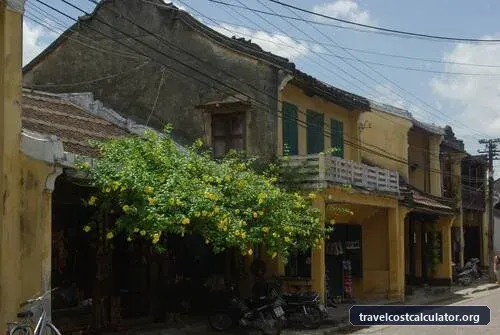
As you stroll along the ochre-yellow streets, you will encounter multi-generational family tube houses, ornate Chinese assembly halls (Hoi Quan), ancestor worship shrines, and the iconic 16th-century Japanese Covered Bridge. In 2026, Hoi An continues to lead heritage management in Southeast Asia, balancing local community living with sustainable tourism strategies that protect its delicate wooden architecture, canal network, and vibrant intangible cultural practices—such as traditional lantern making, folk music (Bai Choi), and ancestral culinary arts.
🎟️ Entrance Fees, Opening Hours & Ticket Booking Tips
Visiting Hoi An Ancient Town requires a cultural heritage entry ticket. The ticket system acts as a direct conservation fund, helping maintain the historic wooden structures, fund restoration projects, and support municipal street cleanliness.
2026 Ticket Pricing & Details
-
✦
International Visitors: 120,000 VND to 150,000 VND (approx. $5.00 – $6.20 USD / €4.60 – €5.70).
-
✦
Domestic Visitors: 80,000 VND (approx. $3.20 USD).
-
✦
Children (under 8 years): Free entry.
What the Ticket Includes
Each ticket grants general admission to the pedestrianized zone of the Old Town for the duration of your stay in Hoi An. Additionally, the ticket includes 5 tear-off coupons allowing entrance to your choice of 5 premium heritage sites out of 21 participating locations, categorised as follows:
-
✦
Japanese Covered Bridge (Chùa Cầu): Fully open following extensive structural stabilization and conservation work completed in recent years.
-
✦
Chinese Assembly Halls: Fujian (Phuc Kien), Cantonese (Quang Dong), or Chaozhou (Trieu Chau).
-
✦
Old Houses: Tan Ky Ancient House, Phung Hung House, or Duc An House.
-
✦
Museums: Museum of Trade Ceramics, Museum of Sa Huynh Culture, or Museum of Folk Culture.
-
✦
Traditional Performing Arts: Daily traditional music and dance shows held at the Hoi An Handicraft Workshop.
Opening Hours & Booking Logistics
The pedestrianized zone operates 24/7, but ticket kiosks and participating heritage buildings open daily from 7:30 AM to 9:30 PM. Motorized vehicles (motorbikes and cars) are strictly banned from entering the Old Town during designated pedestrian hours: 8:00 AM – 11:00 AM and 3:00 PM – 9:30 PM daily.
Booking Tip: Tickets can be purchased in cash (VND) or via mobile QR payment at any of the 11 official wooden ticket kiosks positioned along the perimeter of the historic district (e.g., near Hai Ba Trung Street, Tran Phu Street, or Nguyen Thai Hoc Street). Keep your ticket stub with you at all times; security marshals occasionally request proof of purchase near main entry points.
🚌 How to Get There & Local Transit Costs
Hoi An does not have its own airport or train station. The primary gateway to Hoi An is Da Nang Travel Budget, located approximately 30 kilometers (18.5 miles) north, which houses Da Nang International Airport (DAD) and a major railway depot on the North-South Express line.
Transport Options from Da Nang to Hoi An (2026 Pricing)
-
✦
Private Ride-Hailing / Grab Car: The fastest and most convenient method. A direct Grab Car or private taxi ride from Da Nang Airport or downtown to Hoi An Old Town takes about 45 to 50 minutes. Cost: 320,000 – 450,000 VND ($13.00 – $18.00 USD) one-way.
-
✦
Shared Tourist Shuttle Bus: Frequent minibuses run directly from Da Nang Airport to major Hoi An hotels every hour. Bookable via local travel desks or online platforms. Cost: 120,000 – 150,000 VND ($5.00 – $6.00 USD) per seat.
-
✦
Electric Public Bus (Line 01 Replacement): Electric municipal buses connect central Da Nang to Hoi An Bus Station (located 1 km north of Old Town). Buses run every 30 minutes from 5:30 AM to 6:00 PM. Cost: 30,000 – 50,000 VND ($1.20 – $2.00 USD) per person.
-
✦
Scooter / Motorbike Rental: Renting a 125cc scooter in Da Nang or Hoi An costs roughly 120,000 – 180,000 VND ($5.00 – $7.50 USD) per day. The scenic coastal drive via Truong Sa Street offers direct views of the East Vietnam Sea.
Getting Around Hoi An Ancient Town
The Old Town is best explored on foot or by non-motorized transport. Many mid-range hotels offer complimentary city bicycles. Alternative options include electric tourist buggies operating on the town periphery (around 15,000 VND / $0.60 USD per stop) or traditional Cyclo (rickshaw) rides priced at roughly 150,000 – 200,000 VND ($6.00 – $8.00 USD) for an hour-long tour.
📸 Best Photography Spots & Insider Visit Hacks
Hoi An is widely recognized as one of the most photogenic destinations in Asia. Capturing its vibrant atmosphere requires strategic timing to navigate heat and visitor traffic.
Top Photography Locations
-
✦
The Japanese Covered Bridge (Chùa Cầu): Frame your shot from the western bank along Nguyen Thi Minh Khai Street during golden hour to capture the bridge's intricate wooden pavilion mirrored in the water.
-
✦
Ba Mu Temple Gate (Cổng Chùa Bà Mụ): Located on Hai Ba Trung Street, this restored 17th-century ornate triple-gate features a large reflection pool that produces dramatic symmetrical photos.
-
✦
Yellow-Walled Alleyways along Tran Phu & Nguyen Thai Hoc Streets: Narrow alleyways framed by cascading magenta bougainvillea vines against weathered yellow plaster walls.
-
✦
Thu Bon Riverbank at Dusk: Position yourself on the An Hoi Bridge around 6:00 PM as hundreds of colorful silk lanterns illuminate the river and traditional wooden rowboats.
Insider Timing & Seasonal Hacks
-
✦
The Golden Morning Hour (6:00 AM – 7:30 AM): To experience Hoi An without crowds, visit at dawn. Shop shutters are half-open, locals buy fresh produce, street vendors prepare steaming bowls of soup, and the light is soft and warm.
-
✦
Best Months to Visit: The dry season runs from February to July. February to April offers pleasant temperatures (20°C to 28°C / 68°F to 82°F) with minimal rainfall. May through July is warmer (up to 35°C / 95°F) but guarantees clear blue skies.
-
✦
Monsoon & Flood Season Alert: Avoid late September through November if possible. This is the central coast's typhoon season, and Hoi An frequently experiences rising river levels that flood lower streets like Bach Dang.
-
✦
Full Moon Lantern Festival: Held on the 14th night of every lunar month. Modern electric streetlights in the Old Town are dimmed, replaced entirely by glowing silk lanterns, traditional games, and floating paper flower lanterns on the river.
🏨 Nearby Accommodation & Daily Budget Allocation
Hoi An offers an extensive range of accommodations, from quaint boutique villas tucked inside coconut groves to riverside resorts and budget hostels.
Accommodation Recommendations
-
✦
Budget Traveler ($10 – $25 USD / night): Backpacker hostels and family-run homestays located along Phan Dinh Phung or Cua Dai Road (10-minute bike ride to Old Town). Highlights include clean dorms or private homestay rooms with free bicycle rentals.
-
✦
Mid-Range Traveler ($45 – $90 USD / night): Charming boutique hotels situated along the Hoai River or near An Hoi Islet. Options feature swimming pools, heritage-inspired decor, and inclusive breakfast buffets within a 5-minute walk of the night market.
-
✦
Luxury Traveler ($150 – $400+ USD / night): Five-star riverside resorts along the Thu Bon River or beachfront properties near An Bang Beach. These properties feature historic Vietnamese architecture, spa wellness centers, private riverboats, and fine dining.
Estimated Daily Travel Budgets (2026 Pricing)
1. Backpacker / Low-Budget (~$25 – $40 USD / day)
-
✦
Stay: Hostel bed or budget homestay ($10 – $15)
-
✦
Food: Street food eats like Cao Lau (chewy pork noodles), Banh Mi from Madam Khanh, and fresh herbal tea ($8 – $12)
-
✦
Transport & Sightseeing: Walking/bicycle usage, divided entrance ticket cost ($7 – $13)
2. Mid-Range Traveler (~$70 – $140 USD / day)
-
✦
Stay: 3-star or 4-star heritage boutique hotel ($50 – $80)
-
✦
Food: Sit-down dining at riverside restaurants, craft cocktails, specialty coffee ($20 – $35)
-
✦
Transport & Activities: Grab rides, 1-day express tailor fitting session, rowboat cruise ($15 – $25)
3. Luxury Traveler (~$250 – $500+ USD / day)
-
✦
Stay: 5-star luxury resort or private villa ($180 – $350)
-
✦
Food: Multi-course tasting menus, fine wine pairings, luxury river cruises ($60 – $100)
-
✦
Transport & Activities: Private chauffeur, guided heritage photography tours, bespoke tailor wardrobe ($50 – $100+)
Frequently Asked Questions
Essential visitor FAQs for Hoi An Ancient Town
What is the entrance fee for Hoi An Ancient Town?
How much time do you need to explore Hoi An Ancient Town?
How do I get to Hoi An Ancient Town from the nearest city?
📊 Heritage Quick Specs
Visiting Vietnam on a Budget?
Calculate your full daily travel budget for Vietnam — including hotel costs, local transport, food, and sightseeing expenses.
View Vietnam Daily Travel Costs →Explore more UNESCO World Heritage Sites
🏛️ All 1,200+ Heritage Sites →