
 Japan
Historic Villages of Shirakawa-go and Gokayama
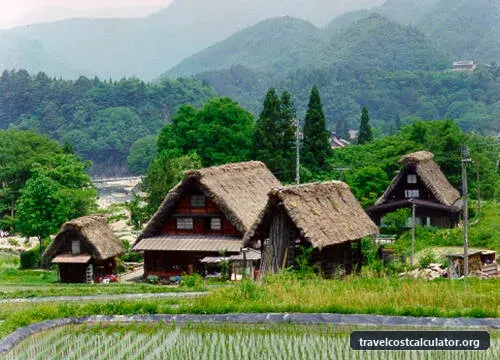
Located in a mountainous region that was cut off from the rest of the world for a long period of time, these villages with their Gassho-style houses subsisted on the cultivation of mulberry trees and the rearing of silkworms.
Historic Villages of Shirakawa-go and Gokayama
🏛️ Overview & Historical Significance
Deep within the steep, remote mountains of Japan’s Shogawa River basin—straddling Gifu and Toyama Prefectures—lie the Historic Villages of Shirakawa-go and Gokayama. Comprising three primary settlements (Ogimachi in Shirakawa-go, and Ainokura and Suganuma in Gokayama), this region was inscribed as a UNESCO World Heritage Site in 1995 for its extraordinary adaptation to harsh alpine environments and its preservation of a vanishing way of traditional Japanese rural life.
The defining feature of these villages is the Gassho-zukuri (合掌造り) architectural style, which translates literally to "constructed like hands in prayer." Designed with extraordinarily steep thatched roofs slanted at 60-degree angles, these timber structures were engineered to withstand some of the heaviest snowfall in Asia—accumulations that frequently exceed two to four meters during winter. Remarkably, these multi-story wooden homes were built entirely without nails, relying instead on intricate wooden joints secured with flexible hazel ropes (neso).
Historically, the vast attic spaces beneath the high-pitched roofs were utilized for two vital economic activities: sericulture (silkworm farming) and saltpeter (gunpowder component) production. The heat rising from the ground-floor hearth (irori) warmed the silkworms above while smoked wooden beams repelled wood-boring insects, creating an ingenious closed-loop living system.
What makes Shirakawa-go and Gokayama truly exceptional from a UNESCO standpoint is the social structure known as Yui (結). Because re-thatching a single Gassho-zukuri roof requires up to 200 volunteers and tons of harvested kaya thatch, the entire community gathers to completely replace a roof in a single day. Visiting in 2026 allows travelers to witness a living cultural landscape where centuries-old communal bonds and architectural resilience continue uninterrupted.
🎟️ Entrance Fees, Opening Hours & Ticket Booking Tips
Accessing the public streets, footpaths, and exterior grounds of Ogimachi, Ainokura, and Suganuma villages is completely free of charge 24 hours a day. However, entering individual historic residences, indoor museums, and observation platforms requires small admission fees. Below are the estimated 2026 entrance costs and operational details:
-
✦
Ogimachi Village Grounds Access: Free.
-
✦
Wada House (Wada-ke): ¥500 (~$3.50 USD) for Adults / ¥300 (~$2.10 USD) for Children. The largest open Gassho house in Ogimachi. Open daily 9:00 AM – 5:00 PM.
-
✦
Kanda House (Kanda-ke): ¥400 (~$2.80 USD) for Adults / ¥200 (~$1.40 USD) for Children. Features an exceptionally well-preserved structure with hot tea served by the irori fire. Open daily 9:00 AM – 4:30 PM.
-
✦
Nagase House (Nagase-ke): ¥400 (~$2.80 USD) for Adults / ¥200 (~$1.40 USD) for Children. Showcases medical artifacts from the Edo period when the family served as village doctors. Open daily 9:00 AM – 5:00 PM.
-
✦
Gassho-zukuri Minka-en Open-Air Museum: ¥700 (~$4.90 USD) for Adults / ¥300 (~$2.10 USD) for Children. An open-air museum housing 25 relocated Gassho buildings across the river from Ogimachi. Open 8:40 AM – 5:00 PM (Closed Thursdays from Nov–Mar).
-
✦
Ainokura & Suganuma Village Museums (Gokayama): Joint/Individual entry tickets range from ¥300 to ¥500 (~$2.10 to $3.50 USD).
Pro Booking Tips for 2026 Visitors
1. Winter Illumination Event Reservations: The famous winter light-up events held on select Sunday nights in January and February operate on a strict mandatory pre-booking lottery system. Day-trippers without advance light-up tickets or designated tour bus reservations are turned away at 3:00 PM on event days. Lotteries open annually between August and October of the preceding year through the official Shirakawa-go Tourist Association portal.
2. Seat Reservations for Highway Buses: While village access does not require a ticket, highway express buses connecting Kanazawa, Takayama, and Nagoya to Shirakawa-go require mandatory seat reservations. Seats open exactly 30 days prior to travel via Japan Bus Online or Nohi Bus platforms; popular morning departures sell out rapidly during peak seasons.
🚌 How to Get There & Local Transit Costs
Because there are no train stations in Shirakawa-go or Gokayama, transit relies on highway express buses, rented vehicles, or private transfers. The primary regional hubs for access are Takayama and Kanazawa.
Option A: Via Takayama (Most Popular Route)
From Takayama Station (accessible via the JR Hida Limited Express from Nagoya), take the Nohi Bus directly to the Shirakawa-go Bus Terminal.
-
✦
Travel Time: 50 minutes.
-
✦
One-Way Fare: ¥2,600 (~$18.00 USD) per adult.
-
✦
Round-Trip Fare: ¥4,800 (~$33.50 USD).
Option B: Via Kanazawa
From Kanazawa Station (accessible via the Hokuriku Shinkansen from Tokyo Travel Budget or Kyoto Travel Budget/Osaka), board the Hokutetsu / Nohi Bus line.
-
✦
Travel Time: 75 minutes.
-
✦
One-Way Fare: ¥2,600 (~$18.00 USD) per adult.
Option C: Via Nagoya (Direct Route)
From Meitetsu Nagoya Bus Center, daily express buses run straight to Shirakawa-go.
-
✦
Travel Time: 2 hours 40 minutes.
-
✦
One-Way Fare: ¥4,000 (~$28.00 USD).
Option D: Accessing Gokayama (Ainokura & Suganuma)
To reach the quieter villages of Gokayama, take the Kaetsunou World Heritage Bus operating between Shin-Takaoka Station, Johana Station, Gokayama, and Shirakawa-go.
-
✦
World Heritage Bus 1-Day Pass: ~¥2,500 (~$17.50 USD), permitting unlimited stops between Shirakawa-go, Suganuma, and Ainokura.
Option E: Regional Rail & Bus Passes
The Takayama-Hokuriku Area Tourist Pass (~¥19,800 / $138 USD for 5 consecutive days) covers JR train travel between Nagoya, Takayama, Kanazawa, and Osaka, as well as unlimited non-reserved and reserved highway bus trips on the Nohi and Hokutetsu lines to Shirakawa-go.
📸 Best Photography Spots & Insider Visit Hacks
1. Shiroyama Viewpoint (Tenshukaku Observatory)
This is the classic panoramic vantage point overlooking Ogimachi village framed by the Mt. Hakusan mountain range. Photography Tip: Arrive at sunrise before the morning fog clears or in the late afternoon when warm light strikes the thatched roofs. A shuttle bus runs from the village center for ¥200 (~$1.40 USD) one-way, or you can take a steep 15-minute uphill walking trail.
2. The Three Gassho Houses (San-ren Gassho)
Located at the southern edge of Ogimachi village, three beautifully aligned Gassho houses overlook open rice paddies. Photography Tip: Capture reflections of the thatched homes in the water-filled paddies during late May, or under heavy winter snow cover in January. Please remain on paved roads and strictly avoid stepping into private farmland.
3. Deai Suspension Bridge
A 107-meter pedestrian suspension bridge spanning the turquoise Shogawa River that connects the parking facilities to the main village. Photography Tip: Frame wide-angle landscape shots of the surrounding alpine forest along the river banks, particularly striking during autumn peak colors.
Insider Visit Hacks to Beat the Crowds
-
✦
The 9:30 AM Rule: Tour buses arrive en masse around 10:00 AM and depart by 3:30 PM. To experience quiet village charm, arrive on the earliest 8:00 AM bus from Takayama or stay overnight in a village minshuku.
-
✦
Escape to Gokayama: Ogimachi receives nearly 90% of all region visitors. If Ogimachi feels overcrowded, take the Kaetsunou Bus 20 minutes north to Suganuma or Ainokura, where you can stroll through quiet, uncrowded thatched hamlets surrounded by pristine nature.
-
✦
Seasonal Highlights: Winter (Jan–Feb): Magical snowfall landscapes; Spring (Late April): Blooming cherry blossoms framing dark timber walls; Autumn (Late Oct–Nov): Fiery maples against deep golden foliage.
🏨 Nearby Accommodation & Daily Budget Allocation
Staying overnight in a historic Gassho-zukuri home transformed into a family-run guesthouse (minshuku) is the ultimate E-E-A-T travel experience. Guests sleep on futons over tatami mats, warm themselves around the central hearth, and enjoy traditional local dining.
Accommodation Options
-
✦
Traditional Gassho Stay (Shirakawa-go / Gokayama): Minshuku Yomoshiro, Kidoya, or Magoemon. Expect rates between ¥14,000 and ¥24,000 ($98 – $168 USD) per person per night, which includes a traditional dinner and breakfast. Note: Must be booked 3 to 6 months in advance.
-
✦
Mid-Range Hotel / Ryokan (Takayama / Kanazawa): Mercure Takayama or Hotel Intergate Kanazawa. Rooms range from ¥12,000 to ¥25,000 ($84 – $175 USD) per room/night for two people. Ideal for day-trippers using public transport.
-
✦
Budget Hostel (Takayama Hub): K's House Takayama Oasis. Dorm beds start around ¥3,800 to ¥5,500 ($26 – $38 USD) per night.
Local Food Costs & Culinary Specialties
-
✦
Hida Beef Nigiri Sushi: Seared Hida beef served on rice crackers (2 pieces): ~¥1,000 (~$7.00 USD).
-
✦
Hoba Miso Teishoku: Local beef or mushrooms grilled over a magnolia leaf with miso: ~¥1,800 – ¥2,500 (~$12.50 – $17.50 USD).
-
✦
Gohei Mochi: Grilled skewered rice cakes coated in sweet walnut-miso glaze: ~¥350 (~$2.45 USD).
-
✦
Handmade Soba Noodles (Sansai Soba): ~¥1,100 (~$7.70 USD).
Estimated Daily Budget Allocations (Per Person, 2026)
1. Budget Day-Tripper: $65 – $95 USD / ¥9,300 – ¥13,600 JPY
Includes round-trip bus fare from Takayama, entry to 1 house museum, street food lunches, and budget dorm accommodation in a nearby city hub.
2. Mid-Range Traveler: $160 – $240 USD / ¥22,800 – ¥34,300 JPY
Includes regional bus pass, entry to multiple house museums, sits-down lunch with Hida beef specialties, and a comfortable 3-star hotel stay in Takayama or Kanazawa.
3. Authentic Heritage Overnight Experience: $250 – $380 USD / ¥35,700 – ¥54,300 JPY
Includes express transit, complete village tours, multi-course local meals, and an immersive overnight stay inside a historic Gassho-zukuri minshuku.
Frequently Asked Questions
Essential visitor FAQs for Historic Villages of Shirakawa-go and Gokayama
What is the entrance fee for Historic Villages of Shirakawa-go and Gokayama?
How much time do you need to explore Historic Villages of Shirakawa-go and Gokayama?
How do I get to Historic Villages of Shirakawa-go and Gokayama from the nearest city?
📊 Heritage Quick Specs
Visiting Japan on a Budget?
Calculate your full daily travel budget for Japan — including hotel costs, local transport, food, and sightseeing expenses.
View Japan Daily Travel Costs →Explore more UNESCO World Heritage Sites
🏛️ All 1,200+ Heritage Sites →