
 South Korea
Historic Villages of Korea: Hahoe and Yangdong
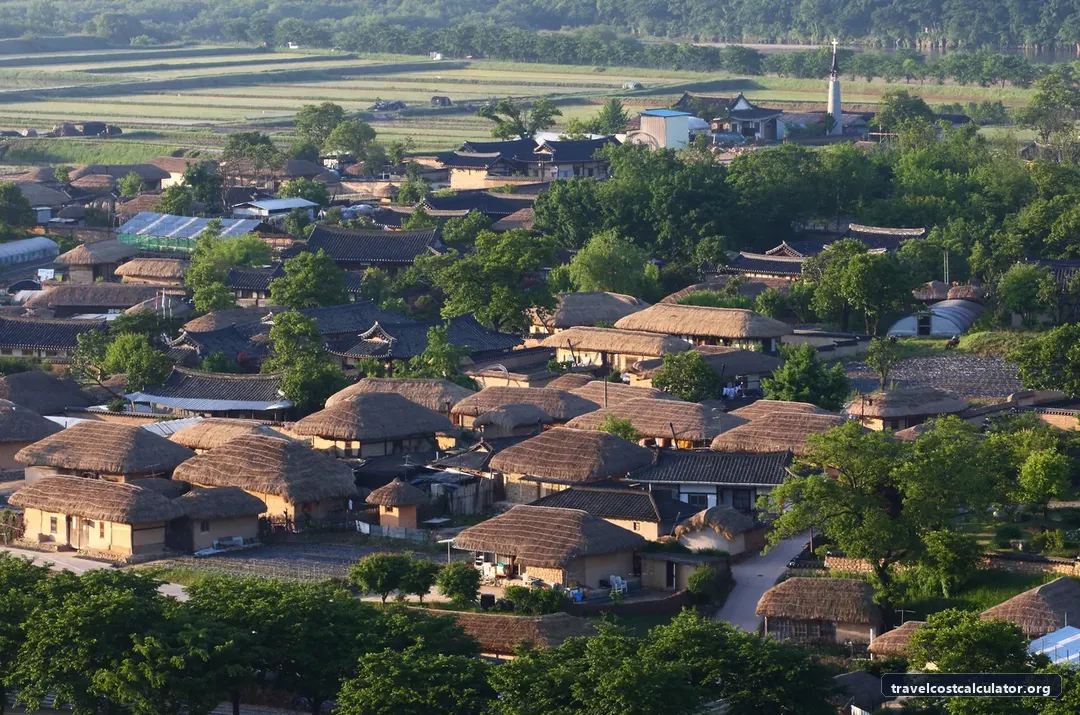
Founded in the 14th-15th centuries, Hahoe and Yangdong are seen as the two most representative historic clan villages in the Republic of Korea.
Historic Villages of Korea: Hahoe and Yangdong
🏛️ Overview & Historical Significance
Inscribed as a collective UNESCO World Heritage site in 2010, the Historic Villages of Korea: Hahoe and Yangdong represent the most well-preserved, authentic examples of Joseon Dynasty (1392–1910) historic clan villages in South Korea. Unlike artificial folk villages created for tourism, Hahoe (located in Andong, Gyeongsangbuk-do) and Yangdong (located in Gyeongju Travel Budget, Gyeongsangbuk-do) remain vibrant, living communities where direct descendants of ancient aristocratic families still reside, practicing centuries-old Confucian traditions, ancestor worship rituals, and traditional artisan crafts.
The historical significance of Hahoe and Yangdong rests upon three structural pillars: Confucian socio-spatial hierarchy, traditional Korean geomancy (Pungsu-jiri), and structural architecture integrated with the natural landscape.
1. Structural Harmony & Geomancy (Pungsu-jiri)
Both villages were intentionally sited according to strict Neo-Confucian geomantic principles. Hahoe, established by the Pungsan Ryu clan in the 14th century, derives its name ("Ha" meaning river, "Hoe" meaning turn/swirl) from its position inside a dramatic S-shaped bend of the Nakdong River. The landscape is shaped like a lotus flower floating on water, believed to bestow peace and scholarly success upon its inhabitants.
Yangdong, founded in the 15th century through the harmony of the Wolseong Son and Yeogang Lee clans, is built among steep ridges and valleys that form the Chinese character for "blessing" or "abundance" (勿). Houses are carefully positioned to face south or east toward surrounding mountain peaks, maximizing natural light, air circulation, and harmony with surrounding pine forests and stream channels.
2. Architecture of Class Distinction
The layout of both villages clearly reflects the strict rigid social strata of the Joseon Era. The noble ruling class (yangban) built imposing tile-roofed residences (giwajip) on elevated ridges, hillsides, or commanding positions. Meanwhile, tenant farmers and servants lived in modest straw-thatched cottages (chogajip) clustered lower down the slopes or positioned symmetrically around the nobility's estates. Walking through these villages offers an extraordinary physical map of 16th- to 18th-century Korean feudal society.
3. Intangible Living Heritage
Beyond the physical timber buildings, ancestral shrines, and pavilion structures (such as Buyongdae Cliff and Mucheomdang), these villages preserve invaluable intangible cultural heritage. Hahoe is world-famous for the Hahoe Byeolsingut Talnori (Mask Dance Drama), an ancient shamanistic ritual performed by commoners to satirize the corrupt upper classes, recognized independently by UNESCO on the Representative List of Intangible Cultural Heritage of Humanity.
---🎟️ Entrance Fees, Opening Hours & Ticket Booking Tips
Visiting Hahoe and Yangdong requires purchasing separate tickets at each location, as they are separated by approximately 90 kilometers. In 2026, admission fees remain exceptionally affordable, directly supporting village heritage preservation funds.
1. Hahoe Folk Village (Andong)
-
✦
Adult Ticket (Ages 19–64): ₩5,000 (~$3.80 USD)
-
✦
Youth / Student Ticket (Ages 13–18): ₩2,500 (~$1.90 USD)
-
✦
Child Ticket (Ages 7–12): ₩1,500 (~$1.15 USD)
-
✦
Seniors (Ages 65+): Free entry (valid passport or ID required)
-
✦
Shuttle Bus: Included free with your admission ticket (transports visitors from the main ticket booth/museum complex to the actual historical village entrance, ~1.2 km).
Operating Hours (Hahoe): Open 365 days a year.
-
✦
Summer Season (March – October): 09:00 – 18:00 (Ticket sales end at 17:30)
-
✦
Winter Season (November – February): 09:00 – 17:00 (Ticket sales end at 16:30)
2. Yangdong Folk Village (Gyeongju)
-
✦
Adult Ticket (Ages 19–64): ₩4,000 (~$3.00 USD)
-
✦
Youth / Student Ticket (Ages 13–18): ₩2,000 (~$1.50 USD)
-
✦
Child Ticket (Ages 7–12): ₩1,500 (~$1.15 USD)
-
✦
Seniors (Ages 65+): Free entry
Operating Hours (Yangdong): Open daily.
-
✦
Summer Season (April – September): 09:00 – 19:00
-
✦
Winter Season (October – March): 09:00 – 18:00
Pro Booking & Payment Tips for 2026
-
✦
Advance Tickets: Advanced online reservations are generally unnecessary for individual travelers; tickets can easily be purchased at the physical automated kiosks or ticket windows using international credit/debit cards or local Korean mobile pay systems (KakaoPay, Naver Pay, WOWPASS).
-
✦
Cash Preparation: While ticket counters take credit cards, bring ₩10,000 to ₩20,000 in cash ($8–$15 USD) for small vendor purchases, traditional snack stalls, or the wooden ferry boat to Buyongdae Cliff in Hahoe (₩5,000 round-trip cash only).
-
✦
Integrated Gyeongju Pass: If exploring multiple sites in Gyeongju, check for the Gyeongju Tour Pass online, which bundles Yangdong Village with Daereungwon Tomb Complex and Donggung Palace at a discounted rate.
🚌 How to Get There & Local Transit Costs
Because Hahoe and Yangdong are located in different regions of Gyeongsangbuk-do, navigating to them requires reaching their respective hub cities: Andong for Hahoe Village, and Gyeongju for Yangdong Village.
Part A: Reaching Hahoe Village (via Andong)
Step 1: Seoul Travel Budget/Busan Travel Budget to Andong Station
-
✦
From Seoul (Cheongnyangni Station): Board the high-speed KTX-Eum train directly to Andong Station. Travel time is approximately 2 hours. 2026 Ticket Price: ₩25,100 (~$19.00 USD) one-way.
-
✦
From Busan (Namsan Bus Terminal): Take an intercity express bus to Andong Bus Terminal (approx. 2 hours 20 minutes, ₩16,500 / ~$12.50 USD).
Step 2: Andong Station/Terminal to Hahoe Village
Andong Train Station and the Intercity Bus Terminal are co-located at the same transit hub outside the central city.
-
✦
By Express Bus 210 (Recommended): Depart from Bus Stop 6 directly outside Andong Station. Bus 210 runs approximately every 30–40 minutes directly to the Hahoe Ticket Office. Travel time: ~40 minutes. 2026 Bus Fare: ₩1,500 (~$1.15 USD) using a standard T-Money or credit transit card.
-
✦
By Taxi: A direct taxi from Andong Station to Hahoe Village takes around 25 minutes and costs approximately ₩25,000–₩28,000 (~$19.00–$21.50 USD). KakaoTaxi app is fully operational.
Part B: Reaching Yangdong Village (via Gyeongju)
Step 1: Seoul/Busan to Gyeongju
-
✦
From Seoul Station to Singyeongju Station: Take the KTX (approx. 2 hours 10 minutes, ₩49,300 / ~$37.50 USD).
-
✦
From Busan Station to Singyeongju Station: Take the KTX (approx. 35 minutes, ₩11,000 / ~$8.30 USD).
Step 2: Gyeongju City / Station to Yangdong Village
-
✦
By Local Bus (Bus 200, 201, 203, 205, 206): From Gyeongju Intercity Bus Terminal or central Gyeongju, board Bus 203 or 200 bound for Yangdong Village. Bus 203 drops visitors directly at the village entrance. Travel time: ~40 minutes. 2026 Fare: ₩1,500 (~$1.15 USD).
-
✦
By Taxi: From central Gyeongju or Singyeongju KTX station, a taxi ride takes 25–35 minutes and costs ₩22,000–₩30,000 (~$16.50–$22.50 USD).
Inter-Village Transport (Traveling Between Hahoe & Yangdong)
If visiting both UNESCO sites in a single itinerary, travel from Andong to Gyeongju via the Mugunghwa/Taehwa regional train lines (approx. 1 hour 40 minutes, ~₩8,500 / $6.50 USD). Attempting to visit both villages on the same calendar day via public transit is not recommended; allocate at least one dedicated half-day for each village.
---📸 Best Photography Spots & Insider Visit Hacks
Capturing the aesthetic charm of traditional Hanok architecture framed by mountains, rivers, and seasonal greenery requires planning your vantage points and timing.
Top Photography Locations
1. Buyongdae Cliff (Hahoe Village)
Located on the northern side of the Nakdong River, this 64-meter-high cliff offers an unrivaled panoramic overhead view of Hahoe Village. You can clearly see how the S-shaped river wraps completely around the tiled and thatched roofs.
Access Hack: Walk down to the sandy riverbank in Hahoe and take the small traditional wooden motorboat across the river (₩5,000 round trip, cash only). From the landing site, a 15-minute pine-shaded woodland walk leads to the cliff summit.
2. The Pine Tree Forest of Mansaedang & Wonjin-jae (Hahoe Village)
Positioned along the river bend inside Hahoe, the 400-year-old pine forest (Mansongjeong) offers striking shadows, rich green foliage, and classic framing of historical wooden structures set against sandy riverbanks.
3. Hyangdan & Mucheomdang Estates (Yangdong Village)
Hyangdan is an extraordinary 99-room ancestral home situated on the highest hill ridge of Yangdong. Photographing looking downhill from the path outside Hyangdan reveals a sea of undulating black clay tile roofs contrasting against yellow straw-thatched roofs below.
Insider Visit Hacks for 2026
-
✦
Attend the Free Mask Dance Performance (Hahoe): Do not miss the authentic Hahoe Byeolsingut Talnori mask dance drama. Performances occur at the designated outdoor theater near the entrance ticket market:
- Schedule: Every Tuesday through Sunday at 14:00 (March – November). Free admission with your village entrance ticket.
- Spring (April – May): Cherry blossoms frame the entrance path to Hahoe along the Nakdong River wall; Yangdong’s wild wildflowers bloom brightly across hillside paths.
🏨 Nearby Accommodation & Daily Budget Allocation
To experience the tranquil atmosphere after daytime tourists depart, spending an evening in a traditional Hanok stay (historic timber guesthouse with underfloor heating, known as ondol) inside or adjacent to the villages is highly recommended.
Accommodation Options
1. Traditional Village Hanok Stays (Immersive Heritage)
-
✦
Rakkojae Andong (Hahoe Village): A luxury, authentic Hanok hotel inside Hahoe featuring natural mud rooms, private garden courtyards, and traditional tea ceremonies. 2026 Rates: ₩220,000 – ₩450,000 per night ($165 – $340 USD).
-
✦
Local Family Hanok Guesthouses (Hahoe & Yangdong): Smaller historic homes operated by descendant families offering authentic private room stays with shared or private en-suite bathrooms. 2026 Rates: ₩70,000 – ₩140,000 per night ($53 – $105 USD).
2. City Hotels & Guesthouses (Modern Convenience)
-
✦
Andong City Center (near station): Budget guesthouses and modern business hotels like Gotaya Guesthouse or Case Hotel. 2026 Rates: ₩45,000 – ₩95,000 per night ($34 – $72 USD).
-
✦
Gyeongju Downtown: Boutique hotel options like Lahan Select Gyeongju or traditional mid-range Hanoks near Hwangridan-gil. 2026 Rates: ₩80,000 – ₩200,000 per night ($60 – $150 USD).
Regional Dining & Specialties
Food near both sites is legendary across South Korea. Ensure you taste these regional signature dishes:
-
✦
Andong Jjimdak: Savory-sweet soy sauce braised chicken cooked with glass noodles, potatoes, carrots, and spicy dried chilies. (₩32,000–₩38,000 per massive platter for 2–3 people).
-
✦
Heotjesatbap: "Fake sacrificial meal"—an ancient scholars' dish consisting of assorted wild mountain vegetables, rice, grilled salted mackerel, and light soy sauce seasoning (₩13,000–₩16,000 per person).
-
✦
Gyeongju Ssambap: A feast of over 15 to 20 side dishes (banchan) served with grilled pork or beef and fresh green leaf wraps (₩16,000–₩22,000 per person).
Estimated Daily Budget Allocations (2026 Rates)
| Travel Style | Daily Budget (USD) | Daily Budget (KRW) | Includes |
|---|---|---|---|
| Budget / Backpacker | $45 – $65 | ₩60,000 – ₩85,000 | City guesthouse dormitory, local bus transit, village entry tickets, traditional street food & basic meals. |
| Mid-Range Explorer | $110 – $175 | ₩145,000 – ₩230,000 | Standard Hanok stay/3-star hotel, KTX high-speed rail, occasional taxis, sit-down regional feasts (Andong Jjimdak/Ssambap), souvenirs. |
| Luxury Heritage | $300 – $500+ | ₩400,000 – ₩660,000+ | Luxury boutique Hanok villa, private driver/guided charter, fine dining Korean court cuisine, private cultural workshops. |
Frequently Asked Questions
Essential visitor FAQs for Historic Villages of Korea: Hahoe and Yangdong
What is the entrance fee for Historic Villages of Korea: Hahoe and Yangdong?
How much time do you need to explore Historic Villages of Korea: Hahoe and Yangdong?
How do I get to Historic Villages of Korea: Hahoe and Yangdong from the nearest city?
📊 Heritage Quick Specs
Visiting South Korea on a Budget?
Calculate your full daily travel budget for South Korea — including hotel costs, local transport, food, and sightseeing expenses.
View South Korea Daily Travel Costs →Explore more UNESCO World Heritage Sites
🏛️ All 1,200+ Heritage Sites →