
 Canada
Historic District of Old Québec
Québec was founded by the French explorer Champlain in the early 17th century. It is the only North American city to have preserved its ramparts, together with the numerous bastions, gates and defensive works w...
Historic District of Old Québec
🏛️ Overview & Historical Significance
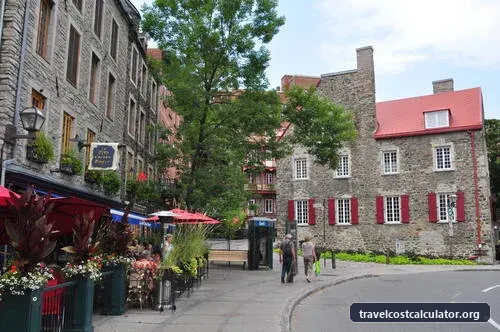
Perched high above the St. Lawrence River on the rocky headland of Cap-Diamant, the Historic District of Old Québec (Vieux-Québec) stands as a living testament to North America's colonial origins. Designated a UNESCO World Heritage Site in 1985, it holds the distinction of being the only urban ensemble north of Mexico that has preserved its ramparts, bastions, and defensive works intact. Spanning roughly 135 hectares, the historic core is divided into two distinct geological and urban tiers: the elevated Upper Town (Haute-Ville) and the coastal Lower Town (Basse-Ville).
Founded in 1608 by French explorer Samuel de Champlain as a permanent fur-trading post, Québec City served as the seat of government for New France for over 150 years. UNESCO awarded World Heritage status based on two primary criteria: its status as an exceptional example of a fortified colonial city and its pivotal role as the center from which European civilization spread across the North American continent. The district vividly illustrates two major epochs of transatlantic history:
-
✦
The French Regime (1608–1759): Visible in the layout of narrow, winding cobblestone streets, 17th-century stone masonry dwellings with steep gabled roofs, and landmark structures like Place Royale and the Monastère des Augustines.
-
✦
The British Regime (1759–1867): Following the historic 1759 Battle of the Plains of Abraham, British military engineers reinforced the defensive walls, added the star-shaped Citadelle de Québec, and introduced Georgian and Victorian architectural elements alongside classical civic monuments.
Today, dominated by the iconic turreted silhouette of Fairmont Le Château Frontenac, Old Québec seamlessly weaves four centuries of military, administrative, and cultural heritage into a vibrant, walkable European-style enclave in eastern Canada.
🎟️ Entrance Fees, Opening Hours & Ticket Booking Tips
As a historic urban district, the Historic District of Old Québec is an open public neighborhood accessible 24 hours a day, 365 days a year with zero overall entry fee. Visitors are free to wander the ramparts, stroll along Terrasse Dufferin, and explore the historic alleys of Quartier Petit Champlain completely free of charge. However, individual museums, historical monuments, and transport services within the district charge separate admission. Below are the estimated costs and operating logistics updated for 2026:
Key Attraction Pricing & Hours (2026 Estimates)
-
✦
La Citadelle de Québec & Musée Royal 22e Régiment: Adults: $24.50 CAD (~$18.00 USD) | Seniors/Students: $21.50 CAD (~$16.00 USD) | Youth (11–17): $12.00 CAD (~$9.00 USD) | Children (under 10): Free. Open daily year-round (9:00 AM – 5:00 PM summer; 10:00 AM – 4:00 PM winter). Guided tours are mandatory to access restricted military areas.
-
✦
Musée de la civilisation: Adults: $26.00 CAD (~$19.25 USD) | Young Adults (18–30): $19.00 CAD (~$14.00 USD) | Youth (6–17): $9.00 CAD (~$6.70 USD). Open Tuesday–Sunday (10:00 AM – 5:00 PM); open Mondays during summer peak.
-
✦
Funiculaire du Vieux-Québec (Upper/Lower Town Elevator): $5.00 CAD (~$3.70 USD) per single ride, per person. Cash only (CAD or USD accepted). Operates daily from 7:30 AM – 10:30 PM.
-
✦
Notre-Dame de Québec Basilica-Cathedral & Crypt: Basilica entry: Free / suggested donation ($3.00 CAD). Holy Door / Museum / Crypt access pass: $6.00 CAD (~$4.40 USD). Open daily 8:00 AM – 6:00 PM (tourist visits restricted during mass).
-
✦
Terrasse Dufferin 1884 Toboggan Slide (Dec–March): $4.50 CAD (~$3.30 USD) per slide per person. Open weather permitting during winter months.
Pro Booking & Money-Saving Tips for 2026
If you plan to visit multiple cultural institutions, purchase the official Québec City Passport (available seasonally via Québec Cité), which bundles entry to La Citadelle, Musée de la civilisation, the Observatoire de la Capitale, and local walking tours at a 20% to 40% discount. To avoid long lines during the peak summer (July–August) and the famous Carnaval de Québec (February 2026), book time-slotted entry tickets for La Citadelle and Musée de la civilisation online at least 48 hours in advance.
🚌 How to Get There & Local Transit Costs
Old Québec is located in Québec City, the capital of the province of Québec, Canada. The primary regional transit gateway is Montreal (located 250 km / 155 miles southwest) or direct arrival via Québec City Jean Lesage International Airport (YQB).
Arriving from Montreal to Old Québec
-
✦
By VIA Rail Passenger Train (Recommended): Direct trains run daily from Montreal's Gare Centrale to Québec City's Gare du Palais. Travel time is approximately 3 hours and 15 minutes. Advanced one-way economy fares range from $50.00 to $120.00 CAD (~$37.00 to $89.00 USD). Bonus: Gare du Palais is located directly at the foot of Old Québec's Lower Town, making it an easy 10-minute walk or quick taxi ride into the historic core.
-
✦
By Intercity Coach (Orléans Express): Hourly coaches run between Montreal's Gare d'autocars and Gare du Palais. Journey time: ~3.5 hours. One-way fares cost $55.00 to $75.00 CAD (~$40.00 to $55.00 USD). Onboard Wi-Fi and power outlets are included.
-
✦
By Car: Take Autoroute 20 East (Rive-Sud) or Autoroute 40 East (Rive-Nord). Driving takes roughly 3 hours. Note: Driving inside Old Québec is challenging due to narrow one-way streets and restricted zones. Parking in historic garages (e.g., SPAQ City Hall or Place D'Youville) costs $25.00 to $38.00 CAD (~$18.50 to $28.00 USD) per 24-hour period.
Getting from Québec City Airport (YQB) to Old Québec
-
✦
Public Transit (RTC Bus Route 80): The Réseau de transport de la Capitale (RTC) operates Bus Route 80 directly connecting YQB airport to downtown and the edges of Old Québec. Single fare costs $3.75 CAD (~$2.80 USD) (exact cash required or purchased via the RTC Nomad app). Ride time is approximately 45–50 minutes.
-
✦
Taxi / Uber: Taxis operate on a flat rate of $40.00 to $45.00 CAD (~$29.50 to $33.00 USD) for rides between YQB and downtown/Old Québec. Uber fares fluctuate based on demand but generally cost between $35.00 and $50.00 CAD (~$26.00 to $37.00 USD).
Navigating Within Old Québec
Old Québec is exceptionally compact and best explored entirely on foot. To travel between the Lower Town (Basse-Ville) and Upper Town (Haute-Ville), you can take the famous Breakneck Steps (Escalier Casse-Cou) for free, or pay $5.00 CAD (~$3.70 USD) for the funicular elevator. RTC local buses charge $3.75 CAD per single trip or $9.25 CAD (~$6.85 USD) for an Unlimited 1-Day Pass.
📸 Best Photography Spots & Insider Visit Hacks
With its dramatic clifftop geometry, stone fortifications, and European architecture, Old Québec is an absolute paradise for photographers. To capture stunning shots while avoiding heavy cruise-ship crowds, follow these strategic insider hacks:
Top 5 Photography Locations
-
✦
Rue du Petit-Champlain (From the Breakneck Steps): Capture the postcard-perfect vista looking down Canada's oldest commercial street framed by stone facades, hanging flower baskets (or winter fairy lights), and cobblestones. Best shot at 7:00 AM before retail shops open.
-
✦
Pierre-Duguas-De-Mons Park (Cap-Diamant Overlook): Walk up the hill from Terrasse Dufferin toward the Citadelle. This grassy vantage point offers the quintessential panoramic shot of Fairmont Le Château Frontenac towering over the St. Lawrence River.
-
✦
Place Royale & Maison Chevalier: The cradle of French America. Frame the 1688 Church of Notre-Dame-des-Victoires with the central plaza stone paving in the foreground.
-
✦
Porte Saint-Louis Travel Budget & City Ramparts: Walk along the top of the defensive walls near the gate for dramatic leading lines of historical stone fortifications contrasting with autumn foliage or winter snow.
-
✦
Traversier Québec-Lévis (The Lévis Ferry): Board the local public ferry crossing to Lévis ($4.00 CAD (~$2.95 USD) single passenger). The mid-river view provides an unbeatable wide-angle vista of the entire fortified cliffside skyline, especially stunning at sunset.
Seasonal Timing & Insider Hacks
-
✦
Avoiding Crowds: Large cruise ships dock at Port de Québec from May through October, releasing thousands of excursionists between 10:00 AM and 4:00 PM. Explore popular spots like Petit-Champlain and Place Royale early in the morning (7:00–9:00 AM) or after 5:30 PM when day-trippers disperse.
-
✦
Best Seasons to Visit:
- Summer (June to August): Pleasant weather (20°C to 26°C / 68°F to 79°F), street performers, open-air bistros, but highest accommodation rates.
-
✦
Autumn (Late September to Mid-October): Crisp air (8°C to 15°C / 46°F to 59°F) and breathtaking fall colors draping the fortifications and surrounding Laurentian mountains.
-
✦
Winter (December to February): Turns into a real-life snow globe! Temperatures range from -5°C to -18°C (23°F to 0°F). Bring heavy thermal gear to enjoy the Christmas markets, toboggan slide, and Carnaval de Québec.
🏨 Nearby Accommodation & Daily Budget Allocation
Staying directly inside the walled city provides an unforgettable historical atmosphere. Because Old Québec is highly sought-after, booking 3 to 6 months in advance is strongly advised for 2026 stays, particularly during peak summer months, autumn foliage season, and the February Winter Carnival.
Accommodation Recommendations by Tier
-
✦
Budget Traveler ($40–$140 CAD / $30–$103 USD per night):
- Auberge Internationale de Québec: The largest hostel in the historic core, located inside Haute-Ville. Clean dorm beds from ~$42 CAD (~$31 USD); private rooms from ~$125 CAD (~$92 USD).
-
✦
Monastère des Augustines: A restored 17th-century monastery offering peaceful, minimalist heritage rooms (authentic monastic style) starting around ~$130 CAD (~$96 USD), including full organic breakfast.
- Hôtel Ste-Anne: A charming boutique hotel located directly on pedestrianized Rue Sainte-Anne, steps from Château Frontenac. Clean, historic stone rooms with modern comforts.
- Fairmont Le Château Frontenac: The world's most photographed hotel. Staying here offers world-class service, lavish historic suites, and unparalleled views of the St. Lawrence River.
Daily Budget Allocations (Estimated 2026 Costs)
Plan your total daily expenditure based on these three travel profiles (costs estimated per person per day in CAD / USD):
-
✦
Backpacker / Low-Budget: $95–$135 CAD (~$70–$100 USD) per day
- Hostel dorm bed: $45 CAD
-
✦
Self-catering & casual eats (Poutine / Bakeries): $35 CAD
-
✦
Local transit & free walking tours: $10 CAD
-
✦
1 museum entry: $15–$20 CAD
- 3-star heritage hotel (shared room cost): $135 CAD
- 5-star luxury hotel stay (Fairmont / Auberge Saint-Antoine): $450–$750 CAD
Dining Recommendations near Old Québec
Do not leave Old Québec without trying traditional French-Canadian cuisine. Grab an iconic poutine at Chic Shack or Chez Ashton ($12–$18 CAD / $9–$13 USD). For classic French-Canadian comfort food like tourtière (meat pie) and pea soup inside 17th-century stone walls, book a table at Aux Anciens Canadiens or enjoy rabbit specialities on the outdoor terrace at Le Lapin Sauté in Quartier Petit Champlain ($45–$85 CAD / $33–$63 USD per person with wine).
Frequently Asked Questions
Essential visitor FAQs for Historic District of Old Québec
What is the entrance fee for Historic District of Old Québec?
How much time do you need to explore Historic District of Old Québec?
How do I get to Historic District of Old Québec from the nearest city?
📊 Heritage Quick Specs
Visiting Canada on a Budget?
Calculate your full daily travel budget for Canada — including hotel costs, local transport, food, and sightseeing expenses.
View Canada Daily Travel Costs →Explore more UNESCO World Heritage Sites
🏛️ All 1,200+ Heritage Sites →