
 Japan
Hiraizumi – Temples, Gardens and Archaeological Sites Representing the Buddhist Pure Land
Hiraizumi - Temples, Gardens and Archaeological Sites Representing the Buddhist Pure Land comprises five sites, including the sacred Mount Kinkeisan.
Hiraizumi – Temples, Gardens and Archaeological Sites Representing the Buddhist Pure Land
🏛️ Overview & Historical Significance
In the peaceful valleys of Iwate Prefecture lies Hiraizumi – Temples, Gardens and Archaeological Sites Representing the Buddhist Pure Land. Designated as a UNESCO World Heritage site in 2011, this extraordinary complex stands as a physical manifestation of Jōdo (Pure Land Buddhism), an 12th-century spiritual concept aimed at creating a paradise on earth to comfort spirits lost in battle and foster universal peace.
During the late Heian period, the Northern Fujiwara clan—led by founder Fujiwara no Kiyohira—established Hiraizumi as a rival cultural capital to Kyoto Travel Budget. Following decades of gruesome civil conflict in northern Japan (the Zenkunen and Gosannen Wars), Kiyohira sought to build an ideal Buddhist realm. The UNESCO inscription encompasses five distinct core component sites:
-
✦
Chūson-ji: The primary temple complex, home to the dazzling Konjiki-dō (Golden Hall), an exquisite structure completely covered in gold leaf and inlayed with mother-of-pearl, housing the mummified remains of the Fujiwara leaders.
-
✦
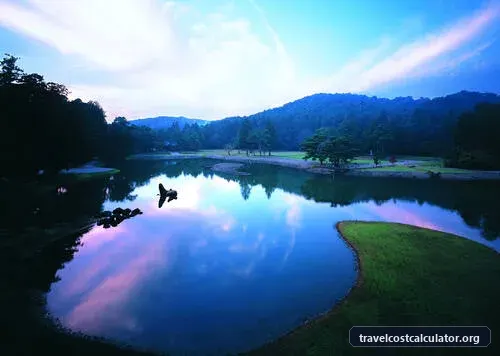
Mōtsū-ji: Renowned for its exceptionally preserved 12th-century Pure Land garden centered around the tranquil Ōizumi-ga-ike pond, representing the pure lakes of the Buddhist celestial paradise.
-
✦
Kanjizaiō-in Ato (Ruins): A former temple site constructed by the wife of Fujiwara no Motohira, featuring a classic Heian-style pond garden structure.
-
✦
Muryōkō-in Ato (Ruins): Modeled directly after the Byōdō-in in Uji, designed so that the setting sun over nearby Mt. Kinkeisan aligned perfectly with the main hall's sacred Amida statue.
-
✦
Mount Kinkeisan: A sacred conical mountain served as the spiritual axis for Hiraizumi's urban plan, where sacred sutras were buried in ritual mounds.
Today, visiting Hiraizumi offers an immersive journey into early medieval Japanese landscape architecture, sacred geography, and political history that remains unparalleled across East Asia.
🎟️ Entrance Fees, Opening Hours & Ticket Booking Tips
Hiraizumi's historic elements are distributed across the town. While walking the town grounds and archaeological parks is free, key temples and indoor museum halls charge admission fees. Below are the estimated 2026 rates and operational details:
Admission Prices (2026 Estimates)
-
✦
Chūson-ji (Konjiki-dō & Sankōzō Museum Ticket): Adults: ¥1,000 ($6.70 USD) | High School Students: ¥600 ($4.00 USD) | Junior High: ¥400 ($2.70 USD) | Children: ¥200 ($1.35 USD). Note: Access to the outer temple pathways and Tsukimi-zaka slope is completely free.
-
✦
Mōtsū-ji Temple & Garden: Adults: ¥800 ($5.35 USD) | High School Students: ¥400 ($2.70 USD) | Elementary/Junior High: ¥200 ($1.35 USD).
-
✦
Kanjizaiō-in Ato & Muryōkō-in Ato: Free entry (Open public archaeological parks).
-
✦
Mount Kinkeisan: Free entry (Open hiking trails).
Opening Hours
-
✦
Chūson-ji & Mōtsū-ji: 8:30 AM – 5:00 PM (March 1 to November 3); 8:30 AM – 4:30 PM (November 4 to February 28). Last entry is 20 minutes prior to closing.
Ticket Booking & Visitor Tips
Advance online booking is generally unnecessary for individual travelers, as tickets can be purchased directly at the entrance gates. Cash (Japanese Yen) remains recommended at smaller souvenir kiosks, though contactless credit cards, IC cards (Suica/Pasmo), and digital mobile wallets are widely accepted at ticket windows in 2026. To explore both primary pay-to-enter sites (Chūson-ji and Mōtsū-ji), set aside a total admission budget of approximately ¥1,800 ($12.00 USD) per adult.
🚌 How to Get There & Local Transit Costs
Hiraizumi is situated in southern Iwate Prefecture and is easily accessible via Japan’s bullet train network (Tōhoku Shinkansen) followed by a short local train connection or bus ride.
Step-by-Step Transport from Major Hubs
From Tokyo Travel Budget (Approx. 2.5 Hours):
-
✦
Board the Tōhoku Shinkansen (Hayabusa or Yamabiko) from Tokyo Station to Ichinoseki Station (approx. 115–125 minutes, ~¥13,500 / $90 USD).
-
✦
At Ichinoseki Station, transfer to the JR Tōhoku Main Line bound for Morioka and ride 2 stops to JR Hiraizumi Station (8 minutes, ¥200 / $1.35 USD).
-
✦
Pass Coverage: Fully covered by the Japan Rail Pass and JR East Tōhoku Area Pass.
From Sendai (Approx. 45 to 60 Minutes):
-
✦
Take the Shinkansen from Sendai Station to Ichinoseki Station (30 minutes, ~¥3,500 / $23.50 USD), then transfer to the JR Tōhoku Line to Hiraizumi (8 minutes, ¥200). Alternatively, local trains take approx. 90 minutes (~¥1,690 / $11.25 USD).
Getting Around Local Hiraizumi
-
✦
Hiraizumi Loop Bus "Runrun": Circulates from JR Hiraizumi Station to Mōtsū-ji, Chūson-ji, and other major sites every 30 minutes. Flat rate: ¥200 ($1.35 USD) per ride, or ¥500 ($3.35 USD) for a 1-Day Unlimited Pass. (Operates daily from April through November).
-
✦
Bicycle Rental: Available right outside JR Hiraizumi Station (Swallow Rentals). Standard bicycles cost ¥600 ($4.00 USD) for 2 hours or ¥1,000 ($6.70 USD) per day. E-bikes cost approx. ¥1,500 ($10.00 USD) per day—highly recommended for cycling between sites.
-
✦
Walking: Hiraizumi is compact. Mōtsū-ji is just a 7-minute flat walk from Hiraizumi Station. Chūson-ji's main entrance is roughly a 20-25 minute walk (1.6 km) from the station.
-
✦
Taxi: A taxi ride from Hiraizumi Station to Chūson-ji main gate costs around ¥1,000–¥1,300 ($6.70–$8.70 USD).
📸 Best Photography Spots & Insider Visit Hacks
Capturing the serene, spiritual essence of Pure Land Buddhism requires hitting the right spots at the right time of day.
Top Photography Angles
-
✦
Mōtsū-ji Pure Land Garden (Ōizumi-ga-ike Pond): Photograph the large lake from the south bank, looking across toward the beach stones (Suhama) and rock formations (Yarimizu). The autumn leaves reflecting on the glass-like water are breathtaking.
-
✦
Tsukimi-zaka Slope (Chūson-ji): The dramatic, steep approach lined with 300- to 400-year-old towering Japanese cedar trees (Sugi) creates an ethereal green canopy, especially under early morning mist.
-
✦
Chūson-ji Main Gate & Hondō Hall: Frame the traditional wooden gate with overhanging cherry blossoms in spring or maple leaves in autumn.
-
✦
Kanjizaiō-in Site at Sunset: Position yourself near the pond to capture the sun setting directly over Mount Kinkeisan, recreating the ancient 12th-century astronomical alignment.
Critical Photography Rules & Insider Hacks
-
✦
NO Photography inside Konjiki-dō: Photography is strictly prohibited inside the protective shelter hall housing the golden altar of Konjiki-dō. Respect the sacred rules; capture exterior architecture instead.
-
✦
Beat the Tour Buses: Large tour groups usually arrive around 10:30 AM. Arrive at Chūson-ji right when it opens at 8:30 AM to experience the sacred cedar walk in quiet solitude.
-
✦
Seasonal Highlights: Late April–Early May: Cherry blossoms around temple ponds. Mid-June: Iris Festival (Ayame Matsuri) at Mōtsū-ji with over 30,000 blooming irises. Late October–Mid-November: Peak Momiji (Autumn Foliage), offering some of northern Japan's best red and gold foliage vistas.
🏨 Nearby Accommodation & Daily Budget Allocation
Whether you choose a quick day trip from Sendai or elect to stay overnight in a traditional local Japanese inn (Ryokan), Hiraizumi caters to various travel budgets.
Recommended Accommodations
-
✦
Budget ($30 – $60 USD / night): Guesthouses near Hiraizumi Station or business hotels in neighboring Ichinoseki Station (e.g., Toyoko Inn Ichinoseki Ekimae or Route-Inn Ichinoseki), offering clean, efficient accommodation with breakfast.
-
✦
Mid-Range ($80 – $160 USD / night): Hiraizumi Hotel Musashibo—located near Mōtsū-ji, offering comfortable western and Japanese-style rooms with hot spring (onsen) baths and authentic regional dinners.
-
✦
Luxury / Ryokan ($250 – $500+ USD / night): Kanjyuku Shizuka or premium Onsen Ryokan nestled in the surrounding valleys of Ichinoseki / Kanagasaki, featuring private open-air baths (rotenburo) and high-end Kaiseki dining.
Local Culinary Highlights & Costs
-
✦
Wanko Soba Experience: A famous Iwate specialty where servers continuously refill tiny bowls of buckwheat noodles until you put the lid on your bowl. Try it at Bashō-an near Chūson-ji (~¥2,200–¥3,500 / $15–$23 USD).
-
✦
Maesawa Beef: High-grade local A5 Wagyu beef from nearby Maesawa. Lunch sets or steak bowls range from ~¥3,500 to ¥8,000 ($23 to $53 USD).
Estimated Daily Budget Breakdown (Per Person, 2026 Rates)
-
✦
Budget Backpacker: ~$55 – $75 USD (¥8,200 – ¥11,200)
- Transit (Local train/bus): $5 USD
-
✦
Admissions (Chūson-ji & Mōtsū-ji): $12 USD
-
✦
Meals (Soba noodles & convenience store treats): $20 USD
-
✦
Accommodation (Budget hostel/hotel in Ichinoseki): $38 USD
- Transit (Shinkansen segment + E-bike rental): $40 USD
- Transit (Reserved Shinkansen + Private Taxi tours): $120 USD
Frequently Asked Questions
Essential visitor FAQs for Hiraizumi – Temples, Gardens and Archaeological Sites Representing the Buddhist Pure Land
What is the entrance fee for Hiraizumi – Temples, Gardens and Archaeological Sites Representing the Buddhist Pure Land?
How much time do you need to explore Hiraizumi – Temples, Gardens and Archaeological Sites Representing the Buddhist Pure Land?
How do I get to Hiraizumi – Temples, Gardens and Archaeological Sites Representing the Buddhist Pure Land from the nearest city?
📊 Heritage Quick Specs
Visiting Japan on a Budget?
Calculate your full daily travel budget for Japan — including hotel costs, local transport, food, and sightseeing expenses.
View Japan Daily Travel Costs →Explore more UNESCO World Heritage Sites
🏛️ All 1,200+ Heritage Sites →