
 Sweden
High Coast / Kvarken Archipelago
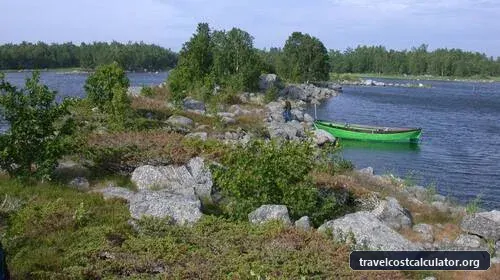
The Kvarken Archipelago (Finland) and the High Coast (Sweden) are situated in the Gulf of Bothnia, a northern extension of the Baltic Sea.
High Coast / Kvarken Archipelago
🏛️ Overview & Historical Significance
Stretching along the western coast of the Gulf of Bothnia in Sweden’s Västernorrland region, the High Coast (Höga Kusten)—together with its Finnish counterpart, the Kvarken Archipelago—represents one of the world's most astonishing geological open-air museums. Inscribed as a UNESCO World Heritage site in 2000 (and expanded in 2006 to form a transboundary site with Finland), this region was recognized primarily for its extraordinary role in understanding isostatic land uplift—a post-glacial phenomenon where the Earth's crust rebounds after the removal of massive ice sheets.
During the last Ice Age (the Weichselian glaciation), a sheet of ice up to three kilometers thick weighed heavily on the Scandinavian landmass. When the ice finally retreated roughly 10,500 years ago, the land began to spring back. Nowhere on Earth has this post-glacial rebound been recorded higher than right here: the land has risen an astonishing 285 meters (935 feet) above sea level since the glaciers melted, and it continues to rise at a rate of approximately 8 to 10 millimeters per year. Islands merge into peninsulas, bays turn into lakes, and ancient shorelines now sit high up on forested mountain peaks.
Beyond its geological prestige, the High Coast is a dramatic landscape of steep red Nordingrå granite cliffs, dense boreal wilderness, deep fjords, and cobblestone field terraces (klapperfält) formed by prehistoric ocean waves. For travelers in 2026, visiting Höga Kusten offers a rare opportunity to literally walk on land that was underwater only a few centuries ago, surrounded by rich Swedish coastal heritage, quaint red-timbered fishing villages, and unmatched hiking trails.
🎟️ Entrance Fees, Opening Hours & Ticket Booking Tips
One of the greatest benefits of traveling in Sweden is the country's constitutional right to public access (Allemansrätten, or the "Right to Roam"). Accessing the landscape, national parks, and public trails across the High Coast is completely free. However, specific transport, museums, cable cars, and guided adventures carry individual service fees.
2026 Estimated Costs & Key Attraction Pricing
-
✦
Skuleskogen National Park & Trailhead Access: Free year-round, 24/7.
-
✦
Naturum Höga Kusten (Visitor Center at Skuleberget): Free admission. Exhibits detailing the land uplift are open daily from May through October (10:00 AM – 5:00 PM peak season; reduced hours in shoulder seasons).
-
✦
Skuleberget Chairlift (Linbana): 180 SEK (~$17 USD) for an adult return ticket; 100 SEK (~$9.50 USD) for children. Operates June to September.
-
✦
Via Ferrata Skuleberget (Climbing Trails): Equipment rental and pass cost approximately 380–580 SEK (~$36–$55 USD) per person, depending on the route difficulty (Yellow, Blue, Red, or Black).
-
✦
Island Ferries (M/S Ulvön to Ulvön Island from Ullånger or Köpmanholmen): Round-trip adult fare is approximately 220–290 SEK (~$21–$28 USD). Book tickets online during peak July dates via High Coast Ferry operators.
Pro Visitor Tips for 2026
-
✦
Book Cable Car and Ferries Ahead: During peak Swedish summer holiday season (mid-July to early August), ferry crossings to Ulvön and Trysunda sell out. Reserve your seats at least 3–5 days in advance online.
-
✦
Digital Trail Passes: While national park trails are free, download offline maps via the Höga Kusten App or Naturkartan before heading out, as cellular signal can fluctuate inside deep canyons like Slåttdalssvackan.
🚌 How to Get There & Local Transit Costs
The High Coast is located in northern Sweden, positioned between the regional cities of Härnösand (to the south) and Örnsköldsvik (to the north). Sundsvall serves as the primary regional transport hub south of the region.
Step-by-Step Transit Options
1. By Train (SJ & Vy Tåg)
High-speed SJ trains run daily from Stockholm Travel Budget Central Station directly to Härnösand or Örnsköldsvik.
-
✦
Travel Time: ~4.5 to 5 hours from Stockholm.
-
✦
2026 Cost: One-way ticket ranges from 380 SEK to 850 SEK (~$36–$81 USD), depending on how early you book. Early bird tickets open 90 days in advance on the official SJ website.
2. By Regional Bus (Din Tur)
From the main train stations in Härnösand or Örnsköldsvik, the public express bus Line 100 operates along the E4 highway through the heart of the High Coast, stopping near key hubs like Ullånger, Docksta, and Skuleberget.
-
✦
Single Bus Fare: ~45–90 SEK (~$4.30–$8.50 USD). Paying via contactless card or the Din Tur mobile app is standard—cash is not accepted on buses.
-
✦
Världsarvsbussen (Summer World Heritage Bus): During July and August, a dedicated summer shuttle links local villages, Skuleskogen National Park entrances (Entré Syd and Entré Väst), and Mount Skuleberget. Fares are roughly 35 SEK (~$3.30 USD) per leg.
3. By Car Rental (Recommended for Full Flexibility)
Renting a vehicle gives you total freedom to reach isolated coastal lookouts, ferry docks, and trailheads. Car rentals are readily available at Örnsköldsvik Airport (OER), Sundsvall-Timrå Airport (SDL), or at the central train stations.
-
✦
2026 Rental Cost: ~550–950 SEK (~$52–$90 USD) per day for a standard compact vehicle.
-
✦
Driving Note: The European route E4 crosses directly through the region and over the iconic High Coast Bridge (Höga Kusten-bron). Driving conditions are excellent, but watch out for reindeer and moose crossing forest roads, especially at dawn and dusk.
📸 Best Photography Spots & Insider Visit Hacks
Must-Capture Photography Locations
-
✦
Slåttdalsberget Summit & Slåttdalssvackan: The iconic image of the High Coast. The colossal red-granite ravine (Slåttdalssvackan) splits the mountain. *Note for 2026:* To protect the canyon's fragile geology from erosion, walking directly through the bottom of the gorge is restricted; however, designated wooden boardwalks along the upper ridges of Slåttdalsberget offer even more breathtaking panoramic shots of the Baltic Sea island archipelago.
-
✦
Skuleberget Peak Lookout: Offers an unobstructed, high-altitude view over lakes, deep forests, and the indented coastline. Accessible by foot climb, Via Ferrata, or chairlift. Early morning light eliminates glare over the sea.
-
✦
Höga Kusten-bron (The High Coast Bridge): A majestic suspension bridge spanning the Ångermanälven river mouth. Capture it from the specialized lookout point at Hotell Höga Kusten during blue hour or twilight.
-
✦
Trysunda Fishing Village: Often voted Sweden’s most beautiful island, Trysunda features a horseshoe-shaped harbor surrounded by preserved red timber boathouses (sjöbodar) reflected in serene mirror-like waters.
Insider Visit Hacks
-
✦
Seasonal Timing: Visit from late June to mid-August for the Midnight Sun effect (up to 20 hours of daylight) and warm hiking conditions. Alternatively, visit in mid-to-late September to capture brilliant golden birch autumn foliage without summer tourist crowds.
-
✦
Avoid Trail Crowds: Skuleskogen National Park’s South Entrance (Entré Syd) gets busy around midday. Start hikes by 7:30 AM or enter via Entré Väst (West Entrance) for a quieter approach through ancient high-altitude forests.
-
✦
Pack Proper Footwear: The land uplift landscape means hiking involves walking over rounded coastal cobblestone terraces far inland. Sturdy, ankle-supporting waterproof boots are essential.
🏨 Nearby Accommodation & Daily Budget Allocation
The High Coast caters to all styles of travel, from wild bush camping under Sweden's right-to-roam laws to boutique heritage hotels overlooking fjords.
Accommodation Options
-
✦
Budget / Camping:
- Wild Camping: Free in Skuleskogen National Park at designated wilderness campsites equipped with fire pits and dry toilets.
-
✦
Hostels & Cabins: FriluftsByn (at the foot of Skuleberget) offers budget cabins and hostel beds starting at ~350–700 SEK (~$33–$66 USD) per night.
- Hotell Höga Kusten: Situated right at the foot of the High Coast Bridge with sweeping fjord views. Standard double rooms run ~1,400–2,100 SEK (~$133–$200 USD) per night including a full Scandinavian breakfast buffet.
- Boutique guesthouses on Ulvön Island (e.g., Ulvö Hotell) provide authentic island immersion with sea views (~1,800–2,800 SEK / ~$170–$265 USD per night).
Food & Dining Costs
Sampling regional delicacies is an integral part of the experience. Try fresh Baltic herring, arctic char, local berries, and—for the brave—the infamous local specialty, surströmming (fermented sour herring), which originated on Ulvön island.
-
✦
Traditional Fika (Coffee & Cinnamon Bun): 55–85 SEK (~$5–$8 USD).
-
✦
Casual Lunch (Dagens rätt): 130–170 SEK (~$12.50–$16 USD).
-
✦
Three-Course Fjord-Side Dinner: 450–750 SEK (~$43–$71 USD) per person excluding alcohol.
Estimated Daily Budget Breakdowns (2026)
Backpacker / Low-Budget Traveler: $45 – $75 USD (470 – 780 SEK) per day
Includes: Wild camping/hostel bed, grocery store self-catering, public transport/biking, and free trail hiking.
Mid-Range Traveler: $160 – $270 USD (1,680 – 2,830 SEK) per day
Includes: Comfortable 3-star hotel/cabin, rental car Split Travel Budget between two people, chairlift tickets, ferry trips, and dining out at local restaurants.
Frequently Asked Questions
Essential visitor FAQs for High Coast / Kvarken Archipelago
What is the entrance fee for High Coast / Kvarken Archipelago?
How much time do you need to explore High Coast / Kvarken Archipelago?
How do I get to High Coast / Kvarken Archipelago from the nearest city?
📊 Heritage Quick Specs
Visiting Sweden on a Budget?
Calculate your full daily travel budget for Sweden — including hotel costs, local transport, food, and sightseeing expenses.
View Sweden Daily Travel Costs →Explore more UNESCO World Heritage Sites
🏛️ All 1,200+ Heritage Sites →