
 Turkey
Hierapolis-Pamukkale
Deriving from springs in a cliff almost 200 m high overlooking the plain, calcite-laden waters have created at Pamukkale (Cotton Palace) an unreal landscape, made up of mineral forests, petrified waterfalls and a series of terraced basins.
Hierapolis-Pamukkale
🏛️ Overview & Historical Significance
Rising like a gleaming mountain of snow above the Anatolian plains, Hierapolis-Pamukkale is one of the world's most spectacular dual-heritage sites. Designated a UNESCO World Heritage site in 1988 under both natural and cultural criteria, this ancient spectacle seamlessly blends geological wonder with classical Antiquity. The name Pamukkale translates to "Cotton Castle" in Turkish, a fitting moniker for the cascading terraces of dazzling white travertine formed by mineral-rich thermal waters flowing down a 200-meter cliff side.
Geologically, subterranean volcanic activity heats groundwater to temperatures between 35°C and 100°C (95°F–212°F). As these supersaturated waters emerge and trickle over the plateau edge, calcium carbonate precipitates out, solidifying into brilliant white calcite basins, stalactites, and petrified waterfalls. This natural spa attraction has drawn travelers seeking healing for over two millennia.
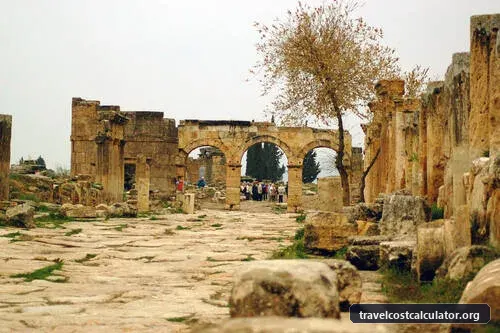
In the late 2nd century BC, the Attalid kings of Pergamum established the thermal spa town of Hierapolis ("Holy City") atop the cliff. It later blossomed under Roman and Byzantine rule into a vibrant metropolis, complete with grand baths, broad avenues, and a massive necropolis. Early Christians revered the city as the martyrdom site of Saint Philip the Apostle in 80 AD. Today, visitors can walk through centuries of history: bathing among submerged Roman columns in the Antique Pool, admiring one of the Mediterranean's best-preserved Roman amphitheaters, and standing at the threshold of the Plutonium—the ancient shrine believed to be the portal to the Underworld.
🎟️ Entrance Fees, Opening Hours & Ticket Booking Tips
Turkey’s Ministry of Culture and Tourism manages the site under unified pricing. In 2026, admission fees are pegged to Euro equivalents to stabilize inflation impacts for international travelers.
-
✦
Combined Site Entrance Ticket (Pamukkale Travertines + Hierapolis Ruins): €30 EUR / ~$33 USD (approx. 1,300 TRY). This pass includes access to the travertine walking trails, the entire Hierapolis archaeological complex, and the Hierapolis Archaeology Museum.
-
✦
Antique Pool (Cleopatra's Pool) Swimming Fee: €14 EUR / ~$15 USD (approx. 550 TRY). Note: Walking around the perimeter of the pool garden and taking photos is free; the fee applies only if you enter the thermal swimming waters.
-
✦
Turkey Museum Pass Aegean / Mediterranean: Fully valid. If you are exploring multiple sites along the Turkish coast (e.g., Ephesus, Didyma, Aphrodisias), purchasing an official 15-day Regional Museum Pass (approx. €95 EUR / $103 USD) offers significant cost savings.
Opening Hours (2026 Schedule)
-
✦
High Season (April 1 – October 31): 06:30 to 20:00. The site remains open for sunset viewing along the travertine ridge until roughly 20:30.
-
✦
Low Season (November 1 – March 31): 08:00 to 18:00.
Pro Booking & Visit Hacks
To avoid massive tour group queues arriving from coastal resorts (Antalya Travel Budget, Marmaris, and Bodrum) between 10:30 AM and 15:00 PM, buy your electronic ticket in advance via the official Turkish Culture Ministry portal (muze.gov.tr). Plan to enter right at 06:30 AM through the South Gate. This grants you two hours of quiet solitude on the travertines before peak sunlight and tour crowds hit.
🚌 How to Get There & Local Transit Costs
The main transport gateway to Pamukkale is Denizli, an industrial transit city located 20 kilometers (12 miles) south of the travertine cliffs.
1. Arriving by Air
Fly into Denizli Çardak Airport (DNZ), which receives daily domestic flights from Istanbul Travel Budget Airport (IST) and Sabiha Gökçen Airport (SAW).
-
✦
Airport Shuttle (Baytur Shuttle): Timed with arriving domestic flights, carrying passengers directly to Denizli Otogar (main bus terminal) or Pamukkale village for approximately $8–$10 USD (250–320 TRY) per seat. Journey time: ~60 minutes.
-
✦
Private Airport Taxi/Transfer: Fixed rates to Pamukkale village average $35–$45 USD per car.
2. Arriving by Bus or Train
-
✦
Intercity Buses: High-frequency bus lines (such as Metro, Kamil Koç, and Pamukkale Turizm) connect Denizli Otogar with Istanbul (9–10 hours, ~$20–$28 USD), Izmir (4 hours, ~$10–$14 USD), and Antalya (3.5 hours, ~$9–$12 USD).
-
✦
Train from Izmir / Selçuk (Ephesus): The regional Turkish State Railways (TCDD) train runs daily from Izmir Basmane Station through Selçuk to Denizli. Tickets are highly economical at around $5.50 USD (190 TRY) one-way. Journey time is roughly 3 hours and 45 minutes.
3. Local Transit: Denizli to Pamukkale
From the lower level (Platform/Bay 76) of the Denizli Otogar, hop on a regional mini-bus (Dolmuş). They run every 15 to 20 minutes to Pamukkale village:
-
✦
Dolmuş Fare: ~$1.50 USD (50 TRY) per person; journey takes 25 minutes.
-
✦
Taxi from Denizli Center: Expect to pay $15–$20 USD (500–650 TRY) one way.
Selecting Your Entrance Gate
Pamukkale has three main access points:
-
✦
Town Gate (Lower Gate): Situated at the base of the village. Ideal if you want to walk uphill barefoot along the designated travertine trail.
-
✦
South Gate: The best entry for independent morning visitors arriving by taxi/shuttle. It drops you right next to the Roman Theater and Cleopatra's Pool.
-
✦
North Gate: Drops visitors off at the expansive Necropolis. Requires a 2-kilometer walk past ancient tombs before reaching the travertines (primarily used by large tour buses).
📸 Best Photography Spots & Insider Visit Hacks
Pamukkale’s stark white travertines create intense glare and high contrast. Mastering your visit requires the right light and smart preparation.
Top Photography Angles
-
✦
The Travertine Terrace Ridges at Sunset: As the sun dips below the horizon, the white calcium terraces act as natural mirrors, reflecting vibrant hues of rose pink, gold, and deep violet. Position yourself on the upper wooden boardwalk near the South entrance.
-
✦
Hierapolis Roman Amphitheater: Built during the reigns of Hadrian and Septimius Severus, this 12,000-seat theater features a restored stage facade. Photograph it during early morning golden hour (07:00–08:30 AM) when light illuminates the marble bas-reliefs.
-
✦
Antique Pool (Cleopatra's Pool): Capture reflection shots of fluted Roman Ionic columns resting on the turquoise pool floor beneath submerged oleander trees.
-
✦
Hierapolis Necropolis: Spanning over 2 kilometers, featuring more than 1,200 ancient sarcophagi, tumuli, and house-shaped tombs set against rugged mountain backdrops.
Crucial Insider Hacks
-
✦
The Shoe Rule: To prevent damage and discoloration of the white calcite, footwear of any kind (including water shoes and flip-flops) is strictly forbidden on the travertine terraces. You must walk barefoot along designated channels. Bring a lightweight backpack with a shoe bag to carry your shoes, along with a small towel to dry your feet.
-
✦
Glare Protection: The brilliant white travertine under the Mediterranean sun reflects high UV radiation. UV-blocking polarized sunglasses and broad-spectrum sunscreen are essential.
-
✦
Swimwear Ready: Wear your swimsuit under light summer clothing. Public changing cubicles are located around Cleopatra's Pool, but lines can be long.
-
✦
Karahayıt Red Travertines Add-On: Located just 5 kilometers north of Pamukkale, the village of Karahayıt features natural thermal springs rich in iron oxide, creating striking red, yellow, and green travertine pools. Entry to Karahayıt's public park is only around $2 USD and receives far fewer crowds.
🏨 Nearby Accommodation & Daily Budget Allocation
Travelers generally choose between staying directly in Pamukkale Village (walkable access to the site) or staying in Denizli City (commercial hub with business hotels and transportation links).
Recommended Accommodations
-
✦
Budget (Pamukkale Village): Family-run guesthouses and pensions (e.g., Bellamaritimo Hotel, Melrose House Hotel). Expect clean rooms, outdoor swimming pools, and traditional Turkish breakfasts for $35–$60 USD per night.
-
✦
Mid-Range (Pamukkale / Karahayıt): Thermal spa hotels featuring private indoor hot springs (e.g., Venus Suite Hotel, Pamthermal Hotel). $75–$130 USD per night.
-
✦
Luxury Thermal Resorts (Karahayıt): 5-star thermal spring resorts (e.g., Doğa Thermal Health & Spa). Includes full thermal bath access and spa packages. $170–$280 USD per night.
Daily Budget Allocation (2026 Estimates)
To help you budget your trip, here are realistic daily expenditure profiles per person:
-
✦
Backpacker / Budget Tier ($55 – $75 USD / day):
- Stay: Budget Pension dorm/private room ($25–$35)
-
✦
Meals: Local Turkish pide, gözleme, and street kebabs ($12–$16)
-
✦
Transit: Local dolmuş buses ($3)
-
✦
Attractions: Main site ticket (€30 (~$33)) divided over stay
- Stay: 3-star Boutique Thermal Hotel ($45–$65 per person based on double occupancy)
- Stay: 5-star Thermal Spa Resort ($120–$160 per person)
Frequently Asked Questions
Essential visitor FAQs for Hierapolis-Pamukkale
What is the entrance fee for Hierapolis-Pamukkale in 2026?
How much time do you need to explore Hierapolis-Pamukkale?
How do I get to Hierapolis-Pamukkale from Denizli?
📊 Heritage Quick Specs
Visiting Turkey on a Budget?
Calculate your full daily travel budget for Turkey — including hotel costs, local transport, food, and sightseeing expenses.
View Turkey Daily Travel Costs →Explore more UNESCO World Heritage Sites
🏛️ All 1,200+ Heritage Sites →