
 United States
Great Smoky Mountains National Park
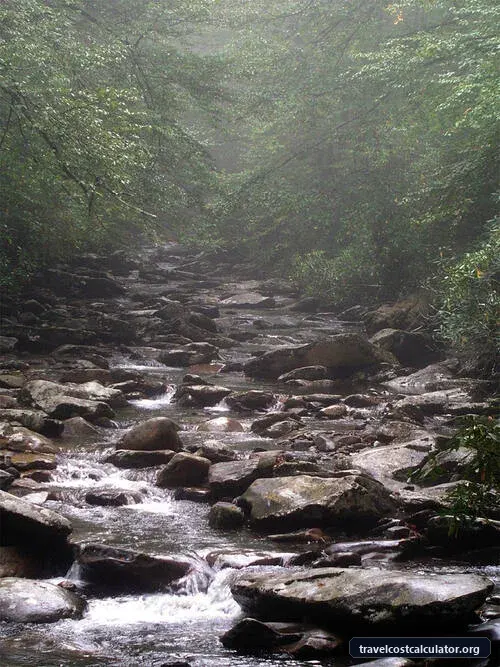
Stretching over more than 200,000 ha, this exceptionally beautiful park is home to more than 3,500 plant species, including almost as many trees (130 natural species) as in all of Europe.
Great Smoky Mountains National Park
🏛️ Overview & Historical Significance
Inscribed as a UNESCO World Heritage Site in 1983, the Great Smoky Mountains National Park represents one of the most ecologically rich and geologically ancient temperate ecosystems on Planet Earth. Straddling the rugged ridgeline between eastern Tennessee and western North Carolina, this 522,427-acre sanctuary contains over 19,000 documented species—with scientists estimating another 80,000 undiscovered species dwelling within its mist-shrouded valleys.
UNESCO selected the park based on two primary criteria: its extraordinary biodiversity and its status as a surviving refuge of Paleozoic-era mountain building. Having escaped Pleistocene glaciation, the Smokies served as a evolutionary cradle where flora and fauna flourished undisturbed for millions of years. Today, it preserves the world’s greatest diversity of salamanders, over 1,400 flowering plant species, and vast stands of old-growth red spruce and Fraser fir forest reminiscent of ice-age conditions.
Beyond its ecological supremacy, the landscape holds deep human history. For thousands of years, it served as the ancestral homeland of the Cherokee Nation, who revered the peak of Kuwohi (formerly Clingmans Dome) as a place of spiritual renewal. In the early 20th century, local communities and visionaries—funded in part by a crucial $5 million matching donation from John D. Rockefeller Jr.—bought out logging operations and private homesteads to establish the national park in 1934. Unlike western parks carved out of public lands, the Smokies were salvaged from private ownership, making its preservation a triumph of American conservation history.
🎟️ Entrance Fees, Opening Hours & Ticket Booking Tips
Unlike almost every other major US national park, Great Smoky Mountains National Park charges NO general entrance fee. This free entry is mandated by the historic deeds that transferred the state-owned Newfound Gap Road (US-441) to the federal government under the condition that no tolls or entry fees ever be levied.
However, visitors must budget for the mandatory parking fee system, fully enforced under the park's "Park It Forward" program:
-
✦
General Park Admission: $0.00 / FREE (No reservations or entry permits required).
-
✦
Daily Parking Tag: $5.00 USD (~€4.60) per vehicle.
-
✦
Weekly Parking Tag: $15.00 USD (~€13.80) per vehicle (valid for 7 consecutive days).
-
✦
Annual Parking Tag: $40.00 USD (~€36.80) per vehicle.
-
✦
Backcountry Camping Permits: $8.00 USD per person per night (up to a maximum of $40.00 per permit).
Crucial Booking Tips: The America the Beautiful Pass, Senior Passes, and Military Passes do NOT cover parking tag fees, as federal law dictates these passes only cover entrance fees (which are already free). Parking tags are required for any vehicle parked for longer than 15 minutes within park boundaries.
Cellular Blind Spot Warning: Cell coverage inside the park is non-existent across 90% of the terrain. Purchase and print your daily or weekly parking tags online in advance via Recreation.gov, or buy physical tags upon arrival at visitor centers (Sugarlands, Oconaluftee, Cades Cove, or Townsend Visitor Center) using automated kiosk machines open 24/7.
Opening Hours: The park roads and trails remain accessible 24 hours a day, 365 days a year, weather permitting. Main visitor centers operate daily from 9:00 AM to 5:00 PM (extended to 6:00 PM during peak summer and October foliage seasons; closed on Christmas Day).
🚌 How to Get There & Local Transit Costs
Great Smoky Mountains National Park is situated within a one-day drive for over 50% of the United States population. However, public transportation options directly entering the park interior are virtually non-existent, making private vehicle rental or specialized local shuttles essential.
1. Arriving by Air & Nearest Gateways
-
✦
McGhee Tyson Airport (TYS) – Knoxville, TN: Located 45 miles west of the Gatlinburg/Sugarlands entrance (approx. 60-minute drive). This is the closest regional airport.
- Car Rental: $45 – $85 USD per day depending on season.
-
✦
Rideshare (Uber/Lyft): $65 – $95 USD one-way to Gatlinburg (note: driver pickup availability returning from inside the park is zero).
- Car Rental: $50 – $90 USD per day.
2. Driving & Navigation Logistics
The park has two primary gateway towns connected by the main arterial highway, Newfound Gap Road (US-441):
-
✦
Gatlinburg, Tennessee: Northern gateway offering access to Sugarlands Visitor Center, Roaring Fork, and Trailheads for Mount LeConte.
-
✦
Cherokee, North Carolina: Southern gateway offering access to the Oconaluftee Visitor Center, Blue Ridge Parkway connection, and cultural Cherokee attractions.
3. Public Transit & Local Shuttles
While regional buses do not service the park interior, localized options exist around the perimeter:
-
✦
Gatlinburg Trolley: Operates low-cost routes within Gatlinburg city limits ($2.00 USD day pass). Seasonal routes run to the Sugarlands Visitor Center for $2.00 USD per ride.
-
✦
Private Trailhead Hiker Shuttles: Licensed commercial providers (such as A Walk in the Woods or Smoky Mountain Shuttles) offer pick-up and drop-off services for point-to-point backpackers along the Appalachian Trail. Expect fees ranging from $40.00 to $120.00 USD per group depending on distance.
📸 Best Photography Spots & Insider Visit Hacks
Capturing the iconic blue mist—caused by volatile organic compounds released by the dense vegetation—requires precise timing, seasonal planning, and strategic location scouting.
Top Photography Locations
-
✦
Kuwohi Observation Tower (formerly Clingmans Dome): Standing at 6,643 feet, this is the highest peak in Tennessee. The concrete observation ramp provides 360-degree views of rolling cloud-inversion layers. Best time: Sunrise on clear morning after rainfall.
-
✦
Cades Cove: An expansive 11-mile loop valley showcasing historic 19th-century pioneer cabins, churches, and wildlife (black bears, white-tailed deer, wild turkeys). Best time: Dawn or golden hour dusk. Note that Cades Cove Loop is closed to motor vehicles every Wednesday from May through September, reserving the road exclusively for cyclists and pedestrians.
-
✦
Morton Overlook: Located along US-441 just south of Newfound Gap. Best time: Golden hour and sunset, as the sun drops directly between cascading mountain ridges during late spring and summer.
-
✦
Roaring Fork Motor Nature Trail & Grotto Falls: A narrow 5.5-mile one-way paved loop winding through old-growth forests and rushing streams. Grotto Falls allows photographers to walk directly behind a 25-foot waterfall cascade.
Insider Hacks to Avoid Crowds
-
✦
The 7:00 AM Rule: The park attracts over 12 million visitors annually. Main parking lots (Alum Cave, Laurel Falls, Clingmans Dome/Kuwohi) routinely fill completely by 8:30 AM. Arrive at trailheads prior to 7:15 AM to secure parking and experience quiet trails.
-
✦
Explore the "Quiet Side" (Townsend & Cataloochee): Escape the dense bumper-to-bumper tourist congestion of Gatlinburg/Pigeon Forge by entering through Townsend, TN, or exploring the remote Cataloochee Valley on the North Carolina side—the absolute best spot for viewing wild elk herds without crowds.
-
✦
Seasonal Strategy: Autumn foliage peaks from mid-October to early November at mid-to-lower elevations (higher elevations peak in early October). Spring (April to May) delivers spectacular wildflower blooms and roaring waterfalls fueled by snowmelt and spring rain.
🏨 Nearby Accommodation & Daily Budget Allocation
Because there are no commercial hotels inside the national park boundaries (with the sole exception of the hike-in-only LeConte Lodge), visitors stay in gateway towns or camp within frontcountry campsites.
Accommodation Tiers
Budget ($70 – $130 USD / night)
-
✦
NPS Frontcountry Campgrounds: Sites at Elkmont, Cades Cove, or Smokemont cost $30.00 – $36.00 USD per night. Reservations must be made months in advance via Recreation.gov.
-
✦
Motels in Pigeon Forge or Cherokee: Budget roadside motels and budget chain hotels range from $65.00 to $110.00 USD per night in off-season (rising sharply during October foliage peak).
Mid-Range ($150 – $280 USD / night)
-
✦
Gatlinburg/Townsend Hotels & Boutique Inns: Standard 3-star mountain lodges, riverscaped hotels, and cozy bed-and-breakfasts range from $160.00 to $260.00 USD per night.
-
✦
1-2 Bedroom Mountain Cabins: Vacation cabin rentals in Cosby, Townsend, or Sevierville offer full kitchens, mountain vistas, and hot tubs for $180.00 to $280.00 USD per night.
Luxury ($350 – $900+ USD / night)
-
✦
Luxury Resort Cabins & Estates: High-end chalet rentals in Gatlinburg or luxury eco-resorts near Walland, TN (e.g., world-renowned luxury retreats like Blackberry Farm) run anywhere from $450.00 to over $1,200.00 USD per night.
Daily Budget Estimations
| Expense Category | Budget Hiker (Solo/Pair) | Mid-Range Traveler | Luxury Traveler |
|---|---|---|---|
| Lodging | $35 (Camping site Split Travel Budget) | $110 (Hotel/Cabin split) | $400+ (Luxury lodge) |
| Food & Dining | $25 (Camp cooking / Diners) | $55 (Pancake houses & Southern BBQ) | $140 (Fine dining & craft spirits) |
| Transport & Fuel | $15 (Car fuel share) | $30 (Rental car + Gas) | $70 (SUV rental + Private shuttle) |
| Park Fees & Tags | $3 (Daily tag split) | $5 (Daily parking tag) | $5 (Daily parking tag) |
| ESTIMATED DAILY TOTAL | $78 USD (~€72) | $200 USD (~€184) | $615+ USD (~€565) |
Dining Local Tip: Don't leave the region without experiencing classic Smoky Mountain cuisine: hearty pancake stack breakfasts in Gatlinburg, slow-smoked Tennessee pork barbecue, wild mountain trout, and freshly baked fruit cobblers at regional roadside diners.
Frequently Asked Questions
Essential visitor FAQs for Great Smoky Mountains National Park
What is the entrance fee for Great Smoky Mountains National Park?
How much time do you need to explore Great Smoky Mountains National Park?
How do I get to Great Smoky Mountains National Park from the nearest city?
📊 Heritage Quick Specs
Visiting United States on a Budget?
Calculate your full daily travel budget for United States — including hotel costs, local transport, food, and sightseeing expenses.
View United States Daily Travel Costs →Explore more UNESCO World Heritage Sites
🏛️ All 1,200+ Heritage Sites →